Quick Answer
A new construction build in Hanover (and most Plymouth County towns) hits five material phases in roughly this order: rough grade with bank-run gravel, utility bedding and foundation drainage with washed crushed stone, driveway sub-base with processed gravel, final topsoil with screened loam, and landscape finish with mulch and decorative stone. Each call has a window when it's optimal — get the sequencing right and the homeowner moves in to a ready yard. Get it wrong and the landscape lags 6 months behind the certificate of occupancy. Below: the order, the materials, and the timing.
Why the Sequence Matters in Hanover
Hanover new construction (Webster Lake area, around Route 53, the new developments off Hanover Street) tends to compress the landscape work into the final 30 days of the build. The excavator and the homeowner often discover too late that the loam delivery is 2 weeks out, the driveway sub-base wasn't specified for the soil type, and the final grading swallowed the front-yard tree budget.
Working through the material sequence with the excavator early — ideally at the project kickoff, not the final inspection — saves the budget and the timeline. The order below is the sequence we run with Hanover-area builders.
Phase 1 — Rough Grade and Site Prep (Days 1–7)
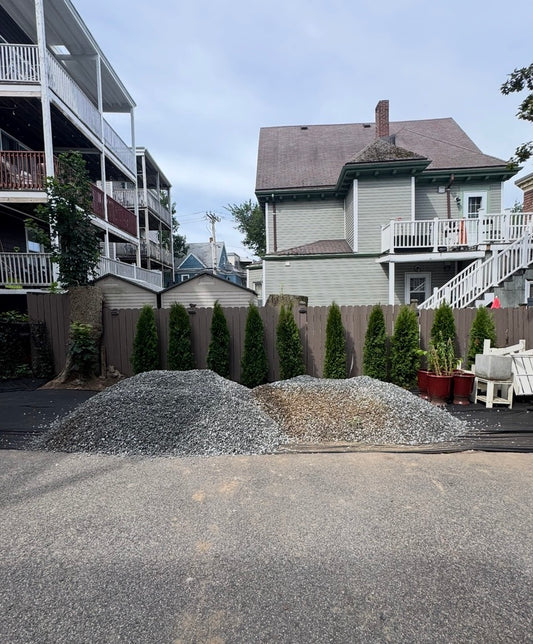
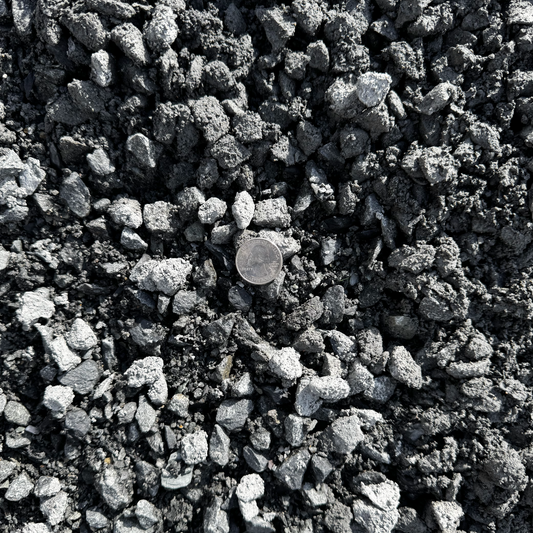
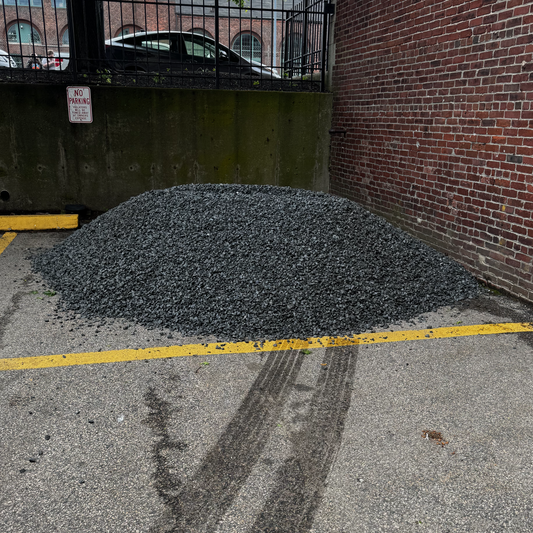
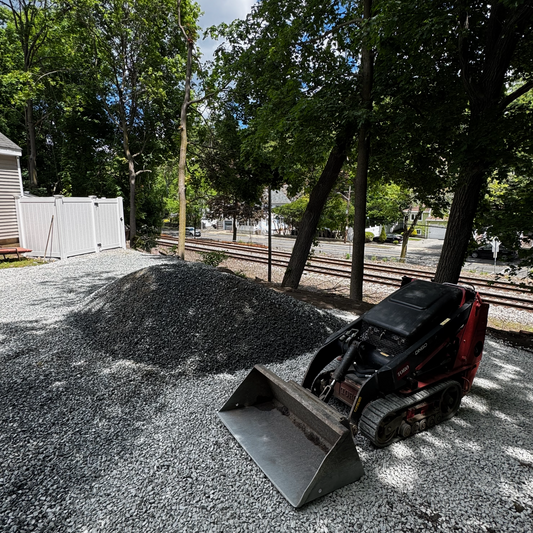
Material: Bank-run gravel for rough grade fills, foundation backfill, utility trench backfill below the bedding zone.
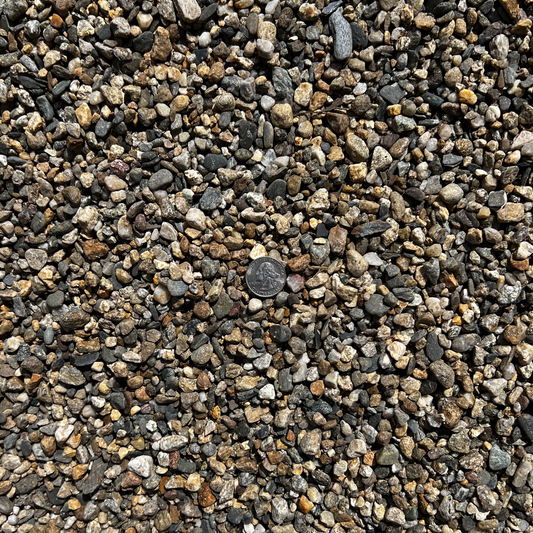
Bank-run is unscreened, includes everything from sand to small cobbles, compacts well for structural fills. Cheaper than processed gravel because it skips screening. Order in volume — typically 20–60 cubic yards on a typical Hanover residential build.
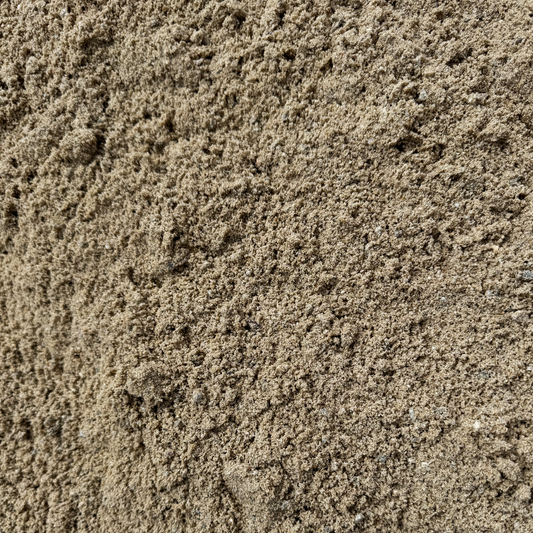
For background on bank vs mason sand for sand-specific applications, Mason Sand vs Bank Sand: A Worcester County Winter Traction Q&A covers the broader sand spec (same logic translates to gravel).
Excavator coordination: Confirm the bank-run spec before backfill. Some Hanover builders accept on-site excavated material as backfill if the soil has acceptable structural content; others require imported. Get the call early.
Phase 2 — Utility Bedding and Foundation Drain (Days 5–14)
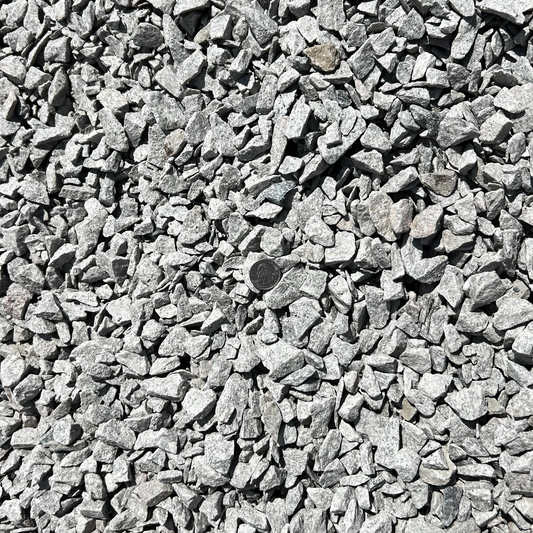
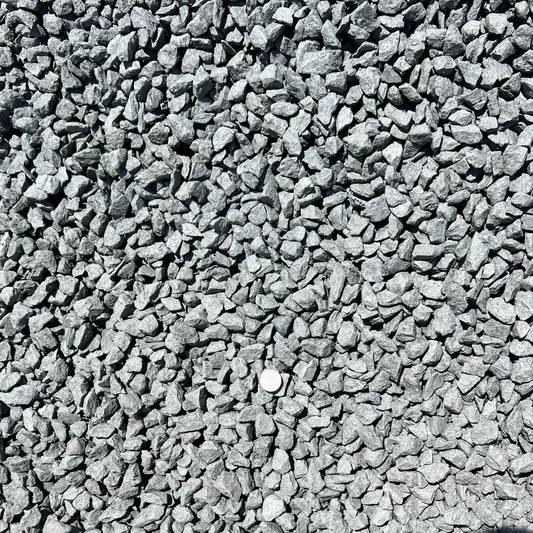
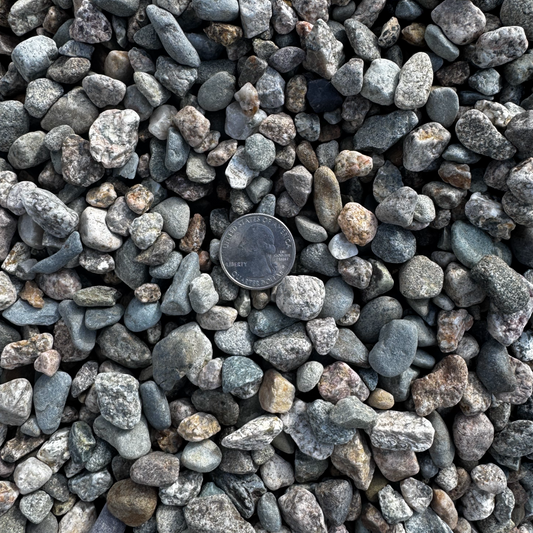
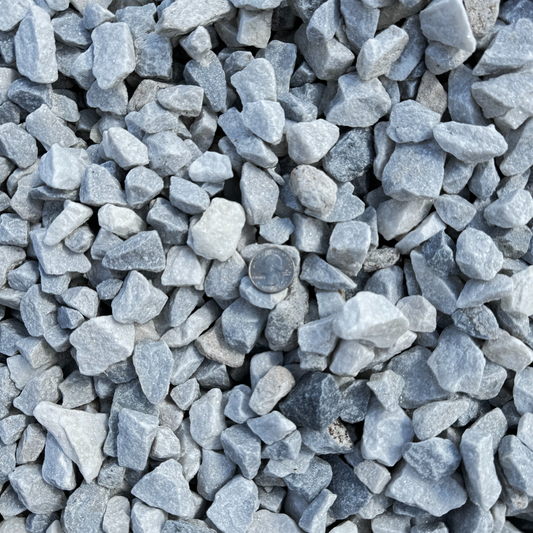
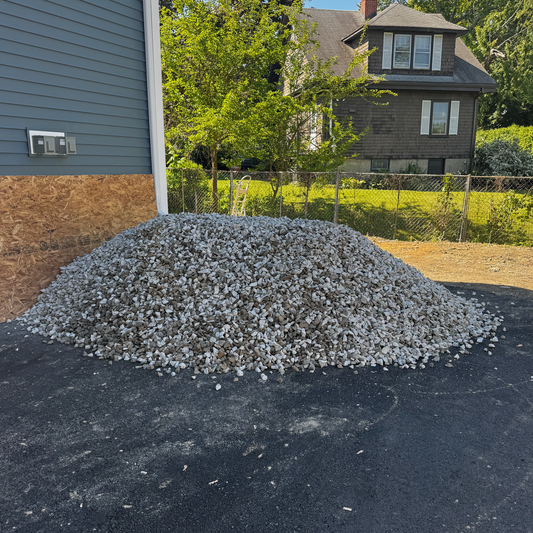
Material: 3/4" washed crushed stone for utility line bedding (water, sewer, electric) and the foundation perimeter drain.
The "washed" spec matters here — fines wash out and the open structure drains freely, which is exactly what utilities and foundation drains need. Different from the processed gravel used in driveway sub-bases (where you want the fines for compaction).
Order through the New Construction & Site Prep collection. For Hanover delivery scheduling, the Hanover Landscape Supply page handles the small-load follow-ups after the bulk truckloads.
Excavator coordination: Foundation drain work overlaps with utility trenching. Make sure the spec is consistent across both — same washed stone, same depth around utility runs, geotextile fabric where the stone meets soil.
Phase 3 — Driveway Sub-Base (Days 21–28)
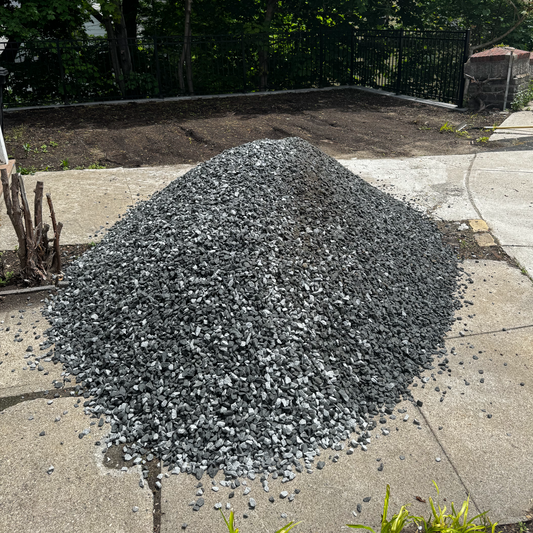
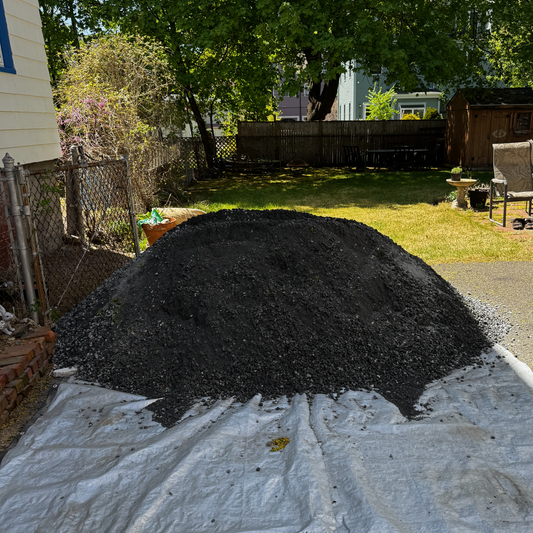
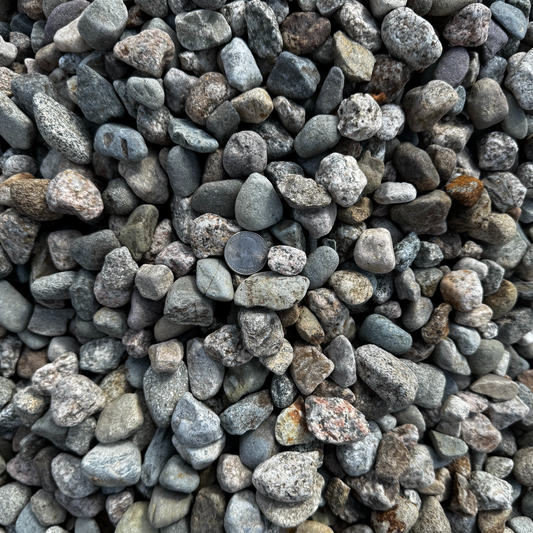
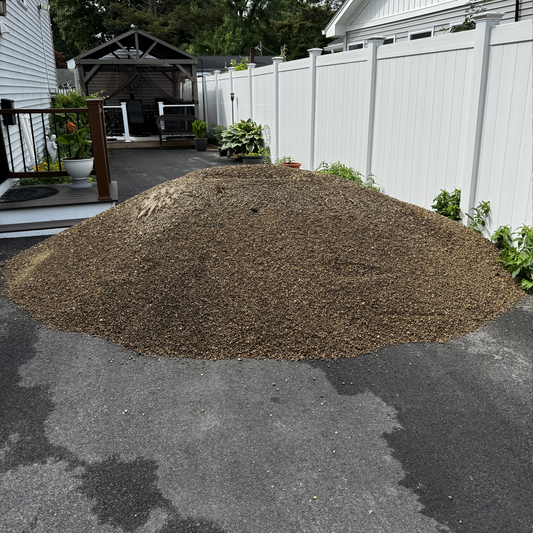
Material: 3/4" processed gravel (with fines) for the driveway sub-base, compacted in 2-inch lifts to a finished depth of 8–12 inches.
The driveway is the first visible landscape feature on a Hanover new build, and the most expensive to redo if specified wrong. The full spec is in How to Set a Plymouth Crushed Stone Driveway Base That Lasts a Decade — it applies directly to Hanover sites.
For Hanover's particular soil mix (mostly sandy loam with clay pockets), the standard spec is:
- 12 inches of compacted processed gravel sub-base on clay zones
- 8 inches on sandy zones with confirmed drainage
- Geotextile fabric under the entire driveway, always
For the broader driveway-build pillar that covers gravel-driveway sequencing, How to Build a Gravel Driveway in Plymouth County: Sub-Base to Top Coat covers the multi-day construction.
Excavator coordination: Driveway base goes in before final landscape grading. Skip this order and the driveway settles below adjacent grade by year two.
Phase 4 — Final Topsoil and Landscape Grading (Days 25–32)
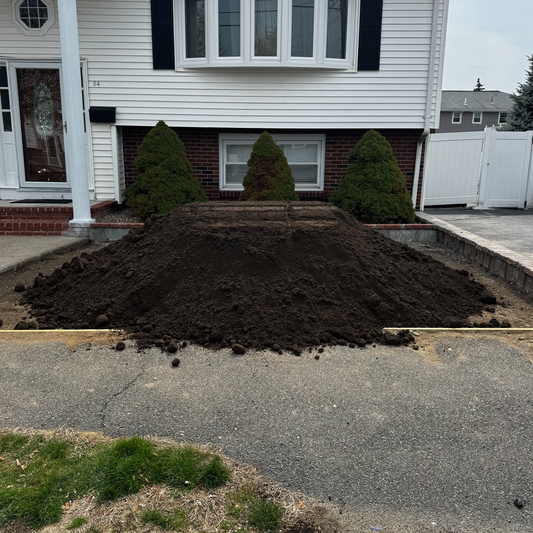
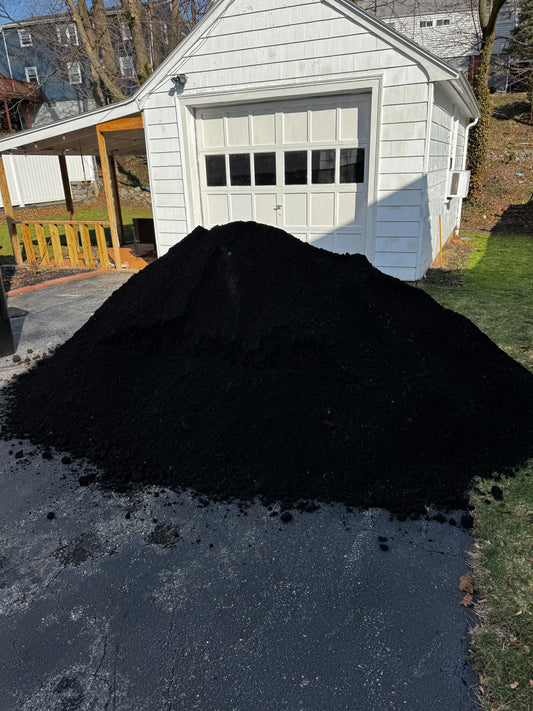
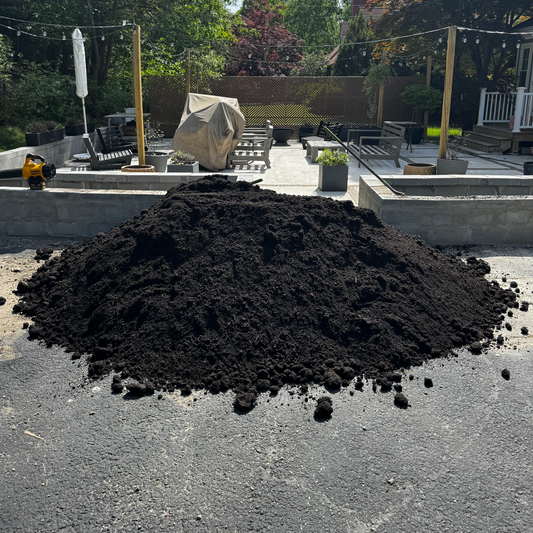
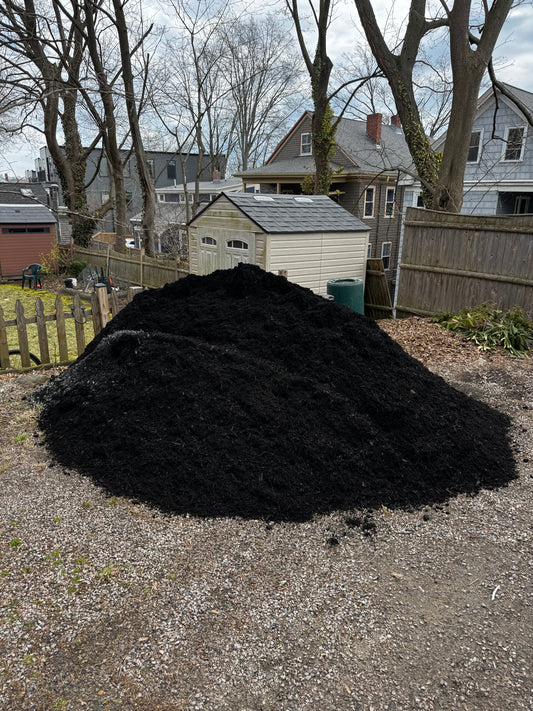
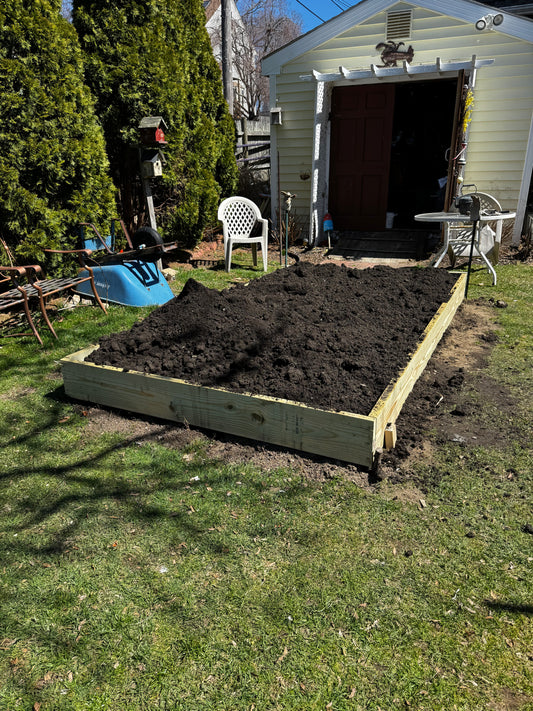
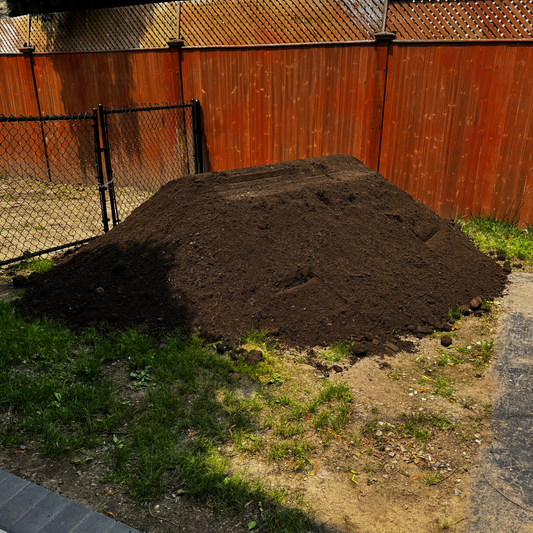
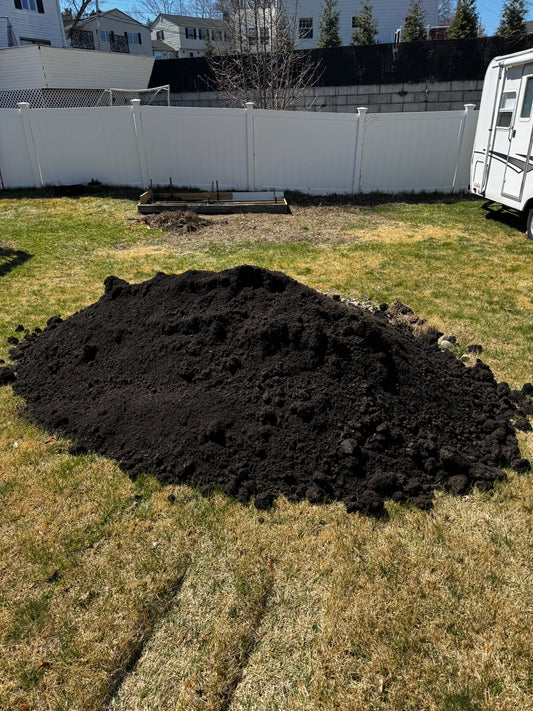
Material: Screened loam at 4–6 inches depth across the lawn area, 8–12 inches in beds.
This is the phase where Hanover homeowners and excavators most often disconnect. The excavator finishes "rough grading" with whatever soil came back from excavation, the homeowner expected screened loam, and the lawn never establishes.
The fix: specify imported screened loam in the contract at 4–6 inches over the entire lawn area. Quantities for a typical Hanover quarter-acre lot run 30–50 cubic yards.
Order through the New Construction & Site Prep collection. Compare with the Topsoil vs Loam vs Compost guide for Plymouth County gardeners for the loam-vs-topsoil distinction that matters here.
Excavator coordination: Final landscape grade after the driveway is set. Lawn loam goes down last, before seeding or sod.
Phase 5 — Landscape Finish (Days 30–45)
Materials:
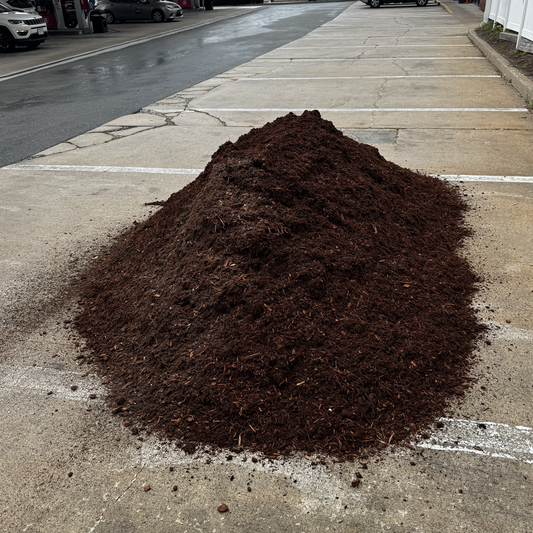
- Mulch for foundation beds and tree rings (browse the Mulch collection)
- Decorative stone for any exposed drainage, fire pit, walkway accent (see 5 Decorative Stones That Anchor a Brookline Front Walk Without Looking Busy for the visual lineup)
- Plant material — see 5 Native MA Plants That Thrive in Average Norfolk County Suburban Yards for the plant list, and How to Plant Bare-Root Trees and Shrubs in a Cohasset Yard Before Bud Break for technique
This is the visible finish phase. The yard should look ready at the certificate of occupancy.
For the homeowner who's moving in but wants to scale up the landscape across year one, 5 Materials Every New-Construction Yard in Plymouth County Needs in Year One covers the post-CO additions.
Coordination Calls With the Excavator
The excavator should know the material sequence before site prep starts. The standard pre-build coordination meeting agenda:
- Bank-run gravel: quantity, source, delivery timing
- Crushed stone (washed): quantity for utilities + foundation drains
- Processed gravel: driveway sub-base spec and depth
- Screened loam: quantity, distribution across lawn vs. beds
- Final landscape: mulch and decorative stone delivery sequence
- Geotextile fabric: where it goes (under driveway, under utilities, around foundation drain)
For contractor net-30 account setup that streamlines the bulk-material side, Net 30 Terms and Bulk Pricing for Plymouth County Landscape Pros walks through the account setup. For broader contractor account guidance, Bulk Material Account Setup for Eastern MA Landscape Contractors.
For MA-specific construction material specifications, the Massachusetts Department of Transportation standards cover the technical specs that translate to residential work, and the ICPI covers paver and walkway sub-base specifications.
The Bottom Line for Hanover Builds
Sequence the materials in this order — bank-run, washed stone, processed gravel, screened loam, mulch — and you avoid the most common new-construction landscape failures: settled driveways, dishing yards, and post-CO punch lists that drag for months.
Order through New Construction & Site Prep for the bulk materials; for Hanover-specific delivery scheduling, the Hanover Landscape Supply page handles the inevitable small-load adjustments through the final two phases.