Quick Answer
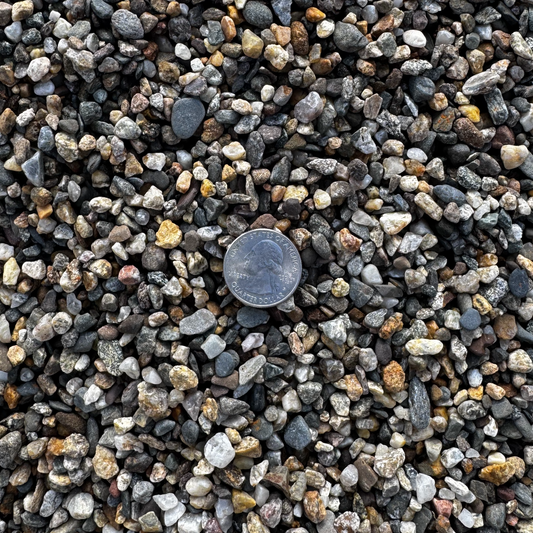
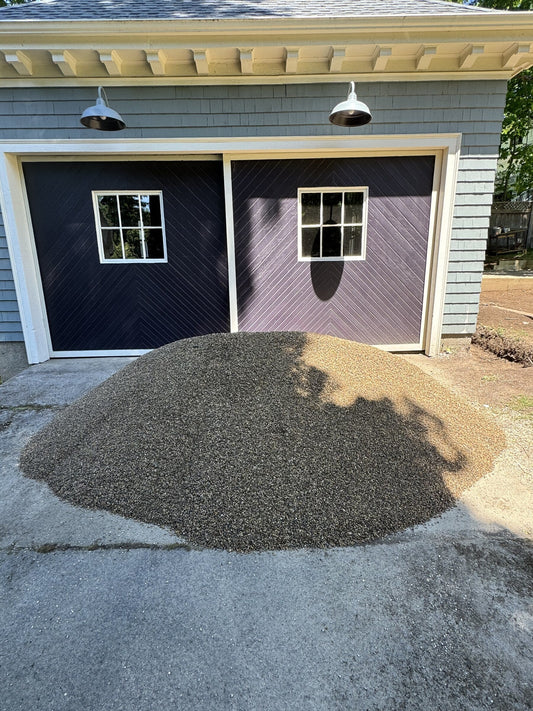
A gravel driveway in Plymouth County's glacial-till soil needs three layers on geotextile to last: 4" of 1.5" crushed stone sub-base for drainage and load distribution, 6" of ¾" processed gravel base for compaction and structural strength, and 2" of stone dust or 3/8" crushed stone top coat for the running surface. Total excavation depth: 12 inches below finished grade. Crown the surface ½" per foot of half-width for water shedding. Built right, it lasts 15–20 years with periodic top-coat refresh.
Why Plymouth County Soil Demands the Three-Layer Build
Plymouth County — Plymouth, Kingston, Halifax, Hanover, Pembroke, Marshfield, Duxbury, and the inland Bridgewaters — sits on glacial till. That's a chaotic mix of sand, silt, clay, cobbles, and the occasional boulder. Two consequences for driveway construction:
- Variable drainage. Some yards drain like sandy beaches; others hold water like clay basins. Both happen on the same property.
- Frost heave potential. When water sits in clay-heavy spots and freezes, it lifts the driveway. The lift comes back down at thaw, but unevenly — and over years, it cracks the running surface.
The solution isn't to dig deeper than the frost line (4 feet — impractical for a residential driveway). It's to build a base that flexes with frost movement and drain water out before it can pool and freeze. That's what the three-layer system does.
The Massachusetts Department of Transportation gravel driveway specifications is the regional reference for layer depths and aggregate sizing. The Interlocking Concrete Pavement Institute (ICPI) carries deeper guidance on compaction protocol that applies cleanly to gravel work.
What You'll Need
Materials (for a typical 60' × 12' Plymouth County driveway, 720 sq ft):
- Sub-base — 1.5" crushed stone: 720 sq ft × 0.33' depth = 8.8 cu yd, ~12 tons
- Base — ¾" processed gravel: 720 sq ft × 0.5' depth = 13.3 cu yd, ~19 tons
- Top coat — stone dust or 3/8" crushed: 720 sq ft × 0.17' depth = 4.4 cu yd, ~6 tons
- Geotextile fabric (non-woven, 4 oz/sq yd): 800 sq ft (with overlaps)
For tonnage math on different sizes, see the Bridgewater stone tonnage walkthrough.
Tools:
- Plate compactor (rental, $80–$120/day) or vibratory roller for larger jobs
- Excavator or skid steer (rental, $300–$450/day) for excavation and rough grading
- Grading rake (12-foot landscape rake) for spreading and finish grading
- Long level or laser level for crown and slope
Step 1 — Excavate and Grade the Subgrade
Strip the existing surface — old gravel, topsoil, organics — down to undisturbed soil. For a new driveway over lawn, that's typically 6–10 inches. For a reset of an existing driveway, you may only need to remove the old top coat and base if the sub-base is intact.
Total excavation depth: 12 inches below finished grade (4" sub-base + 6" base + 2" top coat).
Slope the subgrade to match your finished grade slope: - Length-wise: gentle slope from house to street, 1–2% grade. - Width-wise (crown): ½" per foot of half-width, peaked at the center. For a 12' wide driveway, that's a 3" crown at center.
Address drainage now, not later. If your subgrade has obvious wet spots, install a perforated drain tile (4" diameter) running to daylight or a drywell before laying geotextile. The Scituate dry river bed piece covers parallel drainage logic.
Step 2 — Lay the Geotextile
Non-woven 4-oz geotextile fabric across the entire subgrade. Two reasons:
- Soil separation — keeps fines from pumping up into the base layer over years of vehicle traffic.
- Load distribution — the fabric distributes vehicle weight across a wider footprint, reducing rutting.
Overlap seams 12 inches. Pin edges with 6" sod staples to keep the fabric in place during base placement. Don't skip this step. Geotextile typically extends driveway life by 30–50%.
Step 3 — Place the Sub-Base Layer (1.5" Crushed Stone)
4 inches of 1.5" crushed stone. Spread evenly with a skid steer or by hand on a small driveway. The angular shape of crushed stone (not pea gravel — angular) interlocks under compaction.
Compact thoroughly with a plate compactor — three full passes minimum, more on clay-heavy spots.
The 1.5" crushed stone provides: - Drainage — large voids let water flow through to the perforated drain or into the surrounding soil. - Load bridging — bridges over weak spots in the subgrade. - Frost-resistance — angular shape stays interlocked through freeze-thaw.
For a comparison of stone size choices, see 3/4-inch crushed stone vs 1-1/2 inch on a Middleborough driveway test.
Step 4 — Place the Base Layer (¾" Processed Gravel)
6 inches of ¾" processed gravel, placed in 2-inch lifts. Compact between each lift.
"Processed gravel" means a mix of crushed stone and stone dust — the dust fills voids between stones, locking the layer into a dense, structural mass. Don't substitute clean ¾" stone; you need the fines.
After three lifts and three rounds of compaction, you have 6" of compacted ¾" processed gravel — the structural workhorse of the driveway.
Step 5 — Place the Top Coat
2 inches of stone dust or 3/8" crushed stone. This is the running surface — what your tires touch, what looks finished.
Stone dust packs harder, sheds water cleanly, and looks tighter. The standard Plymouth County choice.
3/8" crushed stone is grippier in heavy rain, slightly looser-looking. Often preferred on rural properties where the casual look fits.
Spread, rake to the crown shape, compact lightly (one pass — over-compaction crushes the top coat into the base and you lose the loose surface tooth that handles frost movement).
Step 6 — First-Year Maintenance
A new gravel driveway in Plymouth County needs:
- Month 1: light rake every two weeks to keep the crown shape as initial settlement occurs.
- Month 3 (typically May–June): top up any low spots that have appeared. Order another ton or two of stone dust.
- Month 6 (October): walk the drive and mark any persistent low spots before snow.
- Year 1+: annual top-coat refresh, typically 1–2 tons stone dust, before winter.
Common Mistakes to Avoid
The most common Plymouth County gravel driveway failures are documented in 5 gravel driveway mistakes common across Plymouth County. The headline ones:
- Skipping the geotextile — you'll rebuild in 8 years instead of 18.
- Using one stone size for the whole depth — sub-base and top coat have different jobs.
- Skipping compaction between lifts — air voids destroy the base in two winters.
- No crown — water sits and freezes; surface fails.
- Building during wet conditions — compaction over saturated subgrade does nothing.
For pre-existing driveway diagnostic — diagnosing what's wrong with a driveway you didn't build — see 5 driveway drainage issues Brockton homeowners can diagnose right now.
Material Procurement and Pre-Booking
Pre-book this material in February for a May build. Pricing on ¾" processed gravel and 1.5" crushed stone climbs through April. The Plymouth County contractor stone pre-book piece covers the curve and how DIY homeowners can pick up some of the same advantage by booking early.
Browse the Ottr crushed stone collection for sub-base and base materials, and the driveway construction & repair use-case collection for the full layered build. Plymouth, Kingston, and Bridgewater area deliveries available — ask the dispatcher about routing.