Quick Answer
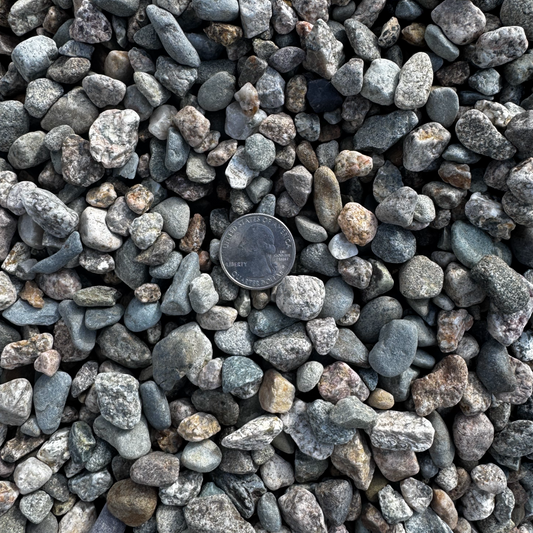
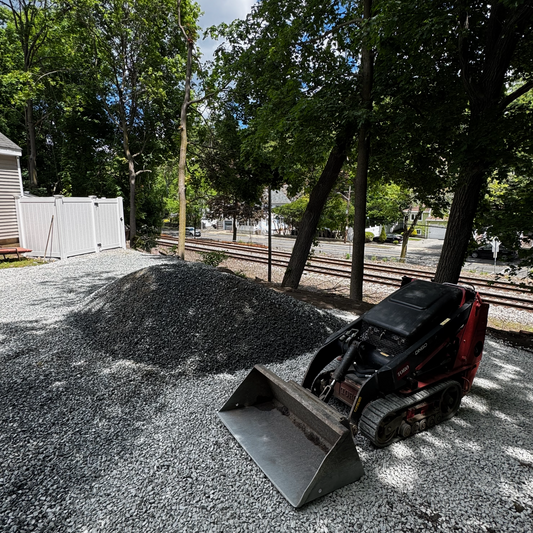
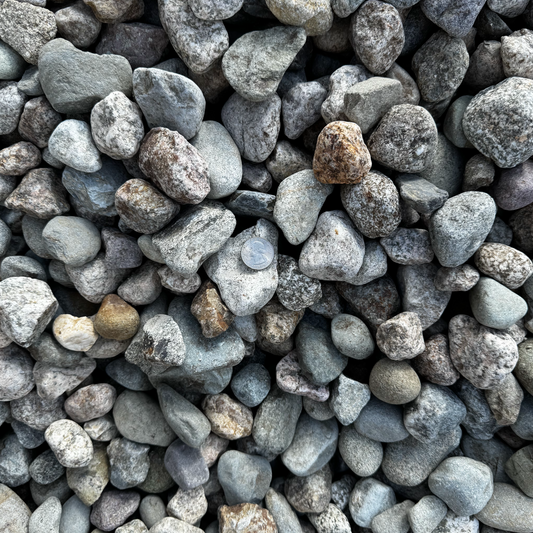
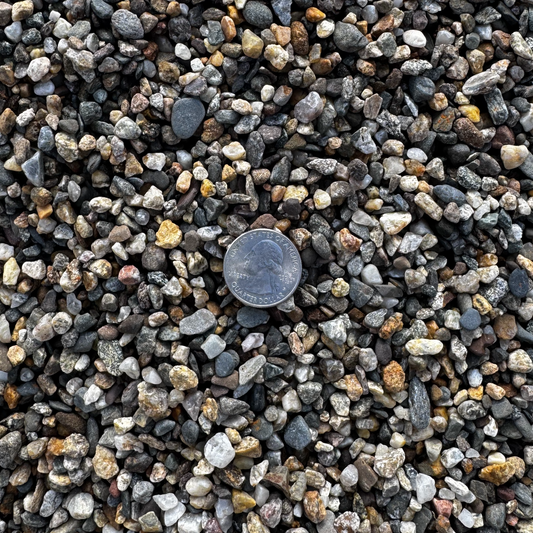
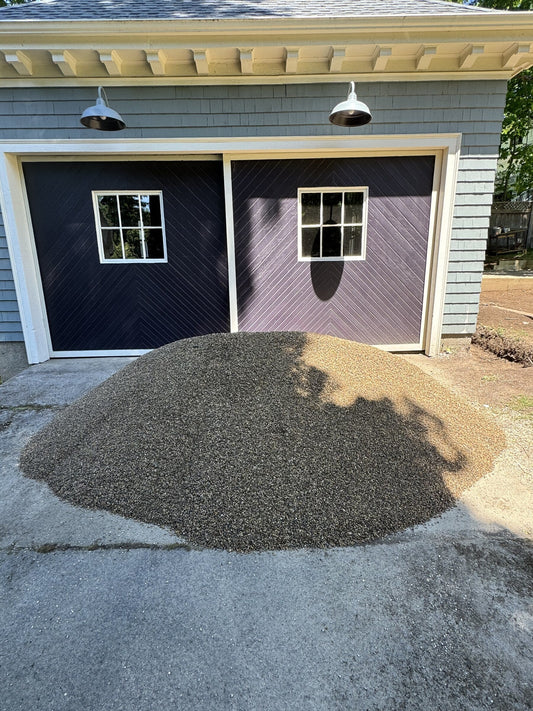
Crushed stone tonnage for a driveway base = (length × width × depth in feet) ÷ 27 × 1.4 × 1.10. For a typical Bridgewater driveway — 60' long, 12' wide, 6" base — that's 20 tons of ¾" processed gravel including 10% waste. The factors that drive the math: 6" minimum compacted depth for residential use, the 27 cu ft per cu yd conversion, and the 1.4 ton-per-cu-yd density for processed gravel. Get all five inputs right and the order matches the job.
Why Bridgewater Driveways Eat Stone
Bridgewater sits on glacial till — a mix of sand, silt, and clay that holds water and heaves when it freezes. That's the same soil running through Halifax, East Bridgewater, West Bridgewater, and Middleborough. Driveways here need a deeper, more thoroughly compacted base than driveways on free-draining sandy soils — the Plymouth crushed stone driveway base piece walks through the structural detail.
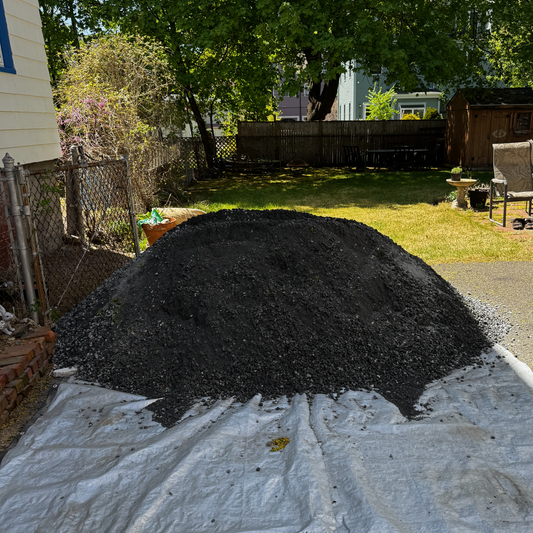
Right tonnage on order day means the truck dumps the right pile, the contractor hits the right depth, and you don't pay for a second delivery in May. Wrong tonnage means a half-finished base or a stone pile melting into the lawn for two weeks.
The Massachusetts Department of Transportation gravel specifications is the regional reference for processed gravel density. The UMass Extension landscape program has homeowner-facing guides on driveway construction.
The Five Inputs
To calculate the right order, you need:
- Length of driveway (feet)
- Width (feet, average if it varies)
- Compacted depth (inches → feet)
- Density of the stone (tons per cubic yard)
- Waste factor (typically +10%)
Get those five numbers and the math is one calculator app and 90 seconds.
Step 1 — Measure Length and Width
Tape-measure the actual usable surface, not the property line. Bridgewater driveways often vary in width — wider at the apron, narrower along the side of the house. Take the average width for the calculation.
Example Bridgewater driveway: - Length: 60' - Width: 12' average (10' along side of house, widening to 18' at the parking apron) - Surface area: 720 sq ft
Step 2 — Set Base Depth
For residential use in Bridgewater (passenger cars, occasional pickup, light landscape delivery):
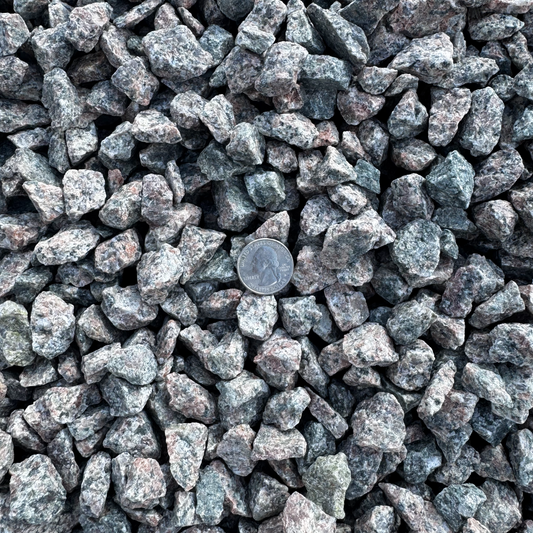
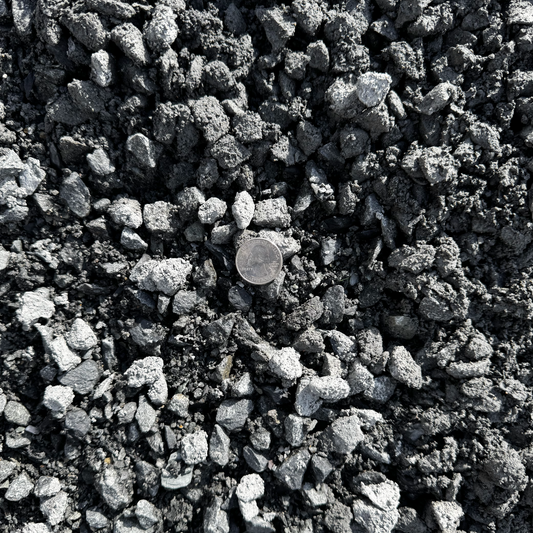
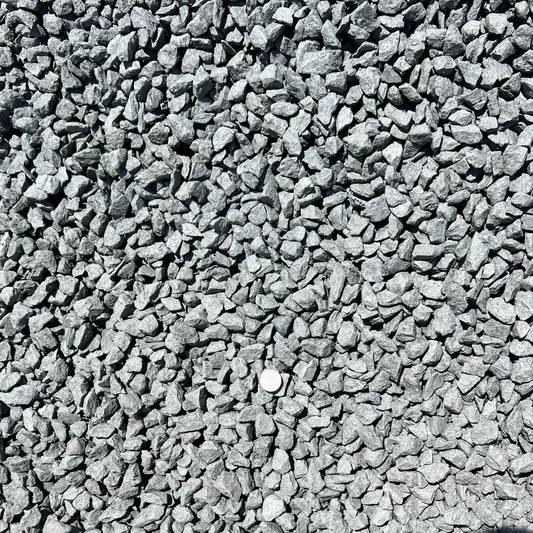
- 6 inches compacted depth of ¾" processed gravel — standard residential.
- 8 inches if you regularly host heavy delivery trucks (oil heat tank fills, masonry deliveries, RV parking).
- 10–12 inches for new-build sites with heavy construction traffic.
Compacted depth is the finished depth after a plate compactor. Loose gravel compresses about 20% under compaction — so 6 inches finished requires about 7.2 inches loose. The waste factor at the end of the calculation accounts for this; you don't need to overthink it.
For surface-only refresh on an existing driveway base, you might go as shallow as 2–3 inches. For full base reset, plan the 6-inch minimum.
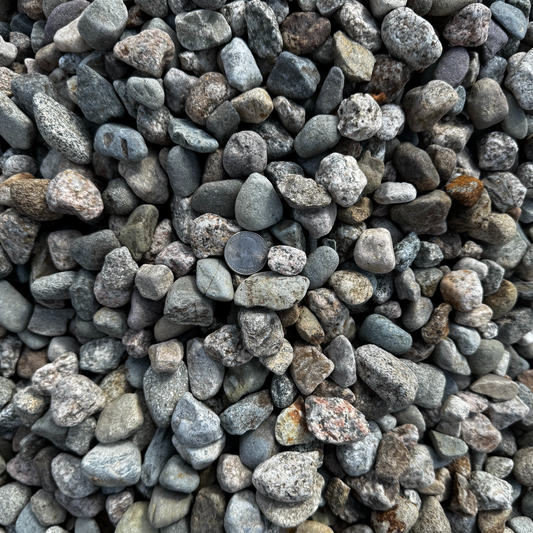
The Middleborough driveway test on 3/4-inch vs 1-1/2-inch stone covers when to step up to larger stone for the bottom layer of a deep base.
Step 3 — Calculate Cubic Feet
Length (ft) × Width (ft) × Depth (ft) = Cubic Feet
Convert depth from inches: 6 inches = 0.5 feet.
Bridgewater example: - 60' × 12' × 0.5' = 360 cubic feet
Step 4 — Convert to Cubic Yards
Cubic Feet ÷ 27 = Cubic Yards
(There are 27 cu ft in 1 cu yd: 3' × 3' × 3'.)
Bridgewater example: - 360 ÷ 27 = 13.3 cubic yards
Step 5 — Convert Cubic Yards to Tons
Cubic Yards × 1.4 = Tons (for ¾" processed gravel)
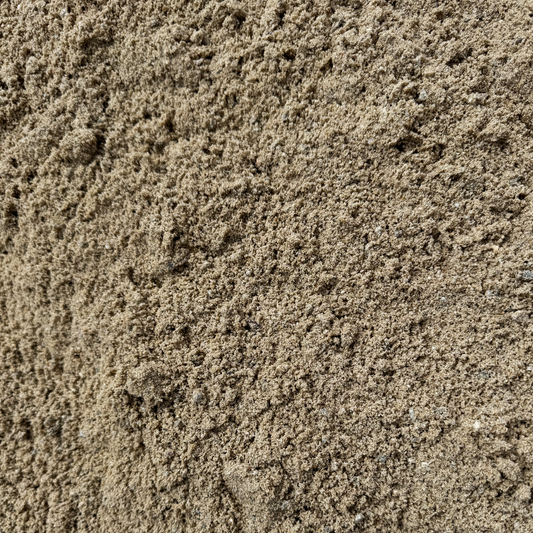
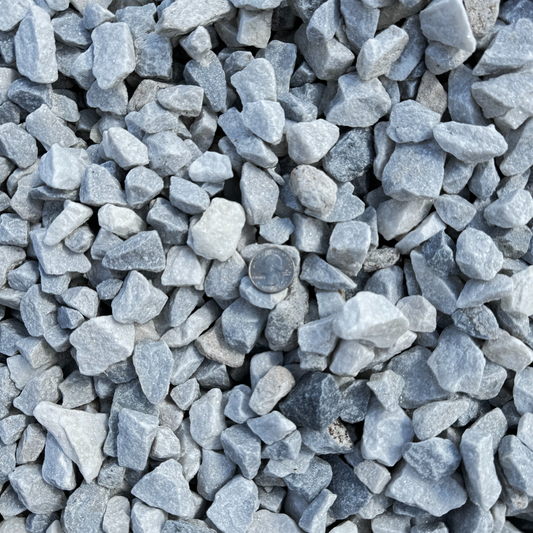
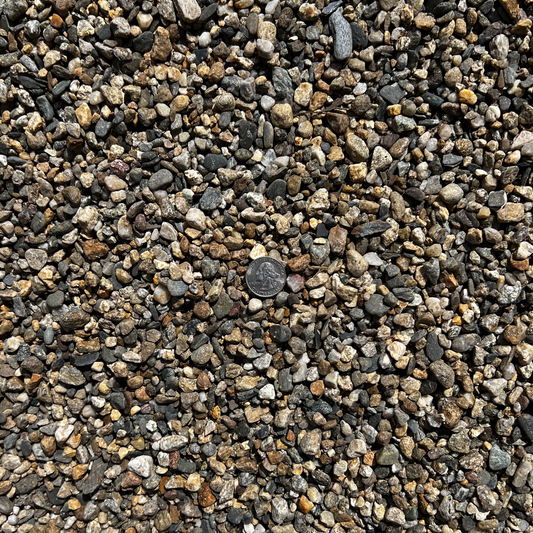
Density varies by stone type: - ¾" processed gravel (standard driveway base): 1.4 tons per cubic yard - ¾" clean crushed stone (drainage applications): 1.35 tons per cubic yard - 1.5" crushed stone (deep-base lower layer): 1.4 tons per cubic yard - Stone dust (top dressing or paver setting bed): 1.45 tons per cubic yard
Bridgewater example: - 13.3 × 1.4 = 18.6 tons
Step 6 — Add Waste Factor
Add 10% to cover compaction loss, edge spillage, and minor over-excavation.
Bridgewater example: - 18.6 × 1.10 = 20.5 tons → order 20 tons (round to whole numbers; trucks don't deliver fractions of a ton).
That's the order. 20 tons of ¾" processed gravel.
A Worked Bridgewater Example, End to End
Driveway: 60' long × 12' wide average, 6" base depth.
| Step | Calculation | Result |
|---|---|---|
| 1. Surface area | 60 × 12 | 720 sq ft |
| 2. Compacted depth | 6" → 0.5' | — |
| 3. Cubic feet | 720 × 0.5 | 360 cu ft |
| 4. Cubic yards | 360 ÷ 27 | 13.3 cu yds |
| 5. Tons | 13.3 × 1.4 | 18.6 tons |
| 6. Plus 10% waste | 18.6 × 1.10 | 20.5 tons |
Order: 20 tons of ¾" processed gravel.
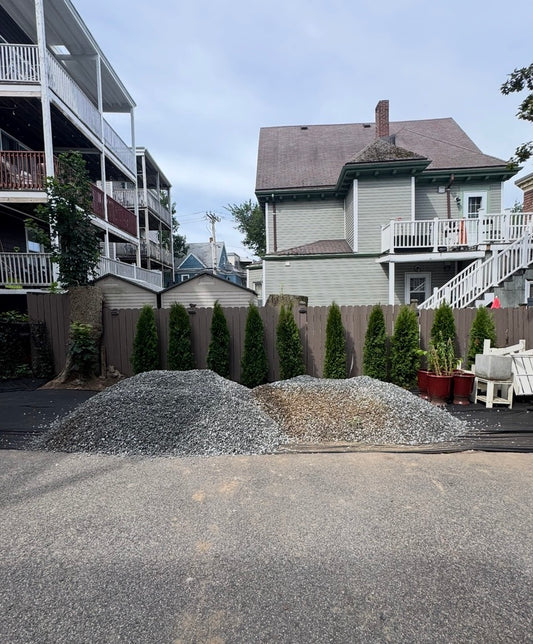
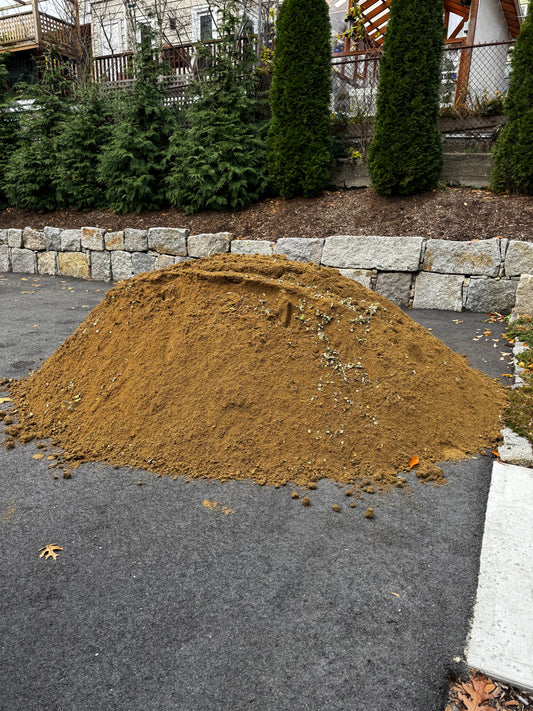
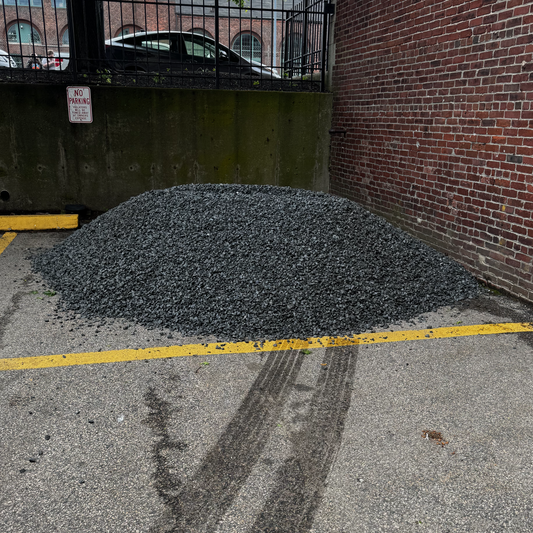
A full tri-axle dump truck holds about 20 tons. So this is one truck. If your order is over 22 tons, you're paying for two trucks; consider redesigning depth or splitting widths.
Common Bridgewater Driveway Tonnage Reference
For quick estimates, here's the math run on common Bridgewater driveway sizes at 6" depth:
| Driveway Size | Cu Yards | Tons (¾" processed) | Trucks |
|---|---|---|---|
| 30' × 10' (300 sq ft) | 5.6 | 8 | 1 |
| 40' × 12' (480 sq ft) | 8.9 | 13 | 1 |
| 60' × 12' (720 sq ft) | 13.3 | 19 | 1 |
| 80' × 14' (1,120 sq ft) | 20.7 | 29 | 2 |
| 100' × 16' (1,600 sq ft) | 29.6 | 42 | 2–3 |
For a top-dressing refresh (2" loose): - 60' × 12' × 0.17' / 27 = 4.5 cu yds × 1.4 = 6.3 tons
What to Do With the Number
Once you have your tonnage:
- Pre-book in February for May delivery. Pricing in February runs 8–12% below late-April rates.
- Specify drop location — typically driveway apron or pull-through near the project. Tri-axle trucks need 14' overhead clearance and firm ground.
- Order related materials together — geotextile fabric, stone dust setting layer for finish, edge stabilization. The full Plymouth gravel driveway construction guide covers the layered build.
- Plan compaction equipment: rent a plate compactor ($100/day) or a roller for larger jobs.
For broader bulk-order pricing on contractor accounts, see the Eastern MA contractor account setup playbook.
Browse the Ottr crushed stone collection for ¾" processed gravel and stone dust, or the driveway construction & repair use-case collection for the full sequenced lineup. Bridgewater, Halifax, and Middleborough deliveries available — ask the dispatcher about route timing.