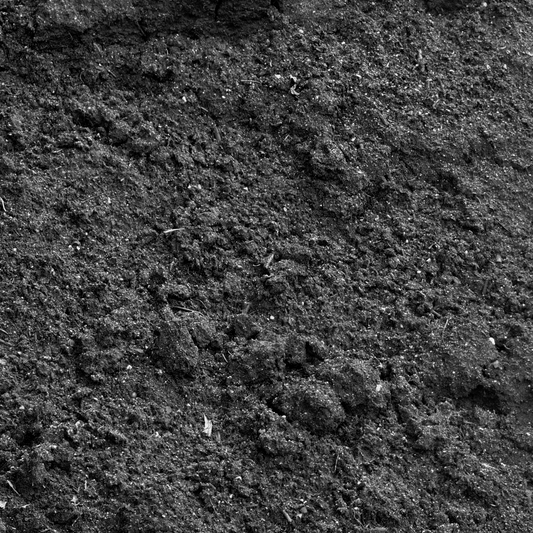
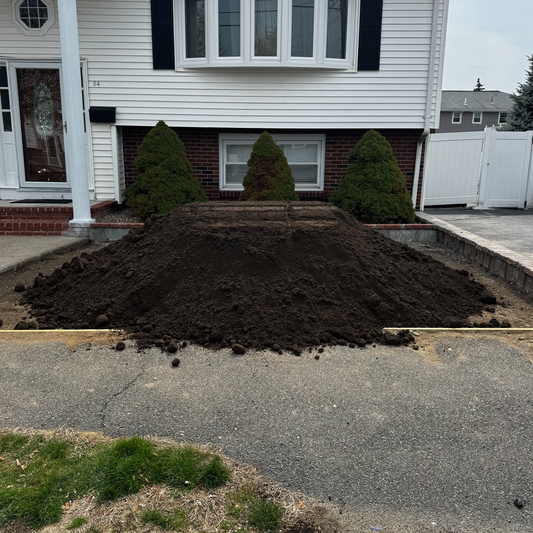
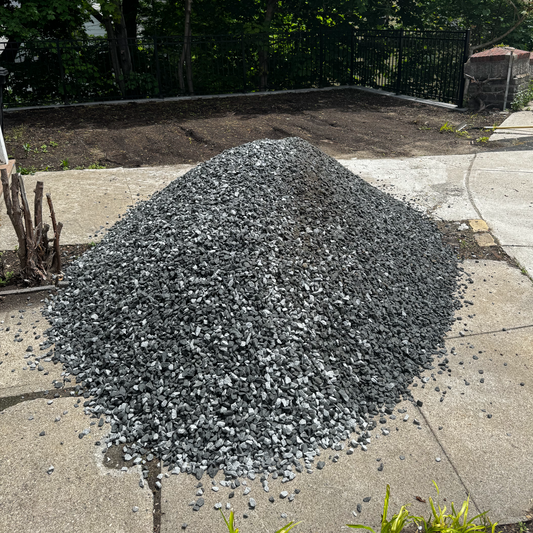
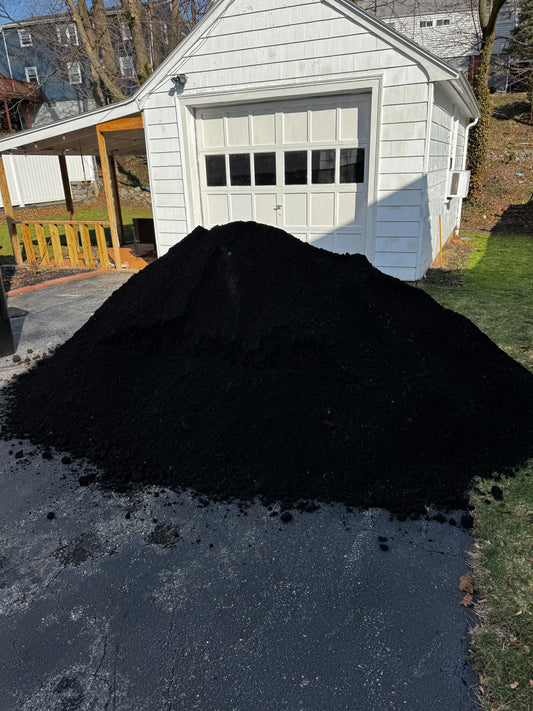
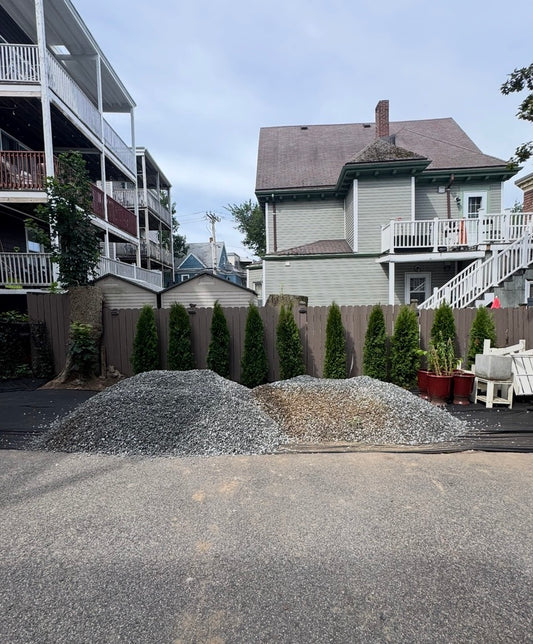
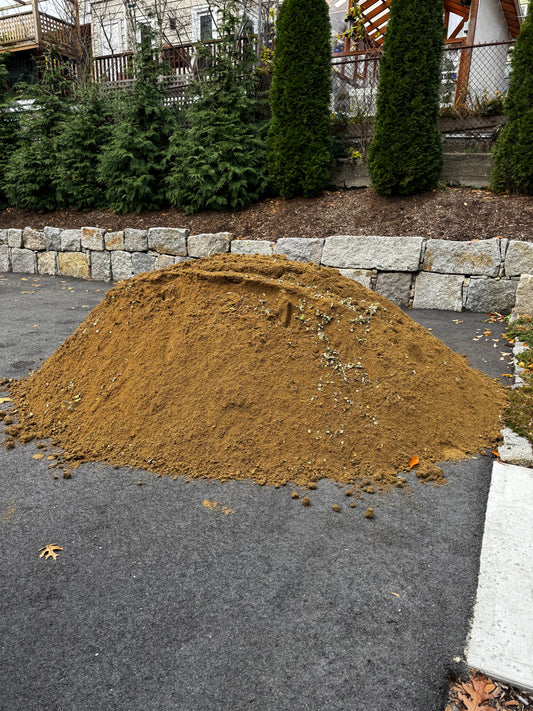
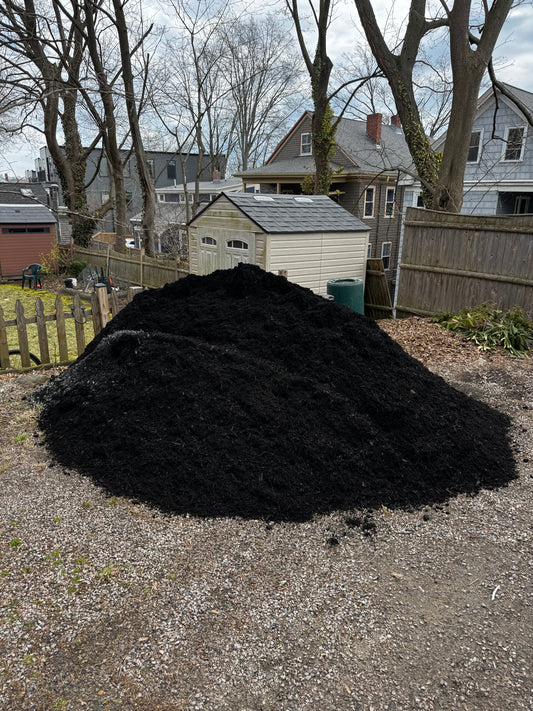
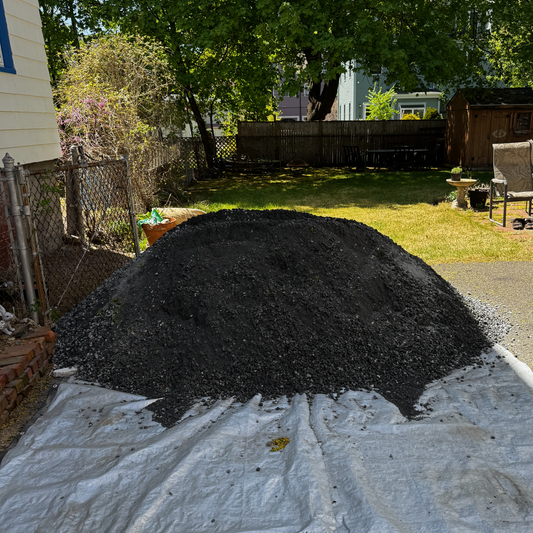
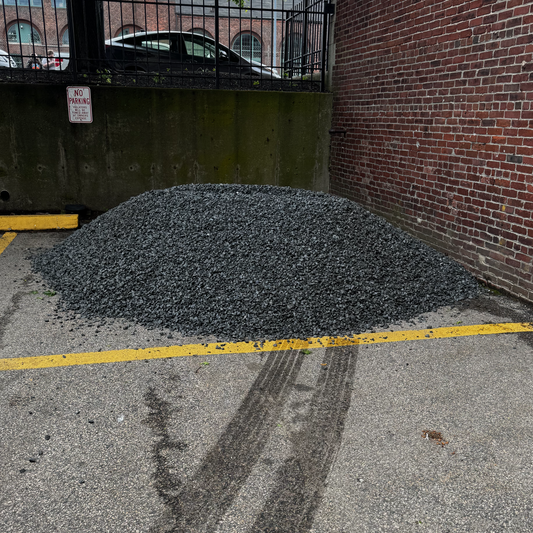
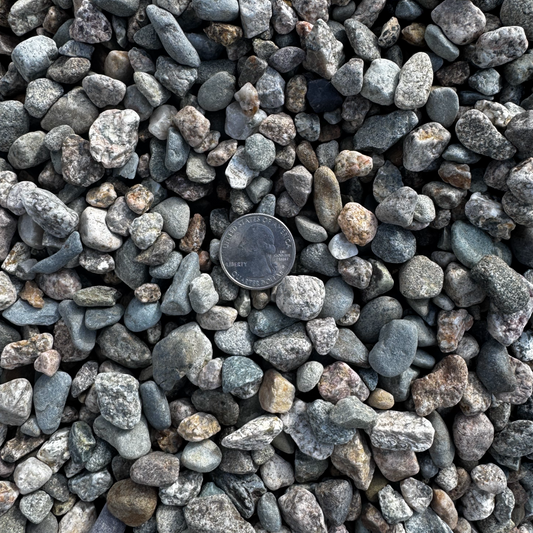
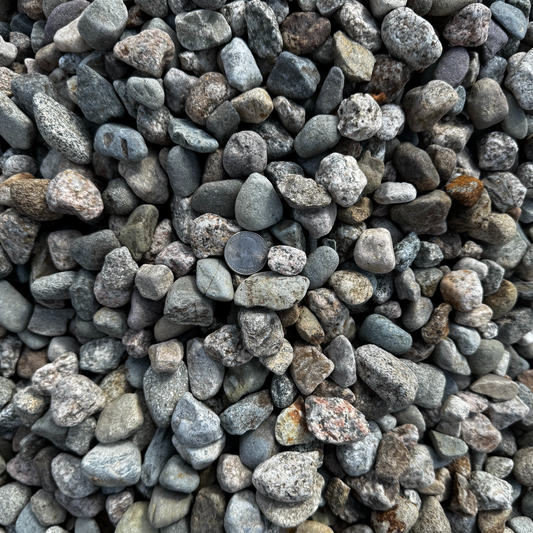
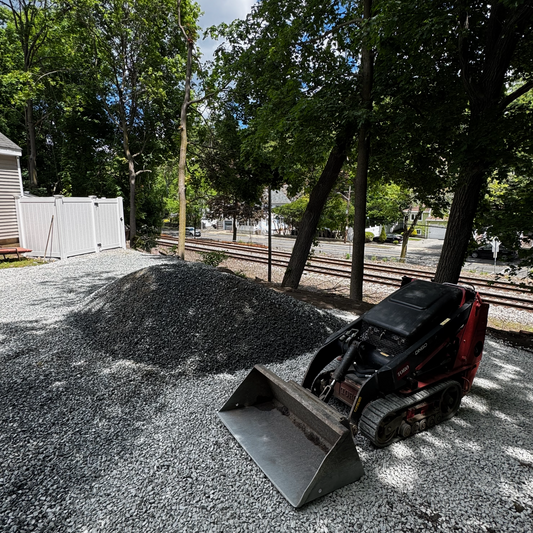
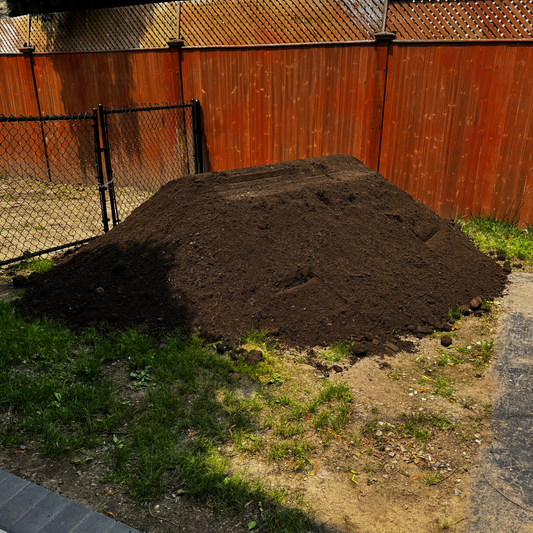
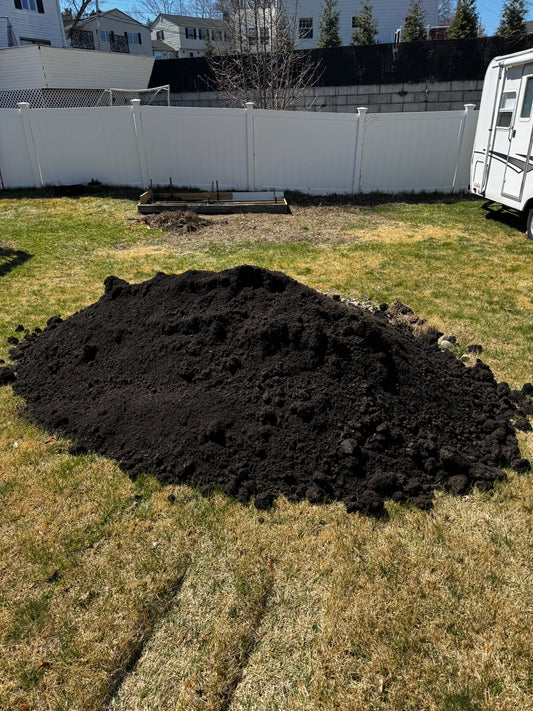
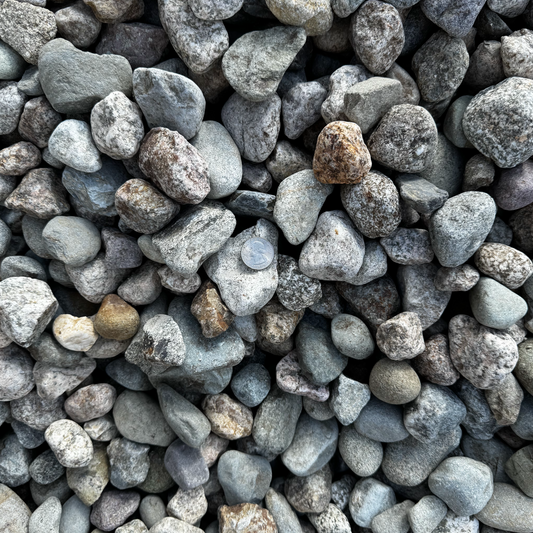
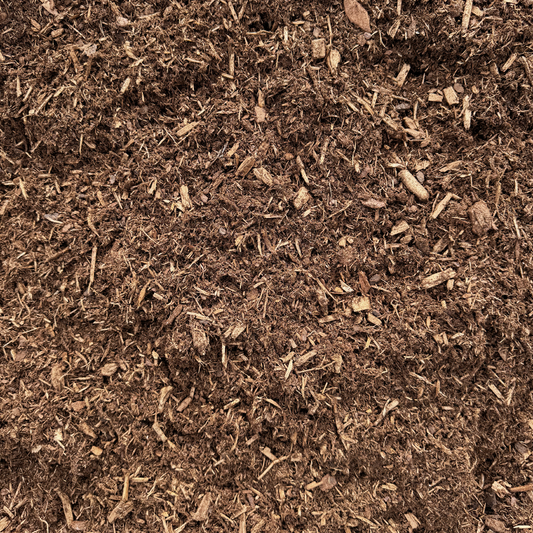
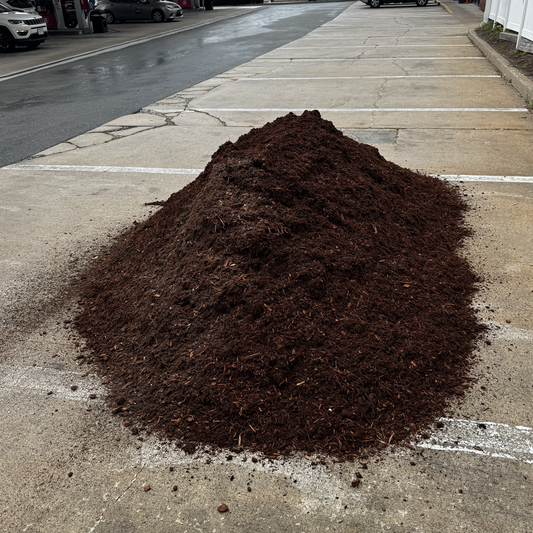
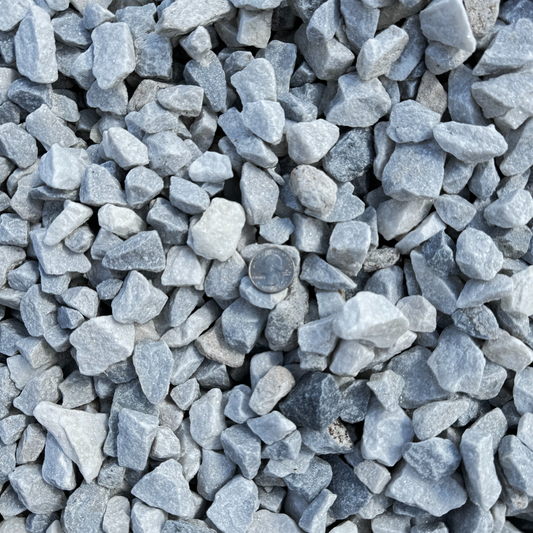
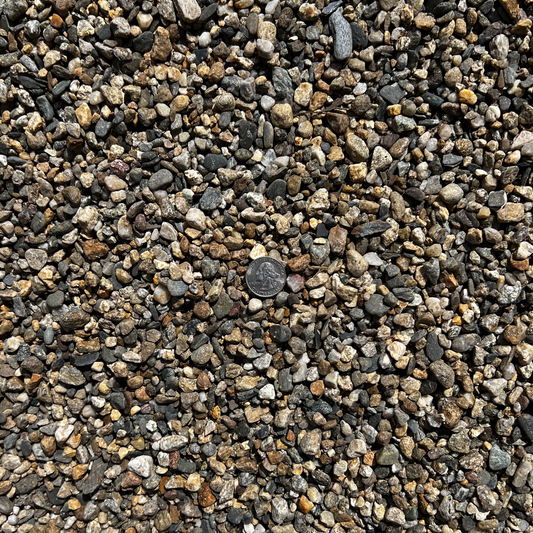
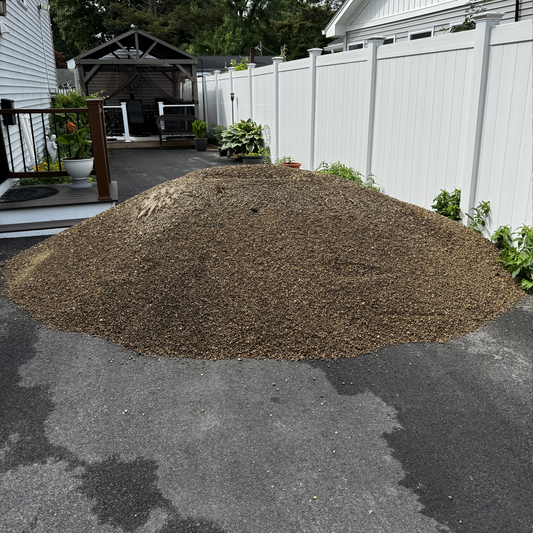
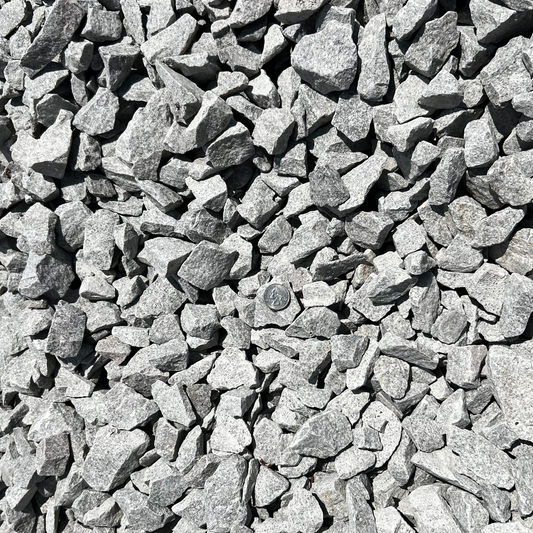
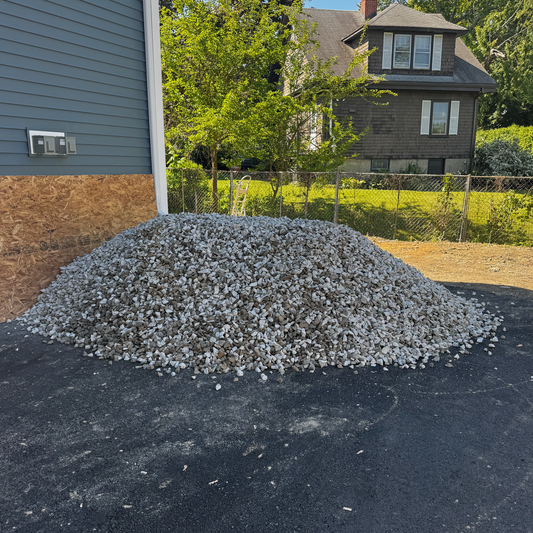
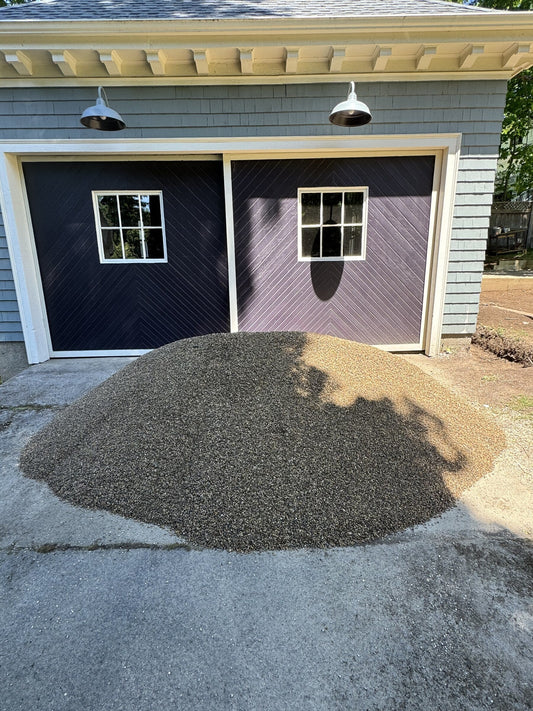
If you've ever bought a shed and then stared at your backyard wondering what it's actually supposed to sit on, you're not alone. Concrete pad? Pressure-treated skids on grass? Pavers? Just… dirt? We get this question a lot, and the answer most pros land on for a residential shed is the one this Malden homeowner picked: a compacted gravel pad built out of Dense Pack. We pulled up to a property in Malden, MA today with 3 cubic yards of Dense Pack for exactly that kind of build — a DIY shed install going in the backyard, and the homeowner wanted the foundation done right the first time.
Here's the casual rundown on why this material works, how to install it, and the questions everyone asks us before they order.
What's Dense Pack, in plain English
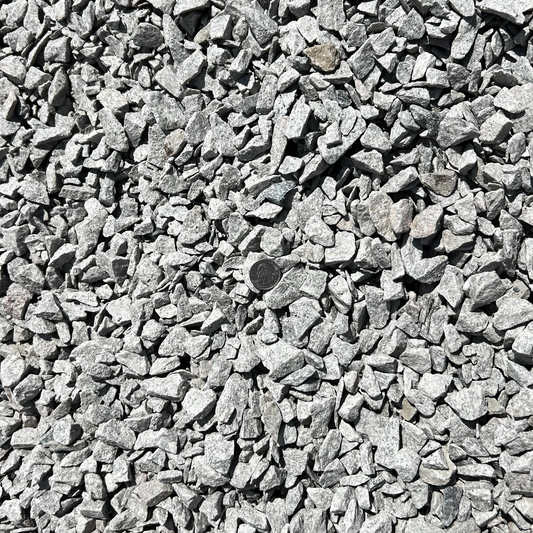
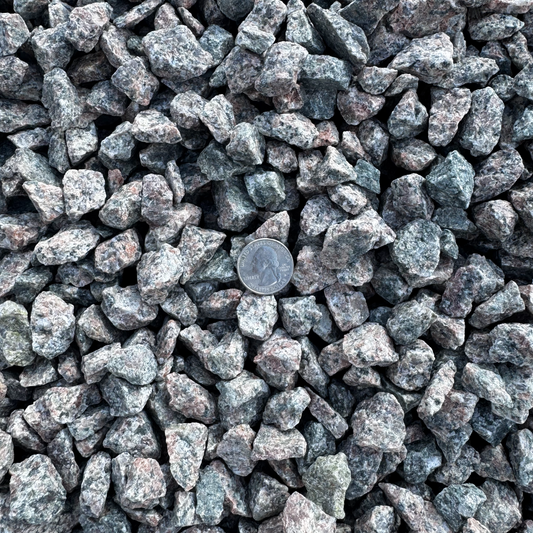
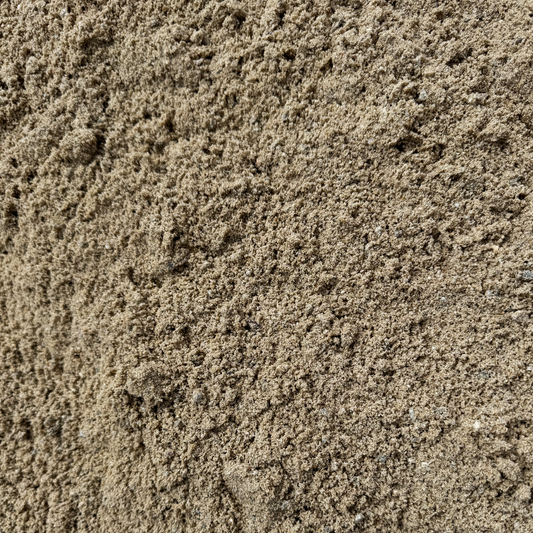
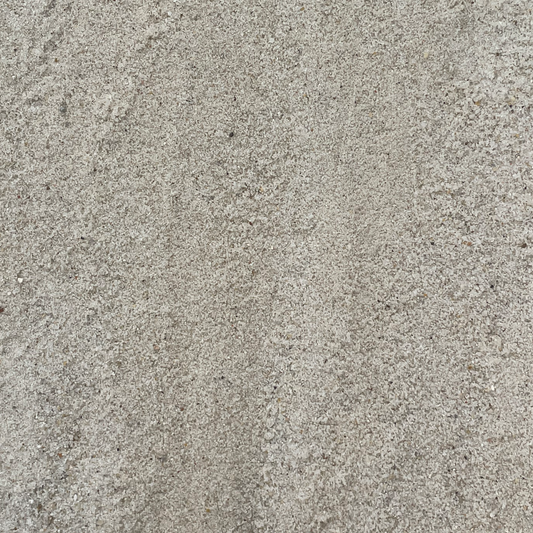
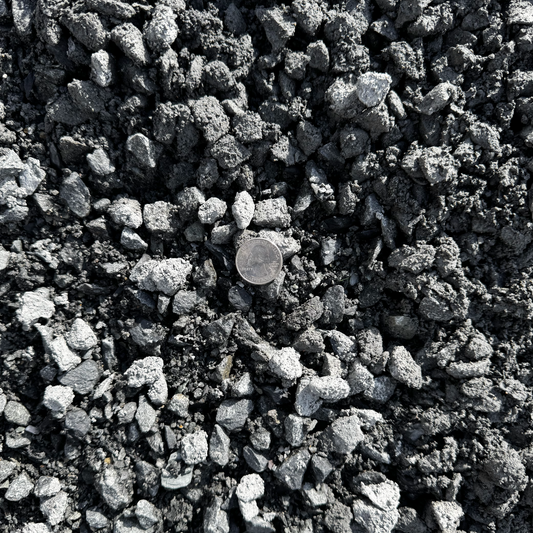
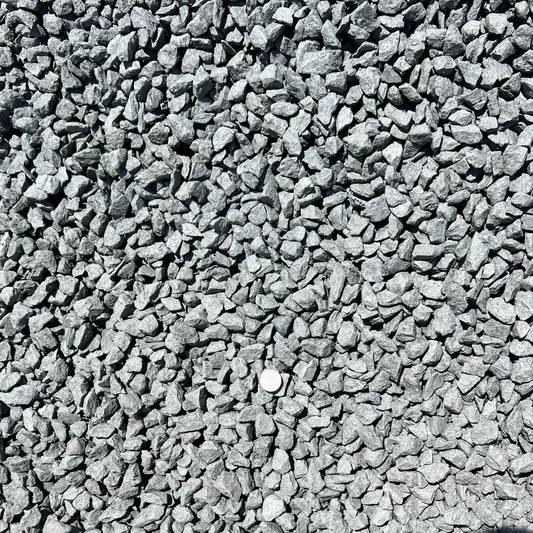
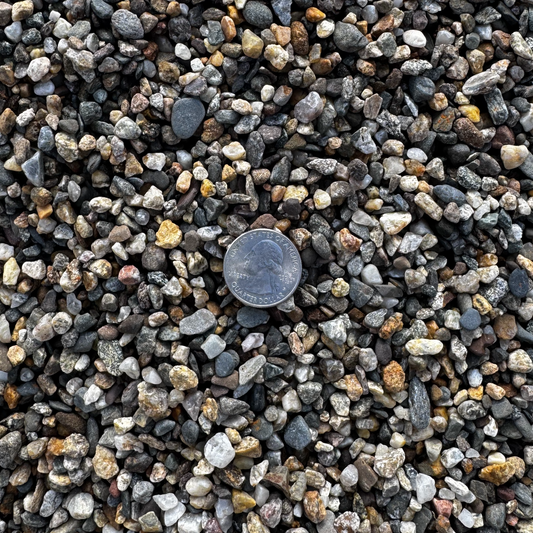
Dense Pack is crushed gravel that includes the small "fines" (rock dust mixed in with the larger stones). The fines are what make it special. When you spread it out and compact it — either with a hand tamper or a rental plate compactor — the fines lock between the bigger stones and the whole thing turns into a rock-solid surface that drains well, doesn't heave with frost, and doesn't shift under load.
You can walk on it like a sidewalk. You can park a riding mower on it. And critically for the Malden project: you can drop a shed on it and trust that the shed will still be level five years from now.
Why gravel beats other shed foundations for most backyard builds
The three real options for a residential shed pad are concrete, gravel, or skids on bare ground. Quick honest take on each:
- Concrete pad. Strongest. Most expensive. Permits and inspections in most towns. Cracks when the ground heaves in Massachusetts winters if it's not poured deep with proper rebar. Overkill for a 10×12 storage shed.
- Pressure-treated skids on bare ground. Cheapest. Worst for the shed long-term — moisture wicks up, the skids rot, the shed settles unevenly, and a few seasons in the door doesn't close right.
- Compacted gravel pad (Dense Pack). Sweet spot. Affordable, fast to install, drains away water that would otherwise rot the shed floor, doesn't heave like concrete, and gives a level surface you can drop pre-built shed skids onto. This is what shed-delivery companies almost always ask for when they bring the shed to your driveway.
Most of our DIY shed builds in Malden, Medford, Everett, Melrose, and the surrounding inner-Middlesex towns go with the gravel pad option for those reasons.
How to actually install a gravel shed pad
The shed-pad install is one of the most beginner-friendly DIY foundation jobs you can do. Rough sequence:
- Mark the footprint — typically 1–2 feet larger on each side than the shed itself, so water runs off the pad instead of seeping under the shed.
- Excavate 4–6" of topsoil within the marked area. You want a clean, flat subgrade.
- Tamp the subgrade — even a hand tamper is fine for a residential shed; rent a small plate compactor if you want the most solid base.
- Optional landscape fabric over the subgrade to keep weeds from pushing up.
- Optional pressure-treated frame around the perimeter to hold the gravel in (4×4 or 6×6 PT, staked from the outside). Most pros do this; it's not strictly required.
- Fill with Dense Pack in two lifts — half the depth, compact, then the other half, compact again. Final surface should be about 4" thick after compaction.
- Level the top with a long straightedge across the frame, then drop the shed.
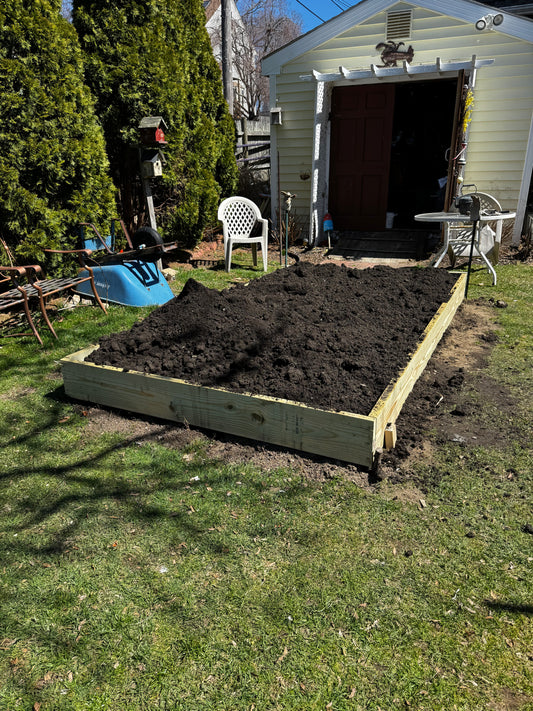
That's a one-weekend DIY job for most residential sheds. The Malden homeowner above is running the same sequence on their build this weekend.
Coverage math: how much Dense Pack you actually need
The honest numbers:
- 1 cubic yard of Dense Pack covers ~108 sq ft at 3" depth, 81 sq ft at 4" (the typical compacted-shed-pad spec), or 54 sq ft at 6".
-
Typical residential shed sizes and their gravel pad math at 4" compacted depth:
- 8×10 shed (80 sq ft) → ~1 cubic yard (with margin around the perimeter)
- 10×12 shed (120 sq ft) → ~1.5 to 2 cubic yards
- 10×16 shed (160 sq ft) → ~2 to 2.5 cubic yards
- 12×16 shed (192 sq ft) → ~2.5 to 3 cubic yards
- The Malden customer's 3 cubic yards fits a 12×16 or 12×20 shed nicely, with extra material for the perimeter feather and the inevitable "oops we need a bit more" patches.
- Dense Pack settles ~10–15% during compaction, so order a touch more than the bare math suggests. We'd rather you have a small surplus than be a wheelbarrow short.
Why this works in Malden and across inner-Middlesex
Malden (02148) sits in a stretch of inner-Middlesex County where backyard sheds are practically required equipment — the lots aren't huge, the houses don't have spacious garages, and homeowners need a place for the snowblower, the mower, the patio chairs in winter, and the kids' bikes year-round. The neighborhoods around Maplewood, Linden, Edgeworth, Faulkner, Bellrock, and West End are full of yards exactly suited for a 10×12 or 12×16 shed install.
We deliver Dense Pack and other foundation materials across Malden and the surrounding inner-Middlesex / Boston-side towns — Everett, Medford, Melrose, Stoneham, Wakefield, Saugus, Revere, Winthrop, Chelsea, Somerville, Cambridge, Arlington, Belmont, Watertown, Charlestown, East Boston. If you're running a shed install, a paver patio project, a driveway repair, or any other foundation-base job in this corridor, we're already in your neighborhood on regular delivery days.
FAQ — the questions everyone Googles before ordering
What's the best foundation for a shed?
For most residential sheds (8×10 up to about 12×16), a compacted Dense Pack gravel pad is the best balance of cost, performance, and DIY-friendliness. Concrete is stronger but expensive and unnecessary for typical storage sheds. Bare-ground skids are tempting but lead to rot and settling within a few seasons.
Can I use Dense Pack as a shed foundation?
Yes — it's specifically designed for this kind of compacted-base application. The crushed gravel locks with the fines into a stable, level, well-draining surface that supports the shed's weight evenly and won't shift seasonally. Shed-delivery companies almost always specify a gravel pad in their install requirements.
How much Dense Pack do I need for a 10×10 shed?
About 1 cubic yard of Dense Pack covers a 10×10 shed pad at the typical 4" compacted depth with a small margin around the perimeter. If you're going for a larger pad (12×12 to give the shed an apron), plan on 1.5 yards.
How much Dense Pack do I need for a 10×12 shed?
1.5 to 2 cubic yards of Dense Pack covers a 10×12 shed pad at 4" compacted depth. The Malden delivery in this post was 3 cubic yards for a larger shed — that order size fits a 12×16 or 12×20 build with margin.
Do I need to compact the gravel?
Yes — uncompacted Dense Pack will settle unevenly under the shed and the surface won't stay level. A hand tamper works for small pads (8×10 or smaller); for anything larger, rent a plate compactor for a half-day. Compact in two lifts: half the depth, tamp, then the rest, tamp again.
Do I need to dig down before laying Dense Pack?
For most shed pads, yes — excavate 4–6" of topsoil and any soft material so the gravel sits on a firm subgrade. If you're putting Dense Pack right on top of grass or soft soil, the pad will settle and your shed will eventually tilt.
Where can I buy Dense Pack in Malden, MA?
We deliver Dense Pack directly to Malden and the surrounding inner-Middlesex County corridor by the cubic yard. Order online and we'll bring it to your driveway, or text us with your project dimensions if you want help sizing the right amount.
What's the difference between Dense Pack and regular gravel?
Regular crushed stone (like ¾" stone or pea stone) doesn't include the fine rock dust, so it stays loose and rolly — great for drainage layers, drainage trenches, or under pavers as a base layer, but not for a surface you want to walk or stand on. Dense Pack includes the fines, which is what lets it compact into a firm, level surface.
How delivery works
We deliver Dense Pack by the cubic yard across the inner-Middlesex / Greater Boston / North Shore corridor. Per truck capacity, Dense Pack ships at up to 6 cubic yards per truck, so most shed-pad orders (1–3 yards) ship in a single delivery. Drop spot is the homeowner's call — driveway is standard, side-yard or backyard placement available where the truck can safely reach.
Ready to build a shed pad?
Whether you're putting a 10×12 shed in Malden, a fire pit pad in Medford, a patio base in Everett, or a driveway extension in Melrose, order Dense Pack online and we'll get it to your driveway. Not sure how much you need? Text us your shed dimensions and we'll walk through the math with you — getting the right amount the first time is always cheaper than running short mid-project.