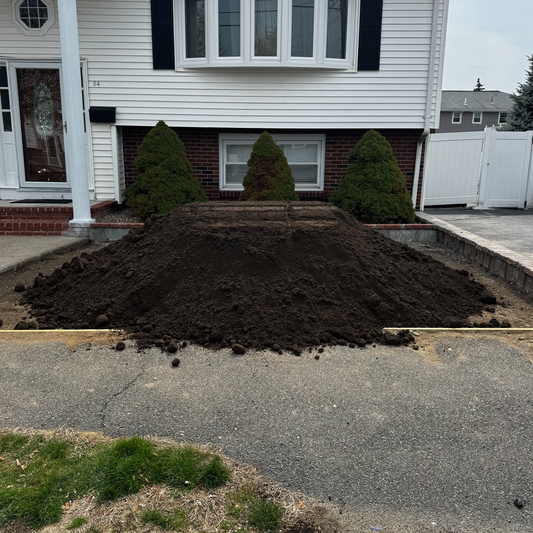
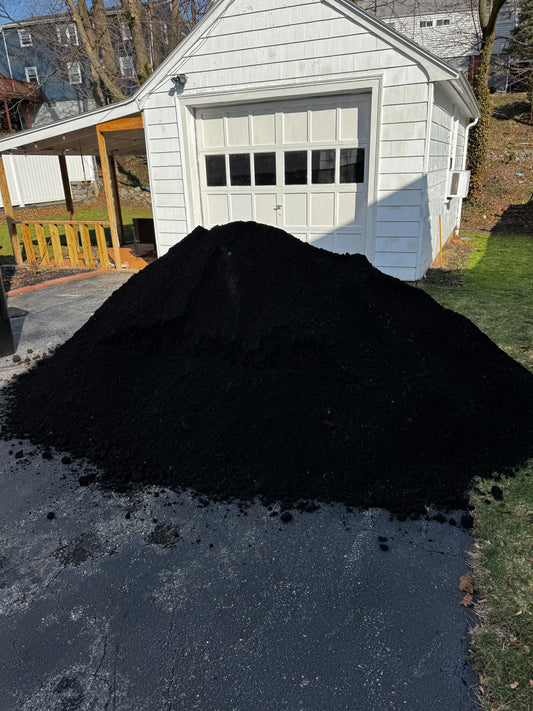
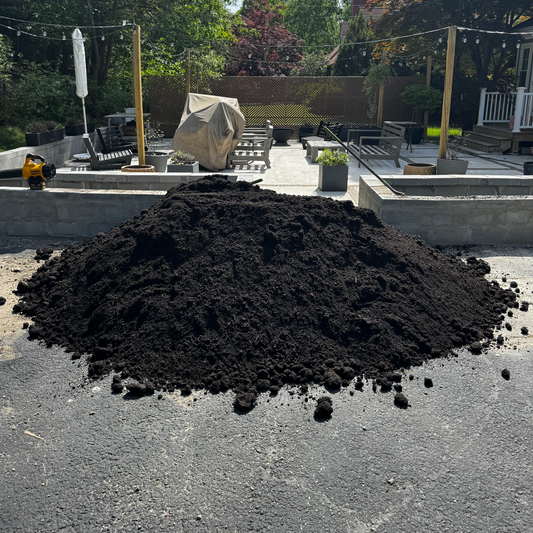
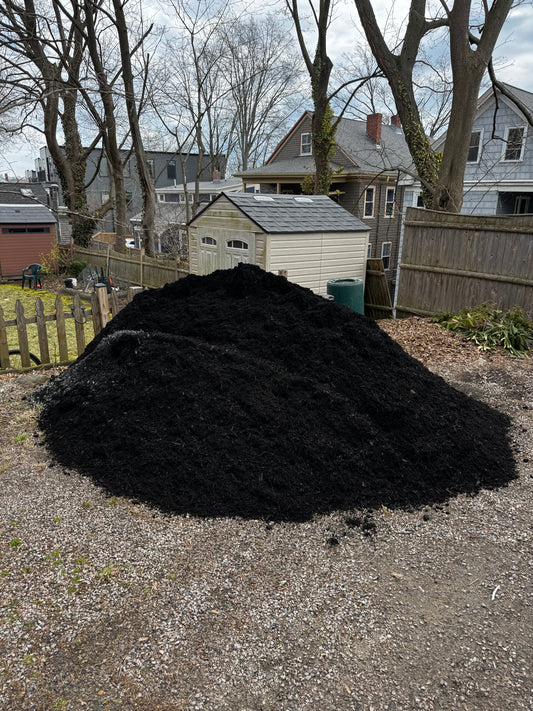
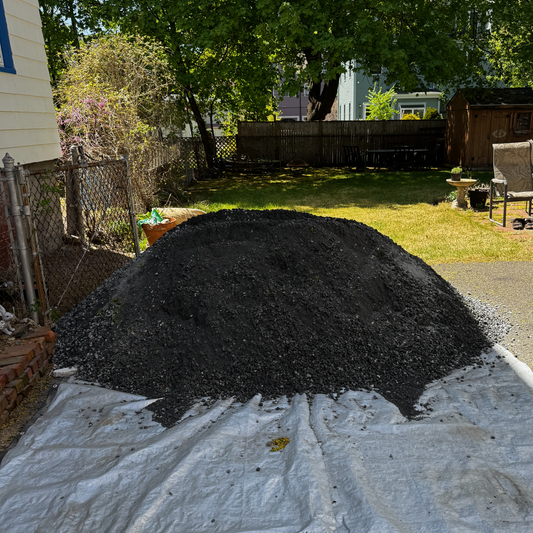
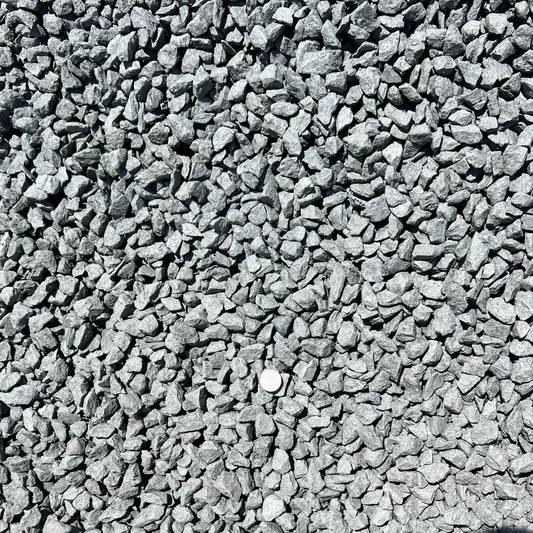
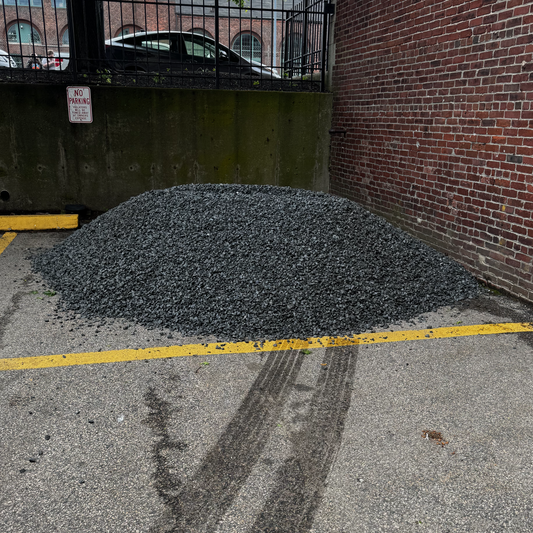
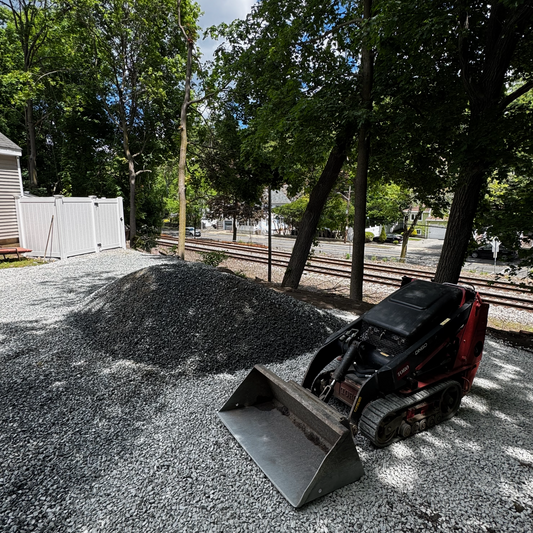
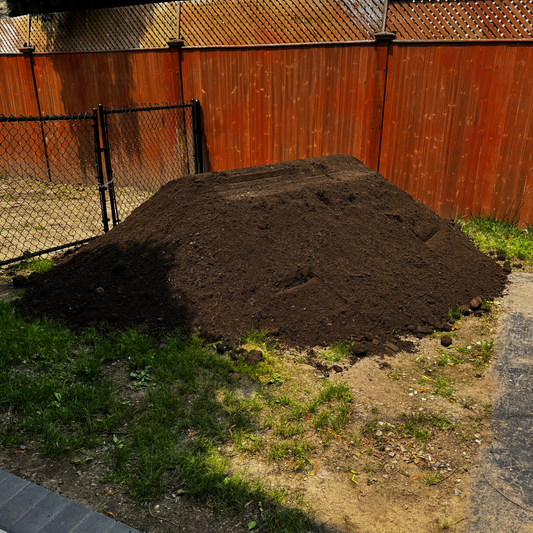
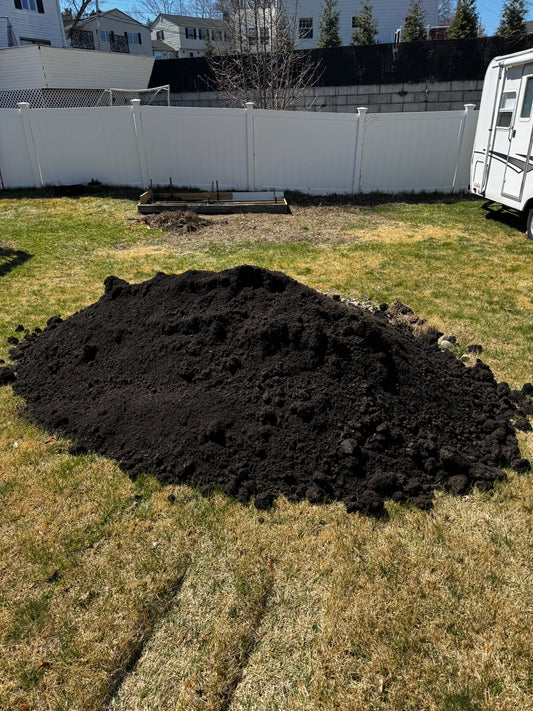
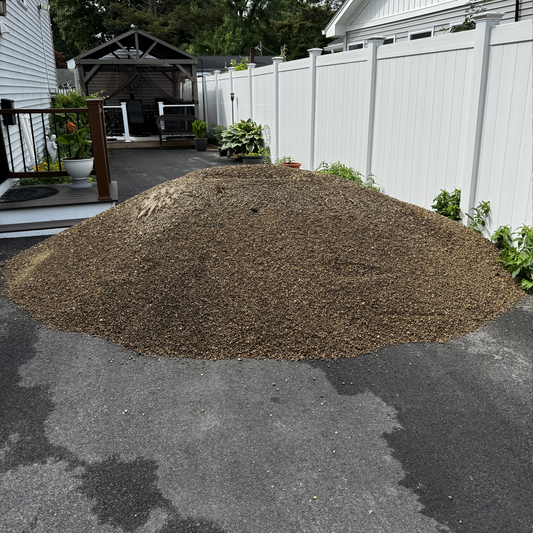
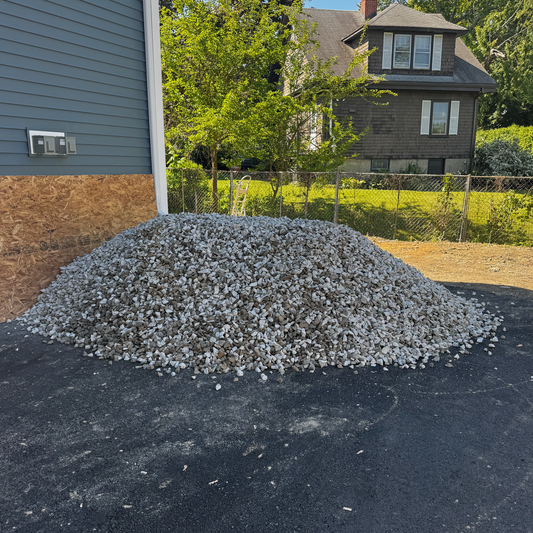
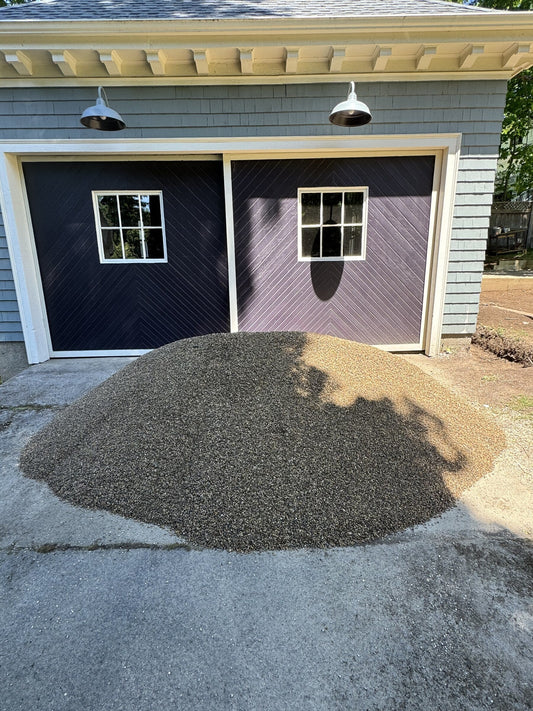
A deep raised vegetable garden does not need to be filled top-to-bottom with premium planting soil — and homeowners who try to do it that way often end up surprised at how much soil 6, 8, or 10 cubic yards of growing bed actually demands at full premium pricing. The smarter build splits the volume into layers, with the right material doing the right job at each depth. We pulled up to a property in Bellingham, MA today with 6 cubic yards of Common Borrow for exactly that kind of build — a series of long raised vegetable beds where the bottom layer is wood and branches (a classic hugelkultur foundation), and Common Borrow is going in next, with premium planting soil to come on top.
What Common Borrow actually is
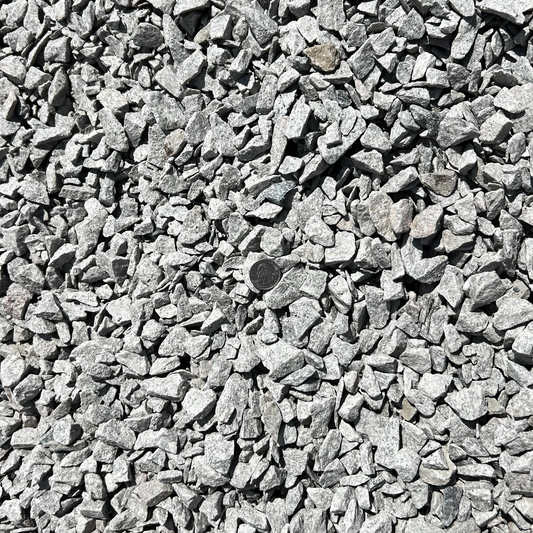
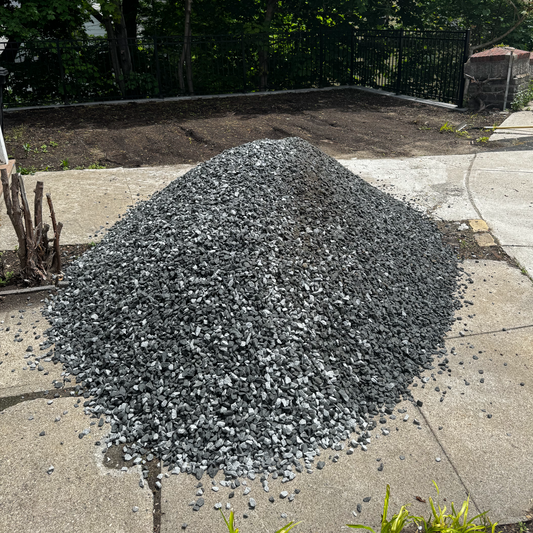
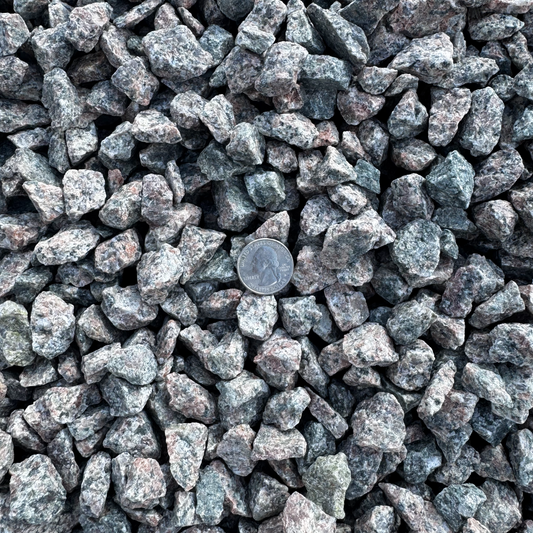
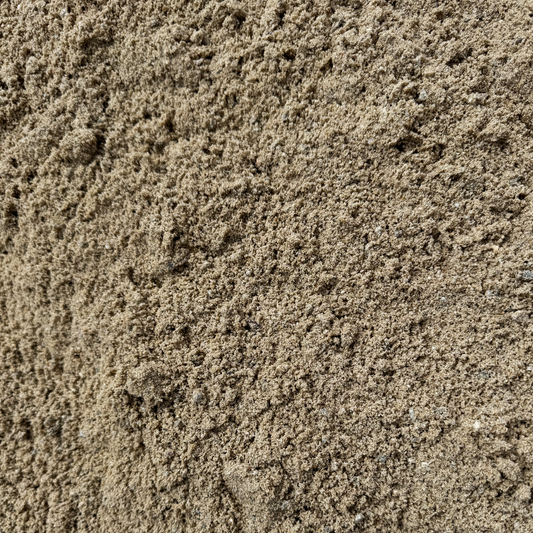
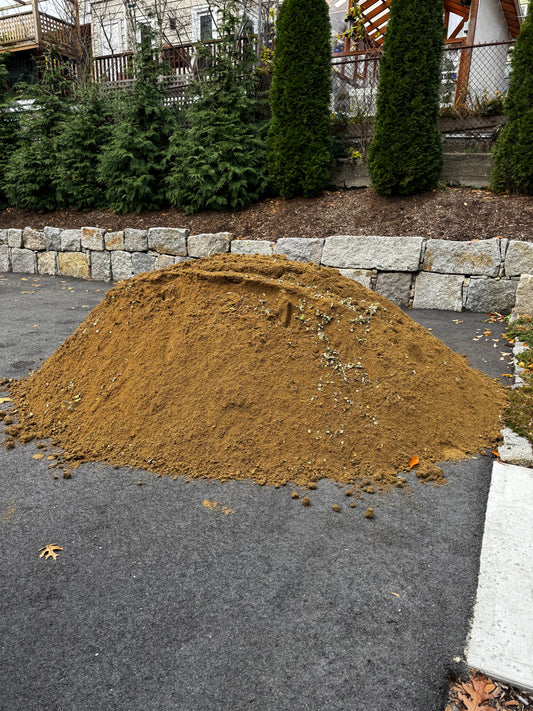
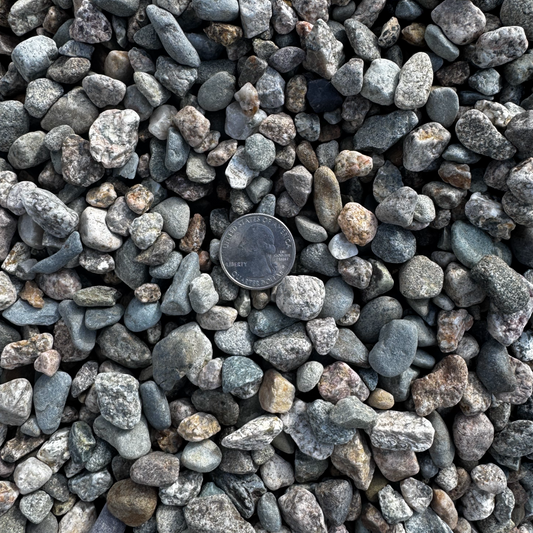
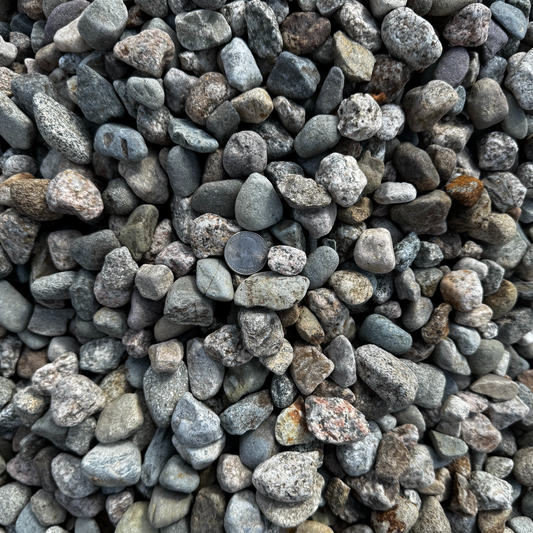
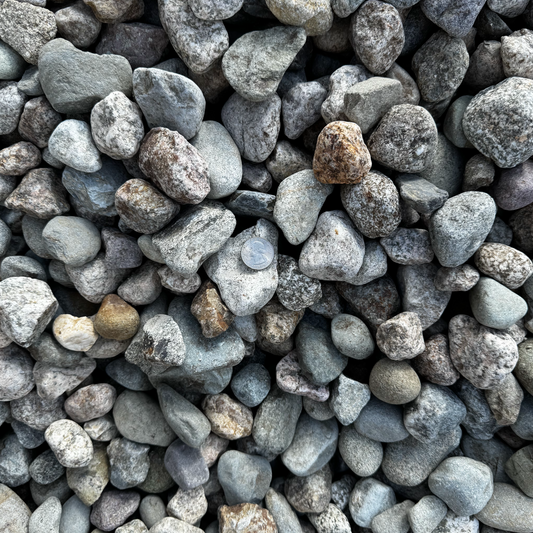
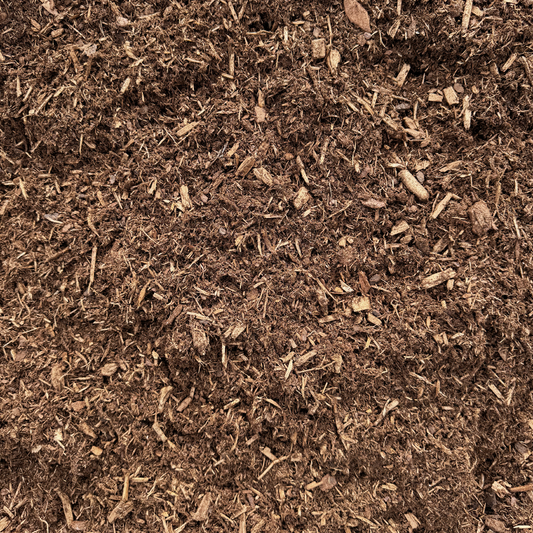
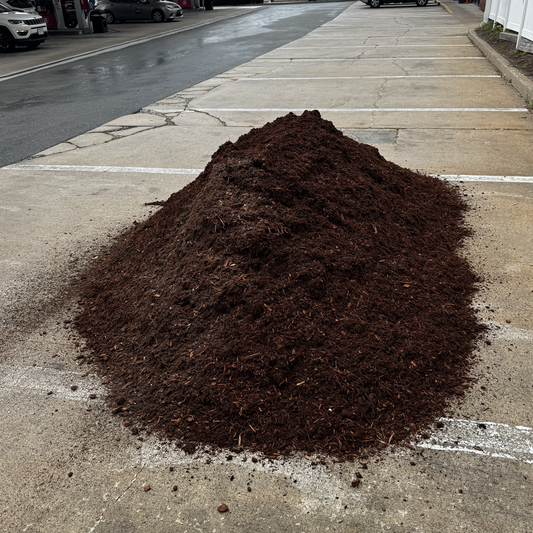
Common Borrow is bulk-grade fill material — clean enough to be free of debris and contamination, structurally consistent enough to compact and hold its shape under load, and economically priced because it isn't trying to be a planting medium. It's the right material for grading, leveling, building up subgrades under driveways and patios, filling deep holes, and — relevant to today's project — anchoring the foundation layer of a deep raised garden bed.
It is NOT a planting soil. Roots that try to grow directly in Common Borrow will struggle. That's not a flaw of the product — that's a feature of being a structural fill. The whole point is that Common Borrow does the structural-fill job that planting soils are wrong for, freeing the budget for actual planting soil where it belongs.

The Bellingham build — a deep raised bed done right
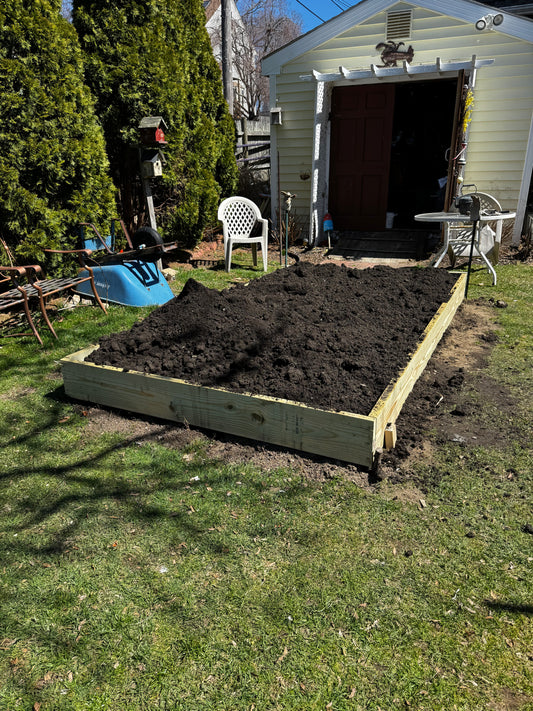
The photo above shows the project the 6 yards of Common Borrow is going into: three long corrugated metal raised beds, each at least 18" deep, partially filled at the bottom with wood logs, branches, and chopped organic matter. That's a hugelkultur foundation — a German-rooted raised-bed technique where coarse woody material at the bottom of the bed slowly breaks down over years, releasing nutrients, holding moisture like a sponge, and feeding the soil community above it.
What hugelkultur DOESN'T do well on its own is fill the rest of the bed efficiently. The wood layer settles fast, leaves big air gaps, and needs something to anchor it down and bridge the gap to the planting layer above. That's where Common Borrow comes in — six yards spread on top of the wood, compacted into the gaps, finishing the structural bulk of the bed up to about the midpoint. Then a final layer of premium planting soil (the kind we deliver as Loam or Horticultural Soil) goes on top — that's where the vegetables actually root.
End result: a deep bed where every layer is doing the job it's optimized for, at a fraction of the cost of filling the same volume with premium mix top-to-bottom.
The three-layer raised vegetable garden, top to bottom
For homeowners planning a similar build, the layered approach typically goes:
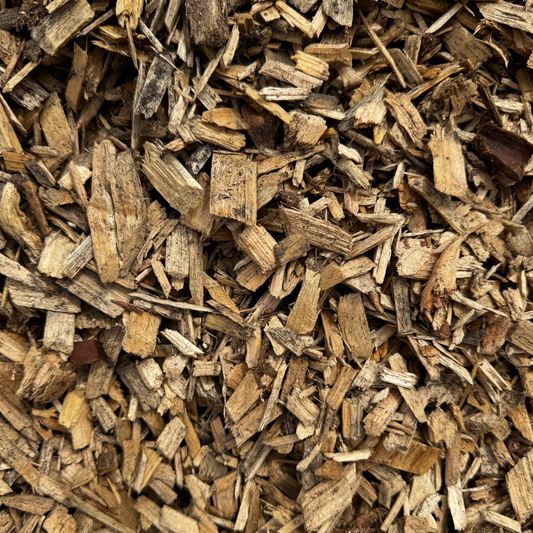
- Bottom 4–8" — woody hugelkultur fill (logs, branches, leaf litter, chopped organic matter). Decomposes slowly over years, releases nutrients, retains moisture. Free if you have a yard with tree work to recycle, or sourceable for cheap.
- Middle 6–10" — Common Borrow (or similar clean structural fill). Compacts into the wood layer, fills volume efficiently, doesn't waste planting-grade soil on depth where roots don't reach.
- Top 8–12" — premium planting soil (Loam, Horticultural Soil, or a vegetable-garden-specific blend). This is where the vegetables actually grow. Worth investing in quality here because every plant in the bed lives in this layer.
For an 18" deep bed (typical for corrugated metal raised beds), that's roughly 25% wood / 35% Common Borrow / 40% planting soil. The Bellingham customer's project is dialing in those ratios across multiple beds, and 6 yards of Common Borrow is the right call for the structural-fill middle layer.
Coverage math: how much you actually need
The honest numbers:
- 1 cubic yard of Common Borrow covers ~108 square feet at 3" depth, 54 sq ft at 6", 36 sq ft at 9", or 27 sq ft at 12".
- For a typical 4'×8' bed (32 sq ft) at 6" of Common Borrow as the middle layer, that's about 0.6 yards per bed.
- For multiple beds, multiply accordingly. The Bellingham project — three long beds with about 200+ sq ft of total bed footprint at ~6–8" of Common Borrow each — fits a 6-yard delivery cleanly.
- For other Common Borrow uses (grading, subbase under a patio, filling a low spot in the yard, building up a driveway), 1 cubic yard fills a 3'×3'×3' hole with a small margin.
Why this matters in Bellingham and across the Blackstone Valley
Bellingham yards run on the larger end of the suburban spectrum — established single-family properties with serious backyard space, the kind of lots that lend themselves to multi-bed raised vegetable gardens and full-on backyard food production. The town's location along the 495/Rhode Island border corridor (01019 / 02019) puts homeowners within range of the kind of yard work that benefits from bulk material deliveries, and the rocky native soils of the Blackstone Valley make in-ground vegetable gardens frustrating — exactly why raised beds dominate the local style.
We see the same pattern across the surrounding Blackstone Valley and inner-Norfolk County towns — Mendon, Milford, Hopedale, Franklin, Wrentham, Blackstone, Uxbridge, Medway, Plainville, Norfolk, Holliston, Millis, Medfield, Walpole, Foxborough, and the close-in suburban edges of Sherborn, Dover, Westwood, and Norwood. If you're building or expanding a raised vegetable garden anywhere in the corridor, Common Borrow does the structural-fill job at every one of these projects, and we're already in your neighborhood on regular delivery days.
How delivery works
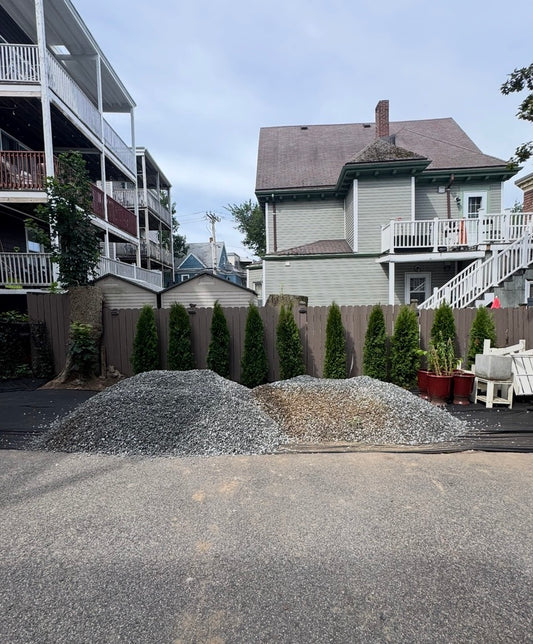
We deliver Common Borrow by the cubic yard across the Blackstone Valley, Norfolk County, and Greater Boston. Per truck capacity, it ships at up to 6 cubic yards per truck — so a 6-yard order like the Bellingham build is a single delivery. Drop spot is your call: driveway is standard, backyard placement available where the property allows (especially useful for raised-garden projects to save wheelbarrow runs across the lawn).
Ready to build a layered raised garden?
Whether you're starting a multi-bed vegetable garden in Bellingham, building a single deep bed in Franklin, or replacing the front-of-yard ornamental beds with hugelkultur veggie beds in Wrentham, order Common Borrow online for the structural fill layer, and pair it with Loam or Horticultural Soil for the top growing layer. Not sure how to split the volume between the layers? Text us your bed dimensions and we'll walk through the layered math with you — picking the right material for each depth is what makes the whole build work.