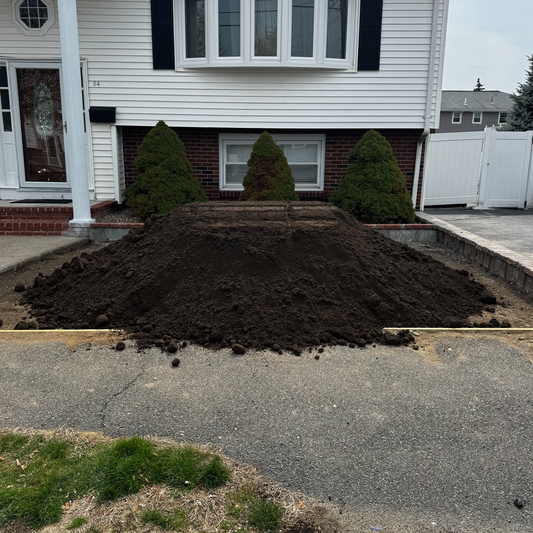
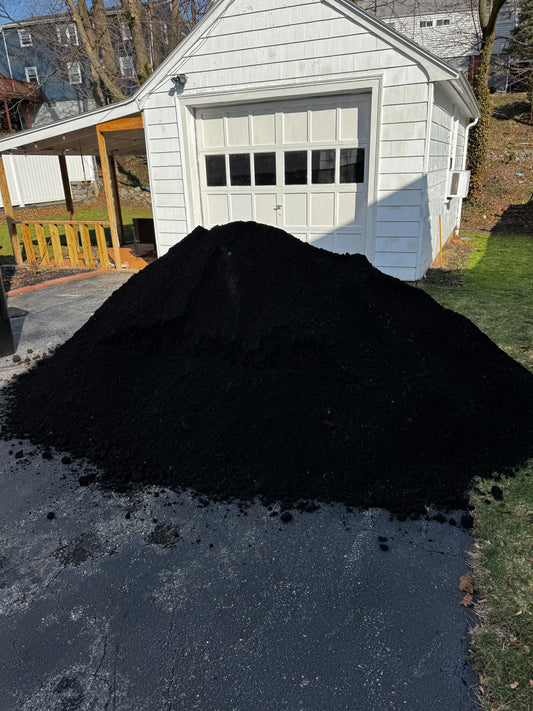
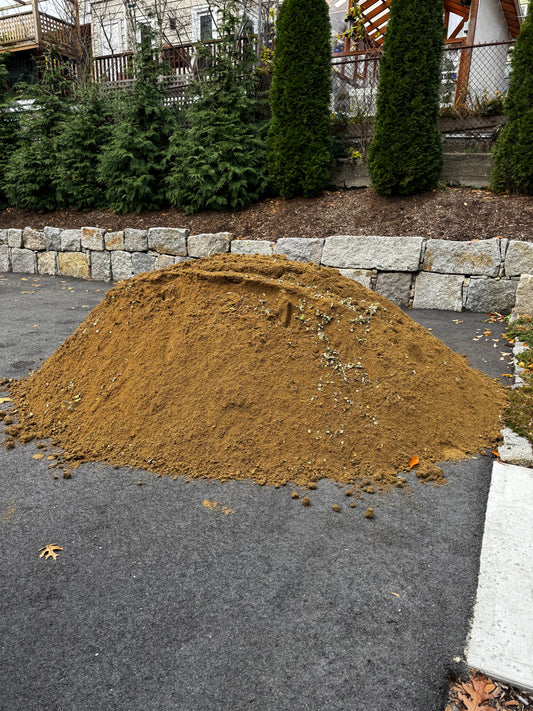
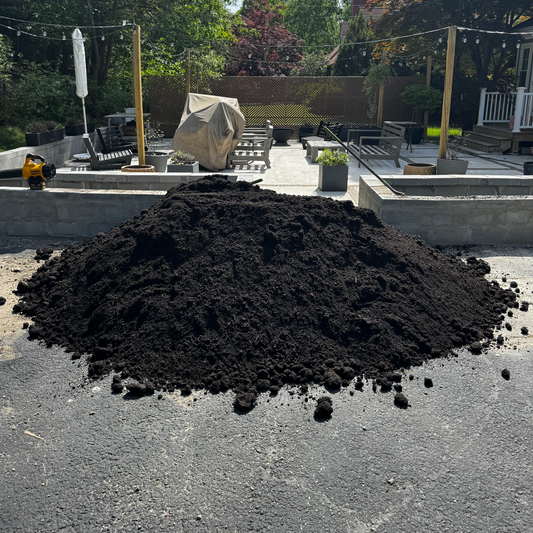
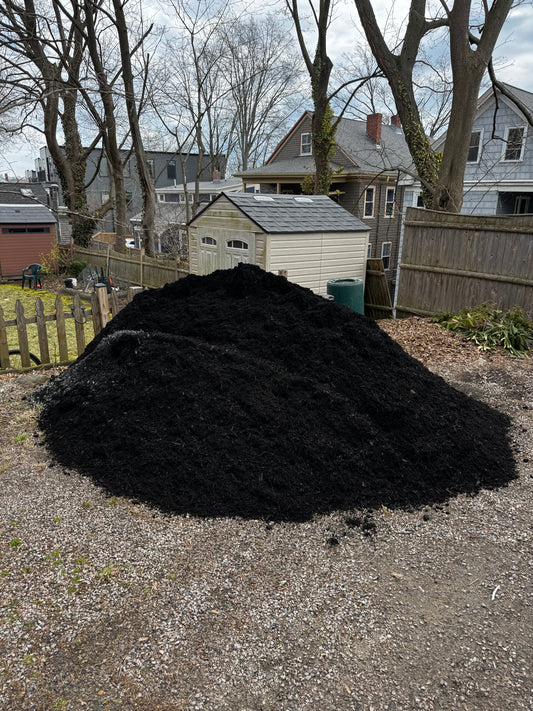
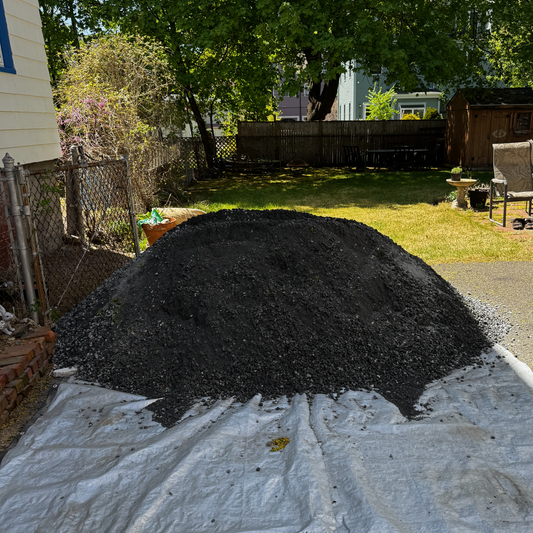
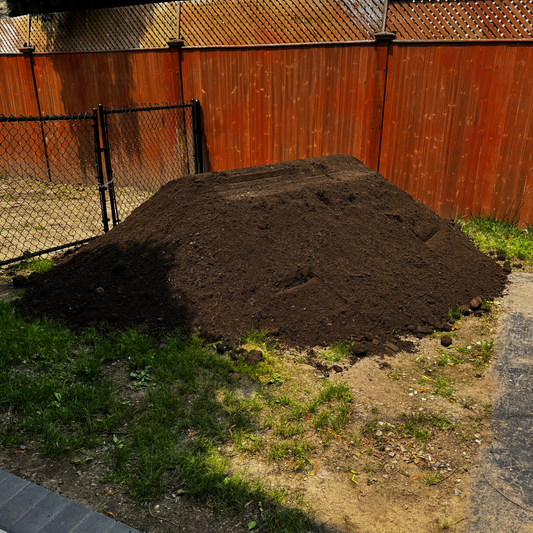
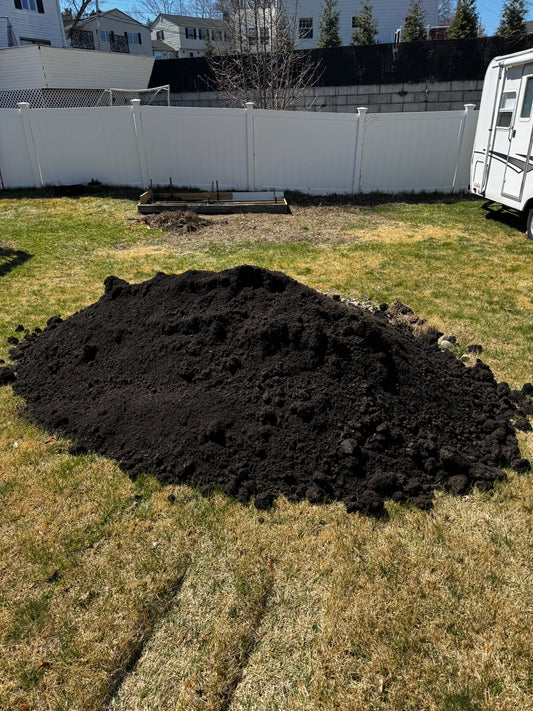
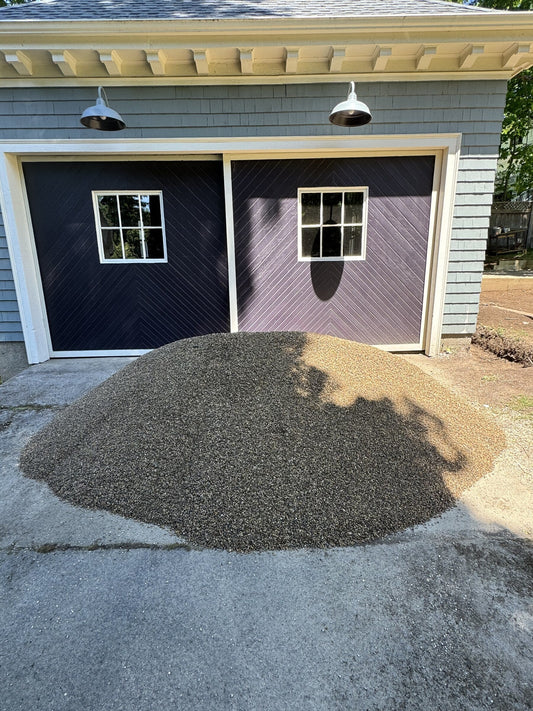
Tree removal is one of those jobs where the actual cutting is the easy part. The truck part — the crane, the bucket, the chipper, the multi-axle dump that hauls the wood away — is where lawns go to die. We pulled up to a property in Quincy, MA this week with 4 cubic yards of Loam for exactly that reason. The homeowner had taken down a mature maple a few weeks earlier; the tree work itself was clean, but the trucks left a pair of deep tire ruts running across the front lawn that no amount of raking and watering was going to fix on their own. Loam was the fix.
Why heavy trucks rut a lawn so easily
It's not the weight by itself — it's the weight concentrated on narrow tire footprints, especially when the ground is even slightly damp. A loaded tree-service dump or crane truck can hit 50,000+ pounds, and once the rear tires are sitting on wet sod, the soil compacts and squishes sideways under them. What you're left with is two things: compaction below the surface (where roots can no longer breathe or push through) and a physical depression that holds water and refuses to grow grass.
Raking the surface won't fix either problem. The compacted layer needs to be broken up, and the depression needs to be filled with material that grass roots can actually grow into. That's where loam comes in.
Why loam (and not just any dirt)
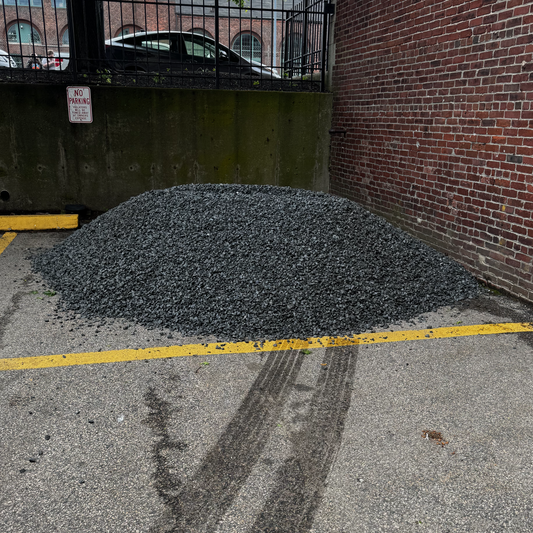
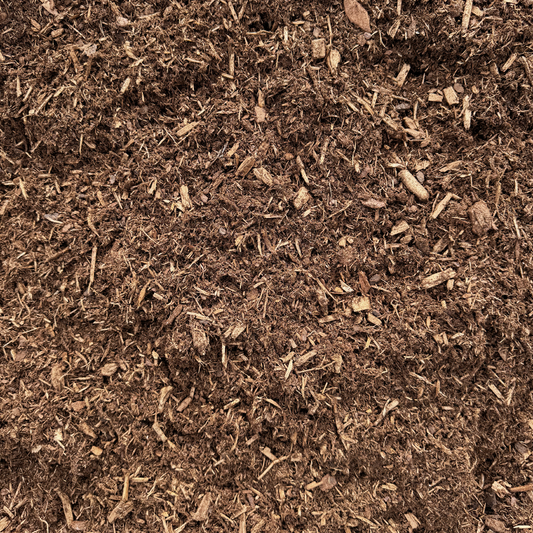
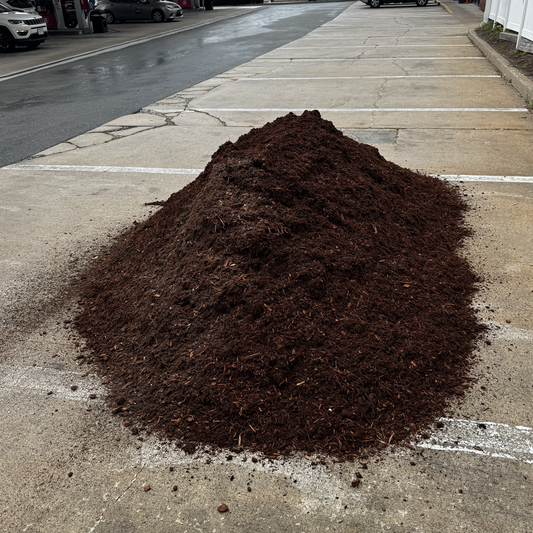
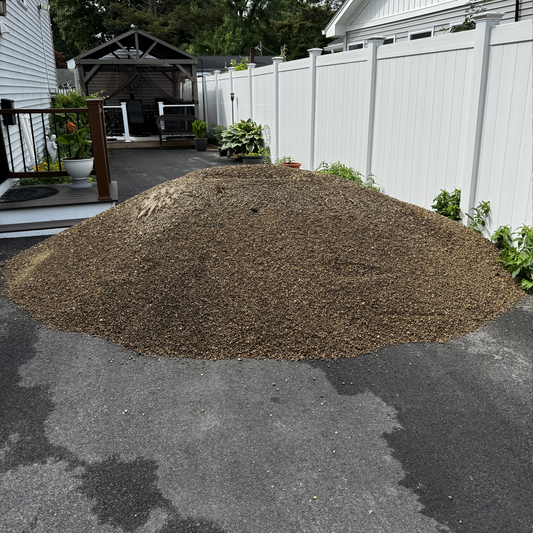
This is where the three products people often confuse — Loam, Topsoil, and Borrow — actually matter:
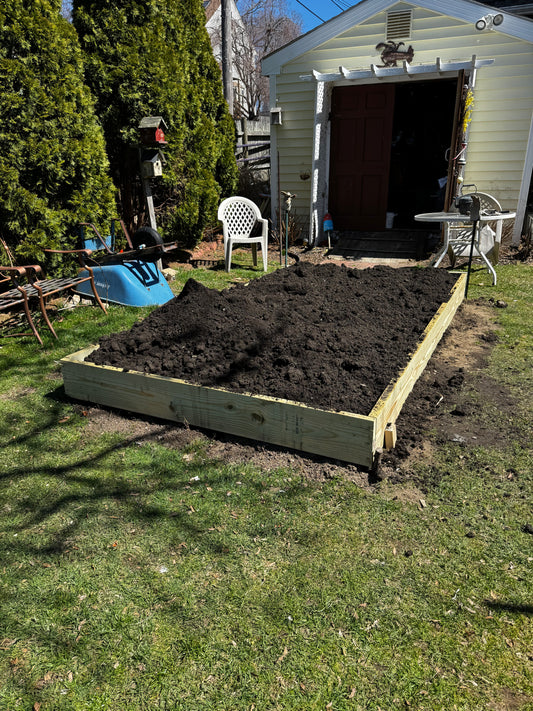
- Loam is a balanced soil blend with sand, silt, clay, and organic matter that's been screened to remove rocks and debris. It's the right call for anywhere grass needs to grow back well — lawn install, lawn repair, garden beds, and tire-rut fills like this one. The Quincy homeowner above got loam because the goal was a flat, green, healthy lawn — not just a cosmetic fill.
- Topsoil is a more general term for screened surface-layer soil. It's perfectly fine for most lawn and garden work, but tends to be lower in organic matter than loam and less consistently blended.
- Borrow is fill material — it's used for grading, leveling subgrades, building up bases under driveways and patios, and filling deep holes where the surface material doesn't need to grow anything. Borrow is the cheapest of the three, but it's the wrong call for any spot that's going to be a lawn or garden in its final state.
For a tire-rut repair on a lawn that's going to look like a lawn afterward, loam is the right answer every time. Borrow underneath it would have worked for the deepest parts of the rut to keep cost down on a big job, but for a 4-yard residential fix, all loam is cleaner and faster.
How a tire-rut repair actually goes
The repair sequence we walked through with the Quincy homeowner is the same one we recommend for any post-construction or post-tree-work lawn fix:
- Wait for the ground to dry out. Don't try to repair ruts when the soil is still saturated. You'll just make new ruts.
- Loosen the compacted layer. Run a tow-behind aerator or a hand fork through the rut and the area immediately around it. Going down 4–6" is fine. This is what gives roots and water somewhere to go.
- Fill the rut with loam, slightly overfilled — the loam will settle 10–15% in the first month. For deep ruts, fill in two passes, lightly tamping between them.
- Grade the surrounding lawn into the new fill so the rut blends into the rest of the lawn. Use a level rake. No hard edges.
- Seed and water. Late spring and early fall are ideal seeding windows around Quincy. If you're repairing in mid-summer, you can sod-patch the rut instead of seeding, which roots faster.
For the 4 cubic yards the Quincy customer ordered, that's enough loam for two ruts roughly 30 feet long, 24" wide, and 4–6" deep, with extra material to feather the edges and patch a few smaller spots near where the crane outriggers had set up. Plenty for the job.
Coverage math for ruts and lawn repair
The numbers most homeowners need:
- 1 cubic yard of loam covers roughly 108 sq ft at 3" depth, 54 sq ft at 6", or 36 sq ft at 9".
- A typical tire rut is 24" wide × 4" deep, so a 30-foot rut takes about 0.75 cy of loam. Two of those = roughly 1.5 cy. The Quincy 4-yard order included a generous overfill plus repair work at the truck staging spot.
- For a full lawn repair after major equipment damage — say, 500 sq ft of badly compacted, rutted, or churned-up turf — you'll want 5–10 yards depending on how deep you're going.
- For post-construction lawn restoration (a new build or major renovation), 6"+ depth of loam is standard. That's the layer the new sod or seed will actually live in.
Why this matters in Quincy and across Norfolk County
Quincy yards and the surrounding South Shore communities run the full spectrum — older single-family homes on Wollaston, Squantum, Houghs Neck, Merrymount, Adams Shore, West Quincy, the denser blocks closer to Quincy Center (02169) and North Quincy (02171), and the leafier streets up toward Quincy Point and Marina Bay (02170). The common thread: mature trees, established lawns, and not enough space to avoid your own driveway when a truck has to back in.
We see the same situation across the surrounding Norfolk County towns and inner suburbs — Milton, Braintree, Weymouth, Holbrook, Randolph, Canton, Stoughton, Dedham, Hingham, Cohasset, plus the Boston neighborhoods just north of Quincy like Dorchester and Mattapan. Anytime there's tree work, septic work, foundation work, or a new build, the lawn pays the price. Loam puts it back together.
How delivery works
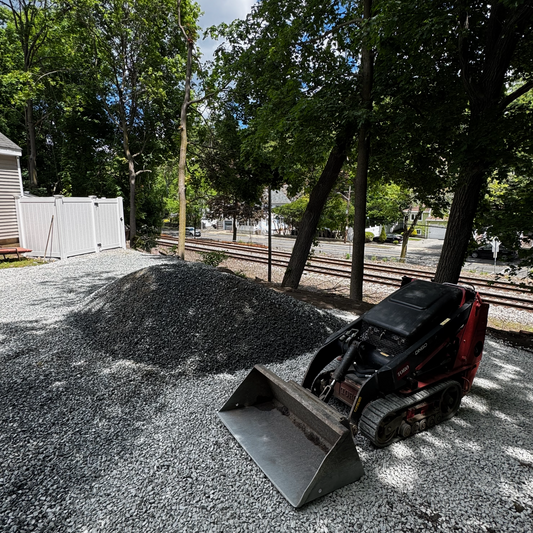
We deliver Loam, Topsoil, and Borrow by the cubic yard across the South Shore and the broader Boston metro. For Quincy and the inner South Shore towns we run regular delivery days; trucks drop material wherever you direct on the driveway or yard, and you spread on your own schedule.
Per our truck capacity, loam ships at up to 6 cubic yards per truck — so a 4-yard order goes on a single truck, and larger jobs (8–12+ yards) ship across two trucks scheduled back-to-back.
Ready to fix a lawn?
Whether it's tire ruts from tree work in Quincy, post-construction grading in Braintree, lawn install in Milton, or garden bed prep in Hingham, order Loam, Topsoil, or Borrow online and we'll get it to you. Not sure which is the right material for your job? Text us and we'll walk through it — picking the right product the first time saves more money than ordering the wrong one and re-ordering.