Quick Answer
For a Brookline front walk that ages well: Pennsylvania bluestone (the timeless flag), Wessex pea stone (warm tan, classic gravel), Cape Cod pebbles (rounded grays), black river jack (modern accent), and Connecticut field stone (irregular, traditional). All five share a quiet palette that complements brownstone and clapboard. Skip bright reds, oranges, and the dyed white marble chips — they fight the architecture. Plan in February, install in May.
Why Brookline's Architecture Drives the Choice
Brookline front yards have to work with the architecture, not against it. The dominant looks across Coolidge Corner, Washington Square, Brookline Village, and Chestnut Hill are brick brownstones, painted clapboard, gray stone, and slate roofs. Decorative stone that fights those materials reads as cheap; stone that complements them reads as built-in.
The five picks below all share three traits: muted palette (grays, tans, browns, soft blacks), natural finish (no dyes, no engineered uniformity), and scale appropriate to the front-yard distance — usually 4'–12' from the sidewalk.
The Interlocking Concrete Pavement Institute (ICPI) is the industry reference on hardscape standards, including stone selection for residential walks. The Native Plant Trust carries useful regional-context guidance on plant-stone pairings appropriate to MA front yards.
#1 — Pennsylvania Bluestone (The Timeless Flag)
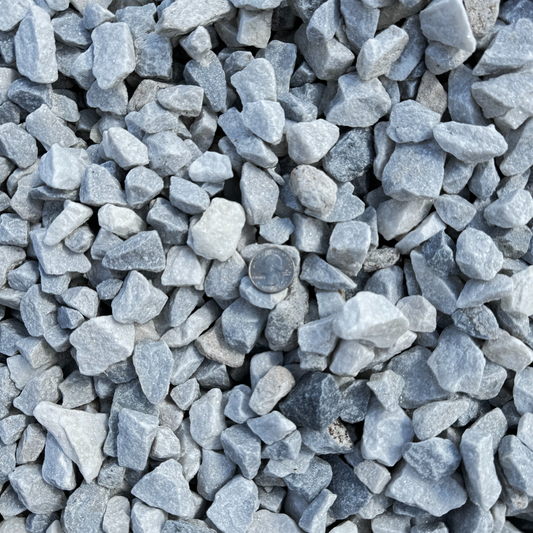
The look: Gray-blue with subtle warm and cool variation. Available in thermal finish (smooth, gridded, more formal) or natural cleft (textured, more organic). The classic Brookline front walk material.
Why it works: Bluestone reads as built-in to a Brookline brownstone or painted-clapboard front. The gray-blue picks up window trim and slate roof tones; the warm undercurrent picks up brick. It's the safest premium choice and the one Brookline homeowners almost never regret.
Cost: Premium tier — typically $22–$35/sq ft installed. The most expensive option of the five, but the longest lifespan (25–35 years with periodic joint refresh — see the Norfolk County hardscape durability Q&A for the full comparison).
Pair with: Boxwood, hydrangea, climbing hydrangea on a brownstone front. Browse the Ottr decorative stone collection for current bluestone options.
#2 — Wessex Pea Stone (Warm Tan Gravel, Classic)
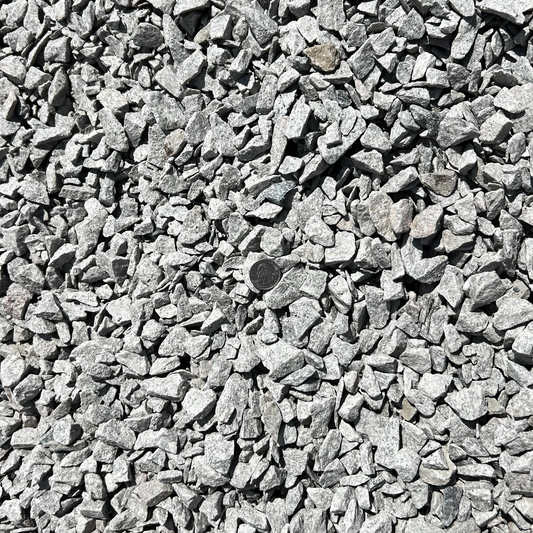
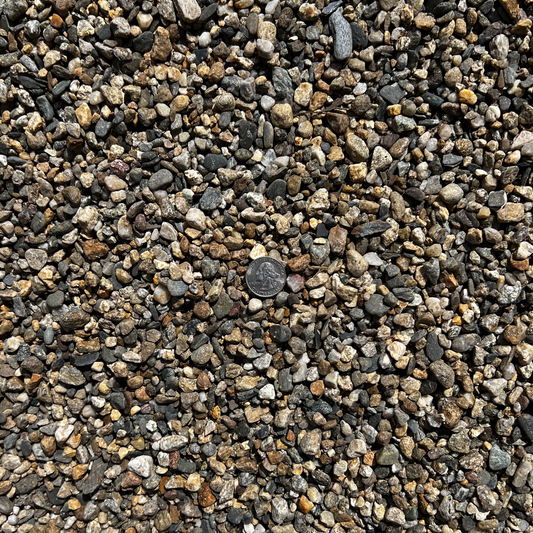
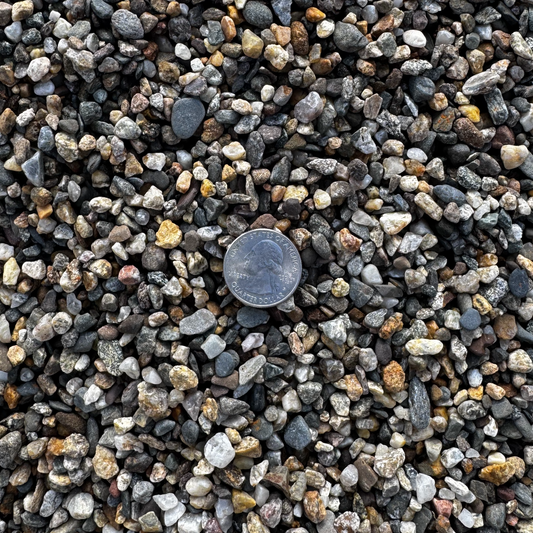
The look: Rounded ¼"–⅜" pebbles in a warm tan-to-buff palette. The classic Brookline gravel walk — used everywhere from Beaconsfield Road to the gardens around the Larz Anderson estate.
Why it works: Pea stone walks crunch underfoot in a way that signals "old garden." The warm tan complements brick beautifully and softens against painted clapboard. Easier on the eye than uniform gray gravel.
The catch: Pea stone migrates. Border the walk with steel edging or stone curbing or you'll be raking gravel out of the lawn forever. Plan for 2–3 inches depth over a compacted ¾" processed gravel base. (The base specs follow the same logic as a Westwood bluestone patio plan — gravel walks need real base, not just stone scattered on dirt.)
Cost: Mid-tier. Material is cheap; install is in the labor and edging.
Pair with: Lavender, catmint, low boxwood, ornamental grasses. Avoid groundcovers that run into the gravel — they fight maintenance.
#3 — Cape Cod Pebbles (Rounded Grays)
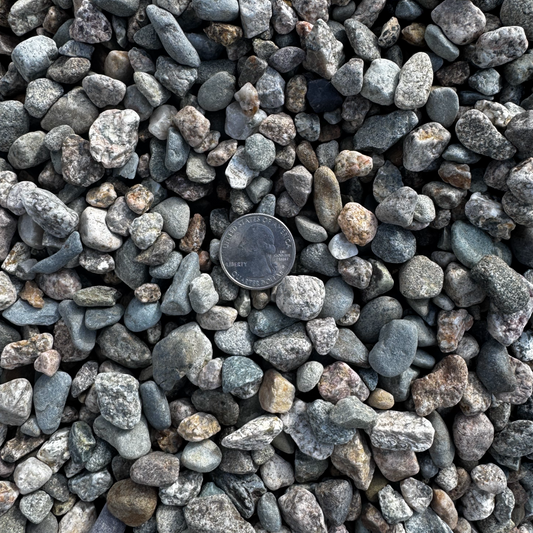
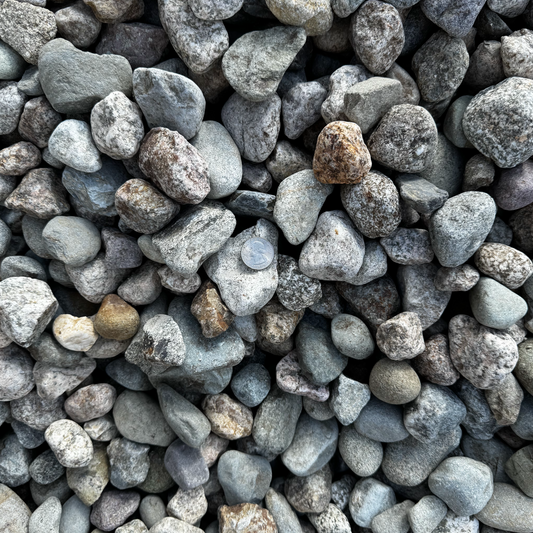
The look: Smooth, water-rounded pebbles in mixed soft grays — light, medium, and charcoal — sized roughly ½" to 1.5". The casual cousin to bluestone.
Why it works: The rounded shape and color variation read as "from the New England coast." Particularly strong on Cape-style and shingle-style Brookline homes — the architecture and the stone have the same vocabulary.
Best application: As an accent border alongside a primary walking surface (bluestone or pavers), or as a transition from walk to garden bed. Less ideal as the main walking surface — rounded pebbles roll underfoot.
Cost: Mid-tier. Comparable to pea stone per ton.
Pair with: Hosta, ferns, blue-flowering perennials (echoes the gray palette), low-growing junipers.
#4 — Black River Jack (Modern Accent)
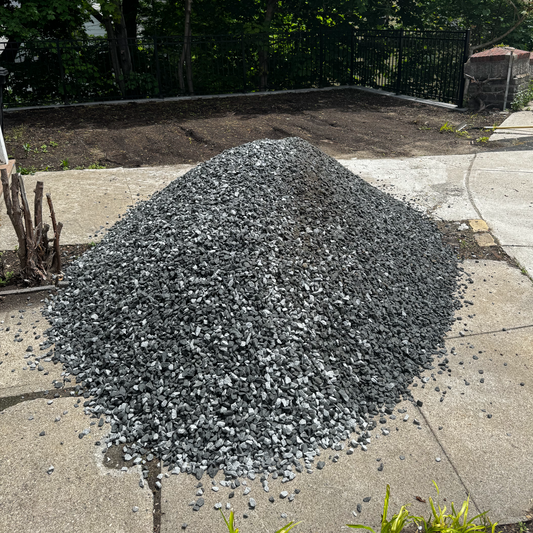
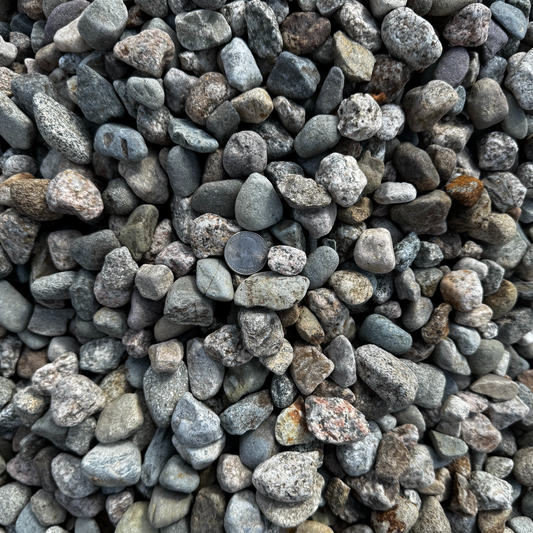
The look: Smooth, water-rounded river stones in deep charcoal-to-black tones, typically 1"–3" sized. Modern, clean, dramatic.
Why it works: Black river jack is the modern accent option for Brookline — works on contemporary renovations, modern infill homes, and architect-designed updates of older houses. Gives a clean reset against gray and white modern palettes.
The risk: Easy to overdo. Use as a border, transition strip, or contained feature — not as the entire front walk. A whole walk in black river jack reads heavy and somber against most Brookline architecture.
Cost: Mid-to-premium tier. The deep color is a sourcing premium.
Pair with: Modern grasses (feather reed grass, blue oat grass), white-flowering perennials for high contrast, structured boxwood. Avoid traditional cottage-garden plant palettes — they fight the modern look.
For a related pairing on coastal MA properties, see 5 stones for a Marshfield walking path that won't wash out — black river jack performs well in coastal high-water conditions.
#5 — Connecticut Field Stone (Irregular, Traditional)
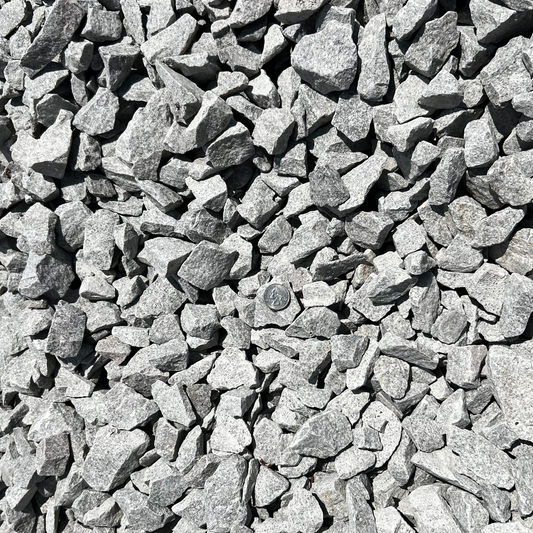
The look: Irregular, fieldstone-shaped flags in mixed natural grays, browns, and rusts. Looks like it was pulled out of a New England stone wall — because the source is essentially the same.
Why it works: The irregular shape and earthy palette feel handmade and historic. Works exceptionally well on older Brookline homes — the 1880s–1920s stock that still dominates many neighborhoods.
Install consideration: Each piece is unique, so the install is more of a puzzle than a grid. A skilled mason charges for the time. DIY-installable but slower than bluestone.
Cost: Premium tier when professionally installed; mid-tier if DIY with patient sourcing.
Pair with: Wide-leafed perennials (hosta, hellebore), ornamental grasses, climbing roses on the porch — anything with traditional cottage-garden roots.
What to Avoid in a Brookline Front Walk
Three categories of stone that consistently look wrong in front of Brookline architecture:
- Bright reds and oranges (Mexican beach pebbles, red lava rock, brick chips) — fights brick, fights brownstone, fights everything.
- Dyed white marble chips — reads as 1970s commercial, not residential.
- Mixed bagged "rainbow" gravel — too busy. The eye doesn't know where to land.
The principle: one quiet palette per walk. Multiple colors compete; one color anchors.
Plan in February, Install in May
The order sequence:
- February: Sketch the walk dimensions. Pick the stone. Pre-book the order.
- March: Final material count, schedule install.
- April–early May: Excavation and base prep on a dry weekend.
- Mid-May: Stone install. Plant the surrounding bed two weeks later.
For full procurement timing on hardscape projects, see the Westwood bluestone planning piece. For more decorative stone options on a modern Newton front yard, see 5 decorative stones for a modern Newton front yard. For a pool-border specific comparison, see pea stone or river rock for a Norwell pool border.
Browse the Ottr decorative stone collection for the full lineup. Brookline and Norfolk County deliveries available — pre-book in February for May installs.