Quick Answer
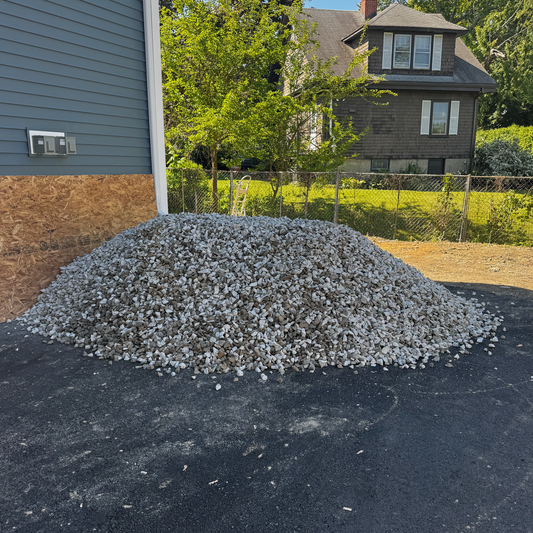
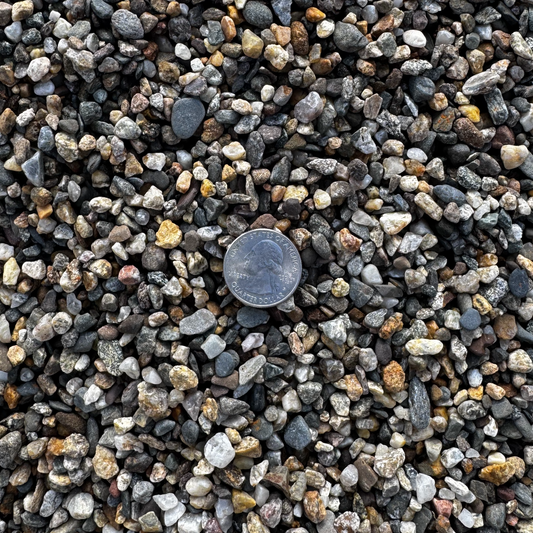
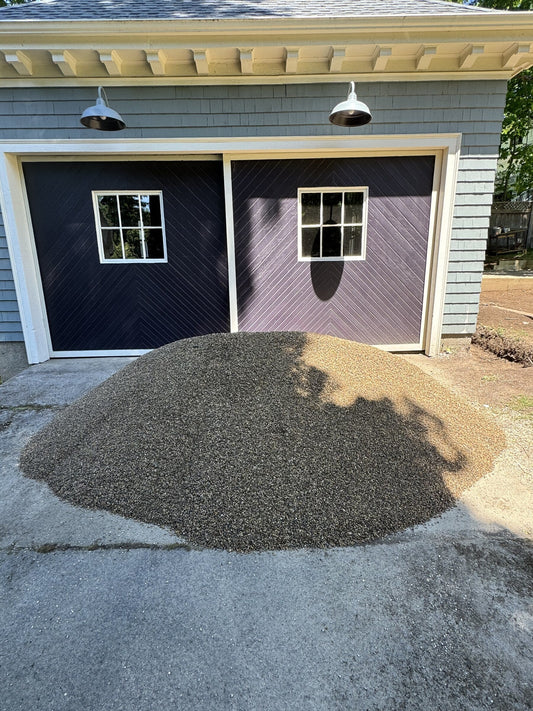
The five decorative stones that work in a modern Newton front yard: 3/8" pea stone in tan or gray (the workhorse fill), 1–2" Mexican beach pebble (the dark contrast), 3/4" pearl-white crushed marble (the high-contrast accent), river rock 2–4" (the architectural mass), and decomposed granite (DG) (the walking-surface pick). Each has a specific role; using all five poorly is worse than picking two and committing. Below: where each one wins in the Garden City.
Why Newton Front Yards Want Quiet Stone
Newton — Auburndale, Newtonville, West Newton, Chestnut Hill — has a strong visual identity built around stately homes, mature street trees, and front yards with bones. The newer modern builds (and the gut renovations of older homes) want a landscape that reads contemporary without fighting the neighborhood.
Decorative stone is the modern Newton answer. It replaces high-maintenance lawn strips along sidewalks, fills foundation lines around new builds, and gives architectural mass to plant beds without competing with the planting. The trick is restraint — quiet palettes, intentional placement, and pairings with native plantings that the Native Plant Trust recommends for the Boston-North suburbs.
Browse the full decorative stone collection for current per-yard pricing.
#1 — 3/8" Pea Stone in Tan or Gray (Best for: foundation strips, walking zones)
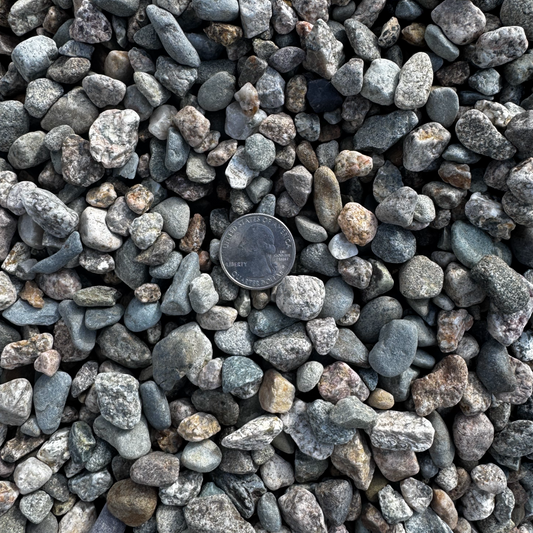
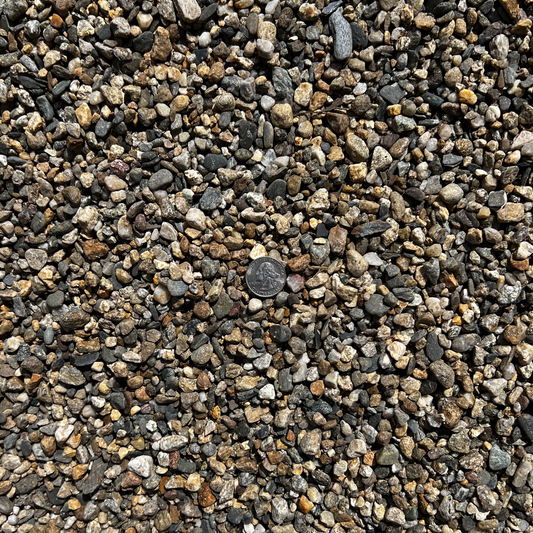
The workhorse modern stone. 3/8" rounded pea gravel in either warm tan or cool gray reads neutral against any siding color. Drains instantly, walks comfortably, and reads modern when set against clean steel edge restraint.
Wins when: You need to fill the strip between the foundation and the first row of plantings. Or replace a high-maintenance grass strip along a Newton sidewalk. Or create a clean "negative space" zone between architectural plantings.
Stops winning at: High-traffic walking zones without edge restraint — pea stone migrates without containment.
Pair with: Steel edging, ornamental grasses (little bluestem, switchgrass), boxwood domes. For the engineering on edge restraint, see How to Set Stepping Stones in a Melrose Garden Path Without Sinking.
#2 — 1–2" Mexican Beach Pebble (Best for: dark contrast, focal accents)
Smooth black-to-charcoal rounded pebble. The dramatic pick. Used as a contrast band between lighter-toned beds, around water features, or as the surface in zen-style entry beds.
Wins when: The home has dark exterior accents (black trim, dark roof, anthracite garage door) and the landscape needs a tie-in. Or you want a single high-impact dark zone in an otherwise light-toned front yard.
Stops winning at: Volume use — a whole front yard of black pebble reads heavy. Use sparingly, in defined zones.
Pair with: Japanese maple, ornamental cherry, white-flowering shrubs (oakleaf hydrangea, viburnum). Let the dark stone make the white blooms pop.
#3 — 3/4" Pearl-White Crushed Marble (Best for: high-contrast accents)
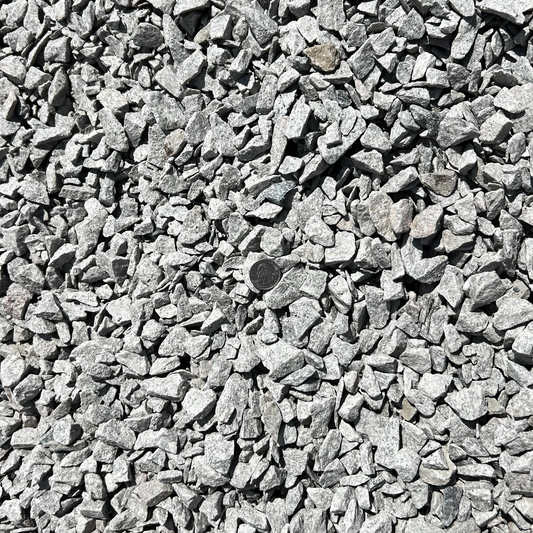
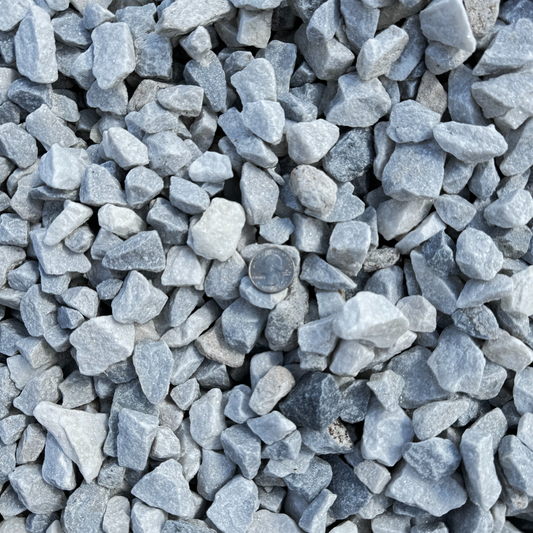
White crushed marble at 3/4" angular. The brightest stone in the catalog. Pairs beautifully with dark-toned siding (charcoal, navy, deep green) and reads modern in a way that pea gravel can't.
Wins when: The home is dark-toned modern. The front yard needs visual brightness. The bed structure has clean geometric lines.
Stops winning at: Tree-canopy-shaded front yards — the white shows every leaf and pine needle, and weekly raking gets old fast.
Pair with: Black mondo grass, dwarf conifers, ornamental boxwood. For more on stone-and-mulch coordination, see Black, Brown, or Natural? Picking a Mulch Color That Matches Cambridge Brick.
#4 — River Rock 2–4" (Best for: architectural mass, drainage features)
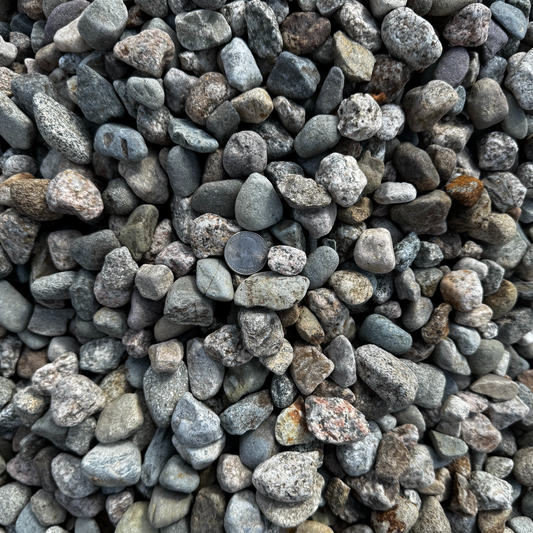
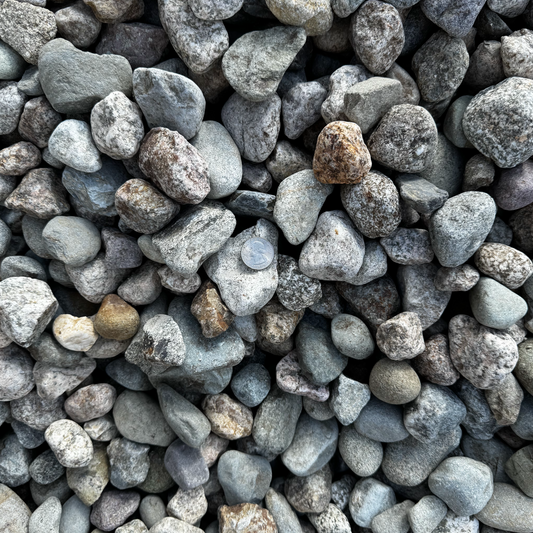
Larger rounded river rock — 2–4" diameter — used as architectural mass in a front bed, around downspout splash blocks, or as a dry creek bed feature.
Wins when: The bed needs visual weight without a wall. The downspout splash zone needs an upgrade. The drainage corridor across the front yard wants to read as intentional, not utility.
Stops winning at: Walking zones — these stones are too large to walk on barefoot. And too large to keep clean of leaves without a leaf blower.
Pair with: Fountain grass, sedum, dwarf weigela. For more on dry creek bed engineering, see How to Build a Dry River Bed for Yard Drainage in a Scituate Backyard.
#5 — Decomposed Granite (DG) (Best for: walking surfaces, paths)
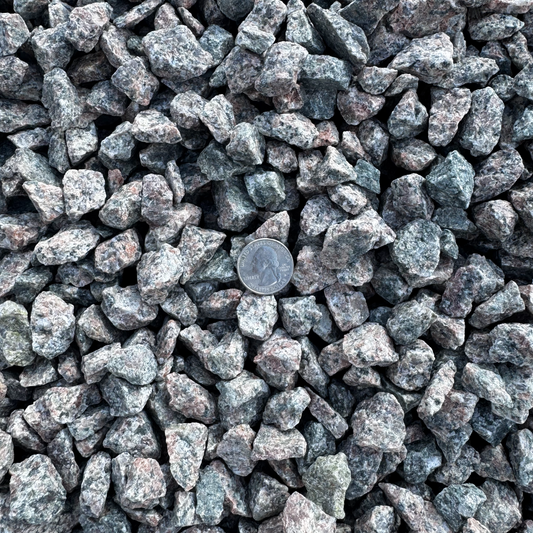
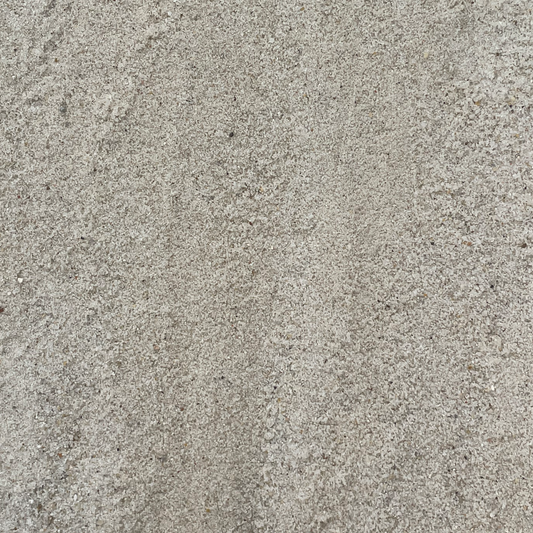
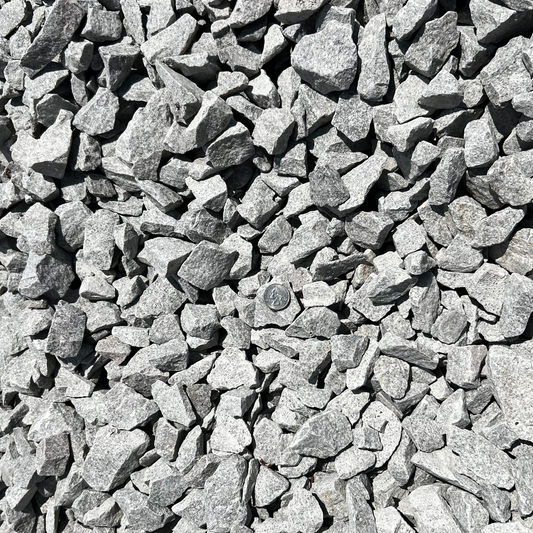
Crushed granite with fines mixed in — compacts hard like a natural concrete, drains well, walks like packed earth but cleaner. The right pick for a front-yard walkway, a side-yard utility path, or any surface that needs to handle daily foot traffic.
Wins when: You want a path that reads natural, not poured. The pavement crew quoted $40/sq ft for a flagstone walk; DG comes in at a fraction. Maintenance is a single annual top-dress with stabilizer.
Stops winning at: Sloped paths over 5% — DG migrates downslope without binders. And true heavy-equipment access; it's a foot-traffic surface, not a driveway.
Pair with: Steel edging, low boxwood, lavender along the path edge. For a related path-stone comparison, see 5 Stones for a Marshfield Backyard Walking Path That Won't Wash Out.
How to Combine These (and How Not To)
The biggest mistake in Newton modern landscapes is using all five stones in one front yard. Restraint is the design principle. Two, maybe three, used in defined zones:
- Foundation strip: pea stone or DG
- Accent bed: Mexican beach pebble OR pearl marble (not both)
- Walking path: DG
- Drainage corridor / dry creek: river rock
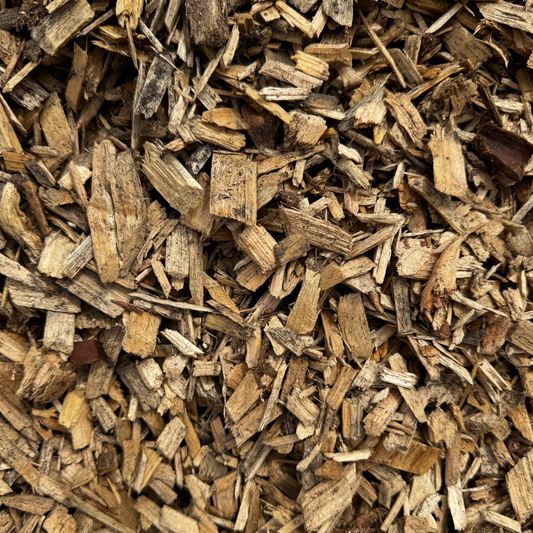
Anything more reads cluttered. The successful Newton modern front yards tend to use two stones max, with one mulch in the planting beds (cocoa or dark hardwood) tying everything together.
Pairing with Native Plantings
The modern Newton landscape that holds up over a decade pairs decorative stone with native plantings rather than fussy ornamentals. Little bluestem, switchgrass, butterfly weed, and oakleaf hydrangea all read modern when set in clean stone fields. The Native Plant Trust plant database is the authoritative source for Boston-region native selections.
For a related foundation-planting selection guide, see 5 Foundation Planting Ideas for a Brookline Brownstone Front — Brookline and Newton modern front yards share much of the same design vocabulary.
What This Means for You
Pick two stones, place them with intention, and pair with the right plants. Order delivered to the Newton landscape supply routes — Ottr stocks all five by the cubic yard or pallet, and a typical front-yard project takes 1–3 cubic yards total.
The hardest part isn't the install; it's resisting the urge to use every stone you saw at the yard.
For broader hardscape engineering on stone bed prep, ICPI standards cover the base preparation that any of these stones share.