Quick Answer
For Norfolk County backyards, concrete pavers on a properly built base win the durability contest — 30+ years with low maintenance. Bluestone is the close runner-up if you love the look (and most Brookline, Newton, Wellesley, and Dedham yards do). Poured concrete is the loser — almost always cracks within 5–10 years from freeze-thaw, salt exposure, and frost heave. The base specification matters more than the surface material. Skimping on the base is the single biggest mistake across all three options.
Why Norfolk County Tests Hardscape Hard
Norfolk County yards — Brookline, Newton, Wellesley, Dedham, Westwood, Sharon — face all four of the conditions that destroy hardscape:
- Deep freeze-thaw cycles (50+ per winter)
- Salt and chloride runoff from driveway de-icing
- Clay-leaning soils that hold water and heave
- Mature tree roots that lift bedding from below
The frost line in Eastern MA runs roughly 4 feet deep, per MassDOT specifications. No backyard hardscape excavates that deep — the base layer is for drainage and load distribution, not frost-line penetration. So the question becomes: which surface flexes with seasonal movement, and which one shatters?
The Interlocking Concrete Pavement Institute (ICPI) is the industry reference on hardscape engineering; the UMass Extension landscape program has regional notes on drainage.
Q: Which hardscape lasts longest in a Norfolk County winter?
A: Concrete pavers on a properly built base. Three reasons:
- Modular: pavers move independently. When frost lifts one corner of the patio, the affected pavers shift slightly and reset on thaw. No cracking.
- Repairable: pull up affected section, reset base, replace, done in an afternoon.
- Salt-resistant: high-quality pavers are made with low water absorption (under 5%). Salt damage is minimal.
Expected life with proper base: 30–40 years.
Q: Does poured concrete crack in MA winters?
A: Almost always, within 5–10 years. Concrete is rigid. Frost heave below the slab pushes up; the slab can't flex; cracks open. Salt exposure pits the surface. Control joints (the score lines you see on professional concrete jobs) reduce cracking but don't prevent it.
Concrete is fine for interior basement floors, garage slabs, and driveways with minimal foot traffic. For backyard patios in Norfolk County, it's the wrong call. We see it cracked across Wellesley and Dedham yards installed in the 2010s.
Expected life: 5–15 years before visible cracks, 20–30 years before full replacement.
Q: What about bluestone?
A: Excellent if installed correctly. Norfolk County's design favorite for a reason.
Pennsylvania bluestone (the standard in MA) is a dense, low-absorption sandstone. On a proper base — 6 inches compacted ¾" processed gravel + 1 inch stone dust setting bed — bluestone handles freeze-thaw well. The thermal-finished version (smooth, gridded) is more weather-resistant than the natural-cleft version.
The risk on bluestone is joint failure rather than slab failure. Polymeric sand or stone-dust joints erode over years. Plan to refresh joints every 5–8 years.
Expected life: 25–35 years with periodic joint maintenance.
For the full procurement and base-build sequence, see the Westwood bluestone planning guide and the Plymouth crushed-stone driveway base piece — same compaction logic.
Q: What base depth is needed in Norfolk County?
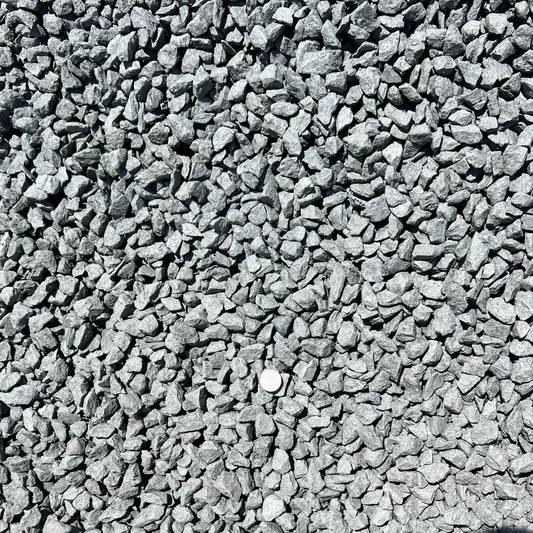
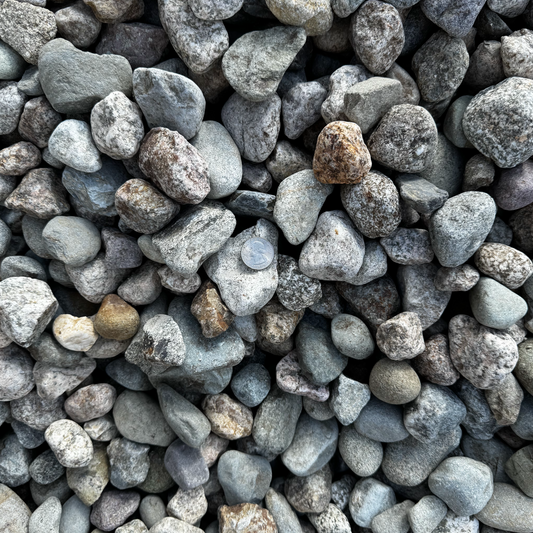
A: 6–8 inches of compacted ¾" processed gravel under any hardscape surface in this region.
The structure of a properly built patio:
- Excavated subgrade — soil compacted, sloping ¼" per foot away from house.
- Geotextile fabric — separates soil from base, extends life 50%.
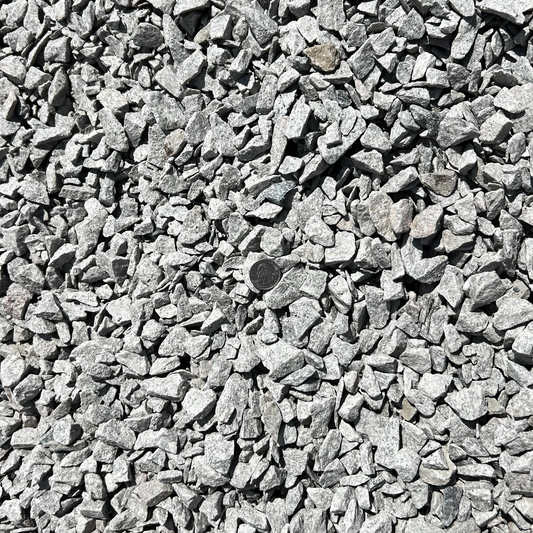
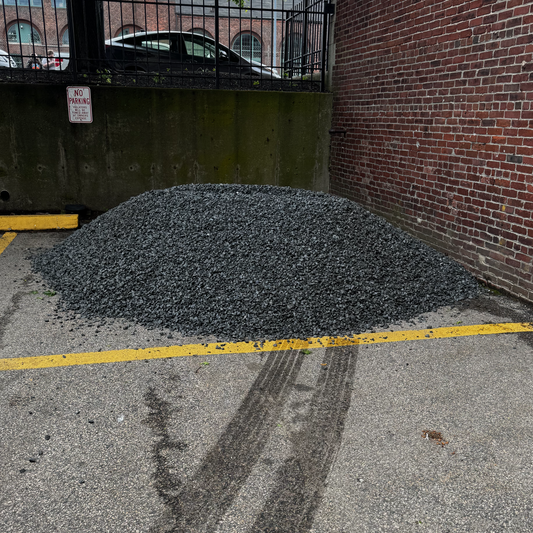
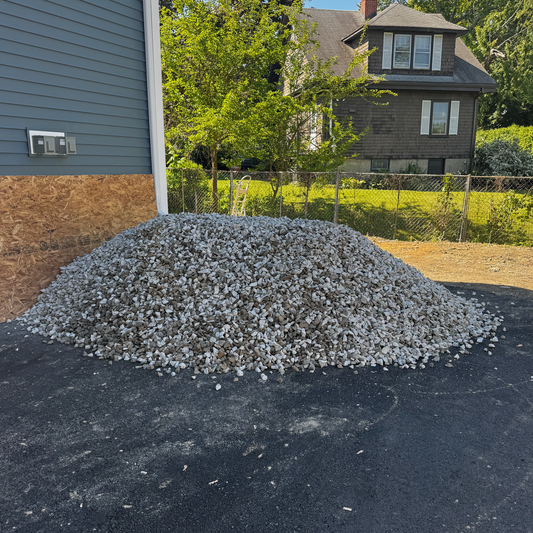
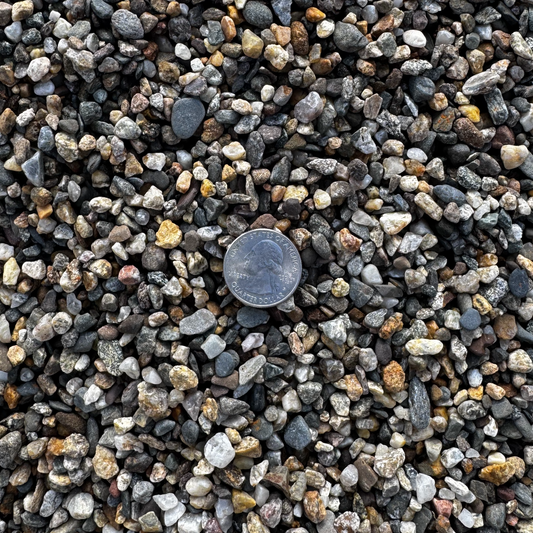
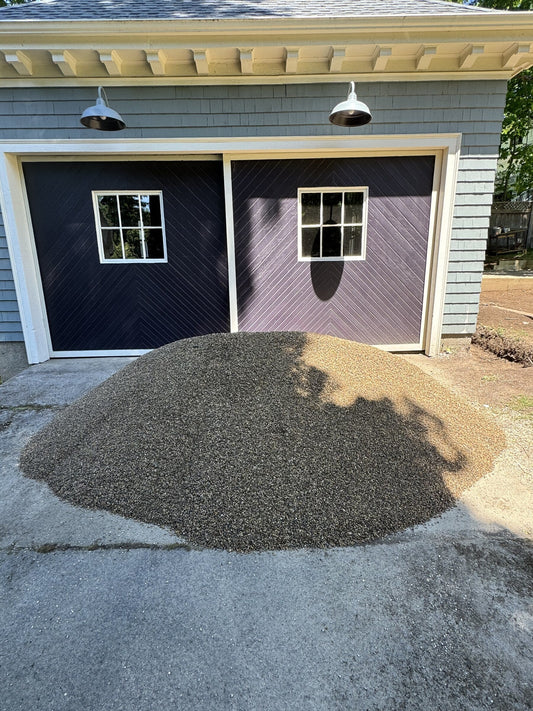
- 6–8 inches ¾" processed gravel — compacted in 2-inch lifts with a plate compactor.
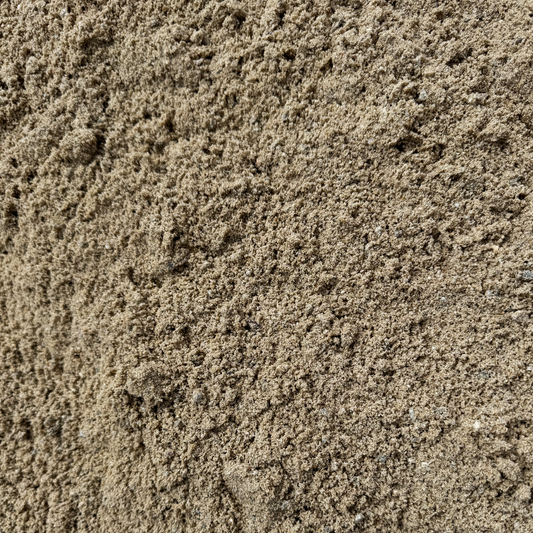
- 1 inch stone dust setting bed — for pavers and bluestone (concrete is poured directly on gravel).
- Surface material — pavers, bluestone, or concrete.
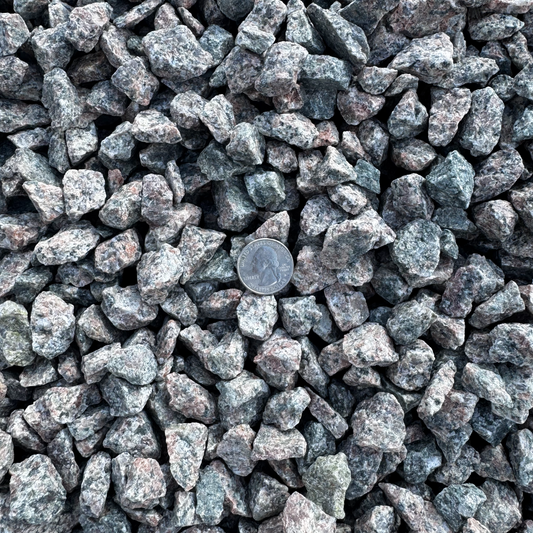
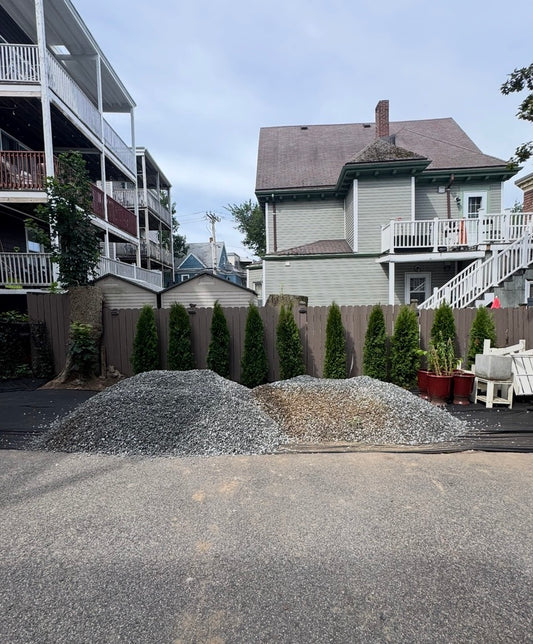
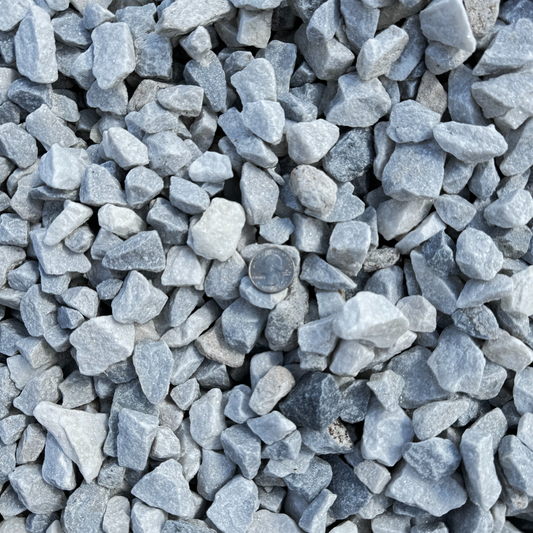
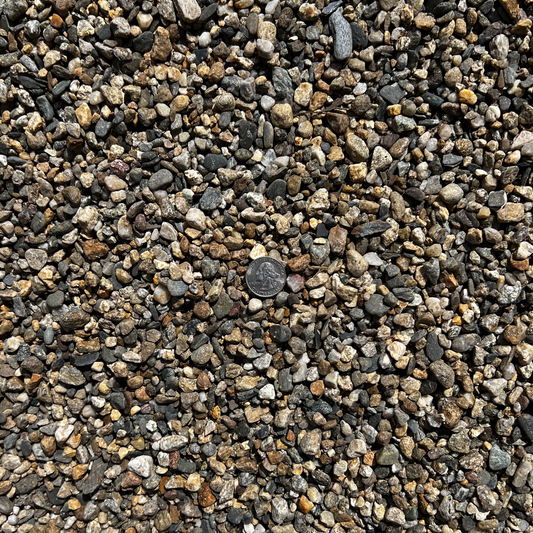
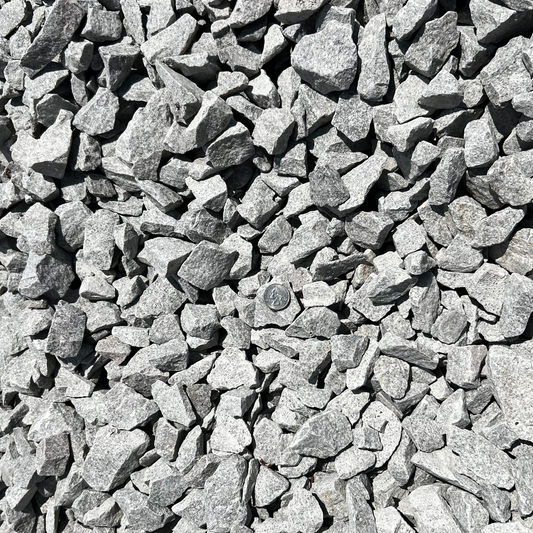
Browse the crushed stone collection for ¾" processed gravel, and the decorative stone collection for bluestone options.
Q: Which hardscape handles salt and de-icer best?
A: Pavers, by a meaningful margin. Quality concrete pavers are manufactured with low absorption (typically 4–5%), so salt water can't penetrate and freeze inside the paver. Bluestone is moderate — it's a natural sandstone with somewhat higher absorption, and salt can cause surface flaking on lower-grade material. Poured concrete is the worst — salt scaling is the most common Norfolk County concrete failure pattern.
If you must use de-icer near hardscape, avoid sodium chloride — use calcium magnesium acetate (CMA) or sand. The principle carries over from driveway practice; see the broader Suffolk County ice melt comparison for products.
Q: Which is easiest to repair after frost damage?
A: Pavers, by a wide margin.
- Pavers: lift affected section with a pry bar, reset base material, drop pavers back in, sweep new sand into joints. Half a day for a 4'×4' section.
- Bluestone: same process, but cutting and lifting individual flags is heavier and trickier. Full day for the same section.
- Concrete: saw-cut the cracked section, demolish, repour. The patch shows. Multi-day project, often hire-out.
Q: What about cost?
A: Counterintuitive — pavers and bluestone end up cheaper over 20 years.
- Concrete: cheap up front ($8–$12/sq ft installed), expensive over time (full replacement at year 15–25).
- Pavers: mid-range up front ($14–$22/sq ft installed), low cost over time (component repairs only).
- Bluestone: highest up front ($22–$35/sq ft installed), low cost over time with periodic joint refresh.
For a 200 sq ft Norfolk County patio over 30 years, the lifetime math typically lands: bluestone ≈ pavers < concrete when you include replacement.
Q: What about the look?
A: Norfolk County yards typically split this way:
- Pavers: clean, modular, modern. Strong fit for newer Westwood and Wellesley homes.
- Bluestone: classic, formal, traditional. Strong fit for Brookline, Newton, and the older parts of Dedham.
- Concrete: utilitarian. Most homeowners regret it within a few years.
The design choice usually drives the material; durability is the tiebreaker.
The Norfolk County Recommendation
For a backyard patio, choose bluestone or pavers. Both will outlive the homeowner with proper base construction. Pavers are slightly more forgiving on a DIY install; bluestone needs more skill but rewards it visually.
Plan in February, build in May. The Westwood bluestone planning sequence covers procurement timing. For hardscape projects to plan in January, Newton's playbook applies cleanly across Norfolk County.
Ottr delivers bulk gravel, stone dust, and decorative stone across Norfolk County. Pre-book in February for May builds.