Quick Answer
A Westwood bluestone patio plans easily in February for a May build. The right sequence: sketch the footprint with a garden hose on a 40°F afternoon, spec a 6"-compacted ¾" processed gravel base under 1" of stone dust, calculate bluestone tonnage at roughly 1 ton per 70 sq ft for 1.5"-thick stone, and pre-book the order in February to lock winter pricing on both stone and base material. May builds run smoothly when the order is in by Valentine's Day.
Why February Is the Right Time to Plan a May Build
Westwood backyards skew bigger than the inner-suburb yards — half-acre to acre lots through Highland, Islington, and the Greenlodge/University Avenue area. That space invites real hardscape, and a 200–400 sq ft bluestone patio is a common 2026 project across the town. The build window is mid-May through mid-June in MA — past the freeze-thaw, before the high-summer humidity.
But the planning window is February. Three reasons:
- Sketches are easier when the lawn is dormant — you see the actual ground, not foliage.
- Pricing on bluestone, gravel, and stone dust climbs through April. February pre-booking holds you at winter rates.
- Permitting in Westwood (any patio over 200 sq ft typically needs a build permit; check with the Westwood Building Department) takes 4–6 weeks. Submitting in February clears the permit before snowmelt.
The Interlocking Concrete Pavement Institute (ICPI) is the industry reference for hardscape base specifications; the UMass Extension landscape program has regional guidance on drainage and frost-line considerations specific to Eastern MA.
Step 1 — Sketch the Footprint
Pick a 40°F afternoon. Walk the backyard. Bring:
- A garden hose (long, flexible — for laying out the perimeter)
- Tape measure (50' minimum)
- Graph paper or a tablet
- Stakes and a ball of mason's twine for straight runs
Lay the hose where the patio edge will go. Walk around it. Sit in chairs at the proposed dining spot. Test the footprint with the actual furniture you'll use. Most homeowners under-size the first sketch by 30%.
Minimum dimensions for common uses: - Round 4-person dining table: 12' × 12' clear (144 sq ft) - Round 6-person dining: 14' × 14' (196 sq ft) - Lounge seating cluster (sofa + 2 chairs + coffee table): 12' × 14' (168 sq ft) - Dining + lounge combined: 18' × 20' (360 sq ft)
Once the hose layout feels right, measure the perimeter and the area in square feet. Sketch it on graph paper at ¼" = 1' scale.
Step 2 — Spec the Base
The base is what makes a patio last in MA's freeze-thaw. Skimp here and you're resetting flags every spring. The ICPI standard for residential bluestone patios in cold climates:
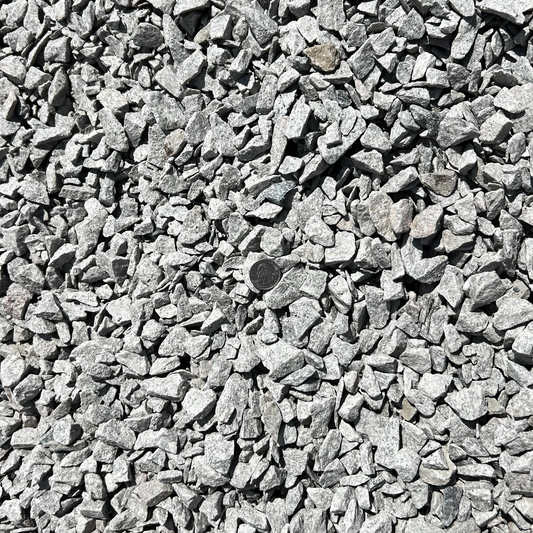
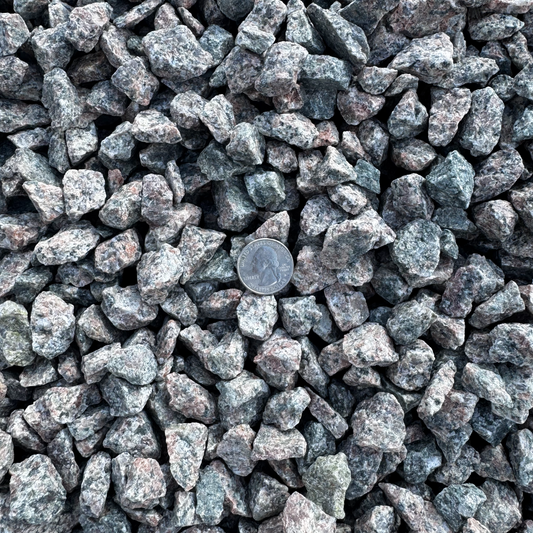
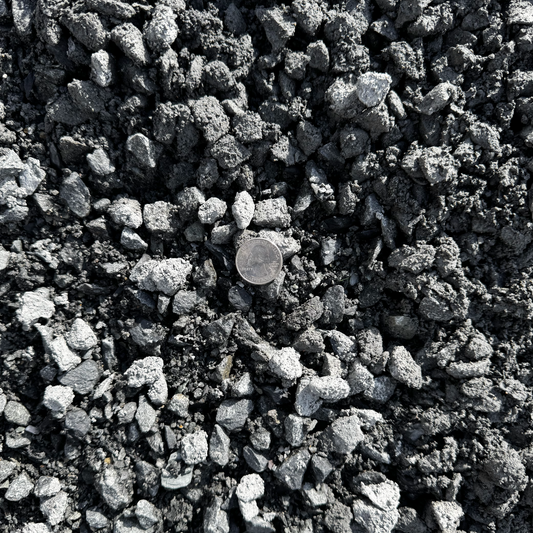
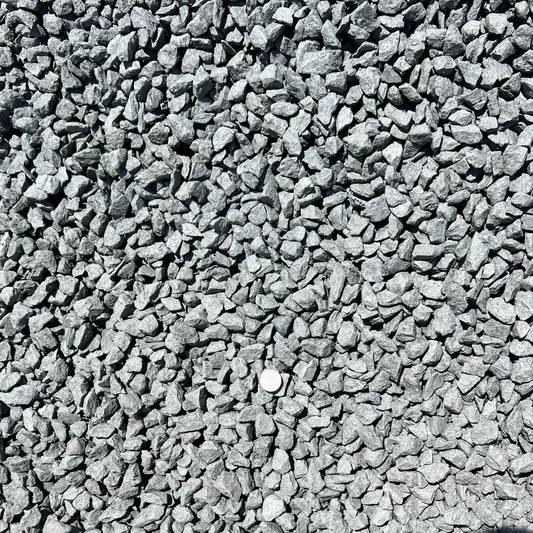
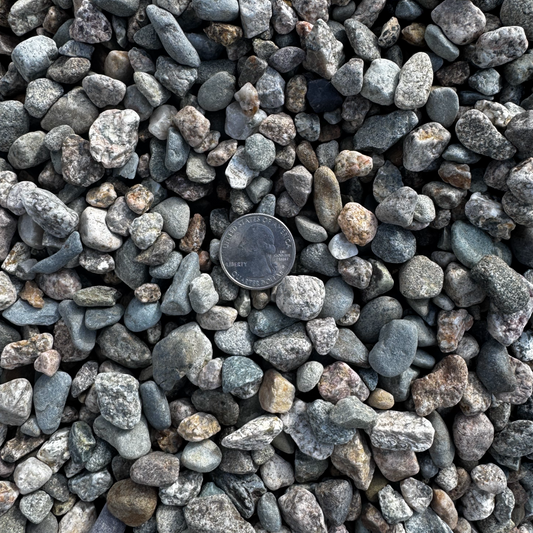
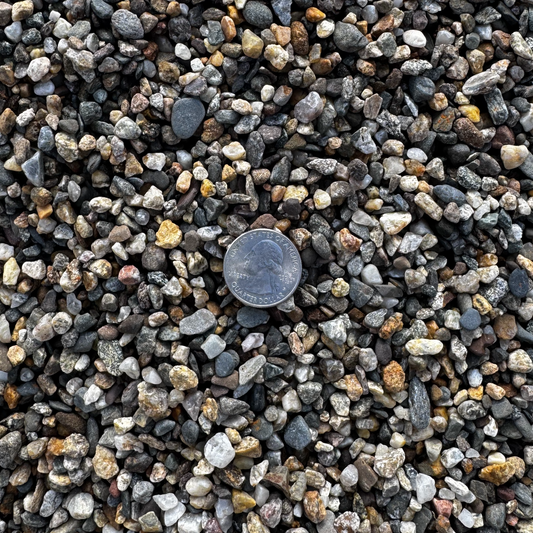
- 6 inches of compacted ¾" processed gravel (the structural base)
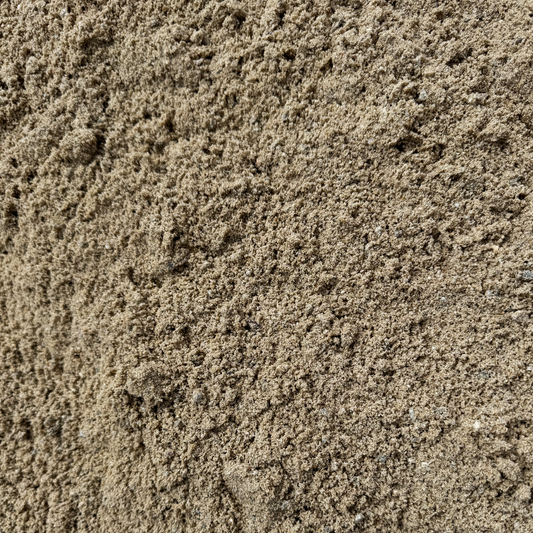
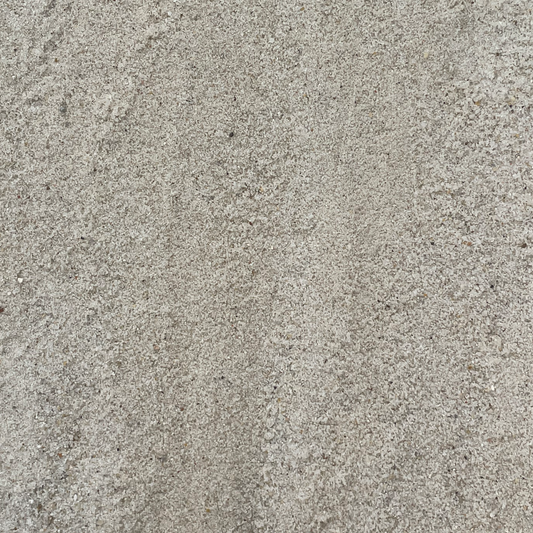
- 1 inch of stone dust (the setting bed — bluestone sets directly into this)
- Geotextile fabric between subgrade and gravel (separates soil from base — extends life)
Total excavation depth = bluestone thickness + 7 inches.
For 1.5" Pennsylvania bluestone, excavate 8.5 inches deep below finished grade.
For drainage, the patio surface should slope away from the house at ¼" per foot — that's 2" over an 8' run. Plan the drop in your sketch.
Step 3 — Calculate Material
For a 200 sq ft patio (a common Westwood size):
Bluestone (1.5" thick): roughly 1 ton per 70 sq ft = 2.9 tons. Add 10% waste = 3.2 tons. Pennsylvania bluestone is typically sold by the ton, palletized.
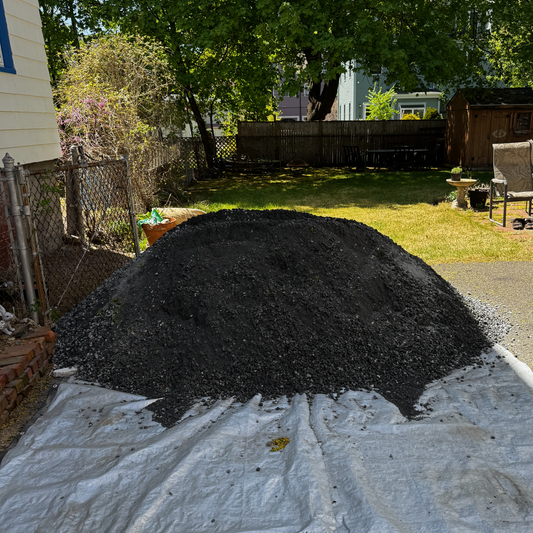
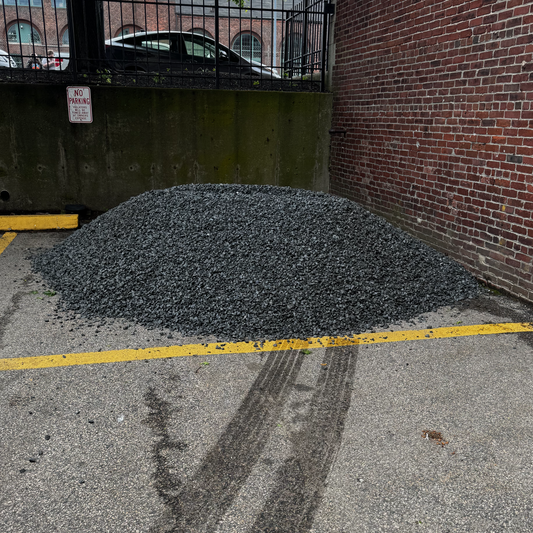
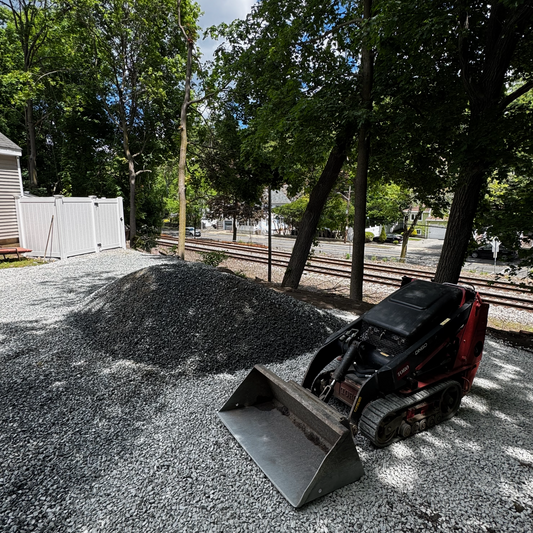
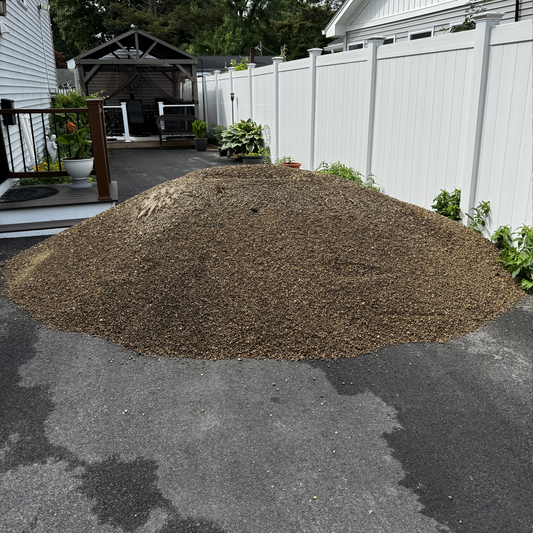
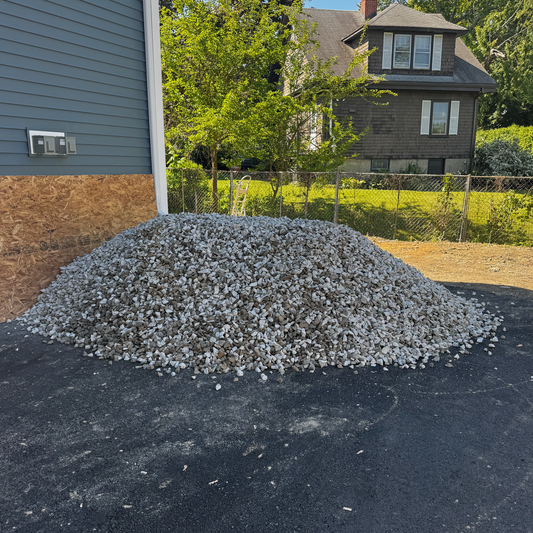
Base gravel (¾" processed gravel, 6" compacted depth): Depth factor for compaction is roughly 1.3× loose volume to compacted. For 200 sq ft × 0.5 ft × 1.3 = 130 cubic feet = 4.8 cubic yards. Order 5 yards.
Stone dust (1" depth): 200 sq ft × 1/12 ft = 16.7 cu ft = 0.6 cubic yards. Order 1 yard (the minimum delivery).
Geotextile fabric: 220 sq ft (with overlap) — about a 4'×60' roll handles it.
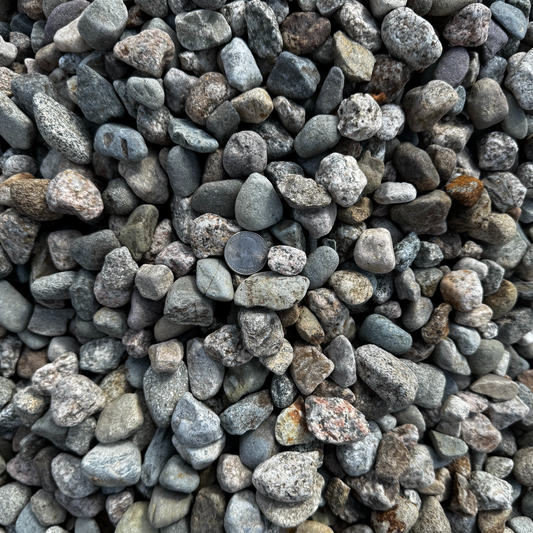
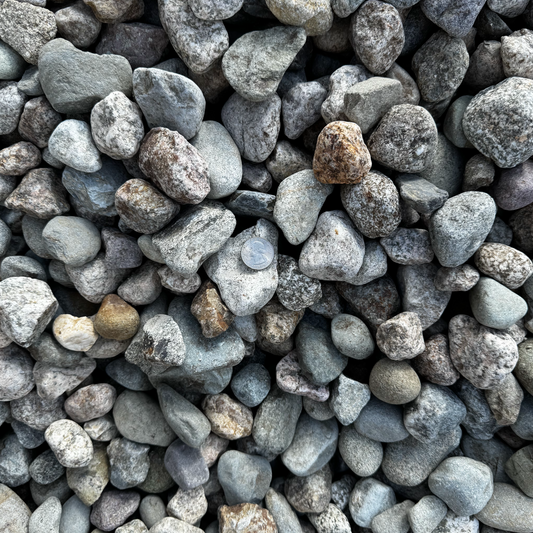
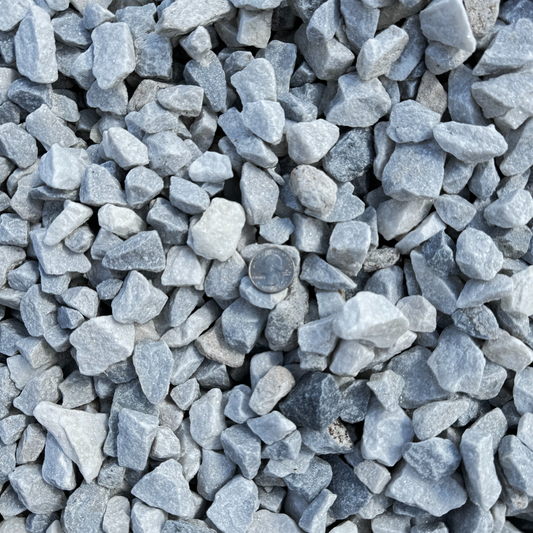
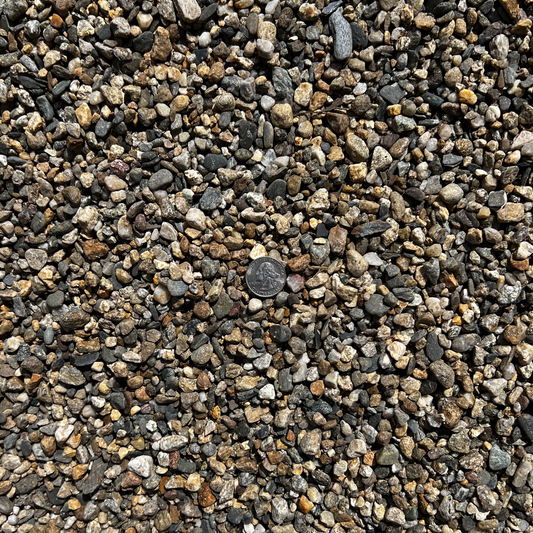
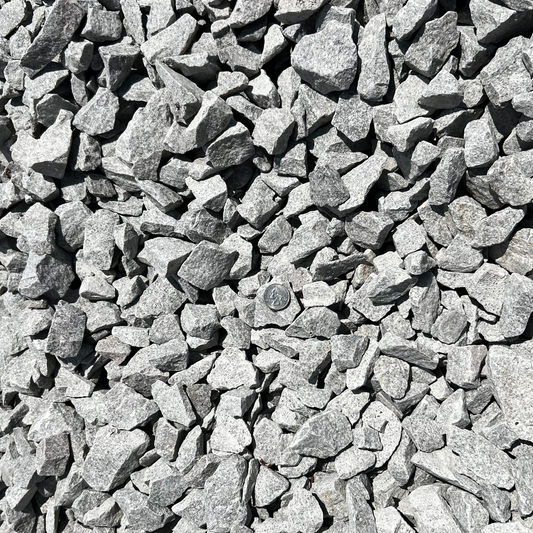
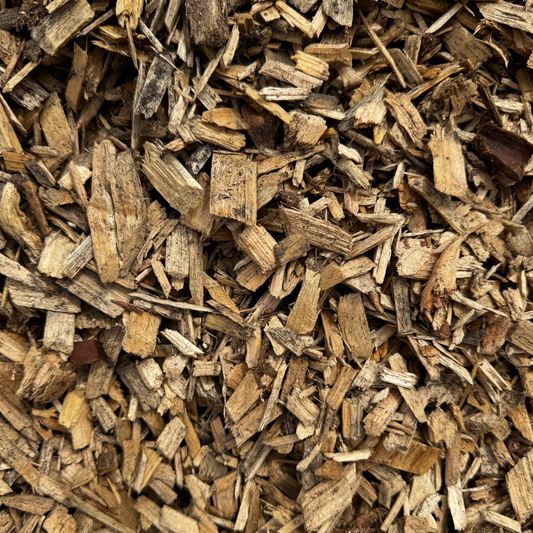
Browse the decorative stone collection for bluestone options and the crushed stone collection for ¾" processed gravel and stone dust. The companion Plymouth crushed stone driveway base piece walks through the same compaction logic on a driveway scale.
Step 4 — Pre-Book the Delivery
Call or order in February. Specify:
- Delivery date target: first dry week of May (typically May 4–10).
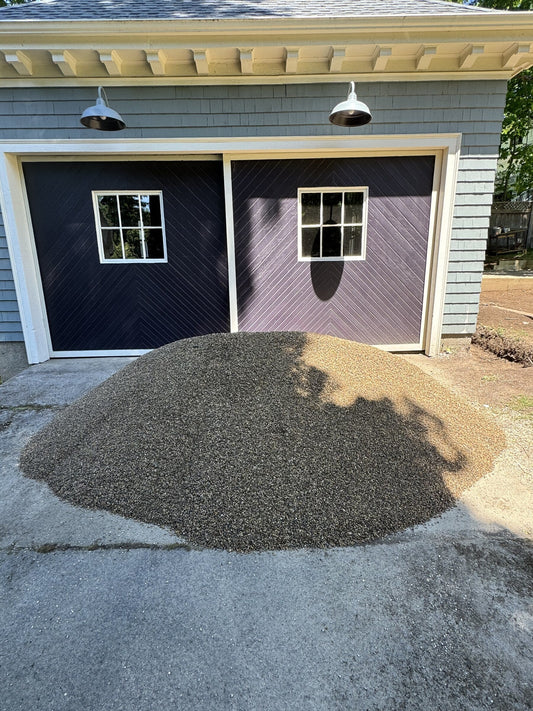
- Drop locations: bluestone pallet on driveway (forklift access), gravel and stone dust at backyard side gate or as close as the truck can reach.
- Lift-gate truck or tag-along trailer if your driveway can't take a tri-axle.
Pre-booking holds February pricing — typically 8–12% below late-April rates on bulk stone, more on bluestone. The dispatcher can also flag if the requested delivery week is already booking up.
For broader hardscape durability comparison — pavers vs. bluestone vs. concrete in MA winters — see the companion piece on hardscape that survives a Norfolk County winter.
Step 5 — Plan the Build Week
The May build itself is roughly:
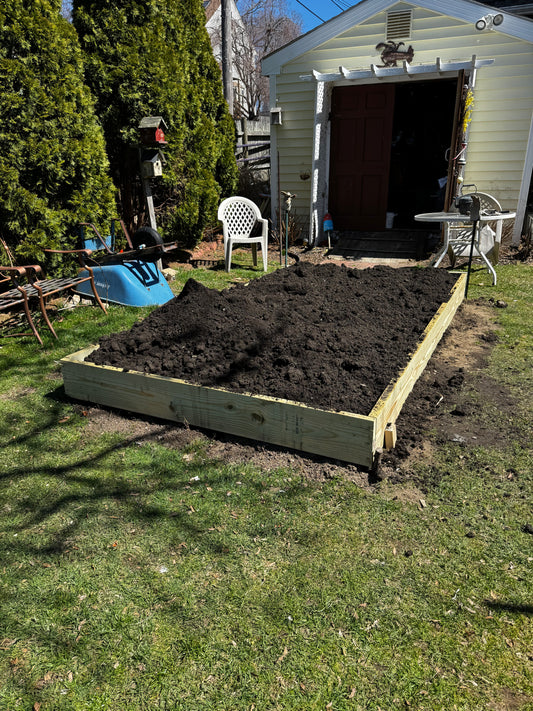
- Day 1: Excavation and rough grade.
- Day 2: Geotextile + base gravel + compaction.
- Day 3: Stone dust setting bed.
- Days 4–5: Bluestone laying.
- Day 6: Polymeric sand or stone-dust joint sweep.
DIY-able in a long weekend with a friend and a rented plate compactor. Or hire a Westwood landscape contractor — see the contractor account setup playbook for how MA pros handle bulk procurement.
Once the patio's down, 5 stones for a Marshfield walking path covers the connector path from house to patio, and 5 fire pit stones for a Plymouth County build handles the optional fire pit anchor.
Ottr delivers across Westwood and Norfolk County. February is the right week to lock the order.