Quick Answer
For Suffolk County driveways — Boston, Chelsea, Revere, Winthrop — the right ice melt depends on temperature, surface, and what's nearby. Treated rock salt is the cost-effective workhorse. Calcium chloride is the cold-snap specialist (works to −25°F). Salt-sand 20/80 protects lawns and old concrete. Magnesium chloride blends balance pet safety and performance. Pure mason sand is the failsafe on lawn-adjacent strips and old brick. Below: the five Ottr stocks, when each one wins, and what each costs by the cubic yard.
How We Pick a Winner in Suffolk County
The Boston-area driveway test is brutal. You've got dense triple-deckers with no off-street parking, brick stoops 100+ years old, lawns within 2 feet of the curb edge, salt-marsh runoff into the harbor, and pets walking the same route every morning. No single product wins everywhere.
Each rank below names a use case where it wins decisively, the limit where it stops winning, and the per-cubic-yard format we stock for that need.
#1 — Treated Rock Salt (Best for: 20°F to 32°F, most events)
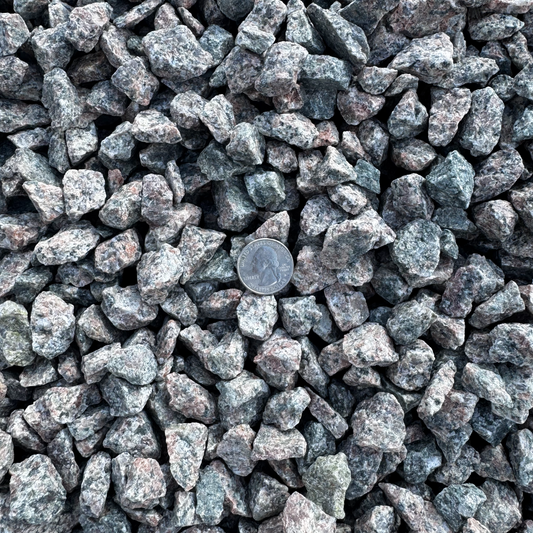
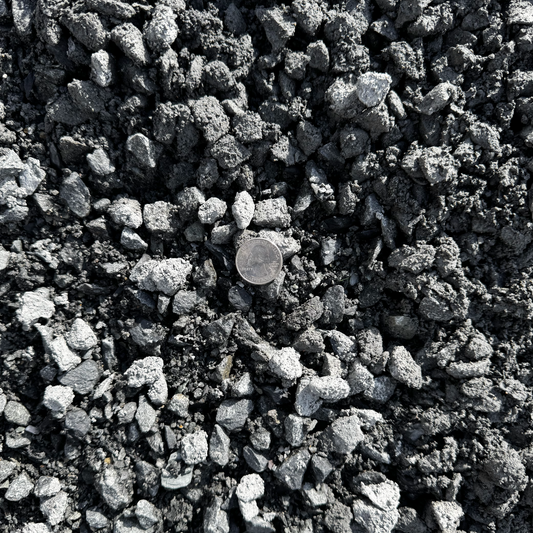
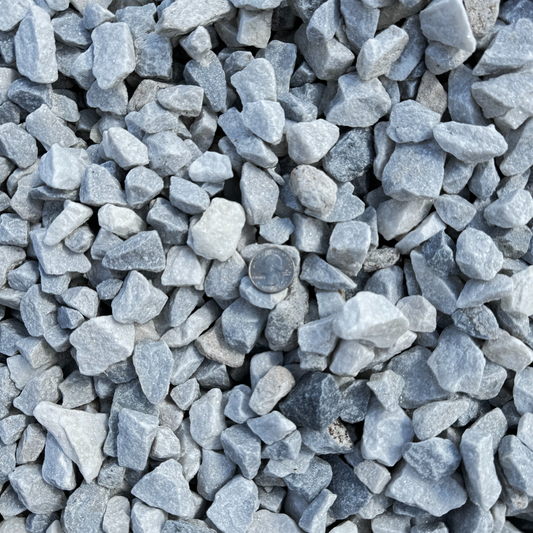
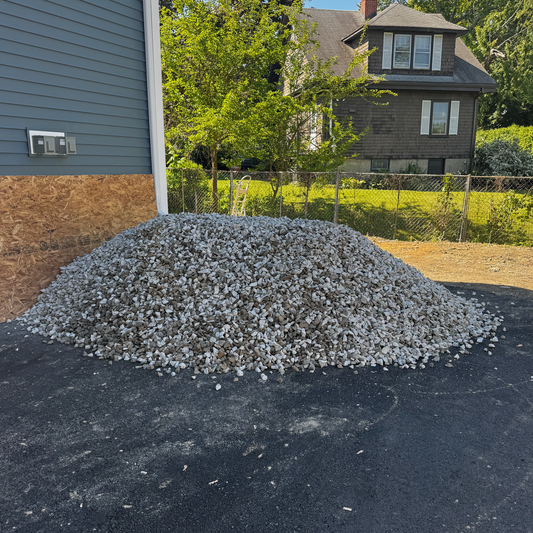
The default for 80% of Suffolk County driveway applications. Rock salt coated with a brine-based liquid that pre-wets the grain so it sticks instead of bouncing off, kicks in 15–30 minutes faster than untreated, and stays effective into the upper teens.
Wins when: It's a normal Boston storm — 4–8 inches at temperatures from 20°F to 32°F. Your driveway is 5+ years old and your lawn isn't immediately at the curb.
Stops winning at: Below 15°F (sluggish), or right next to a flower bed or new concrete.
Cost: Mid-tier per pound, but cuts application volume 20–30% vs. untreated — net cost competitive. Available in bulk rock salt by the cubic yard at Ottr.
#2 — Calcium Chloride (Best for: deep cold snaps, ice events)
The cold-weather king. Works down to −25°F. Generates heat as it dissolves so it kicks in fast, even in the deep cold. The premium pour for ice storms and the polar-vortex stretches that hit Boston every other winter.
Wins when: Sub-15°F daytime highs. Ice storms or freezing rain forecast. You need pre-treatment 8 hours before a storm and want it to still be active when the snow lands.
Stops winning at: Cost — calcium chloride runs roughly 3× the per-pound cost of rock salt. Save it for the events where it actually pays off.
Cost: Premium tier. Buy the smaller volume you need and reserve it for the genuine cold. Available bagged or, for contractors, by the cubic yard with advance order.
#3 — Salt-Sand 20/80 (Best for: lawn-edge driveways, older masonry)
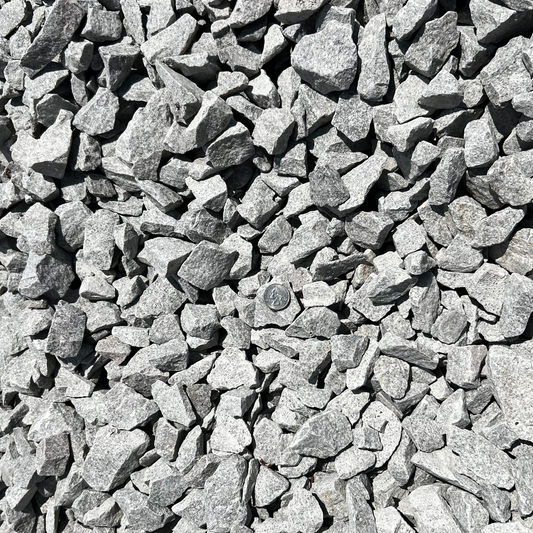
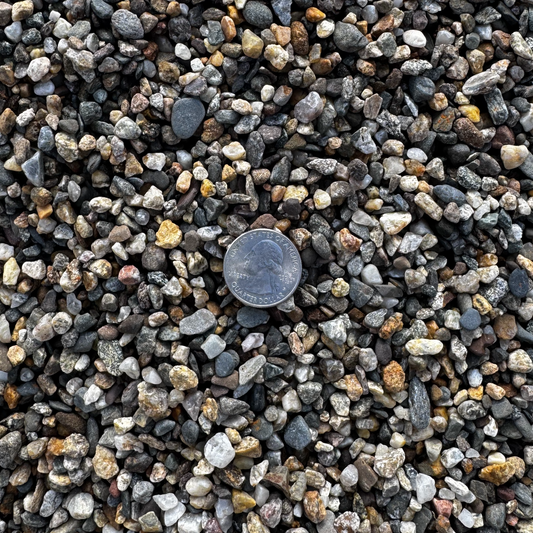
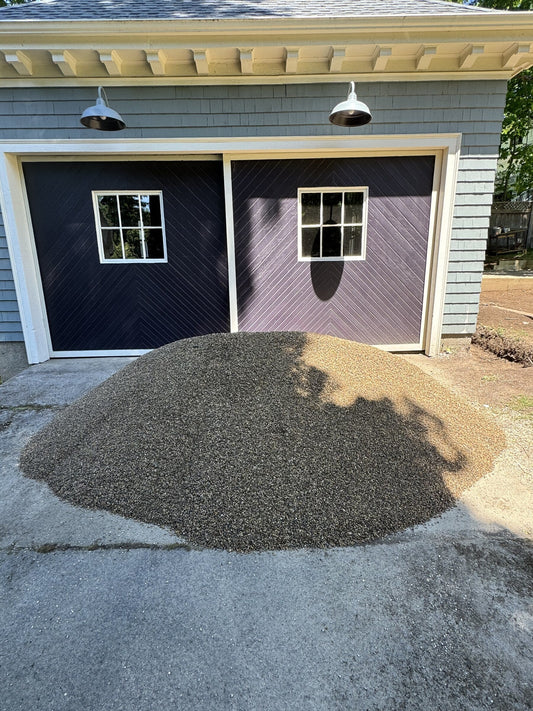
The Suffolk County compromise. 20% rock salt, 80% mason sand. The sand provides traction even when the salt isn't melting; the lighter chloride load is gentler on lawns at the curb edge and on the older concrete and brick steps that are everywhere in Boston.
Wins when: Your driveway is right next to a lawn (Newton, Brookline, parts of West Roxbury, Hyde Park), or the brick stoop and brownstone walks are pre-1990. Also wins when temps drop below 15°F and pure salt is sluggish — the sand still grips.
Stops winning at: Pure efficiency on a wide commercial lot where you don't care about adjacent vegetation. There the cost-per-traction-area math favors straight salt.
Cost: Cost-effective. Stretches your salt supply through a hard February — half the chloride load means half the salt budget. See the Snow & Ice Management collection for current per-yard rates.
For more on why this matters in lawn-adjacent driveways, see Does Rock Salt Really Kill Newton Lawns?.
#4 — Magnesium Chloride Blends (Best for: pet households, pet-safe claims)
Magnesium chloride works down to about 5°F, generates less heat than calcium chloride, and is significantly less corrosive than sodium chloride. Most "pet-safe" or "paw-friendly" products are magnesium chloride at heart — sometimes blended with rock salt to get the price down.
Wins when: You have dogs walking the driveway daily. Or pets-and-paws are a genuine concern (e.g., a Chelsea triple-decker shared by multiple pet households).
Stops winning at: "Pet-safe" is relative — even magnesium chloride irritates paws on long contact. Pre-rinse paws regardless. And the cold-temperature ceiling is lower than calcium chloride.
Cost: Mid-to-premium tier. Available bagged through hardware suppliers; less common in bulk.
#5 — Pure Mason Sand (Best for: traction-only zones, lawn-adjacent strips)
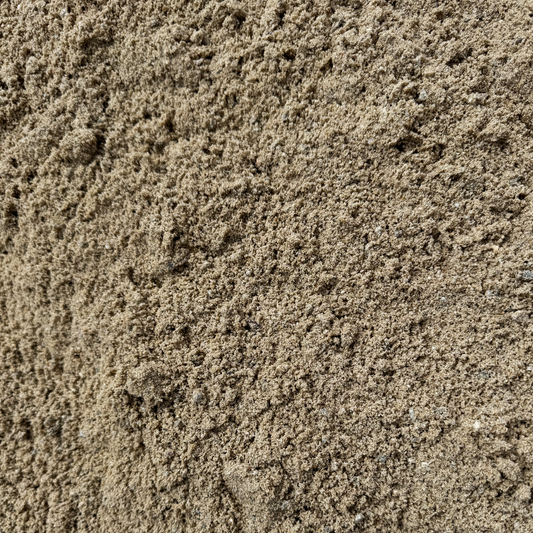
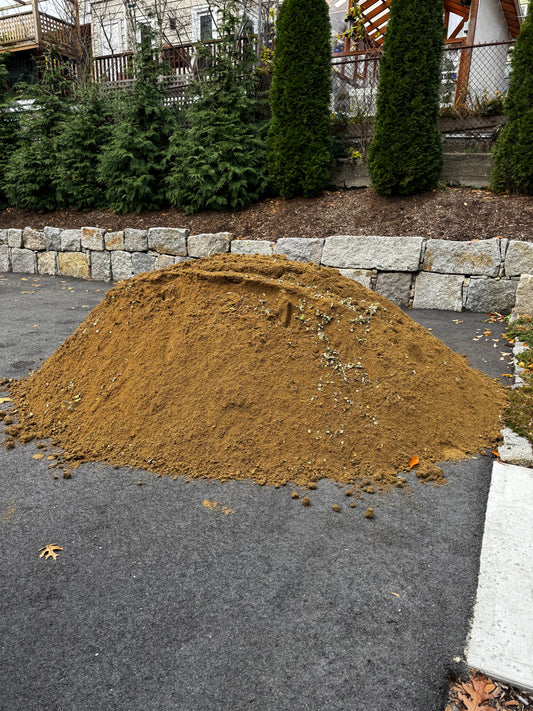
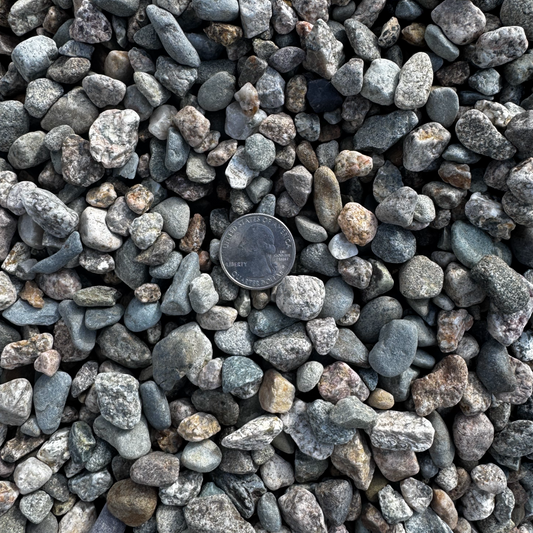
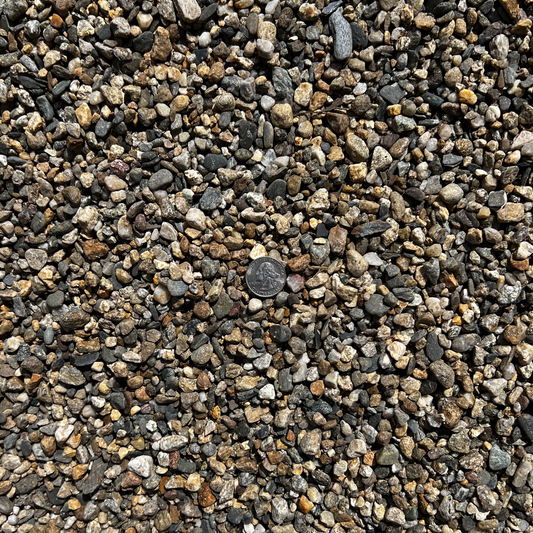
Zero chemistry. Just sand. Provides traction without any of the chloride damage. The honest answer for the last 2 feet of driveway adjacent to a flower bed, the strip between the sidewalk and the curb, and any surface where you can't risk salt damage at all.
Wins when: It's about traction, not melting. Or the surface is brand-new concrete that needs to age 30 days before any chloride contact. Or you've got a stretch right next to a beloved hydrangea bed.
Stops winning at: Actual ice — sand doesn't melt anything. It just gives you grip. Pair it with a salt application elsewhere on the driveway.
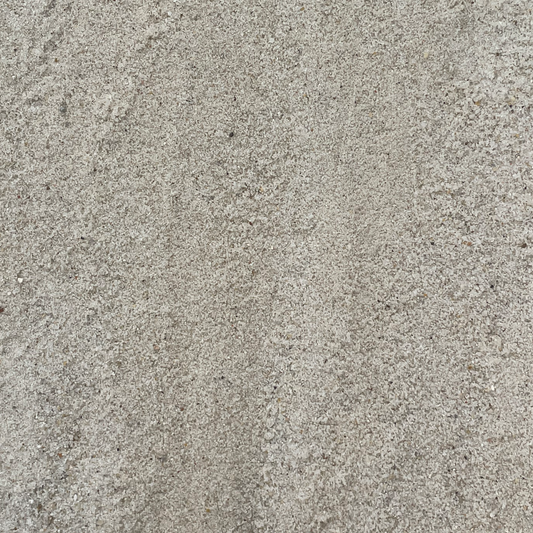
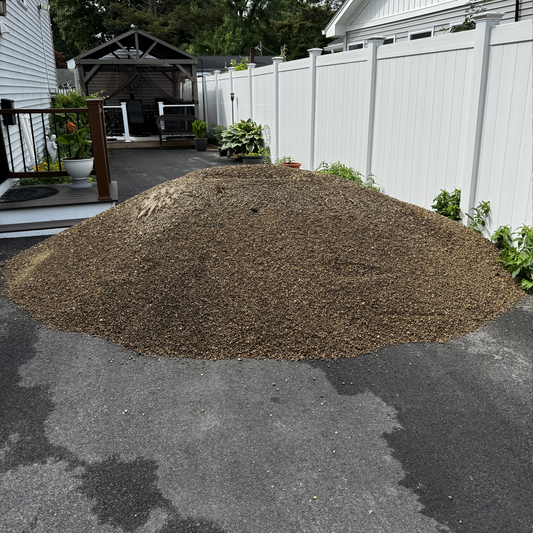
Cost: Cheap by the cubic yard — Ottr's Mason Sand is the same product used for paver bedding, doubled for winter traction.
For a real-world test of how calcium chloride performs on a typical Plymouth driveway over a season, see Ottr's Granular Calcium Chloride: Real-World Notes from a Plymouth Driveway.
How to Stack These for a Real Suffolk County Winter
The Boston winter that doesn't blow up your lawn or your driveway uses all five products in different spots:
- Driveway center: treated rock salt (workhorse).
- Curb edge / lawn-adjacent strip: salt-sand 20/80 or pure mason sand.
- Cold snap pre-treatment: calcium chloride 8 hours before a forecast sub-15°F event.
- Pet-walked entrance: magnesium chloride blend.
- Brick stoop / brownstone walk: pure mason sand for the last 18 inches before the masonry.
Buy the bulk of your supply in treated rock salt (most volume) and salt-sand 20/80 (lawn protection). Keep a smaller bag of calcium chloride and magnesium chloride for surgical use.
For application math by driveway size, How to Calculate Driveway Salt Coverage for a Brookline Apartment-Building Apron walks through the per-sq-ft rates. For label-reading basics on any product, How to Read an Ice Melt Bag covers the technical panel.
For Suffolk County's specific watershed and runoff considerations, the EPA Smart Salting program has the most authoritative recommendations.