Quick Answer
Yes, rock salt damages Newton lawns — but not the way most homeowners think. Salt doesn't directly poison grass; it draws moisture out of root zones, which kills tender turf at the curb edge by late winter. The damage band is usually 6 to 18 inches in from the road or driveway. The fix is rinsing salt-laden snow off the lawn during a thaw, switching to a lower-chloride blend in the spots that matter, and reseeding the dead band in April. You don't have to give up traction. You have to apply less and apply smarter.
The Newton Lawn Damage Pattern
In Newton — Garden City, with mature yards and the longest residential edge of any city in eastern Massachusetts — the salt damage band is a January–April story. Plows push salt-laden slush onto the lawn shoulder. The salt concentrates in the top 6 inches of soil. By April, you see a brown stripe from the curb edge inward, often reaching the sprinkler heads on irrigated lawns.
This Q&A walks through the questions Newton homeowners actually ask in March and April when the damage shows up, with practical recovery steps.
Q: Does rock salt actually kill grass, or does it just turn it brown?
A: Both. At light exposure, salt causes osmotic stress — the grass roots can't pull water out of soil that has elevated sodium and chloride content, and the blades brown out. The grass is in survival mode but alive. At heavy exposure, the osmotic stress lasts long enough that root cells die. The crown (the growth point at the soil line) follows.
Light exposure usually recovers on its own once spring rains flush the salt out of the root zone. Heavy exposure leaves bare ground that needs reseeding.
Q: How much salt is "too much" for my Newton lawn?
A: Less than you think. UMass Extension turf research suggests soil sodium levels above roughly 4 mmhos/cm electrical conductivity start damaging cool-season grasses (Kentucky bluegrass, fescue, ryegrass — the standard Newton lawn mix). The UMass Soil and Plant Nutrient Testing Lab does an inexpensive soil-salinity test if you want to know what your curb edge is sitting at. The general rule: if your lawn has a brown stripe along the curb every spring, you're over-applying.
For application math by driveway size, see How to Calculate Driveway Salt Coverage for a Brookline Apartment-Building Apron.
Q: I can't see the damage during winter. When should I look for it?
A: Mid-March through mid-April. As snow melts and grass starts breaking dormancy, the salt damage band turns straw-yellow before the rest of the lawn greens up. By the second week of green-up, the damaged zone is obvious. See How to Spot Salt Damage on a Brookline Lawn Edge in Late Winter for the visual diagnostic.
Q: Can I rinse salt out before it does damage?
A: Yes, during a winter thaw. When temps climb above 40°F mid-winter and the snow at the curb starts melting on its own, take a hose to the curb-edge lawn and wash the meltwater away from the grass. You're trying to dilute and flush the salt out of the top 6 inches of soil before it concentrates. This is the single most effective Newton-lawn intervention available — and it costs nothing.
Skip this step on frozen ground. Water needs to drain through, not pool on top of ice.
Q: What's the alternative to rock salt at the curb edge?
A: A salt-sand blend or magnesium-chloride product, applied lightly.
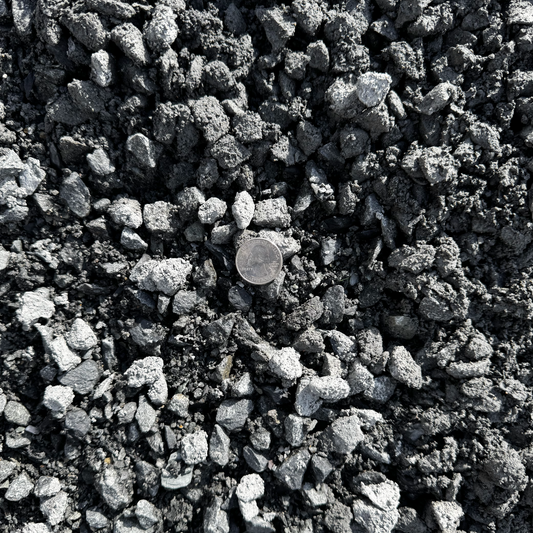
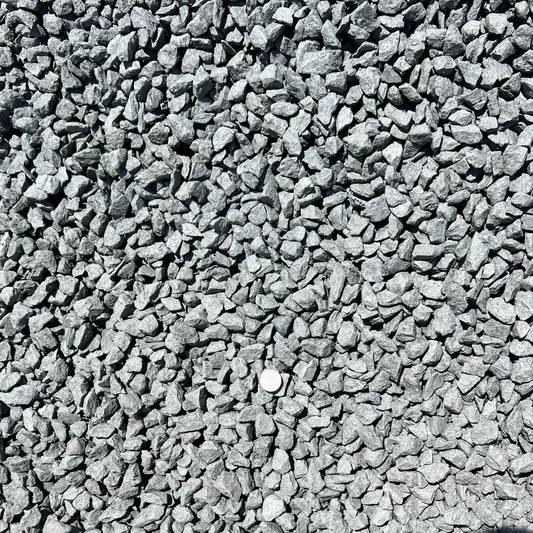
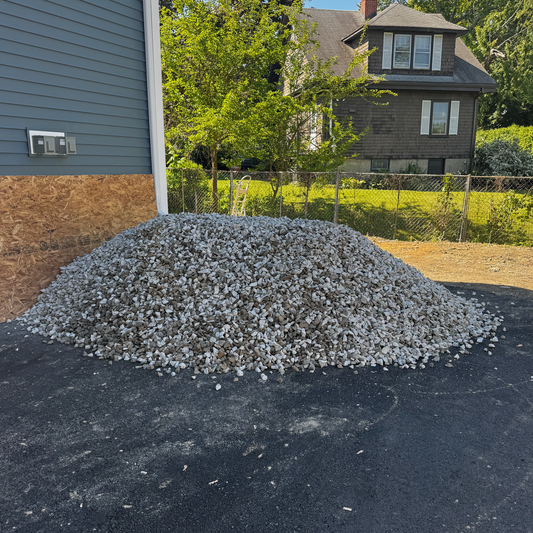
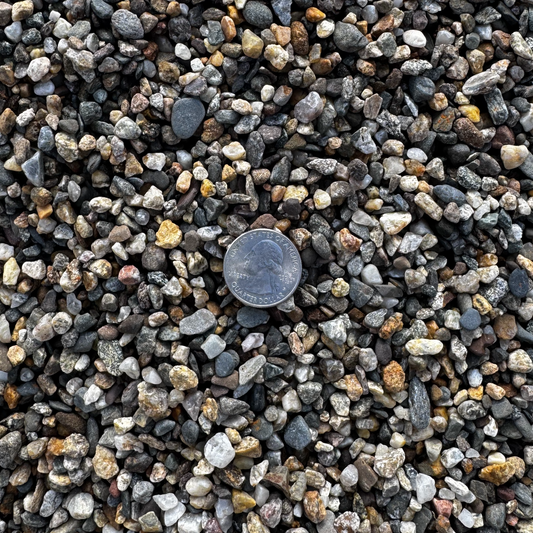
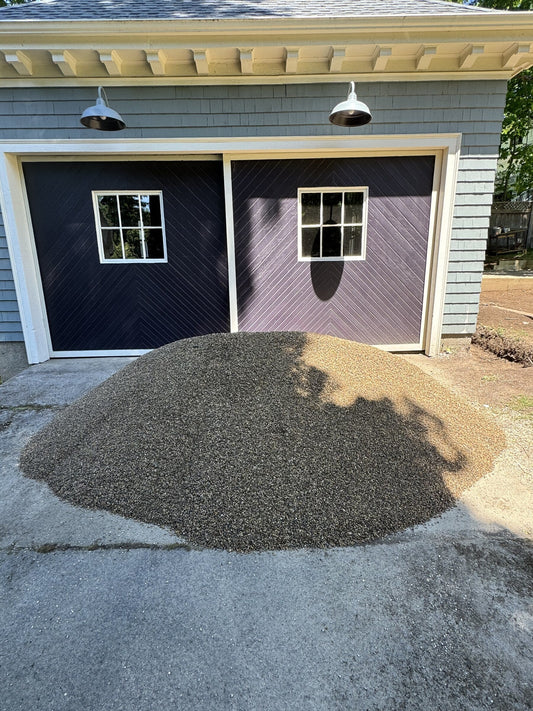
- Salt-sand 20/80 (20% salt, 80% sand) — provides traction with one-fifth the chloride load. The right choice for Newton's irrigated lawns and ornamental beds. Browse Snow & Ice Management for the per-yard rates.
- Magnesium chloride — about half the lawn-burn potential of sodium chloride at equal application rates. More expensive but worth it on visible front-yard frontage.
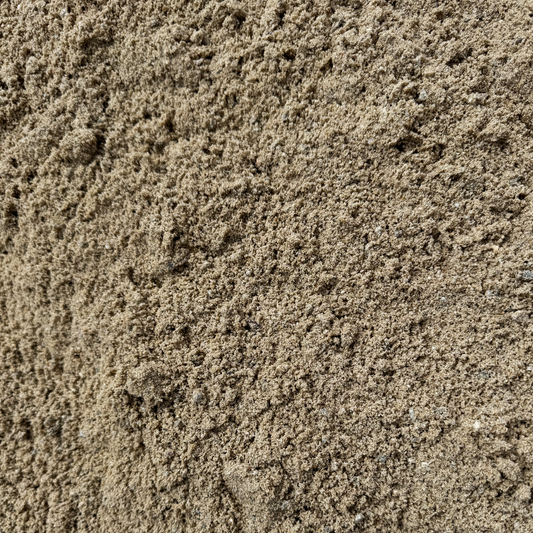
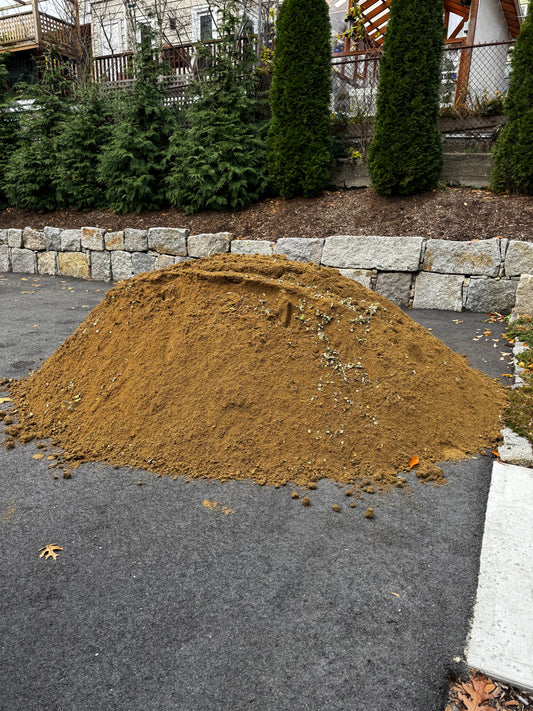
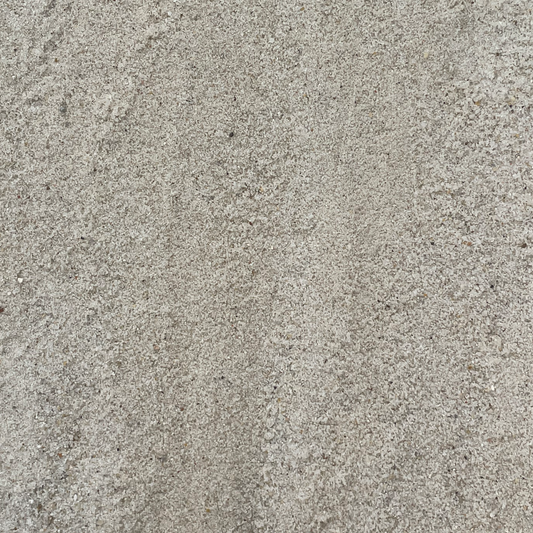
- Sand alone — for the section closest to lawn or planting beds, pure mason sand provides traction with zero chemistry. You sweep it up in spring.
Q: My contractor uses rock salt. Should I tell them to switch?
A: Tell them to apply less, in fewer spots, more strategically. Most plow operators apply at uniform rates across a whole driveway. The salt savings come from a tiered approach: rock salt on the central drive, salt-sand at the lawn edge, sand alone in the last 2 feet adjacent to flower beds. The contractor saves money on salt and you save the curb-edge lawn.
Q: My lawn already has a damage stripe. Can it recover on its own?
A: Light damage yes; heavy damage no. A light stripe (yellow but green at the soil line) usually recovers by mid-May with normal spring growth. A heavy stripe (bare or straw-brown to the soil) needs reseeding in April after temperatures stabilize. The right time and technique for Newton's reseed window is in 5 Lawn Repair Patches Medford Homeowners Can Plan Before April — same playbook applies to Newton.
For deeper damage where the plow tore turf out, see How to Reseed a Bare Spot Where the Snow Plow Tore Out a Medford Lawn.
Q: Is salt damage covered by my homeowner's insurance?
A: Almost never. Salt damage is "wear and tear" and falls outside standard policies. Insurance only covers physical lawn damage from a contractor's negligence or a documented vehicular incident.
Q: Does Ottr stock the lower-chloride options?
A: Yes. Salt-sand 50/50 and salt-sand 20/80 are both stocked by the cubic yard. The 20/80 blend is the right choice for protecting Newton's curb-edge lawns. See the Snow & Ice Management collection for current pricing and delivery scheduling.
The Recovery Playbook for Newton Lawns
- December–January: Order salt-sand blend instead of straight rock salt for any lawn-adjacent application.
- Mid-winter thaws (35°F+): Hose down the curb-edge lawn during the thaw window. Costs nothing, prevents most damage.
- April 1–15: Inspect the curb edge once snow is gone. Mark damaged spots with garden flags.
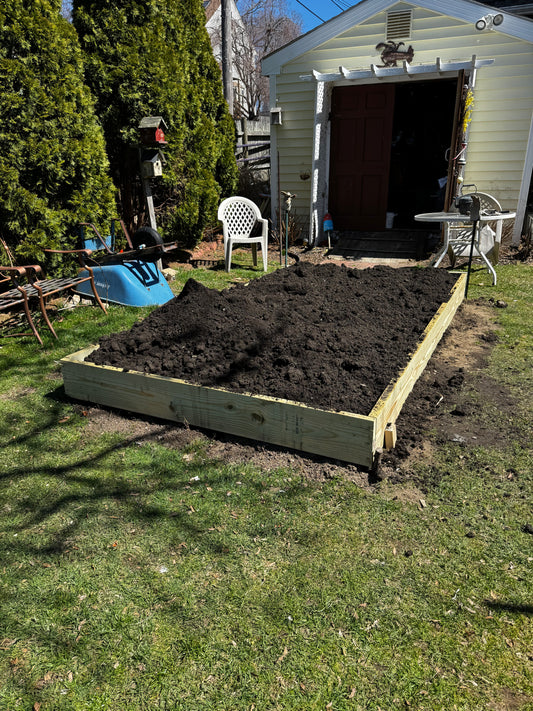
- April 15–May 1: Reseed bare patches with a Kentucky-bluegrass / fine-fescue mix. Top-dress with ¼" compost. Water for two weeks.
- September: A second seeding window for any spots that didn't take in spring.
For broader chloride runoff impact and Newton-specific watershed guidance, the EPA Smart Salting program has the most authoritative recommendations.
The short version: rock salt does damage Newton lawns, but the damage is preventable with smaller applications, blended products at the lawn edge, and a quick mid-winter rinse. Most Newton yards can stay green without giving up safety.