Quick Answer
To reseed a snow-plow bare spot in a Medford lawn: scrape out damaged turf and debris, loosen the top 3 inches of soil with a hand cultivator, top-dress with 1–2 inches of screened loam, broadcast a Kentucky bluegrass / fine fescue / perennial ryegrass mix at 4 lbs per 1,000 sq ft, top with straw mulch, and water lightly twice a day for 14 days. The total job for a 4x8 plow strip: 2 hours of work, then 14 days of patient watering. Done in late April, the patch is full turf by early June.
The Medford Plow Strip
By April, the curb-edge strip along most Medford streets — Salem Street, Boston Avenue, Mystic Valley Parkway — shows a 6-to-18-inch wide brown band where the plow scraped, salt accumulated, or both. Sometimes the plow physically tore up the turf in chunks; sometimes it's salt damage that killed the crowns. Either way, the fix is the same: reseed.
The Medford reseed window is April 20 through May 10 — soil temps reliably above 50°F, frost risk fading, days warming. After May 10, the warm-season heat slows cool-season grass establishment.
For a related piece on diagnosing salt damage vs. plow damage, see Does Rock Salt Really Kill Newton Lawns? A Garden City Q&A.
Materials
For a typical 4x8 plow-damage strip (32 sq ft):
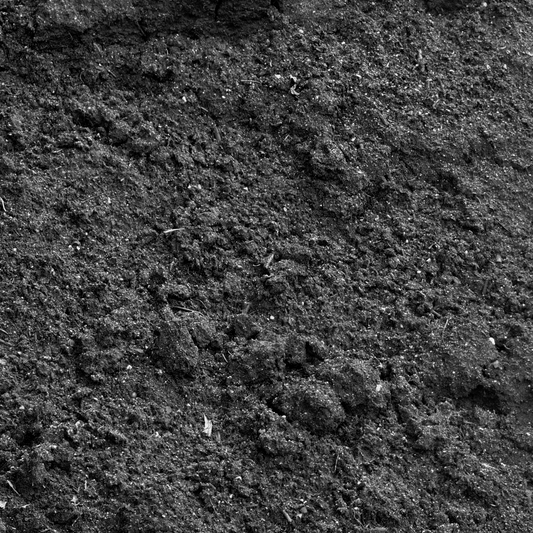
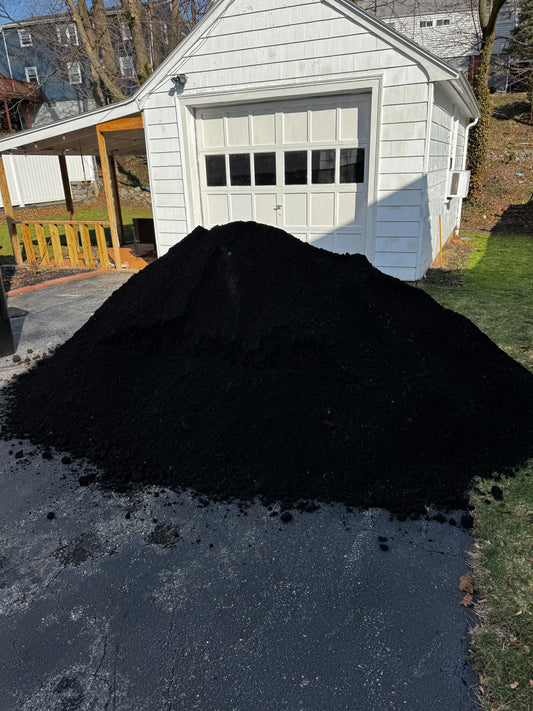
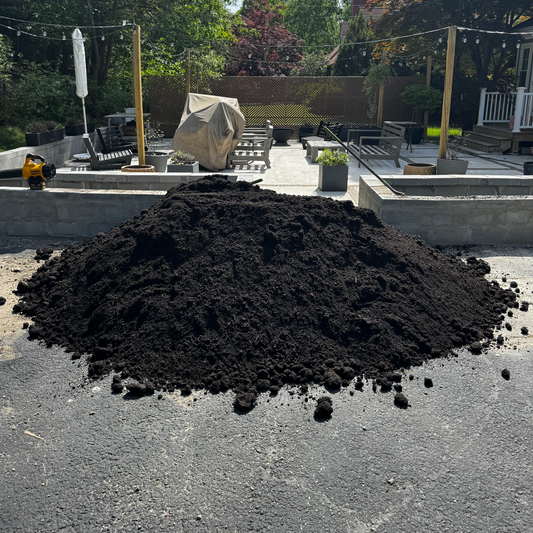
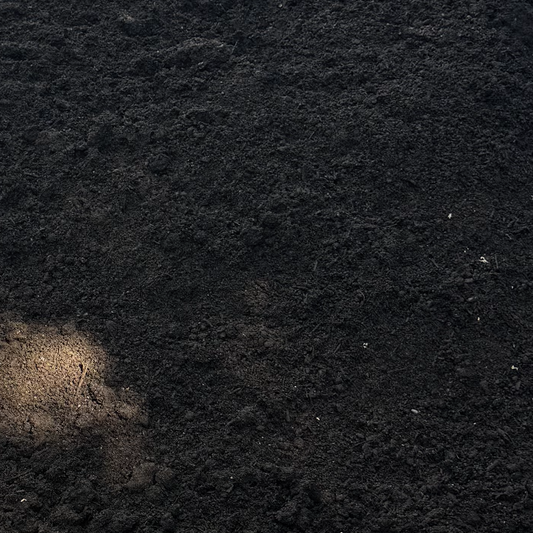
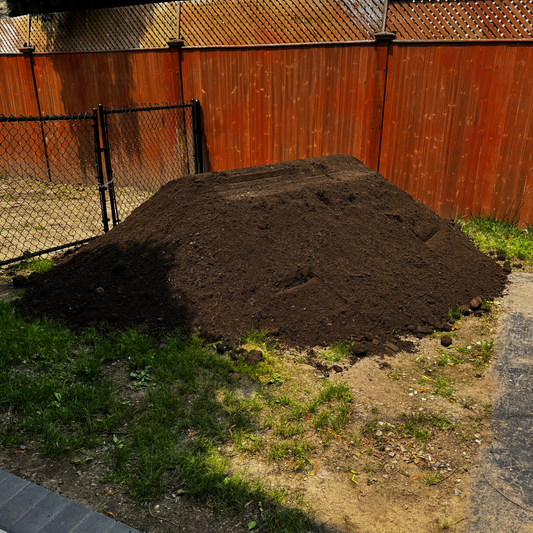
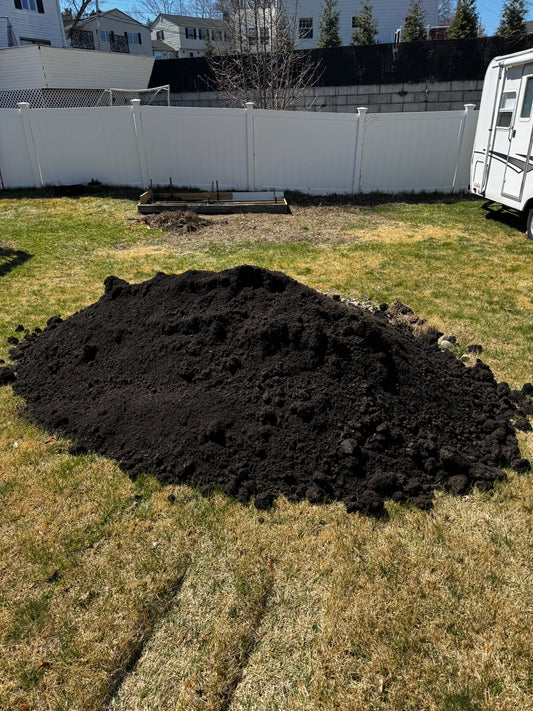
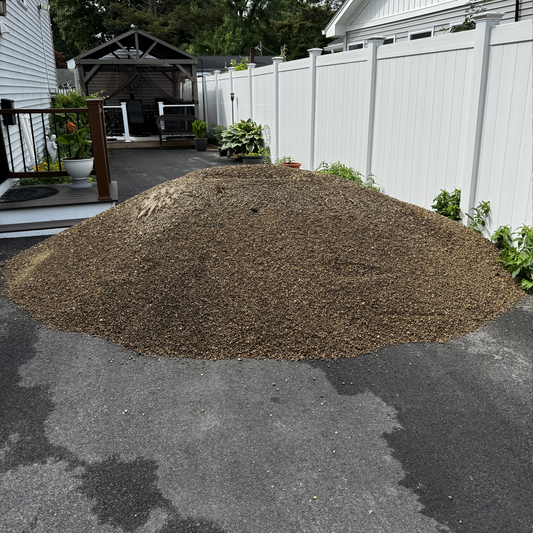
- 0.1 cubic yards screened loam (about 3 cubic feet — bag-size or a small contractor bag)
- 0.15 lb cool-season grass seed mix (Kentucky bluegrass + fine fescue + perennial ryegrass blend)
- Starter fertilizer — small amount, low-phosphorus
- Straw mulch or biodegradable seed blanket — covers the seeded area
- Hand cultivator + garden rake — basic tools, no rentals
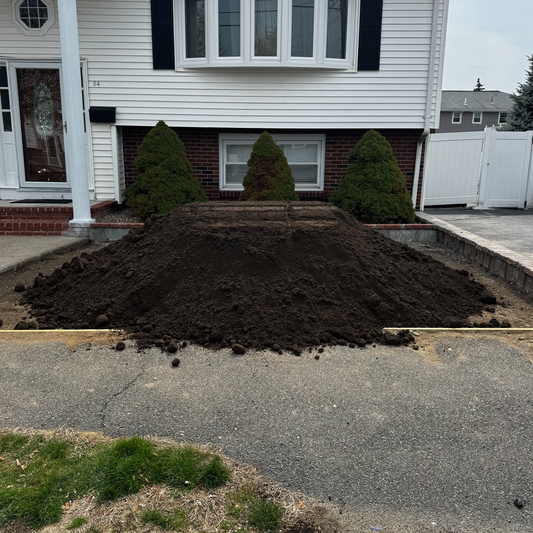
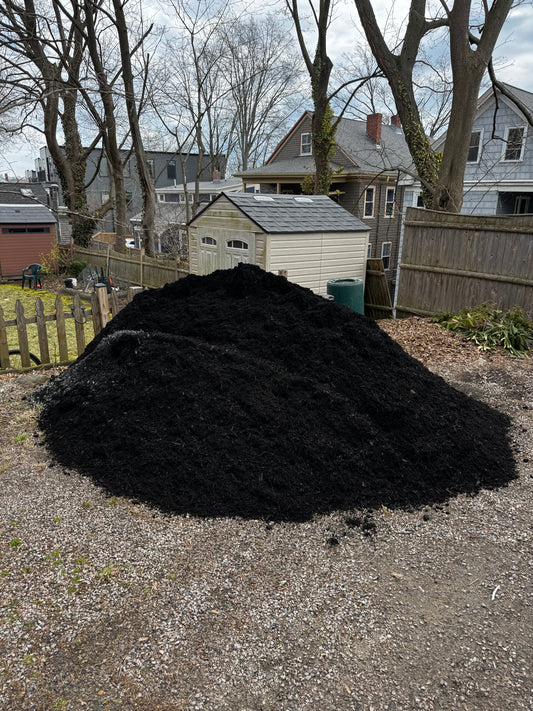
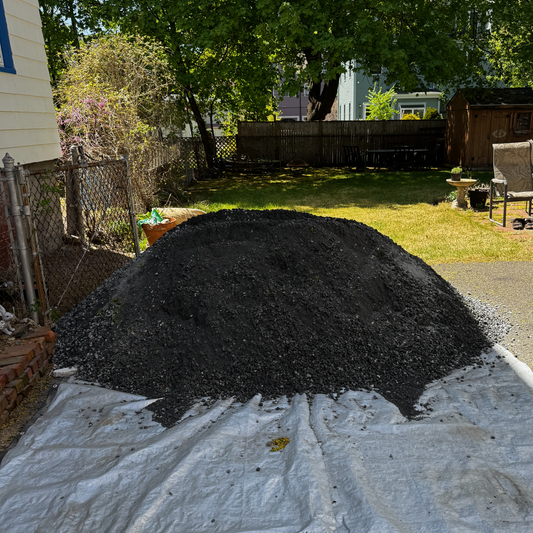
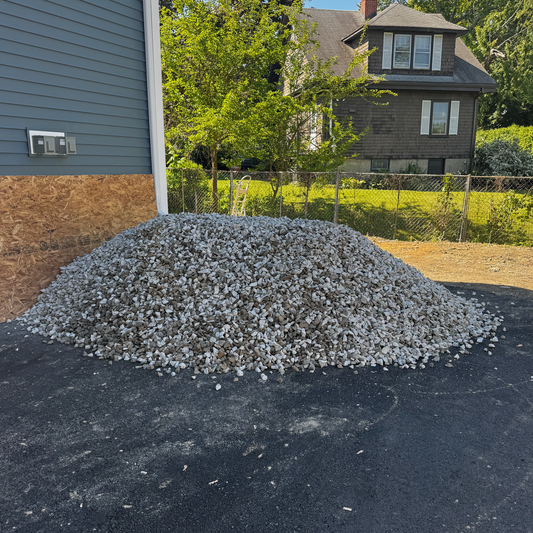
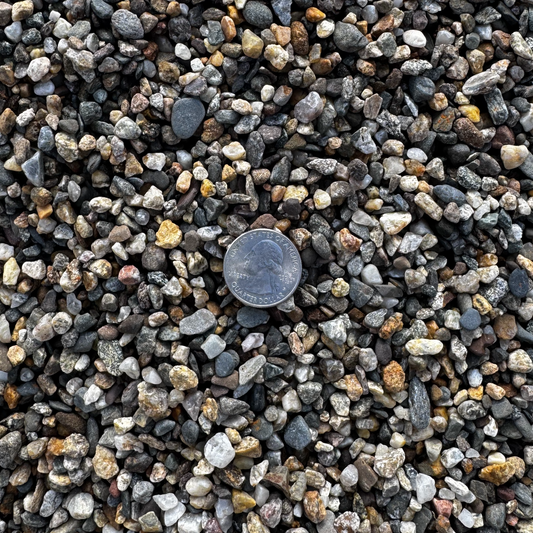
Browse the lawn leveling and repair collection for screened loam by the small bag or larger volume. For larger lawn-renovation projects, see 5 Tools That Make Lawn Leveling Faster on a Brookline Property.
Step 1: Clear the Damage Zone (15 minutes)
Use a stiff garden rake to remove all loose debris — torn turf chunks, leaves, salt-crusted soil. For salt-damaged areas (yellow-brown stripe with no green at the soil line), scrape down to clean soil. The salt-laden topsoil will keep killing seed; remove it.
For physically torn areas (plow gouges), pull the torn turf chunks. Save them only if they're 80% intact — most plow damage isn't worth replanting.
Step 2: Loosen the Soil (15 minutes)
Use a hand cultivator to loosen the top 3 inches of remaining soil. The goal is breaking up compaction so seed roots can reach down. Don't over-till — you want clods broken to thumb-size, not powder.
For severely compacted Medford soils (clay-heavy near the Mystic River), consider a double-pass with a stiff steel rake to fully break up the surface.
Step 3: Top-Dress with Loam (20 minutes)
Spread 1–2 inches of screened loam evenly across the prepared soil. Rake to level. The loam is what germinating seed roots actually grow into; without it, you're seeding into compacted construction-era subsoil that won't sustain turf.
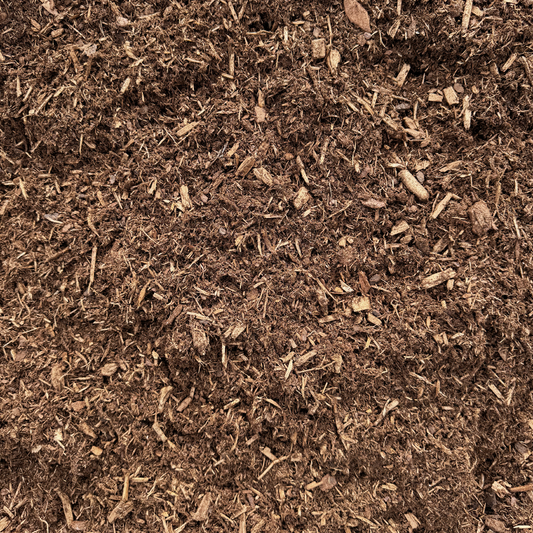
For Medford lawns where the underlying soil is heavy clay, mix 1 part screened loam to 1 part screened compost — see Three Bulk Compost Sources Compared for Plymouth County Vegetable Gardens for compost spec details.
Step 4: Choose the Right Seed Mix (5 minutes)
For Medford curb-edge plow strips, the right mix is:
- 40–50% Kentucky bluegrass — long-term backbone, spreading rhizomes
- 30–40% fine fescue — shade-tolerant, drought-tough
- 15–25% perennial ryegrass — fast germinator, holds the slope while bluegrass establishes
Avoid pure ryegrass mixes — they germinate fast but die out by year three. Avoid pure tall fescue blends in Medford — too coarse next to typical neighborhood lawns. The UMass Turf Program has authoritative guidance on cool-season turf for the Boston region.
Step 5: Broadcast the Seed (10 minutes)
Apply at 4 lbs per 1,000 sq ft for new seeding (about 0.13 oz per square foot — lighter than it sounds). Broadcast by hand for small patches; use a hand spreader for areas over 20 sq ft.
After spreading, lightly rake to mix seed into the top 1/4 inch of loam — most cool-season grass needs to be just under the surface, not buried deep, to germinate.
Step 6: Tamp Lightly (5 minutes)
Walk across the seeded area with a hand tamper or a flat board. The goal is seed-to-soil contact — seeds bouncing on top of loose loam dry out and die. Tamping presses them into the moist top layer where germination starts.
For larger areas, a half-filled lawn roller does the same job faster.
Step 7: Mulch with Straw (10 minutes)
Spread straw or a biodegradable seed blanket lightly across the seeded area. You should still see 50% of the soil through the straw — too thick and the grass can't push through. Straw holds moisture, blocks bird predation, and prevents seed wash from the next rain.
Salt-marsh hay is the gold standard if you can find it locally. Wheat straw works fine. Avoid hay (with seed heads) — you'll plant your weeds along with your grass.
Step 8: Water Religiously (Days 1–14)
Cool-season grass seed needs constant moisture for germination (7–14 days). Don't soak; mist. Twice a day, light mist for 2 minutes. Keep the top 1/2 inch of soil consistently damp without ponding.
If you go even one hot afternoon without water during day 4–10, you'll lose half the seed. Set a phone reminder. Or use a garden timer if you'll be away.
After germination (visible green fuzz at day 10–14), shift to deeper, less frequent watering — once every 2–3 days, deep enough to wet 2 inches down. This trains the new roots to grow deep.
Step 9: First Mow (Day 30–45)
Wait until the new grass reaches 4 inches before the first mow. Cut to 3 inches — a 25% trim, max. Sharp mower blades only; dull blades tear young seedling crowns.
For continuing care, the principles in How to Dethatch and Aerate a Tired Newton Lawn become relevant in year two as the new turf integrates with the existing lawn.
Why Medford Plow Strips Re-Fail
Without addressing the cause, the patch fails again next winter. Three things to do for permanent fix:
- Mark the curb edge with reflective garden flags before December — gives the plow operator a visual buffer
- Switch to salt-sand 20/80 for any salt at the curb edge (see How to Spot Salt Damage on a Brookline Lawn Edge in Late Winter for the chemistry)
- Top-dress annually with a thin loam layer — keeps the curb-edge soil healthier
For broader cool-season turf science, Cornell Turfgrass program research (the Cooperative Extension turf program) is the authoritative Northeast reference.
What This Means for You
Two hours of work in late April, two weeks of misting, and the plow strip is full turf by early June. Order screened loam from the Medford landscape supply routes — Ottr delivers in small contractor bags or by the cubic yard depending on the patch size.