Quick Answer
For a typical Brookline apartment-building apron — say a 20'×40' driveway plus a 6'×40' sidewalk = 1,040 sq ft — figure roughly ¼ to ½ pound of rock salt per square foot per application. That's 260 to 520 pounds (a quarter to a half cubic yard) per storm. For pre-treatment before a forecast storm, drop to 1–2 ounces per square foot — about 65 to 130 pounds. Bigger lots (20+ unit buildings) buy by the cubic yard. Smaller lots stick with bagged.
Why the Math Matters in Brookline
Brookline is the densest non-Boston city in Massachusetts. A typical Coolidge Corner or Washington Square apartment building has a back-alley apron that funnels into a curb cut, and the property manager is responsible for keeping the apron, the sidewalk, and the curb cut clear. Over-apply salt and you damage the asphalt, the sidewalk concrete, and the lawn beds the building maintains. Under-apply and you've got an ADA-compliance problem when a tenant slips at 6 a.m.
The math below assumes a typical mid-rise Brookline apartment building with one main apron, one sidewalk frontage, and one or two side walks to back-of-building entrances.
Step 1 — Measure Your Square Footage
Don't estimate. Walk the apron with a tape measure or a measuring wheel. Capture three numbers:
- The driveway apron: length × width.
- The sidewalk frontage: length × width.
- Any side walks to back entrances or trash storage areas.
Sum the three. That's your salting square footage. For Brookline mid-rise buildings, this typically runs 800–2,500 sq ft.
Step 2 — Pick Your Application Rate
Rates vary by storm severity and by what you're trying to do:
- Pre-treatment (before storm): 1–2 oz per sq ft (about ¾ to 1½ lbs per 100 sq ft).
- Light snow (under 3"): ¼ lb per sq ft.
- Heavy snow / re-application after plow: ½ lb per sq ft.
- Ice storm or freezing rain: ½ lb per sq ft, but switch chemistry to calcium chloride or treated salt for the sub-15°F performance.
These rates assume bulk rock salt (sodium chloride). Calcium chloride and magnesium chloride are more potent — cut the rate by 30–50% for those products. See How to Read an Ice Melt Bag for the chemistry breakdown.
Step 3 — Multiply and Convert
A typical Brookline apron at 1,040 sq ft × 0.25 lb/sq ft = 260 lbs per application. At 0.5 lb/sq ft for heavy storms = 520 lbs.
Convert to bags or cubic yards:
- 50-lb bag: 260 lbs = 5–6 bags per application.
- 80-lb bag: 260 lbs = 3–4 bags.
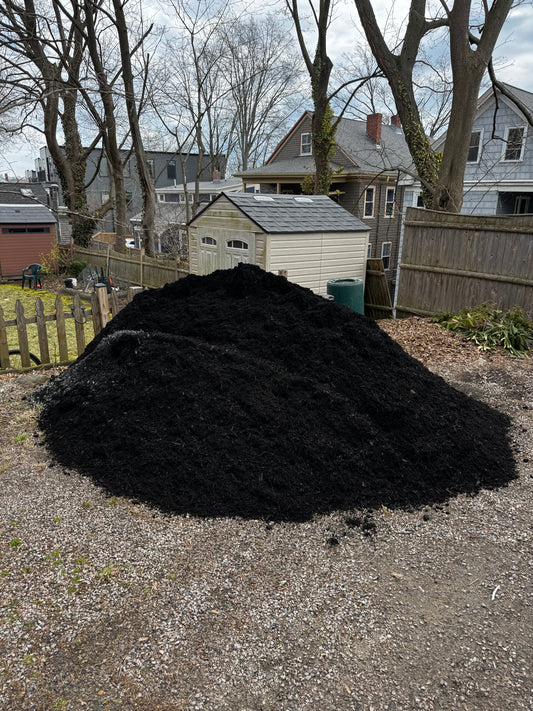
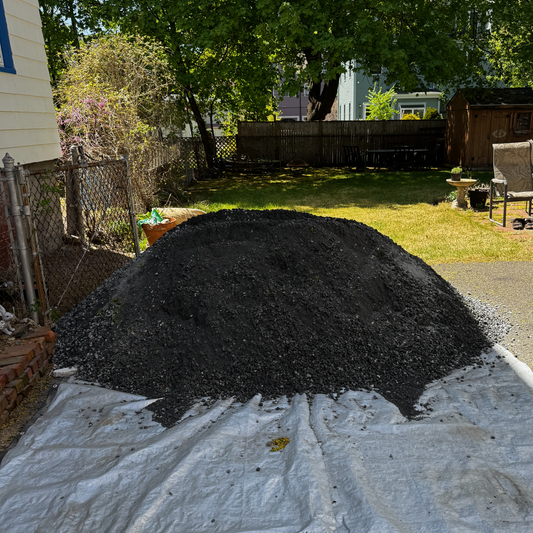
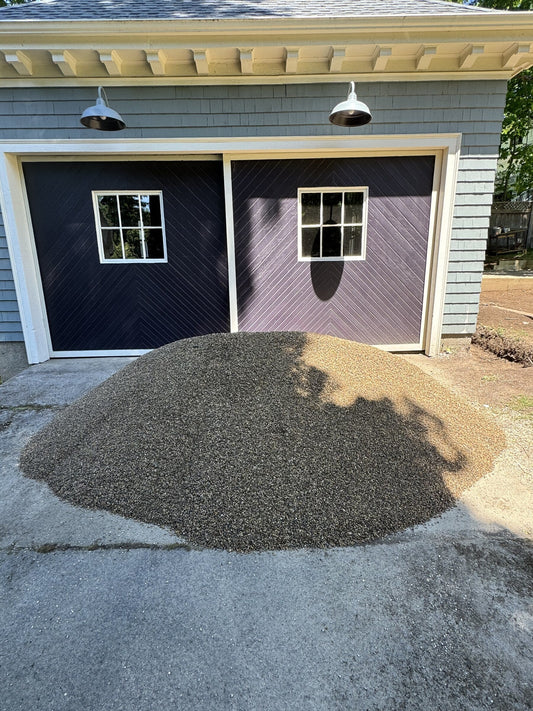
- Cubic yard of bulk rock salt weighs roughly 2,200 lbs — covers about 8–9 applications at 260 lbs each. For a typical Boston-area winter (15–25 plow events), that's roughly 2–3 cubic yards per season.
Step 4 — Order the Right Format
For a single-storm need under 200 lbs: bagged rock salt from a hardware store is fine.
For a single-storm need 200–500 lbs: bagged is workable but heavy. A pallet of 50-lb bags (40 bags = 2,000 lbs) saves trips.
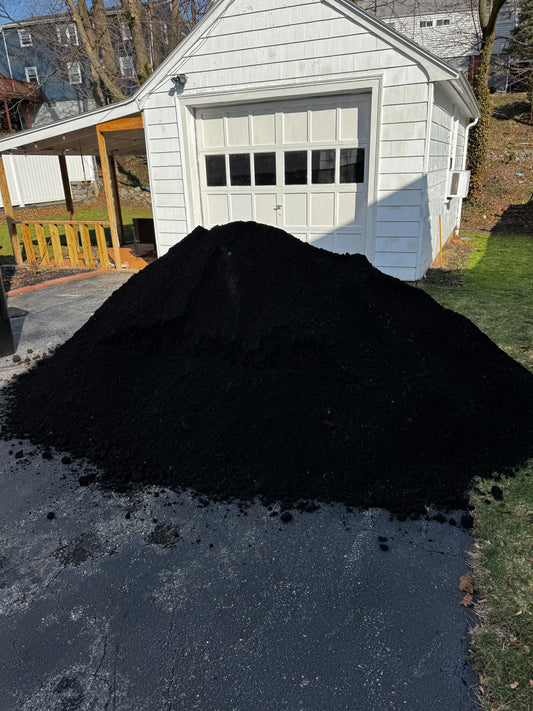
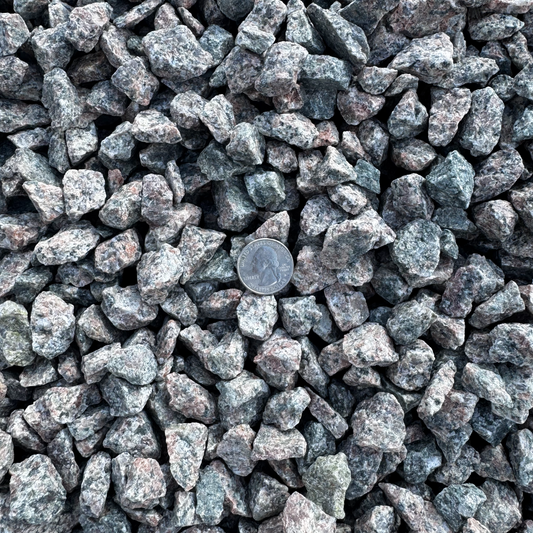
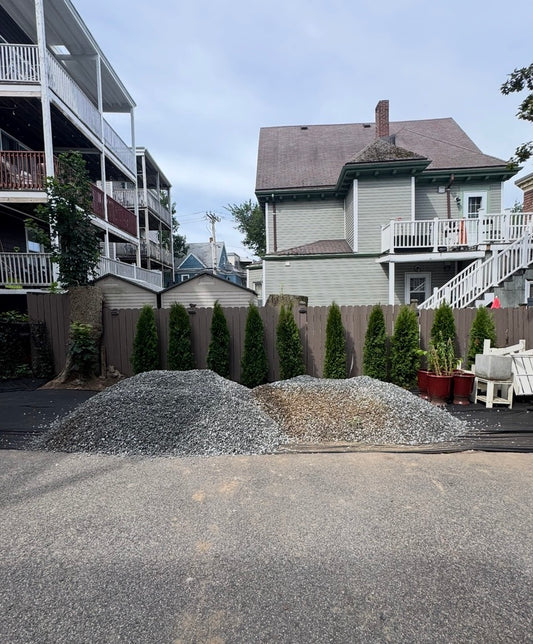
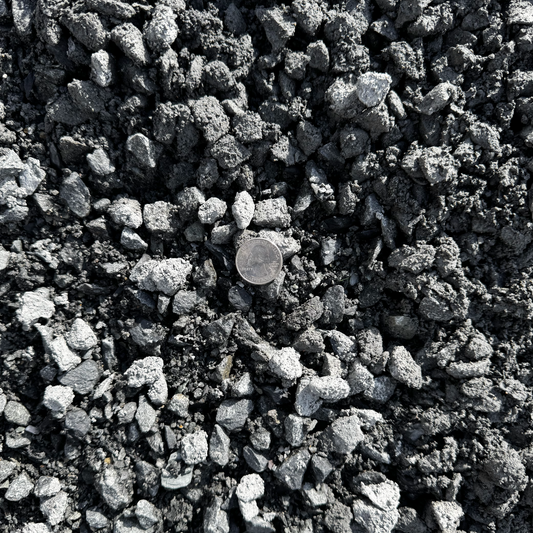
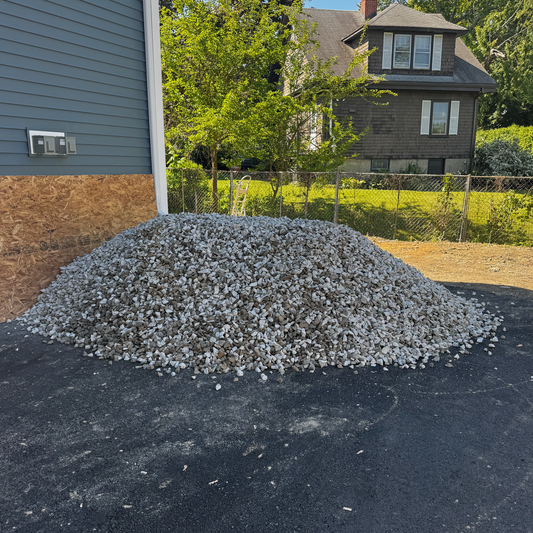
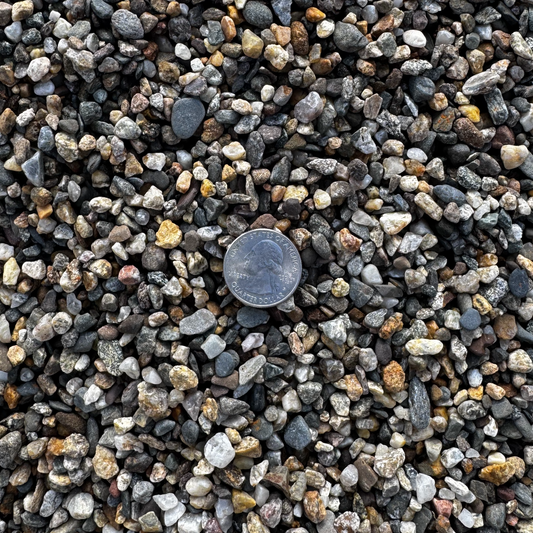
For a whole-season need over 1,000 lbs: bulk by the cubic yard via Ottr Landscape Supply. Cuts per-pound cost roughly in half. The Snow & Ice Management collection has rock salt (treated and untreated) and salt-sand blends by the cubic yard, with same-day or next-day delivery to Brookline and the rest of Norfolk County.
Common Mistakes (and How to Avoid Them)
Over-applying because the bag suggests a heavy rate. Bag instructions are conservative, calibrated for liability protection, not optimization. Most homeowners and building managers use 30–50% more salt than they need. The damage to lawn edges, brick walks, and old concrete shows up by April.
Using straight rock salt next to the brick steps. Rock salt under 30-day-old concrete causes scaling. On Brookline's older brick walks and brownstone steps, prefer calcium chloride (it's gentler on masonry) or sand alone for the final 2 feet next to the building.
Pre-treating with salt right before a storm dumps 12+ inches. The plow sweeps up the salt with the snow. Pre-treat lightly (1 oz/sq ft) before forecast snowfall under 6". For bigger storms, salt after the first plow.
Forgetting the curb cut. The metal grate and the concrete apron at the curb cut are where most slip-and-falls happen. They need their own application — usually a half pound dropped strategically right at the metal edge.
A Worked Example: 1,040-Sq-Ft Brookline Apron
You manage a 12-unit building near Coolidge Corner. The apron and sidewalk total 1,040 sq ft. A typical Boston winter sees roughly 18 plow events.
- Pre-treatment (8 events): 1 oz/sq ft × 1,040 = 65 lbs each = 520 lbs total.
- Light snow application (8 events): 0.25 lb/sq ft × 1,040 = 260 lbs each = 2,080 lbs total.
- Heavy/ice events (2 events): 0.5 lb/sq ft × 1,040 = 520 lbs each = 1,040 lbs total.
Season total: ~3,640 lbs ≈ 1.7 cubic yards. Round up to 2 cubic yards with extra for unexpected events.
For a multi-building portfolio that runs into multiple cubic yards, see the contractor pre-booking playbook in Pre-Booking Spring Mulch Loads — same logic applies to bulk salt orders. For a comparison of which products work best for Suffolk County conditions (which apply to Brookline too), see 5 Ice Melts Compared for Suffolk County Driveways.
For broader application standards and runoff impact in dense urban areas, the EPA Smart Salting program is the authoritative source.