Quick Answer
For a Brockton crew running 3–6 trucks through April and May, pre-booking spring mulch in January typically saves $3–$7 per yard versus spot-buying in April, locks delivery slots when April yards are booked solid, and pegs your job-quote math against a known cost. The structure: a 25–50% deposit in January or early February, balance on delivery, with rate-locked yardage drawn down across March, April, and May. Below: the contract math, the volume tiers that move the needle, and the call to make this week.
Why January Is the Right Call for a Brockton Crew
By the second week of April, every supply yard in Plymouth County is dispatching from 5 a.m. to 7 p.m. and turning new accounts away on peak days. If you're running cleanups in Brockton, Easton, Stoughton, and Whitman simultaneously, your bottleneck isn't crew or trucks — it's whether the yard can drop your mulch within a 36-hour window of the install date. Pre-booking solves that.
The other half is pricing. Spot-rate mulch in April runs 5–10% above January's pre-book pricing. Multiply that across a 200–500 yard season and you're looking at real money — money that's already been quoted into your customer estimates at the lower number.
How the Pre-Book Contract Works
Ottr structures contractor pre-book agreements around three pieces:
1. Volume commitment. You commit to a yardage range — say, 150 yards across March 15 to May 31, drawn in 8–14 yard truckloads. The range gives you flex; the commitment locks your rate.
2. Deposit. Typically 25–50% of contracted volume at January–February signing. This holds the rate and the priority dispatch slot. The deposit applies dollar-for-dollar against draws.
3. Per-yard rate lock. Pegged to January pricing. Hardwood, hemlock, and dyed tiers each have their own lock rate. The bulk mulch collection shows current homeowner pricing; contractor pricing is tier-discounted off that.
The balance gets billed per delivery against your standing PO, NET 15 or NET 30 depending on account history.
Volume Tiers That Move the Needle
Pre-book savings aren't linear. The tier breaks Ottr uses for Brockton-area crews:
- 50–100 yds: ~$2–3/yd off spot rate, priority dispatch.
- 100–250 yds: ~$3–5/yd off, plus locked delivery windows on Saturdays through April and May.
- 250+ yds: ~$5–7/yd off, plus dedicated dispatcher contact and option for jobsite same-day reload.
- 500+ yds: custom — call dispatch direct.
A typical 4-truck Brockton operation running residential cleanups across South Shore towns lands in the 150–300 yard range across the spring. That's the sweet spot for the second tier and worth the January call.
Mulch Mix: What to Pre-Book vs. What to Spot-Buy
Not every product belongs on the pre-book contract. The split that works for most Brockton crews:
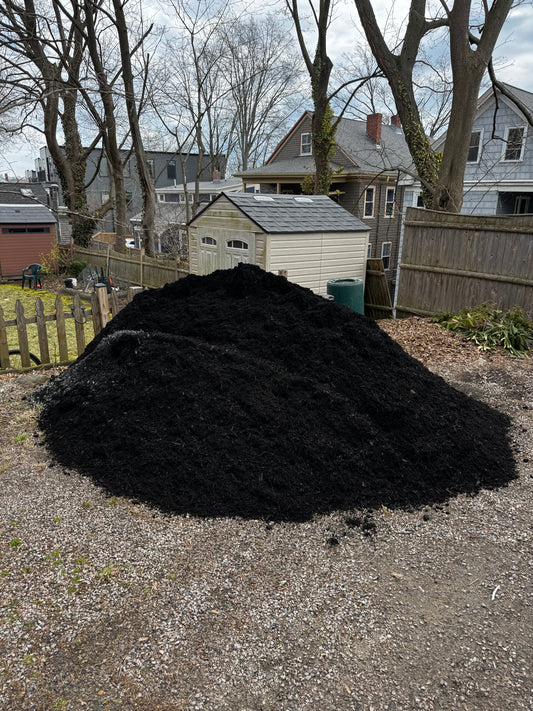
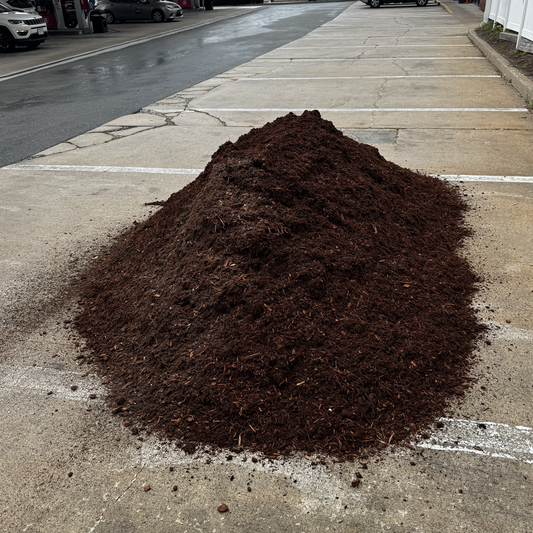
Pre-book: Plain ground hardwood (your high-volume workhorse), dyed black, dyed brown. These are the products you'll move every week and where rate-lock plus slot-priority pays.
Spot-buy: Hemlock (volatile pricing, narrow customer demand), specialty pine blends, and any one-off color a designer specs. Order these against jobs as they come in.
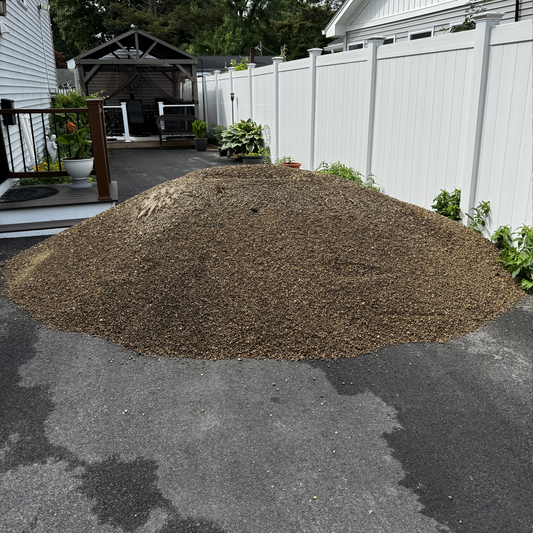
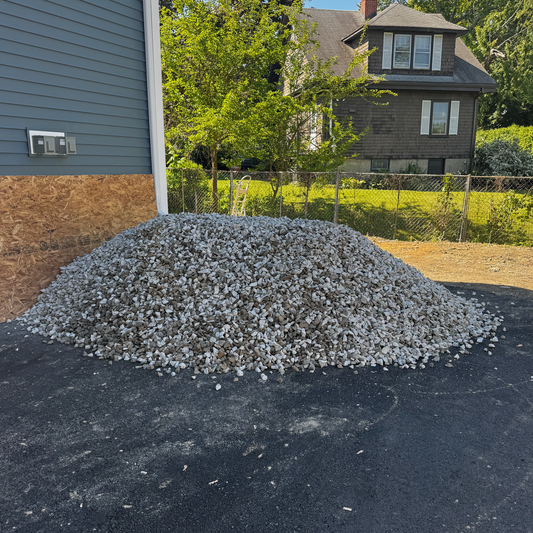
For the gravel side of the same playbook, the Plymouth County gravel driveway build guide covers tonnage math for sub-base and top-coat work that often runs alongside mulch jobs in May.
The January Conversation: What to Have Ready
When you call dispatch this week, have these numbers in front of you:
- Last year's actual mulch volume by product — the jobs you ran, what you used. If you don't have records, work backward from beds-installed-times-3 yards as a rough proxy.
- Project pipeline for March–May — confirmed contracts plus high-probability bids.
- Truck access at your jobsites — gates, side yards, alley constraints. Brockton residential lots often need the 14-yard hauling truck rather than a tri-axle, and that affects scheduling.
- Your draw windows — when you actually need product on jobsites week-by-week. Specific is better than approximate.
The dispatcher will work backward from your draw schedule to confirm the deposit, rate, and yardage range that fits.
Common Mistakes Contractors Make in January
- Over-committing on hemlock. Hemlock pricing is too volatile to pre-book efficiently. Lock the workhorse hardwood instead.
- Under-committing on dyed. Dyed product runs out fastest in April; pre-booked yardage is what gets you covered when the spot market dries up.
- Skipping the deposit step. A "verbal hold" doesn't survive April dispatch chaos. The deposit is what makes the priority slot real.
- Not tying mulch to compost orders. If you're spec'ing a topsoil-loam-compost layer on bed builds, batch the orders — same trip, half the trucking cost.
Pre-Book Pricing Math: A Worked Brockton Example
A 200-yard hardwood pre-book at $4/yd savings vs. April spot:
- Savings on material: $800
- Avoided dispatch premium on 8 peak-week deliveries: ~$240
- Crew time saved not chasing alternate suppliers when primary yard caps: 4–6 hours, ~$200–$300
Net pre-book benefit: $1,200–$1,400 on a $12,000 mulch line. That's a 10–12% margin improvement that hits the bottom line directly.
What's Next on the Calendar
After pre-booking mulch, the contractor account work continues into February with hardscape and drainage planning. The Bulk Material Account Setup for Eastern MA Landscape Contractors covers credit terms, multi-product pricing, and how the same pre-book logic extends to crushed stone and screened loam. The trench French drain weekend playbook is useful for crews adding drainage to mulch-and-bed jobs.
For broader MA agricultural and contractor reference, the Massachusetts Department of Agricultural Resources maintains the registries and standards that affect commercial landscape operators. For mulch-quality and best-practice background, the UMass Extension Landscape program is the regional authority.
Make the call this week. Brockton crews that lock January almost always run smoother springs than crews that don't.