Quick Answer
A 30-foot French drain across a Stoneham backyard takes one full weekend with two people: Saturday for trenching (8 hours), Sunday for fabric, pipe, stone, and backfill (6 hours). You'll need roughly 1.5 cubic yards of washed ¾" crushed stone, 30 feet of 4" perforated pipe, and 60 feet of non-woven drainage fabric. The trench runs 18" deep at the inlet and 24" at the outlet for a 1% slope. Stoneham's clay-loam soil makes the digging hard; rent a trencher if you can.
Why a Stoneham Backyard Needs a French Drain
Stoneham sits in a glacial valley with heavy clay-loam soil and shallow bedrock in pockets. Most backyards have a low spot that puddles in spring, drains slow, and stays soggy into June. The classic Stoneham drainage profile:
- High back corner near the woodline or fence
- Low spot in the middle of the yard, often by a patio or play area
- Foundation drain or street drain at the lower-front of the lot
A French drain catches the water at the high point, channels it underground, and discharges at a controlled outlet — solving the swamp without changing the visible yard.
For the materials and components pillar guide, see What Goes In a French Drain? A Complete Massachusetts Homeowner Guide. For a related dry-river-bed approach in a Scituate yard, see How to Build a Dry River Bed for Yard Drainage in a Scituate Backyard.
Saturday Morning — Plan and Mark the Run
Walk the yard after a rain. The soggy spots tell you exactly where water collects. Plan a trench run that:
- Starts at the wet spot (the inlet)
- Runs in a relatively straight line toward a lower point in the yard
- Ends at the outlet — typically a daylighted exit point at grade, a dry well, or a swale
Mark the trench centerline with marking paint or stakes-and-string. For a 30-foot run, that's the working scope of a one-weekend project.
Call DigSafe (811) at least 72 hours before you dig. In Stoneham, common buried utilities include cable TV, gas (interior pipe to grill), and irrigation lines. A 24" trench will hit anything within 2 feet of the surface.
Saturday Late Morning — Trench
Trench depth and slope:
- Inlet end: 18" deep
- Outlet end: 24" deep (for a 30-foot run at 1% slope)
- Width: 10–12" — wide enough for the pipe plus stone fill
Two trenching options:
Hand-dig with a round-point shovel and trenching spade. Stoneham clay is brutal. Plan 6–8 hours for two people with shovels.
Rent a trencher ($150–$250 for a half-day at a Stoneham equipment rental). Cuts the trench in 60–90 minutes. The right call for any run over 25 feet.
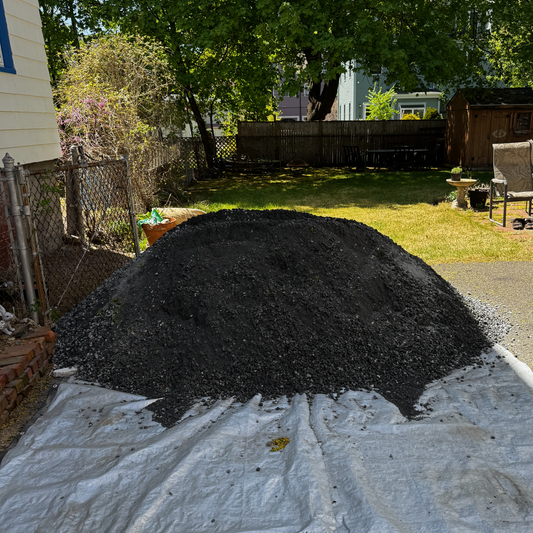
Throw the spoils onto a tarp on the lawn — easier cleanup at the end.
Verify the slope with a string line and line level. Tie a string from inlet stake to outlet stake, hang a line level, confirm the outlet end is about 4 inches lower than the inlet for the 30-foot run (1% = 1 inch per 8 feet).
Saturday Afternoon — Trench Bottom Prep
- Smooth the trench bottom with a hand tamper or the back of a rake
- Re-verify slope — the bottom should mirror the top, sloping down toward the outlet
- Remove any loose soil clumps that would create high spots
Walk away. Day 1 done.
Sunday Morning — Fabric and Stone Bedding
Lay non-woven drainage fabric (sometimes sold as "drain wrap") into the trench:
- Cut a fabric piece roughly 2× the width of the trench plus the depth on both sides (about 6 feet wide for a 12" wide × 24" deep trench)
- Drape it into the trench so it covers the bottom and both walls, with extra fabric extending out across the lawn on each side — you'll fold these flaps over the stone fill at the end
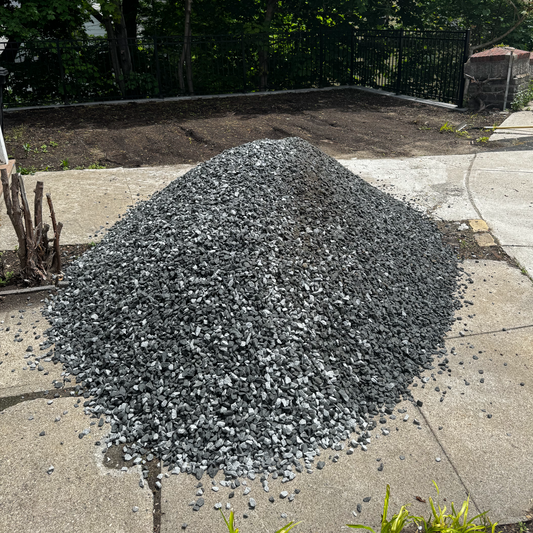
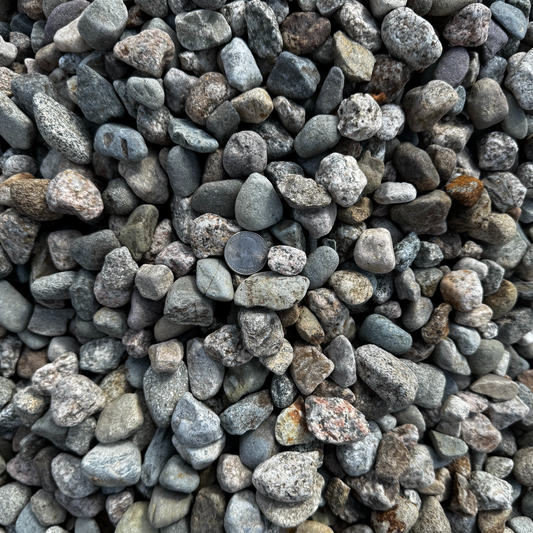
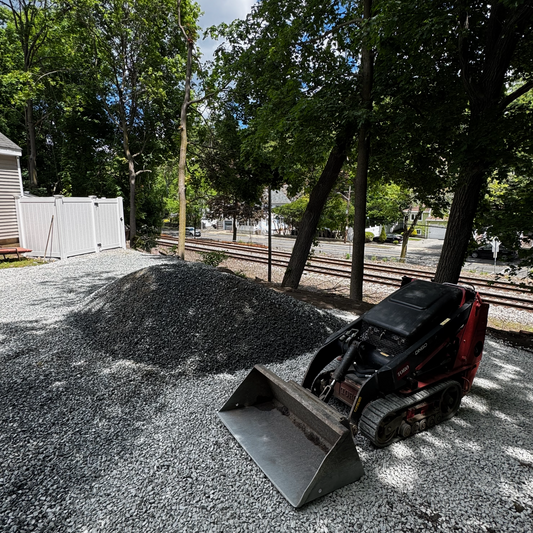
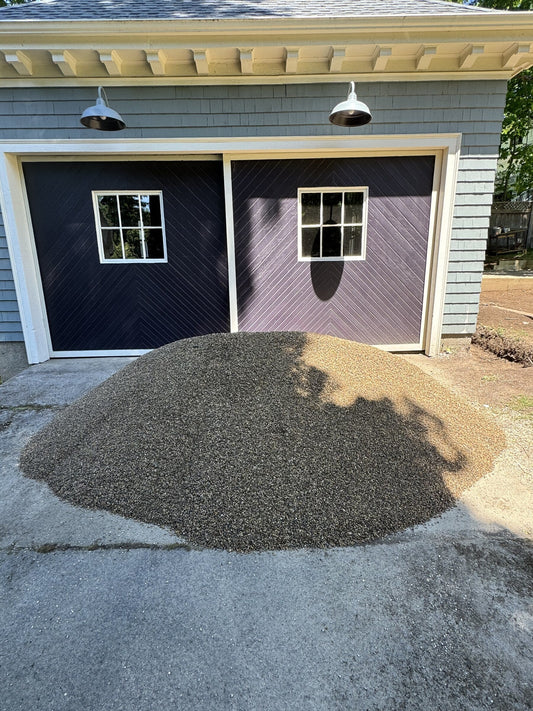
- Pour a 2–4 inch layer of washed ¾" crushed stone along the bottom of the trench, on top of the fabric
This stone bedding layer levels the surface for the pipe and creates void space for water to enter from below.
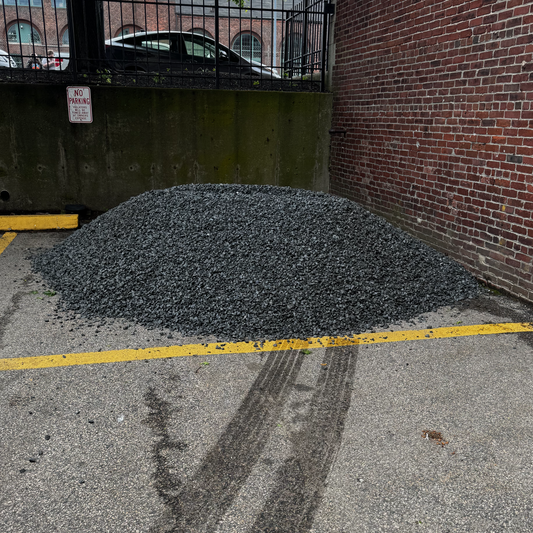
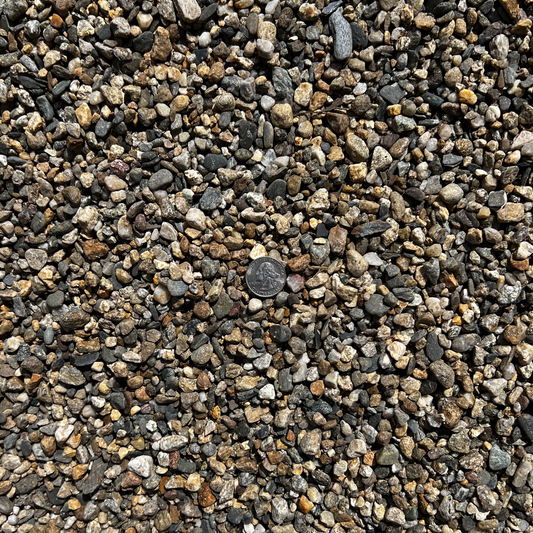
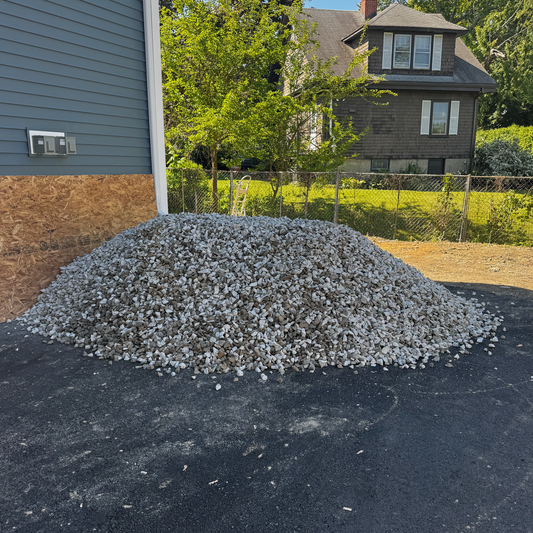
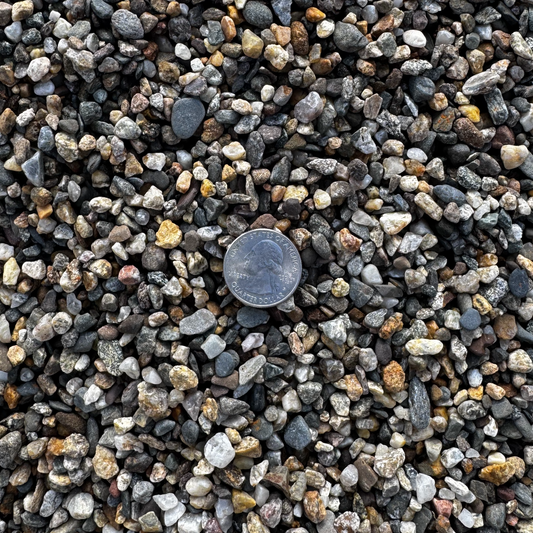
Browse the French Drain & Drainage materials collection for the stone — make sure it's washed ¾" crushed, not pea stone, not unwashed.
Sunday Late Morning — Pipe Placement
Lay 4" perforated corrugated pipe on top of the stone bedding, running the full length of the trench. Holes face down — counterintuitive but correct. Groundwater rises into the pipe through the bottom holes.
Connect the pipe to the outlet:
- Daylighted to grade — pipe ends at a lower spot in the yard with a pop-up emitter
- Into a dry well — pipe ends in a stone-filled pit at the lowest point
- Into a rain garden — pipe daylights into a planted depression
Stoneham yards usually have enough slope for daylighting. Cover the pipe end with a rodent-proof grate.
Sunday Afternoon — Stone Fill and Fabric Wrap
Pour washed ¾" stone over and around the pipe until the trench is filled to within 4 inches of grade:
- Don't let dirt spill into the stone — it clogs voids and tanks performance
- Don't compact the stone hard — let it settle naturally
- Do keep the pipe centered as you fill
Then fold the fabric flaps from each side of the trench over the top of the stone fill, overlapping in the middle. This top fabric layer keeps soil from washing into the stone from above.
Sunday Late Afternoon — Backfill and Restore
Final 4 inches:
- 2 inches of screened loam on top of the fabric
- 2 inches of topsoil + grass seed to restore the lawn surface
Within 6 weeks, the lawn knits back together and the trench line disappears. The drain works invisibly underneath.
Verifying the Drain Works
The first heavy rain after install is the test. The wet spot should drain noticeably faster — usually within 4 hours instead of 2+ days. If it doesn't, check:
- Outlet not blocked (most common failure)
- Slope correct (re-verify with a level)
- Pipe not crushed during backfill
For broader stormwater context and the EPA's residential drainage recommendations, see the EPA SNEP program. For MA-specific soil and drainage guidance, the UMass Extension is the authoritative regional source.
For a stepping-stone path that pairs nicely with a nearby drain run, see Building a Stepping-Stone Path Through a Cambridge Side Yard.
A 30-foot French drain across a Stoneham backyard is one weekend's work, $300–$500 in materials, and 15+ years of trouble-free yard drainage. The right scope for a confident DIY homeowner.