Quick Answer
A working French drain in Massachusetts has five components in this exact order: a 12–18" deep trench sloped 1% toward an outlet, non-woven drainage fabric lining the trench, 2–4 inches of washed ¾" stone as bedding, 4-inch perforated pipe with the holes facing down, and a fill of more washed ¾" stone up to within 4 inches of grade. The top 4 inches is loam and lawn (or decorative stone if visible). Skip any one layer and the drain fails within three years.
The Massachusetts Backyard Drainage Problem
MA backyards drain badly because the soil is heavy clay-loam over glacial till, the lots tilt toward the foundation, and the spring thaw dumps three months of meltwater in two weeks. By April, the low spot in the yard is a swamp. By August it's a mosquito hatchery. A French drain solves it — but only if every layer is right.
This pillar walks through the questions Massachusetts homeowners ask before they dig.
Q: What is a French drain, exactly?
A: A trench filled with stone and a perforated pipe that collects groundwater and moves it somewhere it can drain. It's not a pipe. It's a system. The stone holds open void space so water can travel through; the pipe gives the water a fast lane out; the fabric keeps soil from clogging the void space. The drain works in three dimensions, not just along the pipe.
Q: How deep does the trench need to be?
A: 12 to 18 inches in most MA yards. Deeper if you're trying to lower a high water table or relieve a foundation; shallower wastes the system. The bottom of the trench needs to slope 1% (about 1/8 inch per foot) toward the outlet. Without the slope, water sits and the drain becomes a swimming pool.
Q: What stone goes in a French drain?
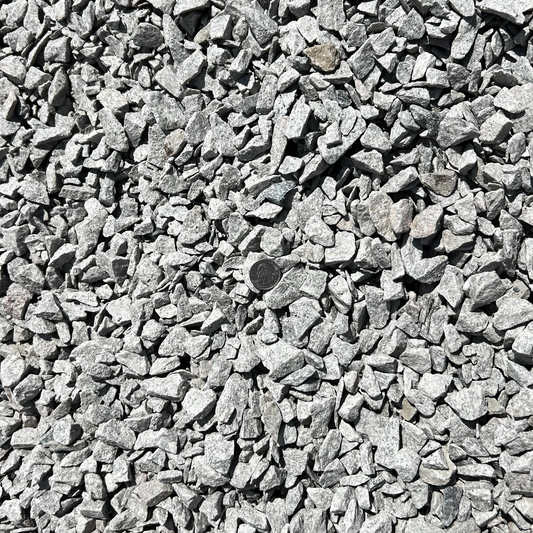
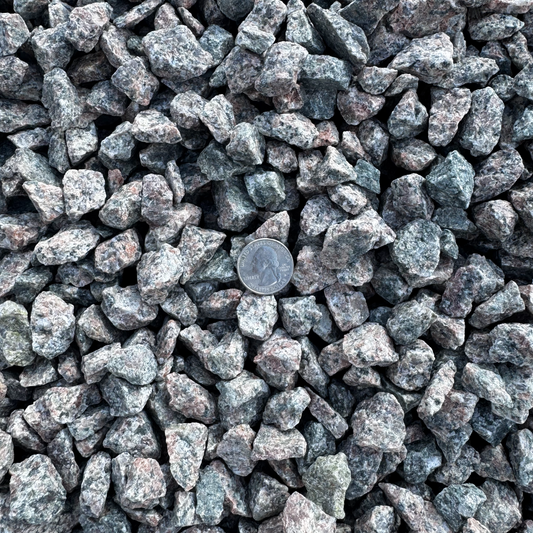
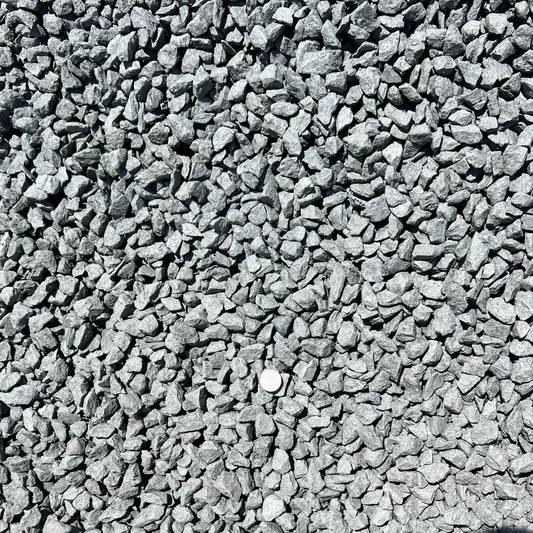
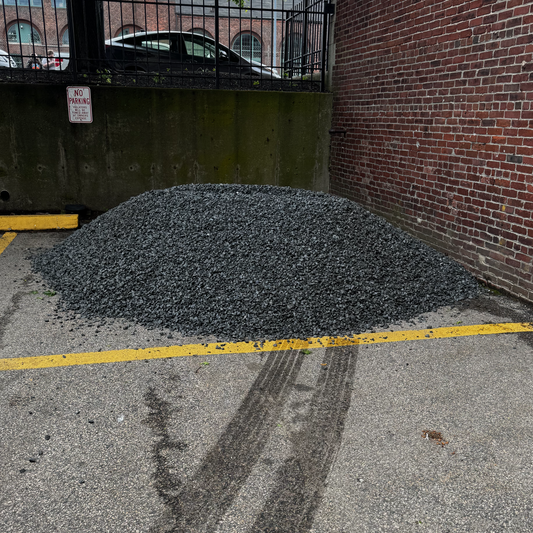
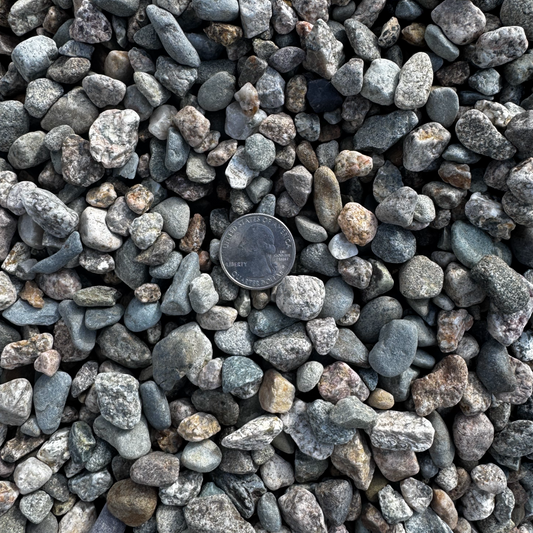
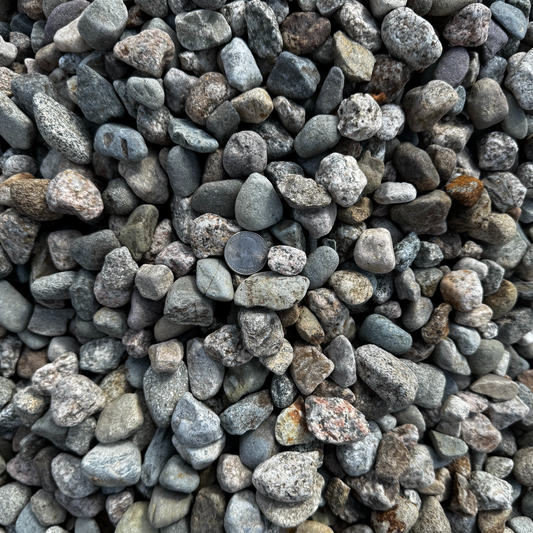
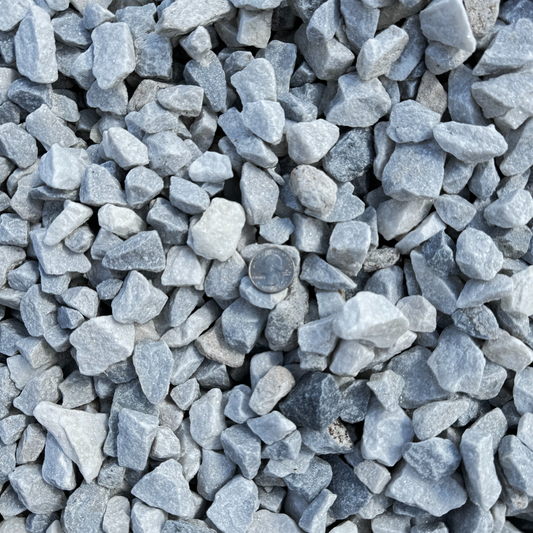
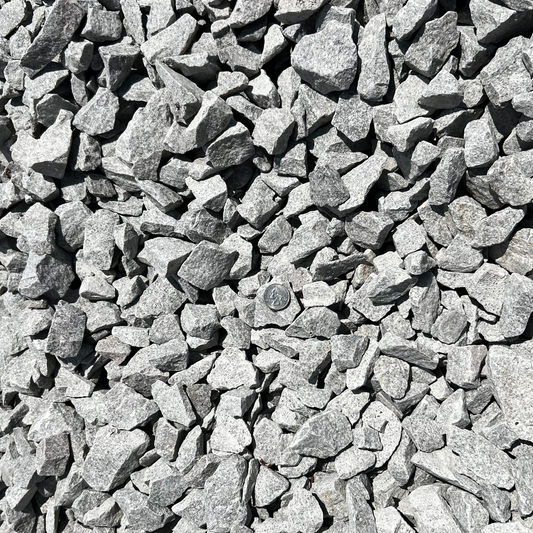
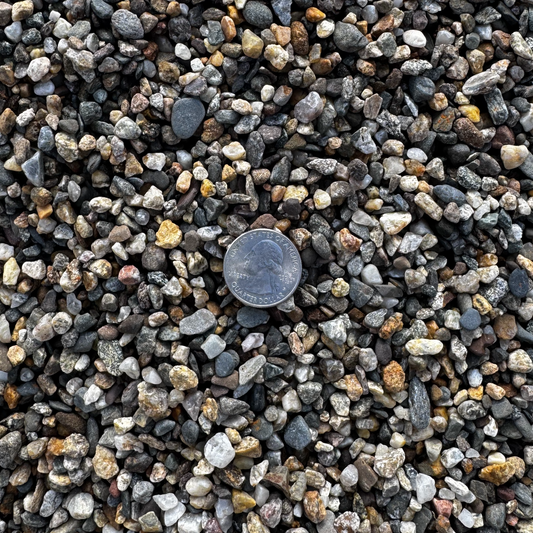
A: Washed ¾" crushed stone — the most important spec in the whole system.
- Washed matters because dust and fines clog the void space within a year if you skip the wash.
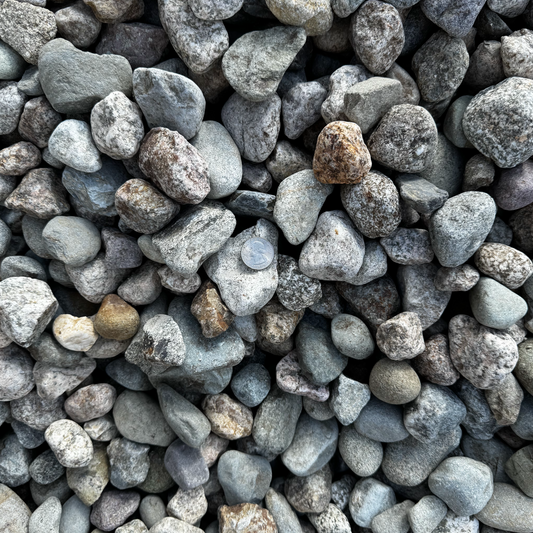
- ¾" matters because smaller stone (¼" or pea stone) doesn't hold open enough void; larger stone (1.5"+) creates voids that soil washes through.
- Crushed, not rounded matters because the angular faces lock together and resist settling.
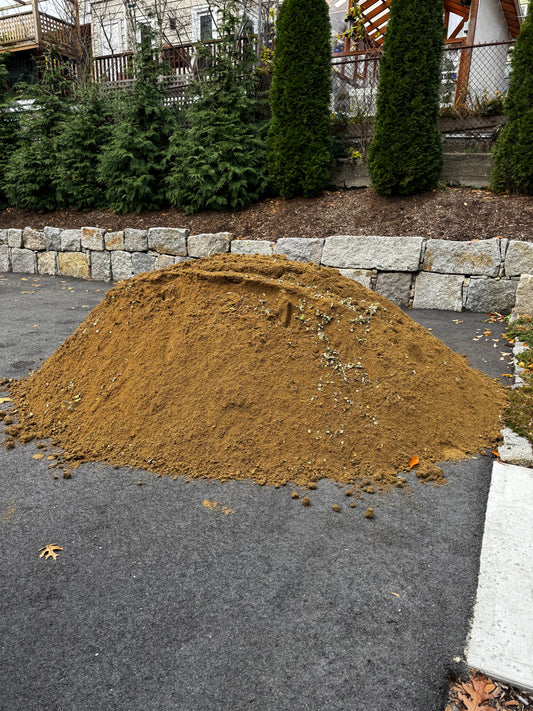
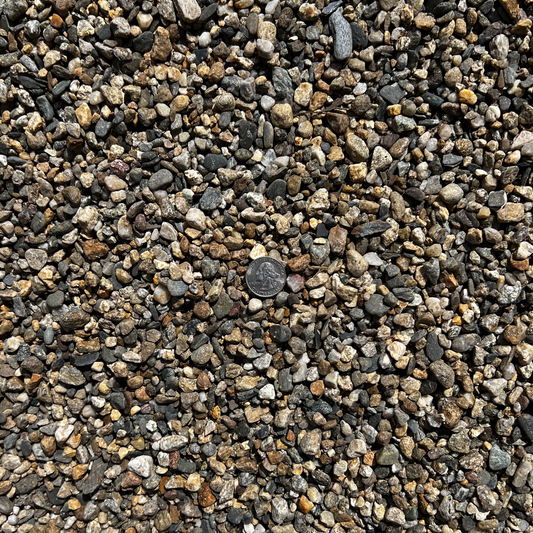
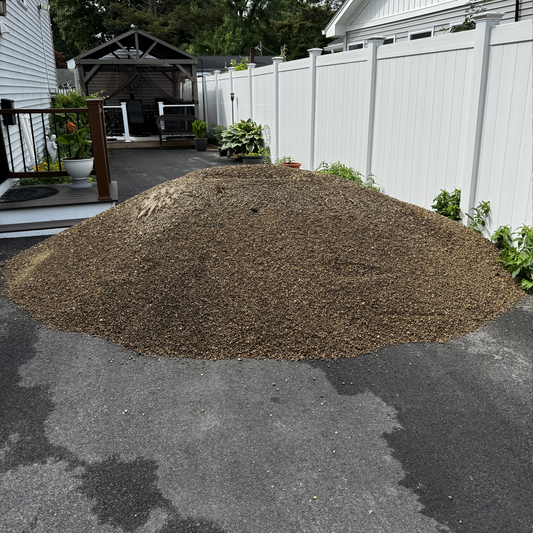
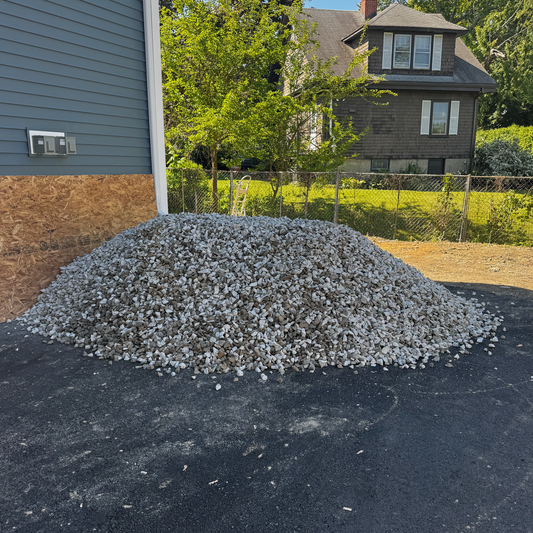
Browse French Drain & Drainage materials for the per-yard rate. A typical 30-foot trench at 18" deep uses about 1.5–2 cubic yards of stone.
Q: What kind of pipe?
A: 4-inch corrugated perforated pipe, holes oriented downward.
- 4-inch handles a typical residential drainage load. Step up to 6" for a foundation drain or any run over 80 feet.
- Perforated (holes along the length) lets groundwater enter the pipe.
- Holes facing down — counterintuitive but correct. Groundwater rises into the pipe through the bottom holes; the top of the pipe is for moving water out, not collecting more.
Some installers use rigid PVC with drilled holes. Both work. Corrugated is faster to install; rigid PVC lasts longer but costs more.
Q: Do I need fabric? Which kind?
A: Yes — non-woven drainage fabric, not landscape fabric.
Non-woven drainage fabric (sometimes called "drain wrap" or "geotextile") lets water through but blocks soil particles. It lines the trench like a sleeve — fabric down on the trench bottom, walls, then folded over the stone fill before the topsoil cap goes back on.
Don't substitute woven landscape fabric. Woven fabric blocks water along with the soil and the drain backs up.
Q: Where does the water go? (The outlet question.)
A: Downhill, daylighted, into a dry well, or into a rain garden.
- Daylighted to grade — pipe ends at a lower spot in the yard with a pop-up emitter or a rodent-proof grate. Cheapest and most common.
- Dry well — a rock-filled pit at the low end where water percolates back into the soil. Right answer for flat yards with no daylight option.
- Rain garden — the drain feeds a planted depression that absorbs the water. Best for sustainability but requires planning.
Never tie a French drain into a foundation footing drain or a sewer line. MA plumbing code prohibits both, and the EPA SNEP program has guidance on stormwater management for residential drainage that's worth reading before you plan.
Q: How long does a French drain last?
A: 15–25 years if you build it right; 3–5 years if you cut corners.
The failure modes are predictable. Skip the fabric: clogs in three years. Skip the wash on the stone: clogs in five. Use rounded river rock instead of crushed: settles and fails in seven. Use a pipe that's too small: backs up in the first heavy event. Get the slope wrong: stagnates immediately.
For a hands-on weekend build, see How to Trench a French Drain Across a Stoneham Backyard in One Weekend. For a related drainage approach using surface stone instead of buried pipe, see How to Build a Dry River Bed for Yard Drainage in a Scituate Backyard.
Q: Can I build one myself, or do I need a contractor?
A: A 30-foot residential French drain is a strong DIY weekend project. A 100-foot foundation drain is contractor work.
The cutoff is about 40 linear feet and 2 feet deep. Past that, hand-trenching gets brutal and the slope math gets unforgiving. Rent a trencher or call a contractor.
A typical Massachusetts DIY French drain runs $300–$700 in materials (stone, pipe, fabric) for a 30-foot run. A contractor install runs $1,800–$3,500 for the same scope.
Q: When is the right time of year to build one?
A: April through October — once the ground thaws and before it refreezes. Late April and early May are ideal because you can see exactly where the spring water pools.
For a stepping-stone path that complements the drain run, see Building a Stepping-Stone Path Through a Cambridge Side Yard. For new-construction sequencing where the drain goes in before final grading, see Working With Your Excavator on a Hanover Build.
The Material Stack, Top to Bottom
Reading from grade down to the trench bottom — what every successful Massachusetts French drain looks like in cross-section:
- Lawn or topsoil cap (4 inches)
- Drainage fabric folded over the stone
- Washed ¾" stone fill (10–14 inches)
- 4" perforated pipe with holes down
- Washed ¾" stone bedding (2–4 inches)
- Drainage fabric lining the trench bottom and walls
- Compacted earth, sloped 1% toward the outlet
For broader Massachusetts soil and drainage context, the UMass Extension has the most authoritative regional guidance on residential drainage.
A French drain isn't complicated, but it is exact. Get the spec right and it works for two decades. Get any one layer wrong and you're digging it up by year three.