Quick Answer
January in Newton is the right month to plan a May build. A flagstone patio, a paver walkway, a low retaining wall, a gravel parking pad, and a decorative-stone bed border are all plannable now — measurements, base specs, materials list, delivery slot — even though the ground's still frozen. Get the plan finished in January, order materials in February, and the May build is paint-by-numbers instead of a five-weekend scramble.
Why January Is the Right Planning Month
Newton's hardscape contractors are slammed from March through November. The yards that get built well in May are the yards where the homeowner walked the property in January, sketched the plan in February, and ordered the materials before the spring rush. By the time April hits and the contractor calls to confirm, you have a punch list, not a brainstorm.
The other half is supply. Bluestone, decorative gravel, and paver pallets all run tighter in May than they do in February. Pre-ordering now locks delivery into your build week.
For the Newton-specific landscape supply collection, pricing on bulk hardscape materials is current and local.
#1 — Flagstone or Bluestone Patio
The signature backyard hardscape in Newton — Garden City homeowners build more bluestone patios than any other neighborhood in eastern MA. The January plan covers:
- Footprint. Stake out the corners on a clear day, even with snow on the ground. A 12'×16' patio is 192 sq ft; a 14'×20' is 280. Walk the size, sit a chair on it, confirm it lives the way you want.
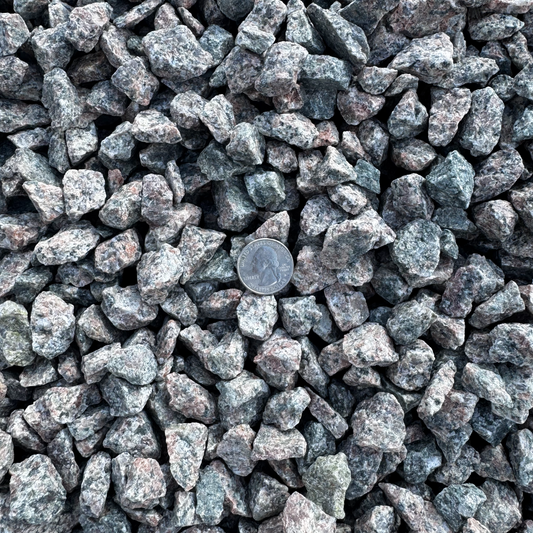
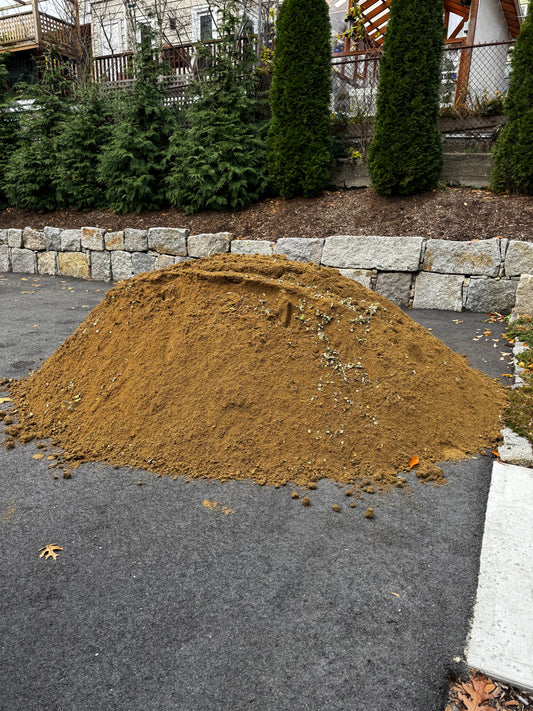
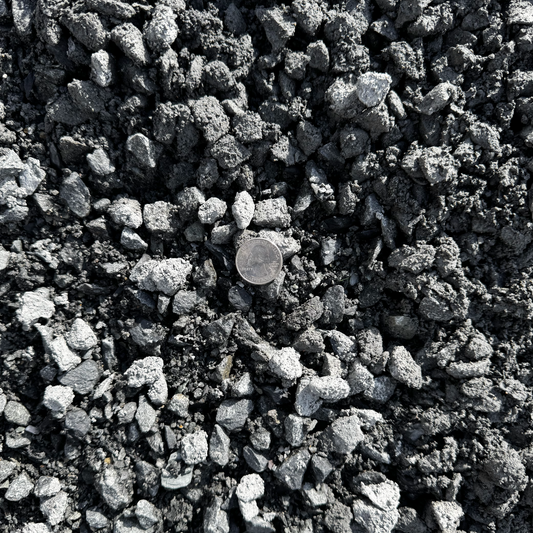
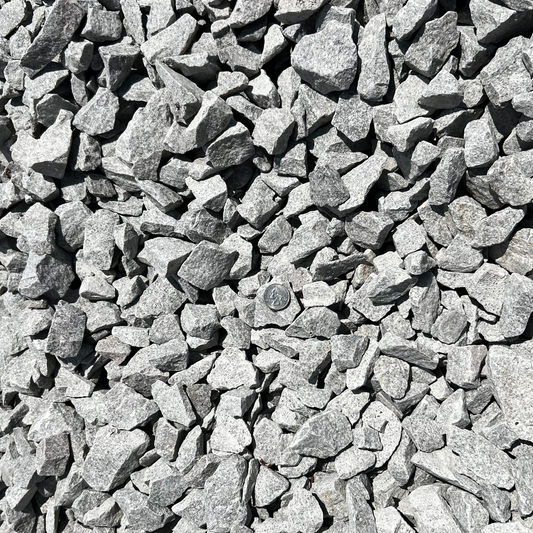
- Base spec. A bluestone patio in Newton's freeze-thaw climate needs a 6–8 inch crushed-stone base over compacted subsoil, topped with 1 inch of stone dust as the setting bed. The decorative stone collection covers bluestone-pattern options; the crushed stone collection covers the base.
- Material count. Square footage divided by the per-piece coverage of your chosen pattern.
For the head-to-head comparison of pavers, bluestone, and concrete in Norfolk County's freeze-thaw cycle (same climate as Newton), see Pavers, Bluestone, or Concrete: Which Hardscape Survives a Norfolk County Winter Best?.
#2 — Paver Walkway
A walkway from the driveway to the front door is the second-most-common Newton January project. Two specs to lock now:
- Width. 4 feet for a primary walkway, 3 feet for a side path. Anything less than 3 feet feels constrained when two people walk side-by-side.
- Pattern and edge. Running bond is the easiest DIY install. Herringbone holds tighter against frost heave but takes more cuts. Either way, a soldier-course edge or steel landscape edging keeps the pavers from creeping outward over years of freeze-thaw.
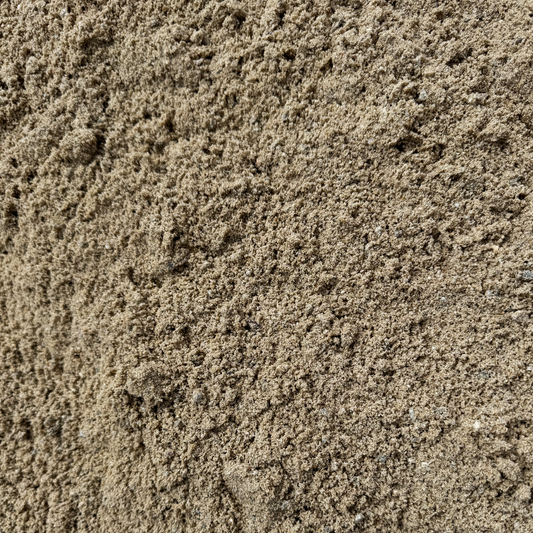
The Patio & Walkway Base collection covers the dense-grade base, bedding sand, and joint-sand sequence. Per ICPI interlocking concrete paver standards, a residential walkway needs a 4–6 inch compacted base over stable subgrade.
#3 — Low Retaining Wall (Under 4 Feet)
Newton's hilly lots — especially in Newton Centre, Auburndale, and the West Newton hills — frequently need a low retaining wall to terrace a slope. Anything under 4 feet is generally a homeowner-permittable project; anything taller in MA needs an engineered design.
What to plan in January:
- Height and length. Measure the grade change. A 24-inch wall holding a 30-foot run uses about 60 sq ft of wall face.
- Block or natural stone. Manufactured concrete wall block (Versa-Lok, Allan Block, etc.) is faster; natural fieldstone or the Decorative Stone collection blends better with older Newton homes.
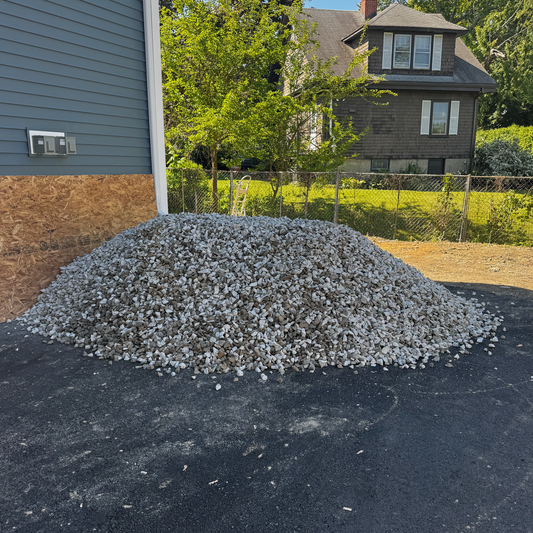
- Drainage. A free-draining gravel backfill behind the wall is non-negotiable. Plan for the Driveway Construction & Repair gravel or 3/4-inch crushed stone at 12 inches deep behind the wall, with filter fabric separating the soil.
A poorly drained retaining wall lasts 5 years; a well-drained one lasts 30+.
#4 — Gravel Parking Pad or Side Driveway Extension
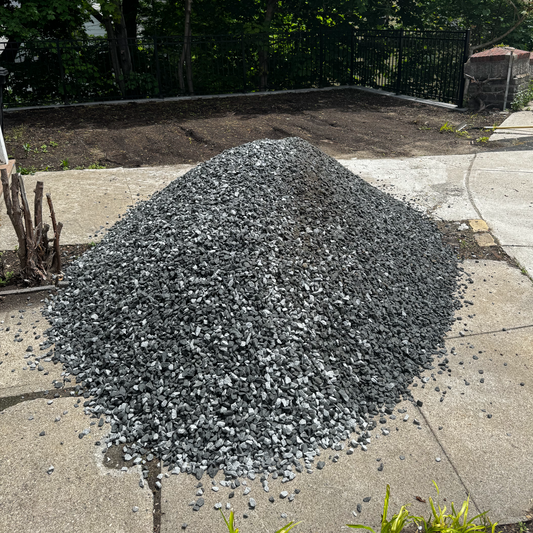
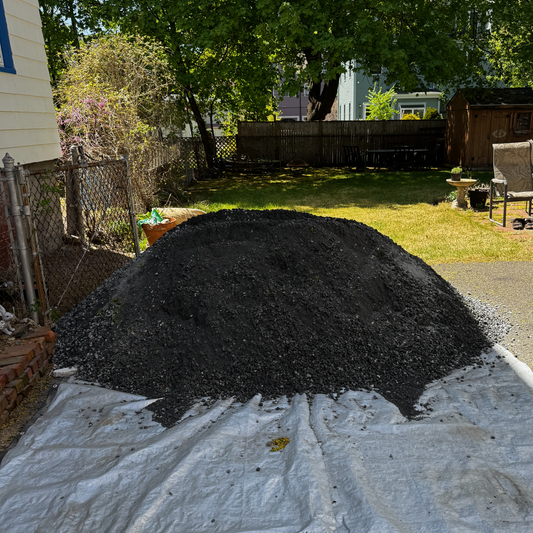
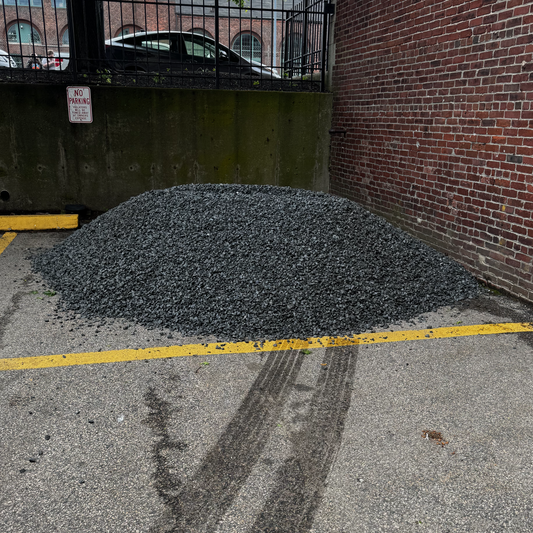
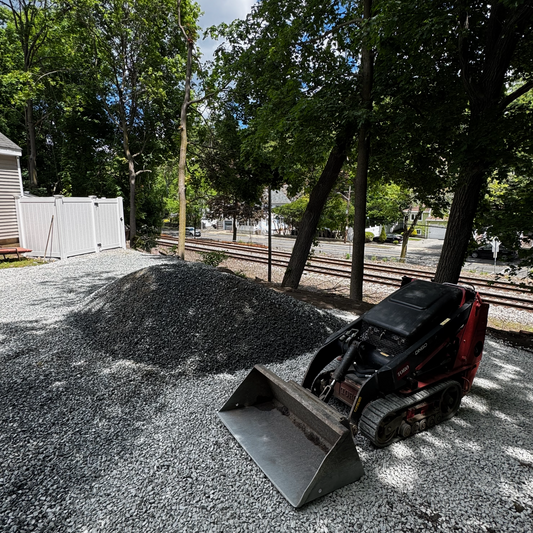
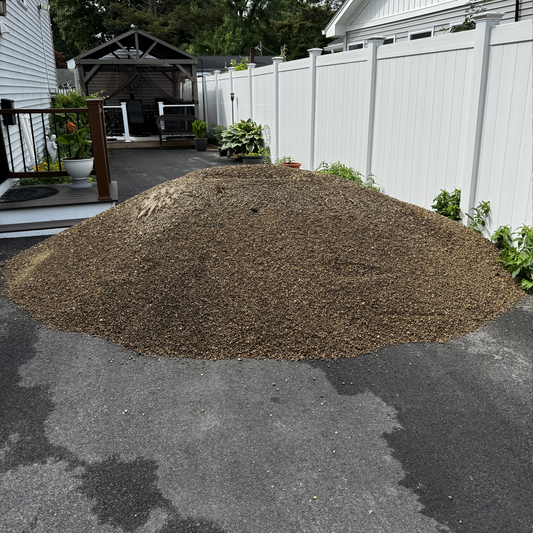
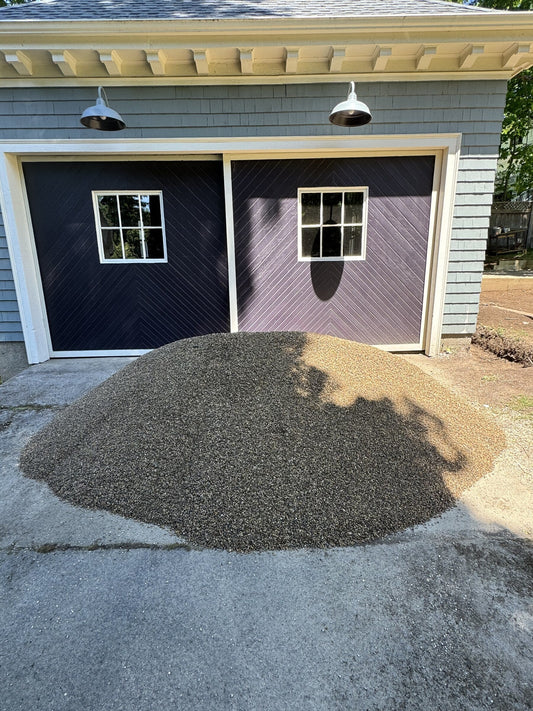
Newton's older lots often run short on off-street parking. A 10'×20' gravel parking pad — for the second car, the trailer, or the visitor spot — is one of the highest-value DIY projects in the area, and it's plannable from a January kitchen table.
The build sequence:
- Excavate 8 inches below grade.
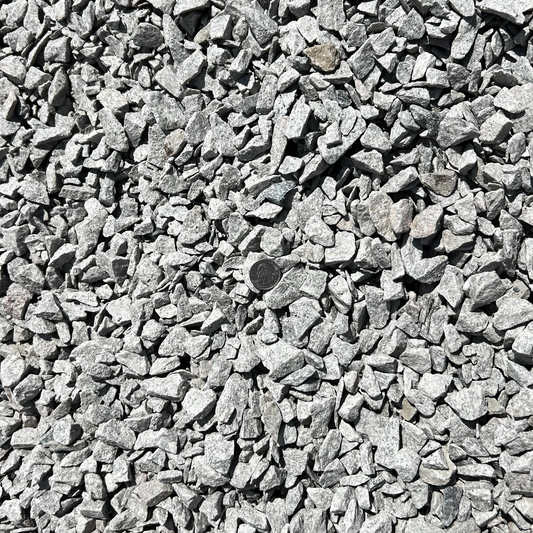
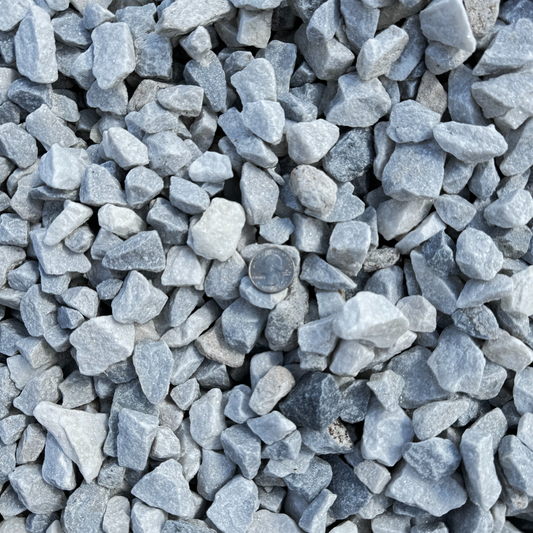
- Base layer: 4 inches of dense-grade ¾-inch crushed stone, compacted.
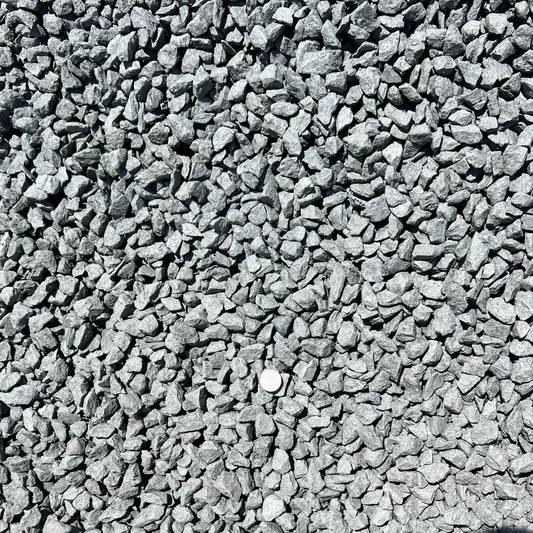
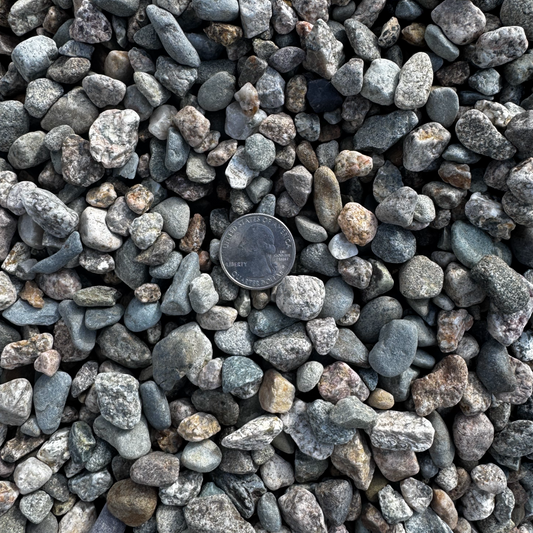
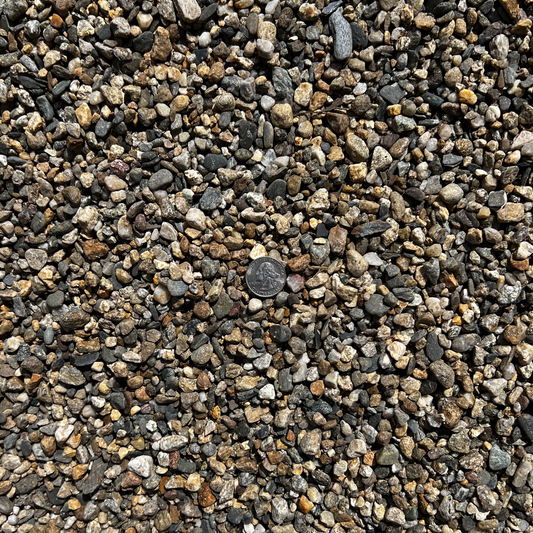
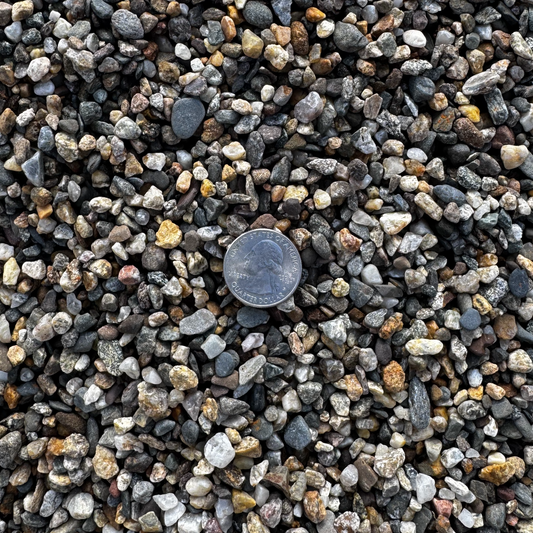
- Top layer: 2 inches of 3/8-inch pea stone or processed gravel for the wear surface.
- Edging: steel or pressure-treated 4×6 timber to keep the gravel from migrating.
For tonnage and material math, How to Calculate Crushed Stone Tonnage for a Bridgewater Driveway Base walks through the cubic-yard-to-ton conversion. The same logic applies to a Newton pad — you just scale the footprint.
#5 — Decorative-Stone Bed Border or Dry Riverbed
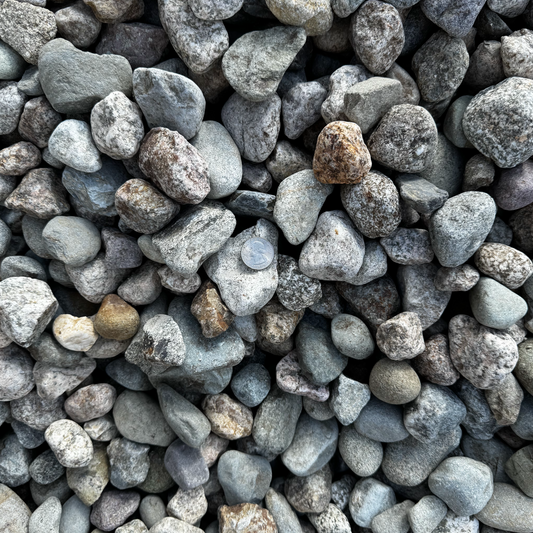
The smallest of the five, but the one most Newton homeowners get to that first weekend in May. A decorative-stone border around a foundation bed, or a dry riverbed running through a side yard for drainage, uses 1–3 cubic yards of stone and 30–60 linear feet of edging.
January planning:
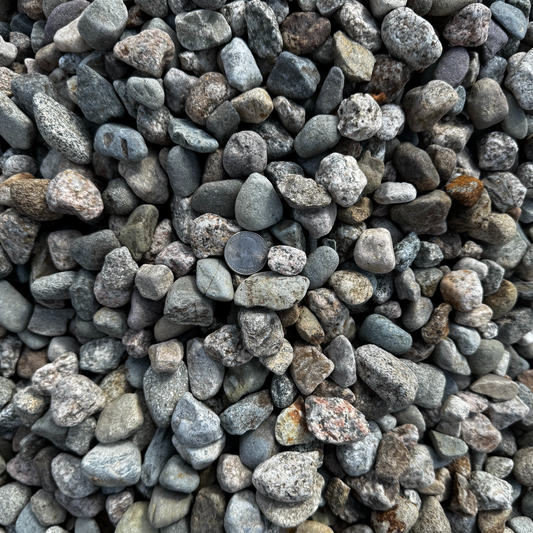
- Stone size. River rock 1–3 inch for borders and visible features; ¾-inch dense-pack for under-mulch drainage runs.
- Cubic yards. Border depth × width × length, then divide by 27 to convert to cubic yards.
- Fabric. Always run landscape fabric under decorative stone to keep weeds from growing through. Skipping this step costs you the project five years out.
The Decorative Stone collection covers the river-rock and accent-stone lineup. The French Drain & Drainage collection covers the dry-riverbed-as-drainage hybrid build.
January Planning Checklist for All Five
For any of these projects, finish January with:
- Sketched plan with measurements (paper or app — see Three Mulch Estimating Apps Tested on a Real Cambridge Yard for the math-app rundown; the same apps handle hardscape yardage).
- Materials list with quantities and product names.
- Delivery slot reserved for late April or early May.
- Permit check with the City of Newton if the project involves walls over 4 ft, pavement over a certain percentage of lot, or work in a flood zone.
- Contractor lined up if you're not DIYing — the good ones are booked by mid-March.
For the contractor account playbook on bulk material ordering across multiple project types, that piece covers the credit and pricing structure for crews running Newton hardscape jobs.
For broader hardscape best practices and base-spec standards, ICPI is the industry authority. For Massachusetts-specific landscape and soil considerations, the UMass Extension Landscape program has the regional reference material.
January is paper. February is materials. May is the build. Newton homeowners who run that sequence end up with the patio, the walkway, or the wall they actually wanted — finished by July, not November.