Quick Answer
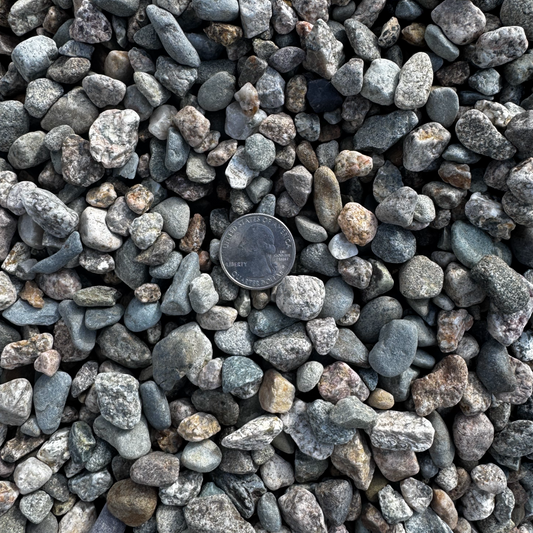
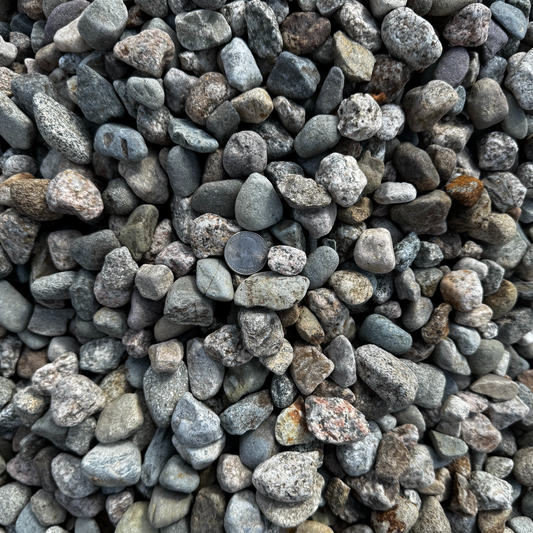
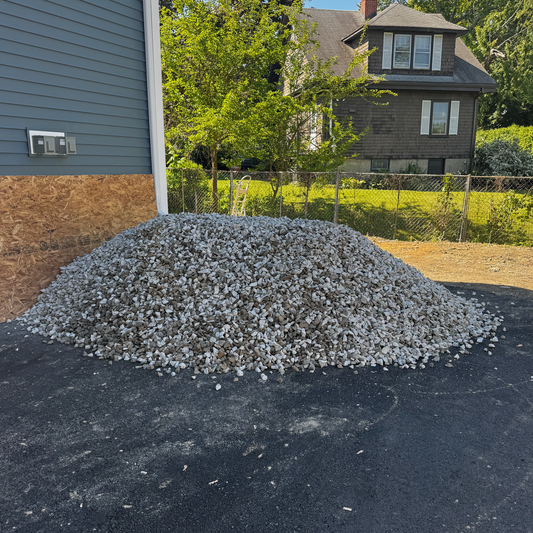
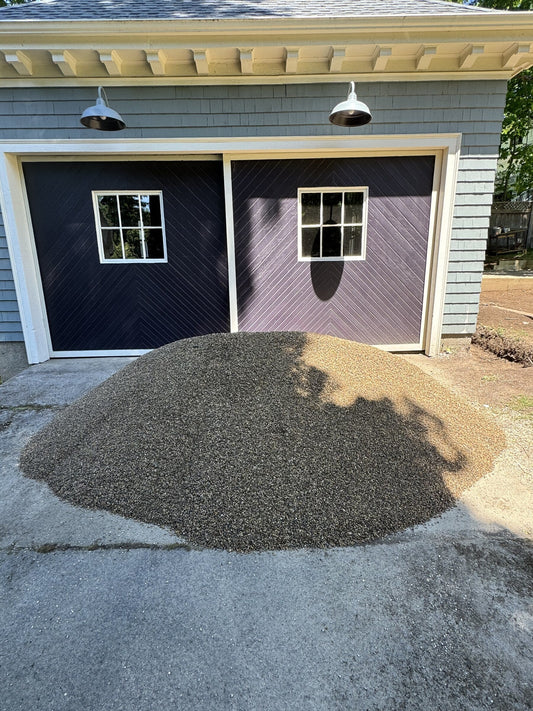
For a Norwell pool border, pea stone (3/8") wins on comfort underfoot and even drainage — the right pick if kids and adults walk barefoot from the pool to the lawn. River rock (1–3" rounded) wins on visual character and resistance to migration — better when the border is decorative, not walked, and the pool deck handles the foot traffic. Most Norwell pool installs use pea stone in walked zones, river rock in planting beds and corner accents, not one stone everywhere.
The Norwell Pool Border Question
Pool installs across Norwell, Hanover, and the South Shore are split right down the middle on this question. Half the yards use pea stone for the entire 24-inch border between the pool deck and the lawn; the other half use 1–3" river rock for the same border. Both look great in May. By August, one of them is wearing better.
This Q&A walks through the questions Norwell homeowners ask their landscaper between the pool's water test and the surround install — with practical answers on which stone wins where.
Q: What's the actual difference between pea stone and river rock?
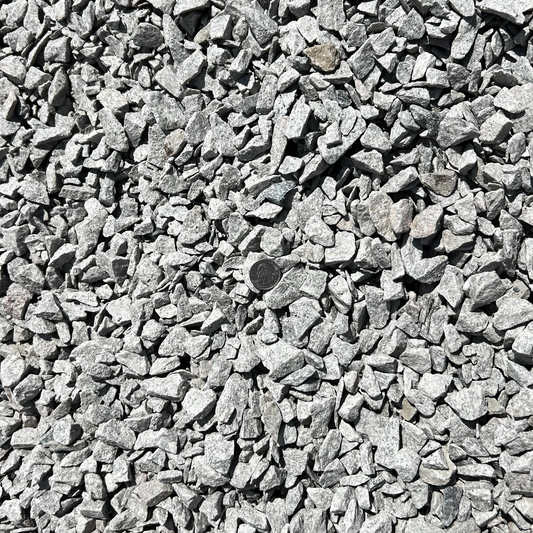
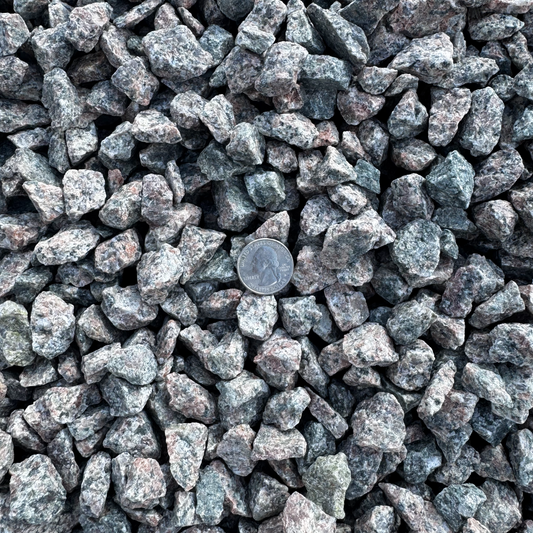
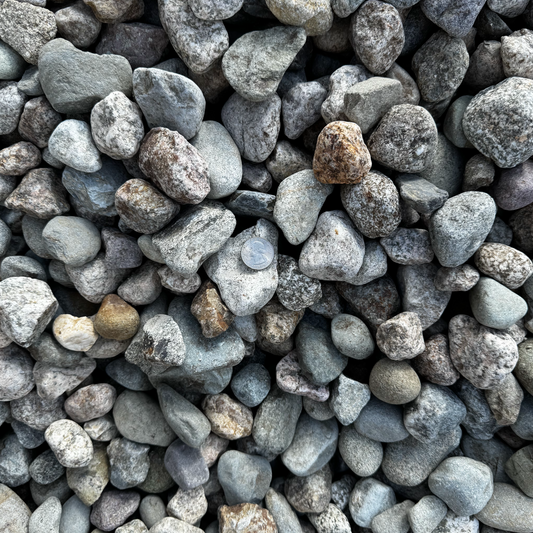
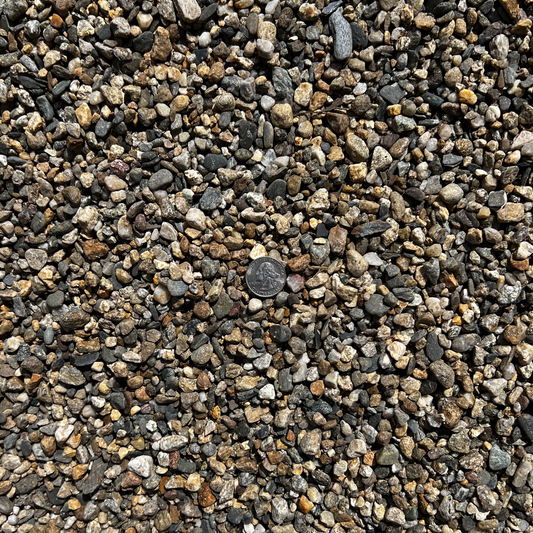
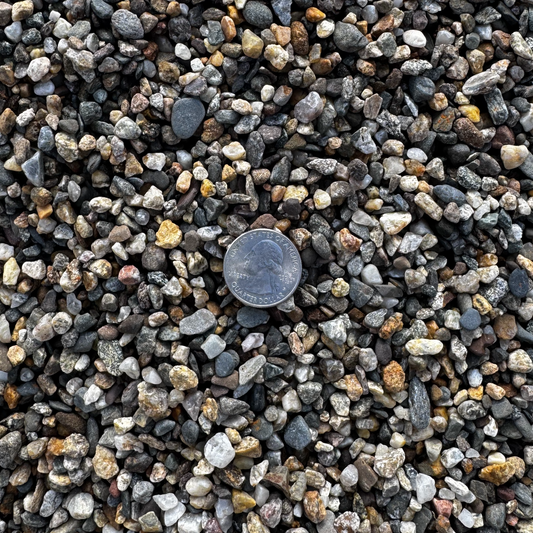
A: Size and shape. Pea stone is 3/8" rounded gravel — small, smooth, walks like coarse beach sand. River rock is 1–3" rounded stones — larger, more visually distinct, walks like cobble.
Both are rounded (vs. crushed angular stone), both drain well, both come in similar tan/gray/brown palettes. But the size difference changes everything about how they behave under foot traffic, near a pool, and under maintenance.
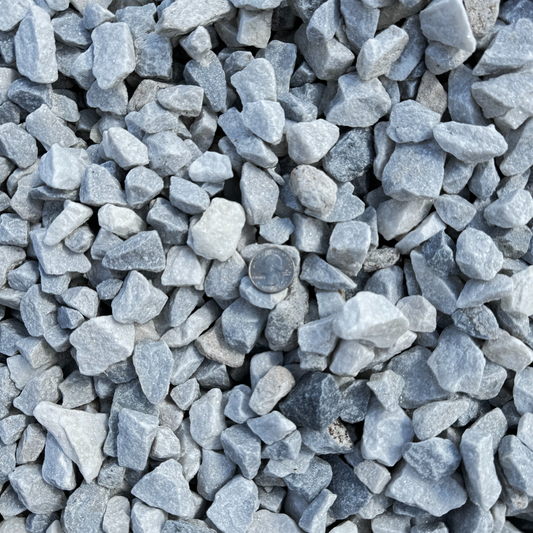
Browse the decorative stone collection for current pricing on both.
Q: Which is more comfortable to walk on barefoot?
A: Pea stone, by a wide margin. A 3/8" stone distributes load across the foot evenly. A 1–3" river rock concentrates load on a few high points — uncomfortable to comfortable depending on the rock and your foot.
For a Norwell pool border that gets daily summer foot traffic — kids running from the pool to the lawn, adults walking to the chairs — pea stone is the clear pick.
Q: Which migrates more under foot traffic?
A: Pea stone migrates more. Smaller stones travel further with each footfall. After one summer, pea stone in a heavy-traffic walking zone will end up in the lawn, on the pool deck, and (worst) in the pool skimmer.
River rock, being heavier, stays put. It's the right pick for accent areas — corners, planting beds, the strip behind a pool fence — where decoration matters more than walkability.
Q: How do I prevent pea stone from ending up in the pool?
A: Three things. First, install steel edge restraint between the stone and the pool deck — no migration zone. Second, set the pea stone 2 inches below the pool deck surface so it can't roll up onto the deck. Third, use a gravel grid (plastic honeycomb) under the pea stone in walked areas. The grid locks the stones in place; foot traffic compresses, doesn't displace.
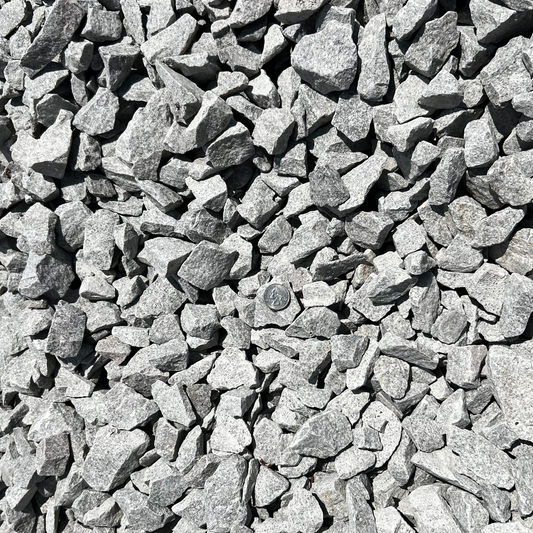
For more on edge restraint engineering, ICPI hardscape standards cover the principles — same engineering used for paver patios works around pools.
Q: Which drains better in a Norwell rainstorm?
A: Both drain instantly. Pea stone has more void space per cubic foot than river rock when packed tight, but in real-world install thicknesses (2–3 inches), both shed water in seconds. Drainage is a wash.
What matters more is the base under the stone. A 4-inch compacted 3/4" crushed stone base under either pea stone or river rock prevents water pooling at the soil interface. Without that base, water tracks down to the soil and either way the border is wet for hours after rain.
Q: What about heat — does either get too hot to walk on?
A: River rock gets hotter. Larger stones with more thermal mass absorb more sun. On an August afternoon at noon, river rock in full sun can reach 130°F+ at the surface — too hot for bare feet.
Pea stone, with smaller individual stones and more air gaps, stays roughly 10–15°F cooler. For a south-facing Norwell pool border in full afternoon sun, this matters.
Q: How does each one look as the season wears on?
A: River rock holds appearance better. Pea stone catches every leaf, pine needle, and grass clipping; by July, a Norwell pea stone border looks busy and needs raking. River rock sheds debris between the larger stones — debris falls through, raking is rare.
If maintenance time matters more than walkability, river rock wins. If walkability matters more, pea stone wins and you accept weekly raking.
Q: Which lasts longer?
A: Both last 10+ years if installed properly. The failure mode is migration, not wear. Both stones are essentially geologically inert.
What fails first is the base layer — soil contamination from below, weeds growing up through. The fix is woven landscape fabric over a compacted 3/4" crushed stone base before either stone goes down. With proper base prep, plan to top-dress with 1/2 cubic yard every 3–5 years; otherwise the stones stay.
Q: Which one is cheaper?
A: Pea stone, slightly. Per cubic yard, pea stone runs roughly 10–15% less than river rock at most New England yards. But river rock typically goes down at 2-inch depth (not 2.5–3" like pea stone), so material volumes per square foot are close. Net cost per square foot ends up within 5–10% of each other.
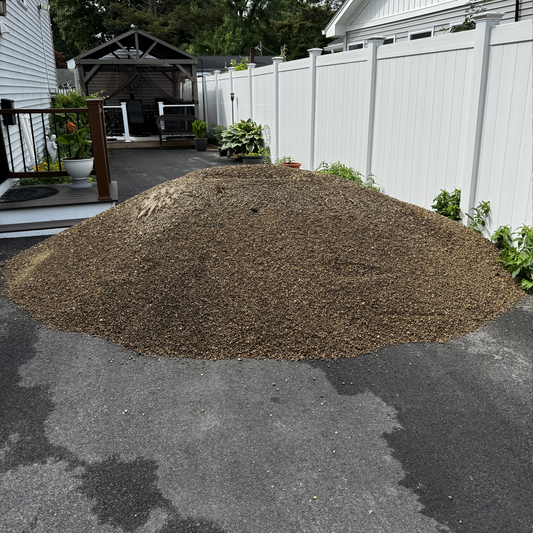
For yardage math on a typical Norwell pool border (say 24-inch border around a 16x32 pool — about 95 square feet), you're looking at roughly 0.7 cubic yards of pea stone or 0.6 cubic yards of river rock at appropriate depths.
Q: What about pet safety and pool chemistry?
A: Both are inert. Neither pea stone nor river rock leaches anything that would affect pool chemistry or pet safety. The MA Department of Public Health lists no concerns for either material in residential pool surrounds.
The actual pet question is paw comfort — same answer as bare feet: pea stone is gentler. For broader pet-safe yard material guidance, 5 Pet-Safe Mulch and Stone Picks for a Watertown Backyard covers the wider material set.
The Norwell Pool Border Recommendation
The answer most Norwell homeowners arrive at: mix the two.
- Walking zones (pool exit ladders, gate path, deck-to-lawn transitions): pea stone with edge restraint and gravel grid
- Accent zones (corners, planting beds, behind fence rails): river rock for visual character
- Transition between the two: a row of larger flagstones or a low wallstone course as a visual break
For a related stone-walking-path build that uses similar engineering, see 5 Stones for a Marshfield Backyard Walking Path That Won't Wash Out.
For Norwell pool installs, Ottr stocks both pea stone (3/8") and river rock (1–3") by the cubic yard. Browse the Norwell landscape supply collection for delivery scheduling, and pair with the decorative stone selection for the full installation.
The short version: pea stone walks better, river rock looks better. Most Norwell pool yards do best with both, in the right zones.