Quick Answer
To spread mulch around Brookline perennials without smothering them: apply 2 inches deep across the bed, pull back to ½ inch within a 3-inch ring around each crown, and never bury the spot where stem meets soil. Hostas, daylilies, peonies, hellebores, and astilbes all rot at the crown if buried. Spread by hand near plants, by rake in open bed sections. Time the work for late March in Brookline, after crowns have pushed up but before leaves fully unfurl.
Why Brookline Perennial Beds Are a Special Case
Brookline gardens — Coolidge Corner brownstones, Brookline Village, Chestnut Hill, the Aspinwall Hill side streets — lean heavy on shade-tolerant perennials. Hostas dominate north-facing foundations. Daylilies anchor sunny corners. Peonies and hellebores show up in established Victorian-era plantings. These are forgiving plants in most ways, but every single one of them is killed by the same mistake: mulch piled against the crown.
The crown is the spot where roots meet stem at soil level. Bury it under 3 inches of damp hardwood mulch and within 6 weeks you get crown rot — a soft, brown collapse at the base. The plant either dies outright or returns half-strength next spring. Most Brookline homeowners who lose perennials in year 3 of a yard lost them to mulch, not to weather.
When to Mulch in Brookline
Brookline's perennial crowns push visible growth between mid-March and early April. The right window:
- Too early (early March): crowns are still dormant and hidden. You'll bury them by accident.
- Right (late March to early April): crown tips are visible — pink-red on peonies, pointed white-green on hostas, fans on daylilies. You can see what to mulch around.
- Too late (mid-April): leaves have unfurled and you're working around fragile foliage. Easy to snap a leaf.
Pair the mulch timing with the bed edge — see How to Edge a Newton Mulch Bed Cleanly in Under an Hour for the cut that goes in before the mulch.
What to Spread
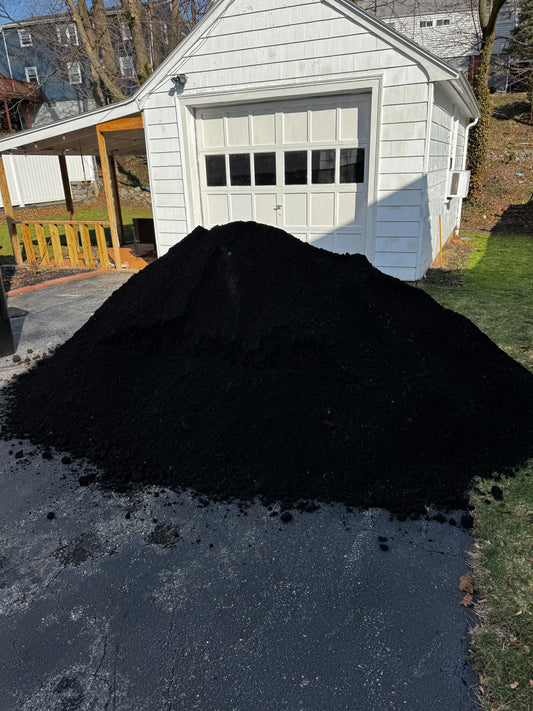
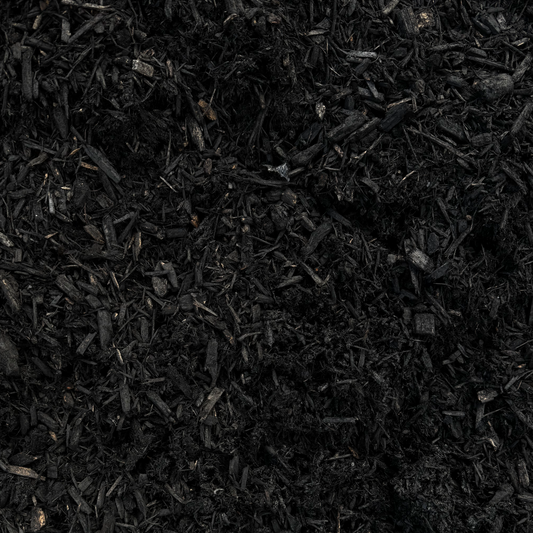
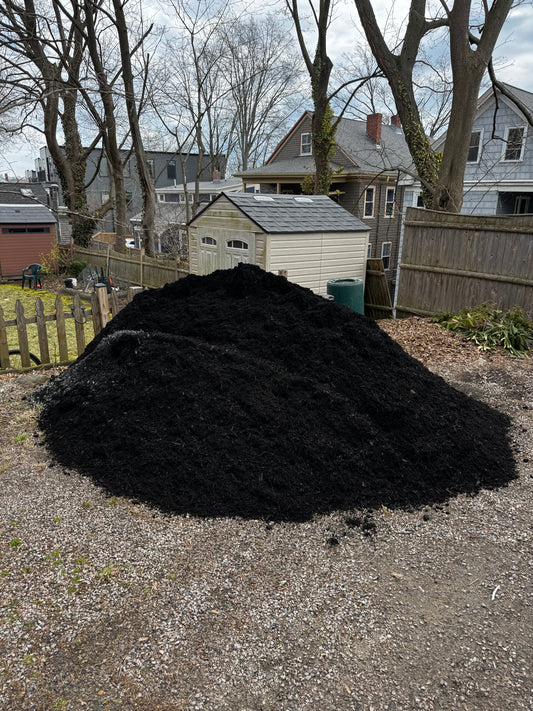
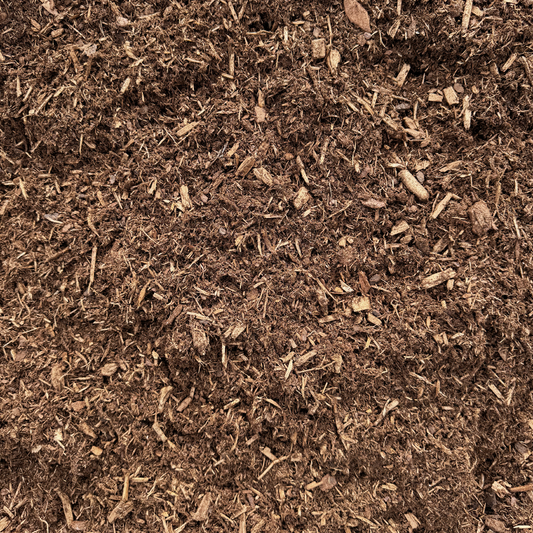
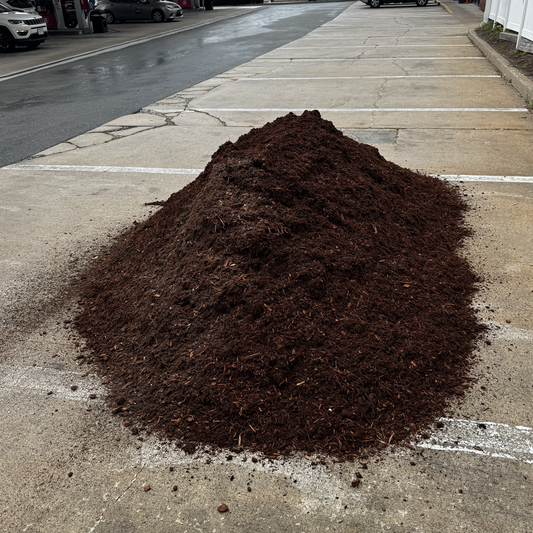
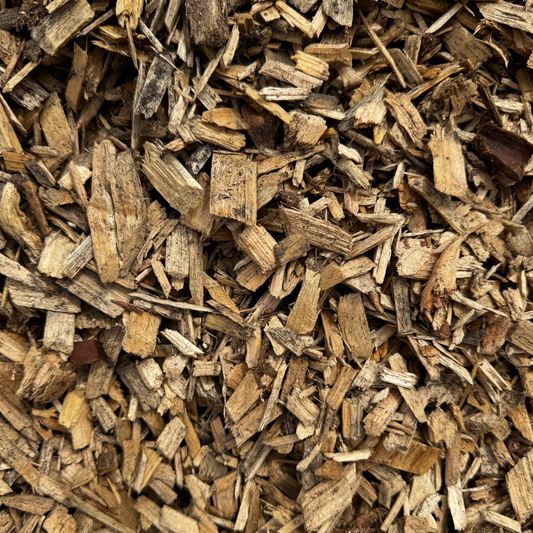
For Brookline shade and part-shade beds with mixed perennials, a finer double-shredded hardwood or hemlock blend spreads tighter around crowns than coarse pine bark. Skip cocoa mulch in any yard with dogs. Skip rubber mulch in any planted bed. The mulch bed refresh collection has the lineup tuned for refresh applications.
For depth, the two-inch rule is the target across the bed — but the rule has an exception, and that exception is the crown ring.
Step 1 — Walk the Bed and Mark the Crowns
Before any mulch hits the ground, walk the bed and visually locate every perennial crown. Mark unfamiliar emerging shoots with golf tees or short bamboo stakes. In a typical 80 sq ft Brookline foundation bed, expect 15–25 crowns: hostas in clumps, daylilies in fans, peonies as hard red-pink tips, hellebores already partly leafed.
If you can't tell what something is, flag it and don't mulch within 6 inches until you can identify it. The Native Plant Trust plant identification resources cover most New England natives commonly used in Brookline beds.
Step 2 — Spread by Rake in Open Sections
In bed sections clear of perennials, dump small wheelbarrow loads (¼ cubic foot each) and spread with a leaf rake. Work toward the bed edge so you're not stepping on freshly mulched soil. Aim for a uniform 2 inches measured to the top of the loose layer. The credit-card-on-edge gauge from the two-inch rule works here.
For a 80 sq ft bed at 2 inches, you need about 0.5 cubic yards. For 200 sq ft, about 1.25 yards. The math worksheet is in How to Calculate Mulch Yardage for a Quincy Triple-Decker Yard — same formula in Brookline.
Step 3 — Switch to Hands Within 12 Inches of a Crown
Within a 12-inch radius of any crown, set the rake down and use gloved hands. Place mulch by handful. Taper the depth from 2 inches at the outer ring down to ½ inch within the 3-inch crown ring and bare soil right at the crown itself.
Do not push mulch into the crown. Do not pile mulch against perennial stems. Do not bury emerging spring shoots. The 3-inch bare ring at each crown looks naked in March; by May it disappears under leaf canopy.
Step 4 — Treat Specific Plants Right
- Hostas: crowns are wide and shallow. Bare ring should match the crown diameter — often 4–6 inches across on a mature clump. Hostas tolerate minor mulch contact better than peonies, but rot still hits in wet years.
- Daylilies: fans push up densely. Mulch between fans, not over the crown center. ½ inch maximum within the clump.
- Peonies: the most mulch-sensitive. Crown buds (the red-pink eyes) must be no more than 1–2 inches below soil surface total — that includes mulch. Bury peonies and they stop blooming. Some bare soil at the crown is correct.
- Hellebores: already leafed in March. Tuck mulch under leaves at the bed level, not on top of the crown.
- Astilbes: delicate emerging shoots. Bare ring 3 inches; mulch tapers gently.
The pet-safety angle for any Brookline yard with dogs is covered in Building a Dog-Friendly Yard in Medford: Materials That Won't Hurt Paws or Pets — the same material picks apply.
Step 5 — Walk the Bed Again
Step back. Look for piles, exposed soil sections, and missed crowns. Smooth high spots with the rake. Add to thin spots. The finished bed should read as a uniform 2-inch layer with small bare circles at each plant — visible in March, invisible by mid-May.
Common Mistakes
- "More is better." False. 4 inches kills crowns; 2 inches is correct. Stop at 2.
- Mulching before crowns are visible. You'll bury them blind. Wait for visible shoots.
- Pushing mulch into the crown ring with the rake. Always switch to hands.
- Reusing last year's full depth and adding 2 inches on top. Last year's mulch is now 1 inch decomposed; add ½ to 1 inch on top, not a full 2.
- Annuals over the crowns. If you're popping in annuals after mulching, see 5 Annuals to Pop Into a Just-Mulched Brookline Bed Without Damaging Roots for the technique.
Brookline Neighborhoods, Specific Notes
- Coolidge Corner brownstones: narrow front beds, mature plantings. Hand-spread the whole bed; the rake won't fit.
- Chestnut Hill: larger lots, more daylily-and-grass mass plantings. Rake the open masses, hand-spread the perimeter perennials.
- Brookline Village: older Victorian gardens with established peonies — handle with extra care.
Where to Buy
The mulch bed refresh collection covers the hardwood, hemlock, and pine bark options that work for Brookline perennial beds. For Brookline-specific delivery, browse Brookline landscape supply. For broader perennial care references, UMass Extension Landscape is the regional authority.
The short version: 2 inches across the bed, ½ inch in the crown ring, bare at the crown itself. Hand-spread close to plants. Time it for visible-shoot late March. Spend the extra 20 minutes — your peonies will still be blooming in year 10.