Quick Answer
Mulch yardage for a Quincy triple-decker breaks down to one formula: (square feet × inches deep) ÷ 324 = cubic yards. A typical Quincy triple-decker with a 25×40 lot has about 200–300 square feet of mulched bed, which works out to 1.25–2 cubic yards at 2 inches deep. Below: how to measure your beds in 15 minutes, the formula with worked examples, and the rules of thumb that get you to a clean order without leftovers piling up in the side yard.
Why Yardage Math Matters in Quincy
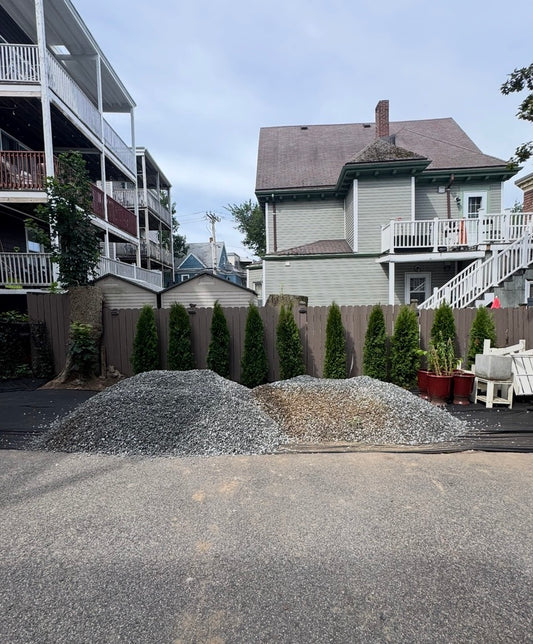
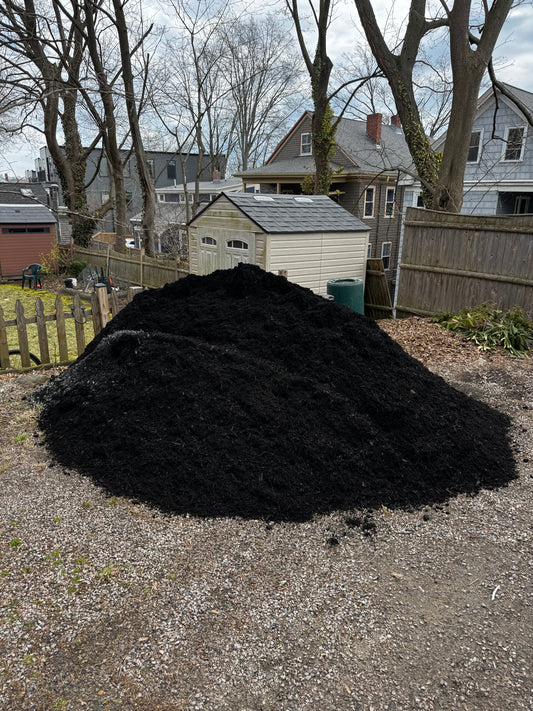
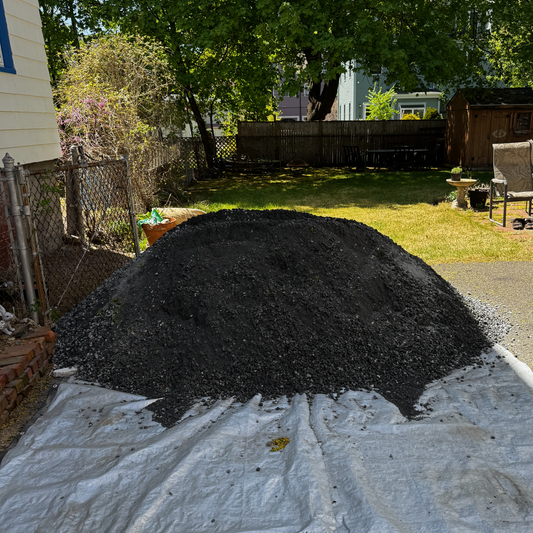
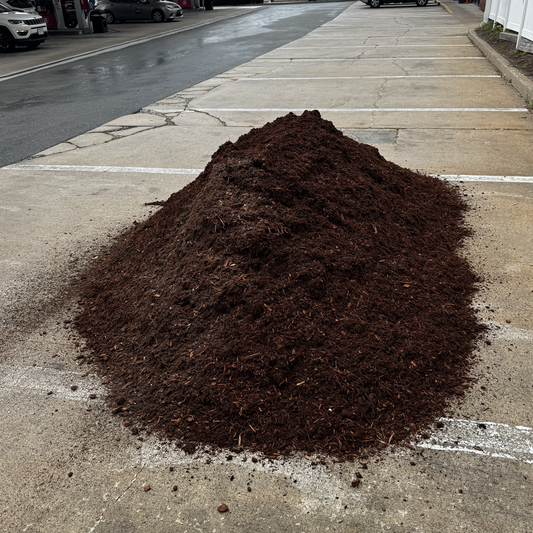
Quincy triple-deckers — Squantum, Wollaston, North Quincy — sit on lots tighter than 30×40, with side-yard setbacks of 5–8 feet. There's nowhere to dump leftover mulch. Order too much and you've got a 1-yard pile sitting on a tarp through July, breaking down in the rain, becoming a slug habitat. Order too little and you stop mid-application, which means a second delivery fee for a half-yard top-up.
Get the math right once and the order is clean.
Step 1 — Measure Each Bed
Walk the yard with a tape measure. Sketch a rough plan on a piece of paper. For each bed, record length × width. Don't worry about precision — round to the nearest foot.
Common Quincy triple-decker bed types:
- Front foundation bed: typically 3–4 ft wide × the width of the house (often 25 ft) = 75–100 sq ft
- Walk-side bed (between front walk and lawn): 2 ft wide × 15–25 ft = 30–50 sq ft
- Side-yard utility strip: 3 ft wide × 25–40 ft = 75–120 sq ft
- Back-corner shed bed: 2 ft wide × 8–12 ft = 16–24 sq ft
- Mailbox circle: ~6 sq ft
- Tree rings (per tree): 9–12 sq ft each (3-ft radius)
Add them up. A typical Quincy triple-decker yard runs 200–300 total square feet of bed.
Step 2 — Apply the Formula
The formula:
(Square feet × inches deep) ÷ 324 = cubic yards needed
The 324 comes from cubic-yard math: 1 cubic yard = 27 cubic feet × 12 inches = 324 inch-square-feet of coverage. Don't worry about the derivation — just remember the number.
Worked example: a 200 sq ft Quincy yard at 2 inches deep:
200 × 2 ÷ 324 = 1.23 cubic yards
Round up to 1.25 yards or 1.5 yards depending on what your supplier offers. Ottr delivers in half-yard increments — see the mulch collection.
Worked example: a 300 sq ft yard at 2 inches deep:
300 × 2 ÷ 324 = 1.85 cubic yards
Round to 2 yards.
Worked example: a 250 sq ft yard with 80 sq ft of new beds (3 inches deep) and 170 sq ft of established beds (2 inches deep):
(80 × 3) + (170 × 2) = 240 + 340 = 580 580 ÷ 324 = 1.79 cubic yards
Round to 2 yards.
Step 3 — Apply the Quick Reference
If you don't want to do the math every time, memorize this:
1 cubic yard covers 162 square feet at 2 inches deep.
So: - 100 sq ft → 0.6 cubic yards (round to 0.75) - 200 sq ft → 1.25 cubic yards - 300 sq ft → 1.85 cubic yards (round to 2) - 400 sq ft → 2.5 cubic yards - 500 sq ft → 3.1 cubic yards
For depths other than 2 inches, scale proportionally: 1.5 inches deep covers 216 sq ft per yard; 3 inches deep covers 108 sq ft per yard. The depth question itself is settled in The Two-Inch Rule.
Step 4 — Add the Forgotten Spots
Quincy yards reliably forget the side-yard utility strip, the foundation gap behind shrubs, and the tree rings. These add up. See 5 Spots Quincy Homeowners Forget to Mulch in Spring for the full list — and add an extra ½ yard to the order to cover them.
Step 5 — Choose Your Format
The math determines the volume; the format determines how you receive it.
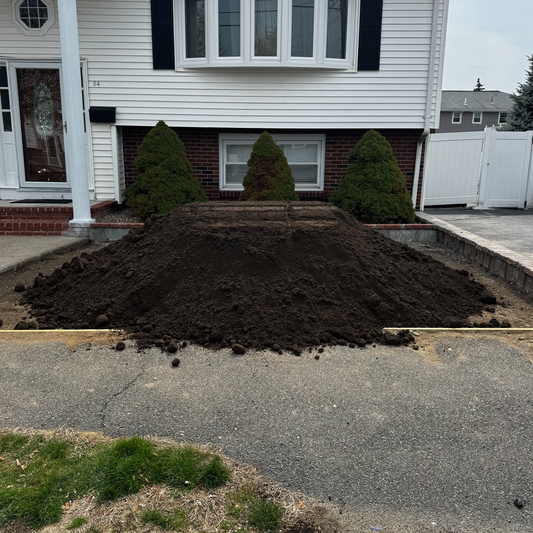
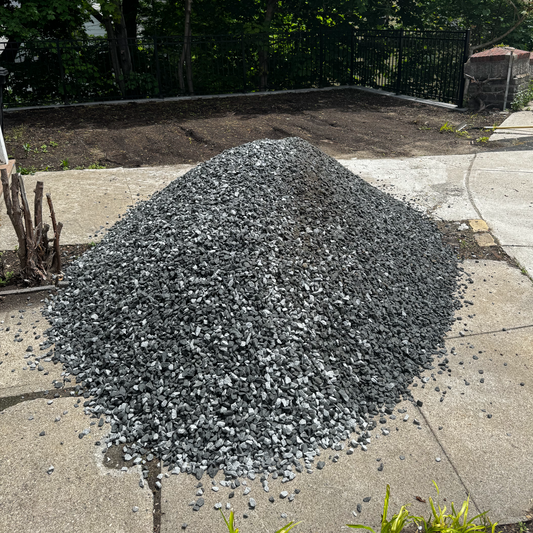
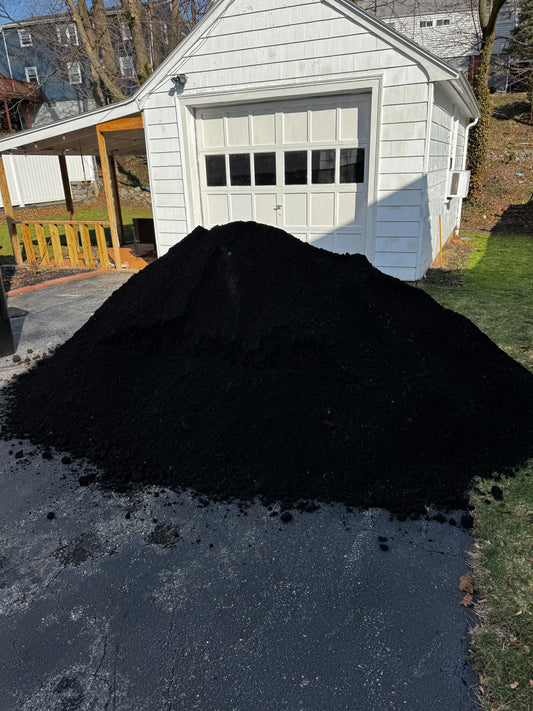
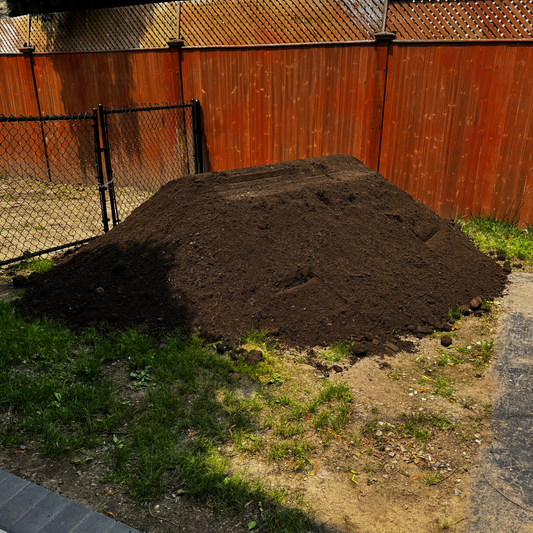
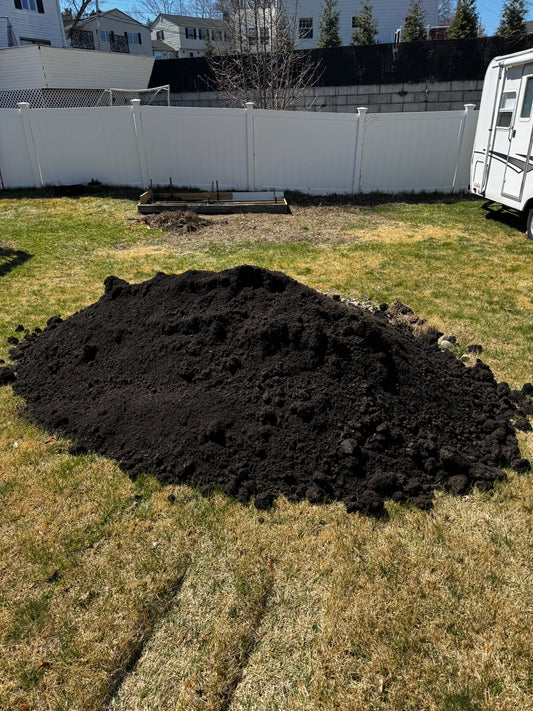
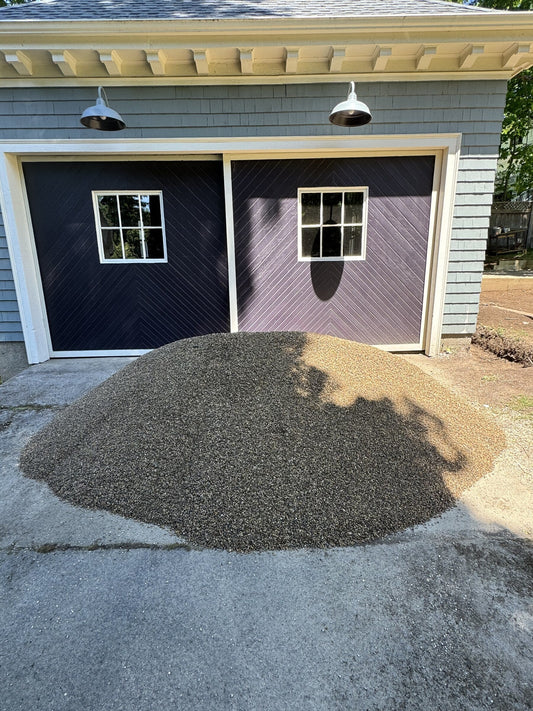
Bulk by the cubic yard: cheapest per yard. Delivered loose — you need a tarp or driveway space. Best for orders 1.5+ cubic yards. Quincy triple-deckers usually fit a bulk delivery on the driveway or the front-walk approach.
Bagged: more expensive per cubic foot, but easier to handle and store. Best for orders under 1 cubic yard, or when bulk delivery is impractical (e.g., no driveway access).
The bagged-vs-bulk math is worked in Bagged vs Bulk Mulch for Cambridge Homeowners: When Each Makes Sense — same logic in Quincy.
Common Mistakes in the Math
- Including the lawn area in the bed measurement. Lawn doesn't get mulched. Measure only the actual bed footprint.
- Forgetting that mulch settles. Apply at the rated depth (2 inches), not 1.5 inches "knowing it'll fluff." Mulch compresses 10–15% after the first rain — that's already factored into the 2-inch rule.
- Buying for "just-in-case" coverage. Extra mulch becomes too-deep mulch, which kills plants — see 5 Mulch Mistakes That Cost Norfolk County Homeowners Plants Every Year.
- Using bag coverage rates as gospel. Bag labels show coverage at varying depths; verify they're at 2 inches before scaling up the order.
Quick Worksheet for a 30-Minute Walk
- Sketch the yard outline on a piece of paper.
- For each bed, write length × width = sq ft.
- Sum total sq ft.
- Multiply by depth in inches (2 for established, 3 for new).
- Divide by 324.
- Round up to the nearest 0.25 cubic yard.
- Add 0.25 yard for the forgotten spots.
- Place the order.
Where to Buy and How to Schedule
The mulch collection covers the full lineup with current per-yard rates. For Plymouth County and the South Shore, the Plymouth County mulch pre-order playbook covers the timing — book in late February for a March delivery window.
For broader mulch quality and depth standards, UMass Extension Landscape and the US Composting Council are the authoritative regional and national references.
The short version: 200–300 sq ft of bed × 2 inches ÷ 324 = ~1.25–2 cubic yards for a typical Quincy triple-decker. Measure once, do the math, order once. The 30 minutes upfront saves you the second-delivery fee — and saves the side yard from a leftover pile.