Quick Answer
Five annuals that drop into a just-mulched Brookline bed in April with zero root damage and still look good in September: dusty miller (silver foliage anchor), angelonia (heat-tolerant vertical color), lantana (sun zone, hummingbird magnet), calibrachoa (small-leafed trailing color), and scaevola fan flower (drought-tough purple-blue mat). All five tolerate cool April nights, plant fine through 2 inches of mulch with the right technique, and earn their keep through frost.
The Just-Mulched Bed Problem
Mulch went down two weekends ago in the front beds along Beacon Street and the gardens behind the brownstones in Coolidge Corner. Now you want to add annual color — but pulling mulch back exposes bare soil, smashing perennials underfoot is not ideal, and the new plug roots need to actually reach soil, not just sit in mulch.
The five annuals below are the ones that handle this gracefully. They tolerate cool nights, plant well through the mulch with a careful technique, and don't sulk for two weeks of transplant shock.
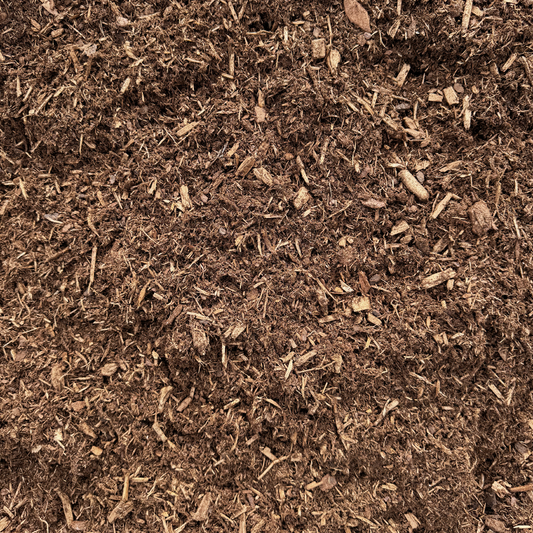
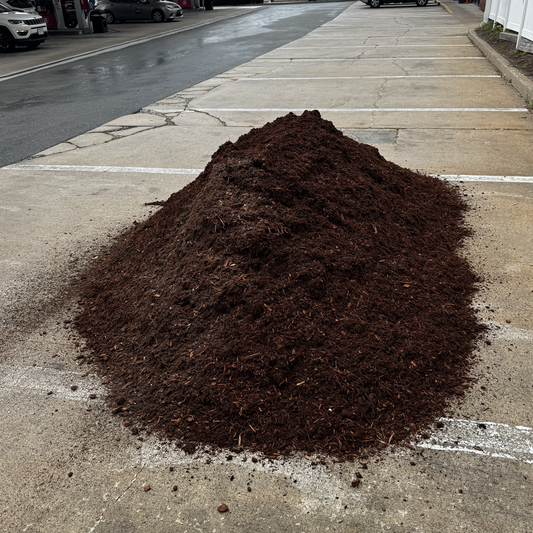
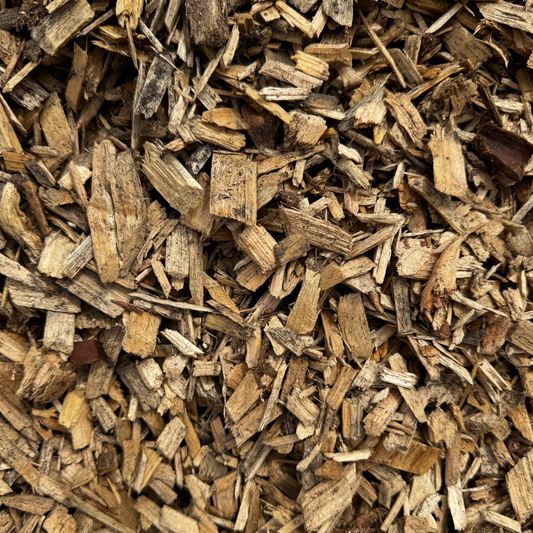
For mulch selection that pairs with these annuals, browse the mulch collection — hardwood, hemlock, and cedar all work fine.
The Planting Technique
Before the picks: the technique that keeps the mulched-bed install clean.
- Pull mulch back in a 6-inch circle around the plant spot — push it gently with a hand trowel, don't scoop it out
- Dig a hole in the exposed soil twice the width of the root ball, same depth
- Set the plant with the top of the root ball flush with the existing soil grade (not the mulch grade)
- Backfill with soil, not mulch — push the original soil back around the root ball
- Pull mulch back over the soil up to the plant stem, with 1 inch of clearance from the stem itself
- Water in with a slow trickle for 30 seconds per plant
That's it. The whole process takes 90 seconds per plant once you have the rhythm. For more on proper mulch depth around plants, see The Two-Inch Rule: Why Most Mulch Beds Are Either Too Thin or Way Too Deep.
#1 — Dusty Miller (Silver Foliage Anchor)
The unsexy hero. Silver-gray velvety foliage that reads as a backbone in any annual bed, makes neighboring colors pop (especially purples and pinks), and tolerates Brookline's cool April nights without blinking.
Wins when: The bed needs structure between flowering annuals. Or you want a planting that looks intentional rather than messy.
Light: Full sun to part shade. Tolerates the dappled shade off Brookline's mature street trees.
Stops winning at: Wet feet — needs decent drainage. Avoid low spots in the bed.
#2 — Angelonia (Vertical Color, Heat-Tolerant)
Sometimes called "summer snapdragon." Vertical 12–18 inch spikes of purple, pink, white, or blue. Cool-tolerant when planted in late April; absolutely thrives in July–August Boston heat.
Wins when: You need vertical accent in a bed dominated by lower-growing perennials. The color holds without deadheading — major win for low-maintenance Brookline gardens.
Light: Full sun to 4 hours of afternoon shade.
Stops winning at: Deep shade — flowers stop. Move it to sun.
#3 — Lantana (Sun-Loving Hummingbird Magnet)
Bright multi-color flower clusters (yellow-orange, pink-purple, red-yellow). Bombproof in heat, drought-tolerant, attracts hummingbirds and butterflies. The right pick for sun-baked Brookline front beds.
Wins when: The bed gets 6+ hours of direct sun. You want pollinator activity. You're tired of deadheading petunias.
Light: Full sun, period.
Stops winning at: Shade or pet households where curious dogs munch foliage — lantana is mildly toxic to dogs and cats. For pet-safe alternatives, see Building a Dog-Friendly Yard in Medford: Materials That Won't Hurt Paws or Pets. And 5 Pet-Safe Mulch and Stone Picks for a Watertown Backyard covers the broader pet-safe picks.
#4 — Calibrachoa (Million Bells)
Small petunia-relative with prolific bell-shaped flowers in every color imaginable. Trailing growth makes it perfect for the front edge of a bed where it cascades over the mulch line.
Wins when: You want continuous color from May to October without deadheading. Or you have a bed edge that wants to spill toward the walkway.
Light: Full sun to part sun.
Stops winning at: Heavy clay soils that hold water — calibrachoa hates wet feet. Amend with compost before planting if your Brookline bed is heavy clay (most are not — most are well-amended after years of mulching, but check).
#5 — Scaevola Fan Flower (Drought-Tough Purple-Blue)
Native to Australia. Blue-purple fan-shaped flowers, foliage stays compact, drought tolerance is exceptional. The pick for the Brookline homeowner who's away on summer weekends and won't water religiously.
Wins when: The bed faces the unforgiving August sun. Watering will be inconsistent. You want a continuous mat of color rather than vertical spikes.
Light: Full sun.
Stops winning at: Cool wet springs — wait until air temps are reliably above 60°F at night before planting (typically May 1 in Brookline). For cooler April installs, the other four picks above are better.
What to Avoid Right Now
Skip impatiens until late May — they hate cool soil. Skip begonias for the same reason. Skip geraniums at the curb edge if there's any salt residue still in the top soil layer (see Does Rock Salt Really Kill Newton Lawns? for why — same logic applies to ornamental beds).
For the UMass Extension annual planting calendar for the Boston region, the regional cue cards confirm the late-April / early-May window for these five.
Pairing with Containers
The same five plants drop into containers on the front porch with the same technique. For a related container-combination guide, see 5 Container Garden Combinations for a Quincy Triple-Decker Front Porch — the thriller-filler-spiller logic translates directly to mulched beds.
For broader native plant selection that complements annuals, the Native Plant Trust plant database has the authoritative MA-region recommendations.
What This Means for You
Five annuals, 90 seconds per plant, no damaged perennials, no disturbed mulch line. Stop by the Brookline landscape supply routes for any mulch top-up if your beds need a refresh before annuals go in — most beds in late April are still at the 2-inch depth the plants need, but check before you plant.