Quick Answer
To edge a Newton mulch bed cleanly in under an hour, work a sharp half-moon edger along the bed line at a vertical 3-inch cut on the lawn side and a 45-degree slope on the bed side. Pull the soil chunks onto a tarp as you go, sweep the edge with a flat spade, then mulch right up to the cut. A 60-foot front bed takes 35–45 minutes. The "pro" look comes from a single continuous line, not from any expensive tool.
Why the Edge Is the First Thing People See
A Newton front yard — Newtonville, West Newton Hill, Auburndale, Waban — is judged from the sidewalk in about three seconds. The bed edge is what carries most of that read. Sharp line, intentional. Soft line, neglected. Mulch color and plant material are secondary. Re-edging in early March, before the first mulch refresh, locks in the visual lift for the entire growing season.
The technique is geographically universal but Newton's heavy clay-loam soils make a clean cut both easier (the soil holds shape) and more important (a sloppy cut in clay slumps within two weeks).
What You'll Need
- Sharp half-moon edger. The single tool that matters. A dull edger doubles the time and leaves a ragged line. Sharpen the blade with a flat file before starting — the edge should bite a fingernail.
- Flat spade or square shovel. For lifting the cut soil onto the tarp.
- Tarp. 6×8 minimum. Catches the spoils so you're not raking the lawn after.
- String line or garden hose. For laying out a clean curve before you cut.
- Knee pads or a kneeling cushion. Optional but you'll thank yourself.
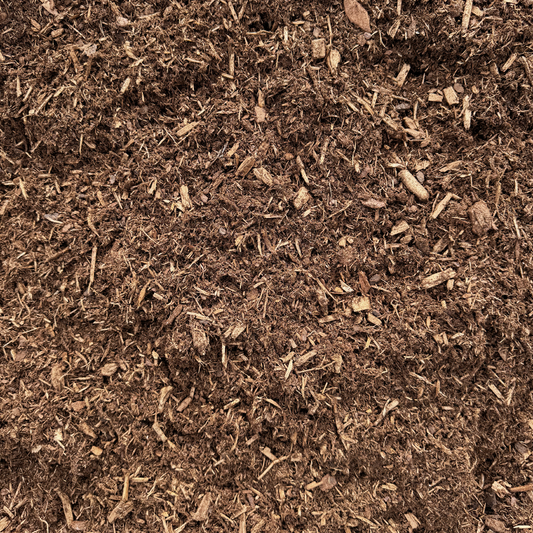
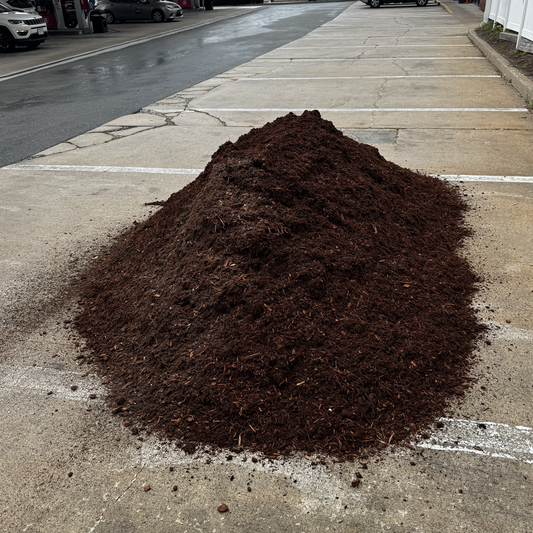
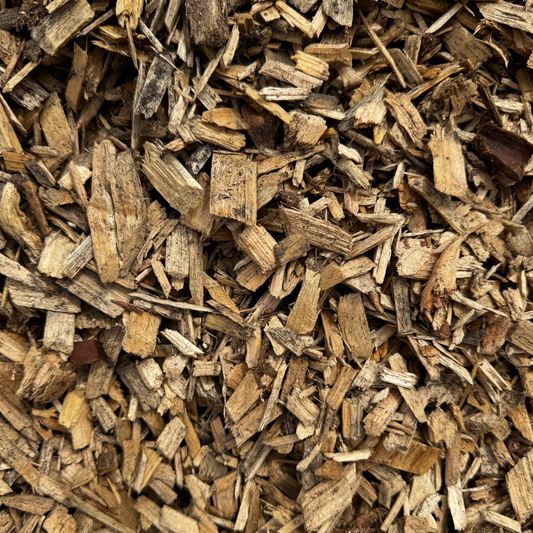
- Hardwood or hemlock mulch ready to go in once the edge is set. The mulch bed refresh collection has the lineup.
Skip the power edger for this job. Power edgers are great for annual lawn-edge maintenance (see Half-Moon Edger vs Power Edger: A Waltham Lawn Bed Edge Test) but a hand half-moon gives a deeper, cleaner geometry on a re-cut.
Step 1 — Lay the Line (5 minutes)
Walk the existing bed and decide whether you're recutting the existing line or moving it. For a refresh, recut. For a redesign, lay a garden hose where the new edge should run and step back to the sidewalk to check the curve. Adjust until the line reads as a single intentional gesture, not a wobble. Newton beds tend to look best with a slow, gentle curve — sharp angles read busy.
Step 2 — Make the Vertical Cut (15–20 minutes)
Stand on the lawn side of the line, edger blade vertical, foot on the shoulder of the blade. Drive straight down to the full depth of the blade — about 3 inches in Newton clay-loam, deeper in sandy patches. Pull back, advance 3–4 inches along the line, repeat. Keep the cut vertical on the lawn side so the turf has a clean wall, not a crumbling slope.
Work in a continuous direction. Don't hop around the bed — you'll lose the line.
Step 3 — Make the Bevel Cut (10–15 minutes)
Step into the bed. With the edger or a flat spade, cut a 45-degree slope from the bottom of your vertical lawn-side cut up to the existing soil level inside the bed. This creates a small trench profile: vertical wall on the lawn side, sloped floor running into the bed. The trench is what holds the mulch in and keeps it from spilling onto the lawn.
In Newton clay, the sloped chunks lift out as cohesive wedges. Pop them onto the tarp.
Step 4 — Clean the Trench (5 minutes)
Sweep the trench with a flat spade or hand brush. Pull any loose chunks back into the bed (they decompose under mulch — don't waste them). The trench bottom should be roughly 2 inches below soil grade, ready to receive mulch.
Step 5 — Mulch to the Edge (10 minutes)
Apply hardwood or hemlock mulch right up to the bottom of the vertical cut, not over the top of it. The lawn-side wall stays exposed as a 1-inch dark line that visually separates lawn from bed. Mulch depth in the bed itself: 2 inches over established soil, per The Two-Inch Rule. Don't pile mulch against perennial crowns or shrub trunks.
Step 6 — Walk the Line (2 minutes)
Step back to the sidewalk. Squint. The line should read as a single continuous edge. Touch up any wobbles with the half-moon. Sweep stray mulch off the lawn.
Common Mistakes
- Dull edger. The biggest time-sink. A sharp edger cuts in one push; a dull edger needs three.
- Cutting wet, frozen soil. Newton thaws bed-deep around mid-March. Cutting frozen soil produces a crumbly mess. Wait for thawed, slightly damp soil.
- Sloping both sides. A sloped lawn-side wall slumps within weeks. Keep the lawn side vertical.
- Mulching over the top of the cut. Buries the visual line. Mulch into the trench, not over it.
- Mulch volcanoes against tree trunks. ISA / Trees Are Good covers why volcanoes kill trees — keep mulch 2–3 inches off the bark.
How Often to Re-Edge
A clean March re-cut holds visual sharpness through July in most Newton yards. By August, the lawn creeps back over the edge by ½ inch. A 10-minute touch-up with the half-moon in mid-August carries the look through fall. Then a fresh cut next March.
For the broader bed-refresh sequence — edge, weed, top-dress mulch — see How to Refresh Medford Mulch Beds Without Disturbing Existing Plants, and pair the edging material decision with 5 Garden Bed Edging Materials Ranked for a Belmont Front Yard if you're considering a permanent edge instead of an annual recut.
For broader landscape and turf-edge guidance, UMass Extension Landscape is the regional authority on Massachusetts bed and turf maintenance.
Newton-Specific Notes
- Newton Highlands and Waban front beds tend to be deep (4–6 ft) curving foundation beds. Use a longer hose for layout.
- Newtonville and West Newton Capes typically have shallower (2–3 ft) straight-run beds. The vertical cut matters more on a straight line — wobbles show.
- Auburndale Victorian front yards often have multiple beds; edge them all in one session for visual consistency.
For the matching mulch and material lineup serving Newton specifically, browse Newton landscape supply.
The short version: sharp half-moon, vertical lawn-side cut, beveled bed-side slope, mulch into the trench. 35–45 minutes for a typical Newton front bed. Re-edge in March, touch up in August, and the line carries the yard through the season.