Quick Answer
Five vegetable garden mistakes to avoid this week in Brockton: planting tomatoes too close (3 feet between indeterminate plants, not 2), transplanting into cold soil (wait for 60°F at 4-inch depth), planting the day after a hard rain (compaction tears feeder roots), skipping the staking step (stake at transplant, not later), and mulching too thick around stems (2 inches, never piled against the plant). Fix all five and you'll be eating from the garden by mid-July.
The Brockton Mid-May Reality
Across Brockton — the Campello, Montello, and West Side neighborhoods — vegetable gardens are going in this week. Soil temps are reliable, the frost-free date passed two weeks ago, and most homeowners have one weekend to get tomatoes, peppers, cucumbers, and basil in the ground before Memorial Day weekend's hosting demands.
That hurry is where the mistakes happen. The five below are the most common — each costs 2–4 weeks of growing time when you get it wrong.
For the frost-date side of this, see When Is It Safe to Plant Tomatoes Outside in Worcester County?. For the staking technique referenced below, see How to Stake Tomatoes and Heavy Annuals in a Quincy Backyard.
1. Planting Tomatoes Too Close
The biggest mistake. Most Brockton gardens have tomato plants 18–24 inches apart because the seedlings are small at planting.
The right spacing for indeterminate (vining) tomatoes: 3 feet between plants. For determinate (bush) tomatoes: 2 feet.
Crowded tomatoes don't get the airflow needed to avoid early blight, septoria leaf spot, and powdery mildew. By August, a crowded row reads as half-dead.
If you've already planted close, thin now. Pull every other plant and donate them to a neighbor. Better to have 4 healthy plants than 8 sick ones.
2. Transplanting Into Cold Soil
Air temperatures in mid-May can hit 75°F while soil at 4 inches deep sits at 55°F. Tomatoes, peppers, and cucumbers stop growing — sometimes for weeks — when soil temps are below 60°F.
Check soil temperature with a meat thermometer at 4-inch depth, mid-afternoon. If it reads below 60°F, wait. Or use black plastic over the bed for 3 days to pre-warm.
The UMass Extension Vegetable Program publishes the regional soil-temp guidance — Plymouth and Bristol County soils usually pass 60°F by May 10, but cold-microclimate Brockton yards (Montello flats) lag by a week.
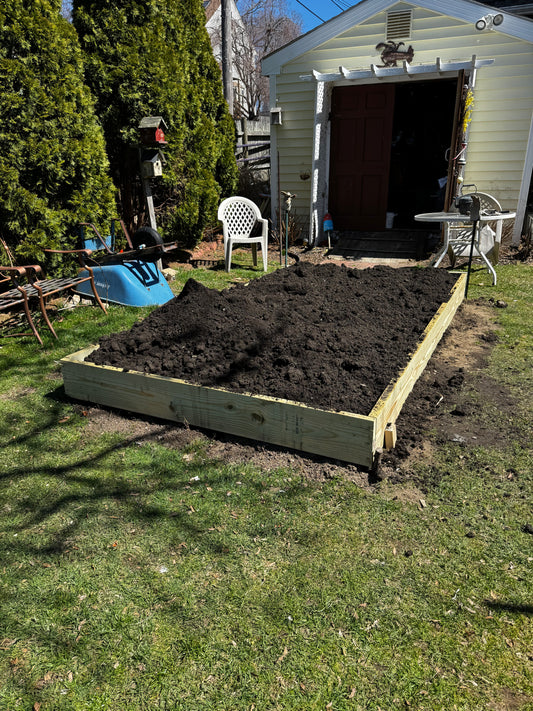
For raised beds, soil warms faster — see Filling a Raised Bed in Wellesley and How to Build a Quick Cedar Raised Bed for a Cambridge Patio.
3. Planting the Day After a Hard Rain
Wet soil compacts when you walk on it or dig into it. Once compacted, drainage drops and feeder roots die. Brockton's heavier clay soils (common east of Main Street) are especially vulnerable.
Wait 48 hours after a hard rain. Pick up a handful of soil and squeeze. If it forms a tight ball, wait. If it crumbles, you can dig.
For raised beds, the rule still applies but you'll be ready faster — bed soil drains in 24 hours after rain.
4. Skipping the Staking Step at Transplant
The temptation: "I'll stake when the plant is big enough to need it." The reality: by the time you're ready to stake, the root system is already where the stake needs to go.
Stake at transplant. Drive the stake 12 inches deep, 4 inches off the stem, on the windward side. First tie at 12 inches of plant height. The full technique is in How to Stake Tomatoes and Heavy Annuals in a Quincy Backyard.
Staking later means tearing roots, then waiting 2 weeks for the plant to recover. Multiply across 6 plants and you've lost a quarter of the season.
5. Mulching Too Thick Against Stems
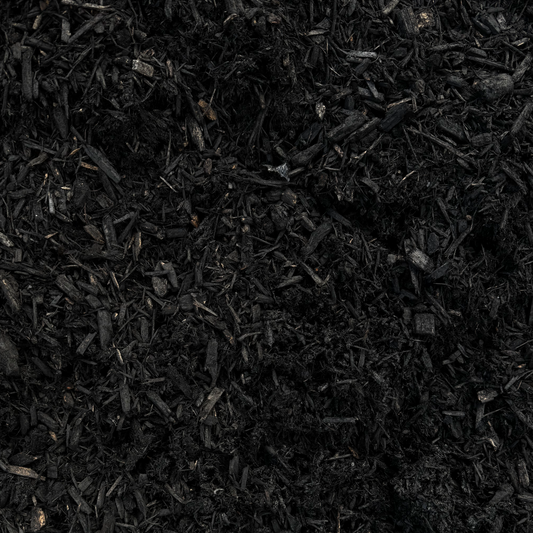
Vegetable mulch is a 2-inch layer around the plant, with a 2-inch open ring at the stem.
The mistake: piling mulch against the stem. This holds moisture against the stem and invites stem rot, slugs, and seedling diseases.
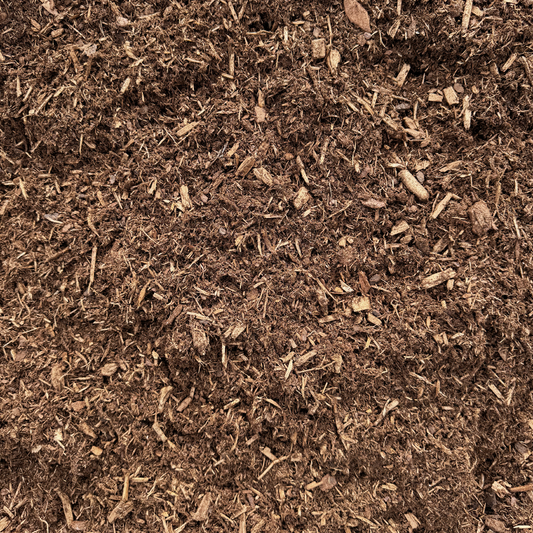
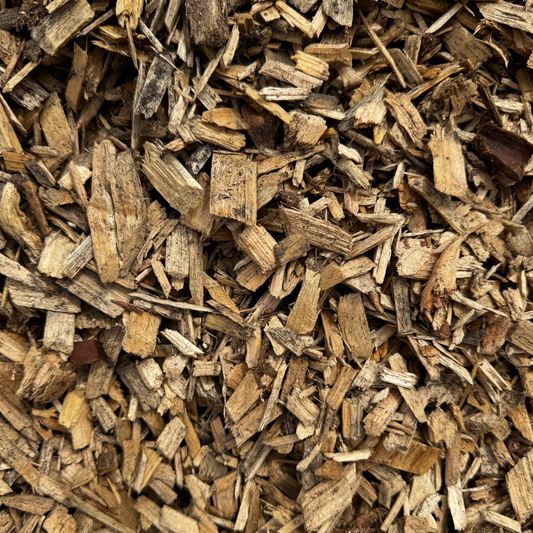
The right way: - Spread 2 inches of straw or shredded bark across the bed surface - Pull mulch back from each stem so there's a 2-inch open ring at soil level - The mulch suppresses weeds between plants without crowding the stem
For the broader 2-inch mulch principle, see The Two-Inch Mulch Rule for MA Beds. For compost top-dressing under the mulch, US Composting Council STA-tested compost is the right spec.
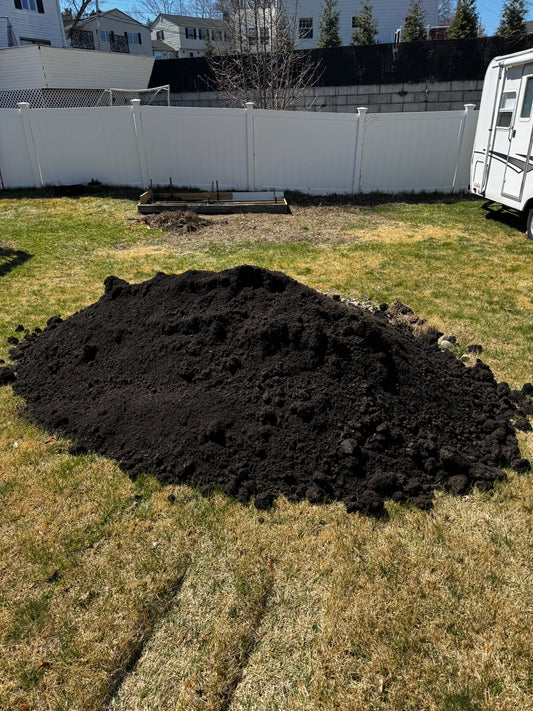
Browse the raised garden bed materials collection for compost, mulch, and straw in small bags.
Bonus: The Brockton Watering Schedule
Most Brockton vegetable gardens are over-watered in May (still cool, plants don't transpire much) and under-watered in July (plants are big and demanding).
The right May schedule: - Week 1 after transplant: Deep water every 3 days - Week 2–3: Deep water every 4 days - Once established (week 4+): Deep water once a week, 1 inch
For the broader watering pillar, see How Often Should I Water New Plantings in May? A Middlesex County Q&A. For drip irrigation that automates this, see How to Set Up a Drip-Irrigation Run for Watertown Foundation Beds.
What This Means for You
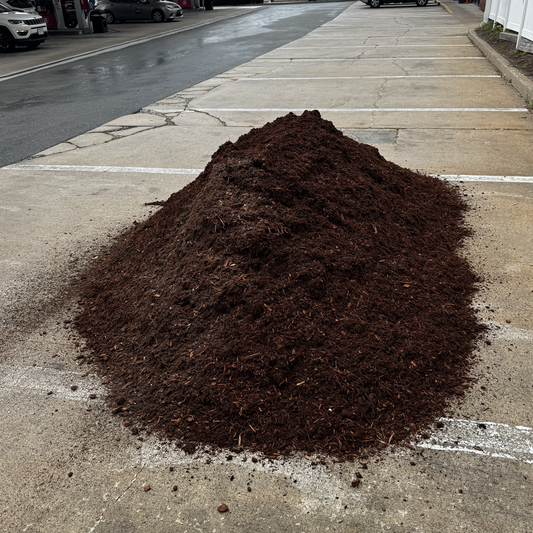
Five mistakes, five fixes. Plant spaced, in warm soil, after dry days, staked at transplant, mulched right. Order soil amendments, mulch, and stakes through the Brockton landscape supply routes — Ottr delivers compost in small bags or by the cubic yard.