Quick Answer
To stake tomatoes and heavy annuals in a Quincy backyard: stake at transplant time, not later — drive a 6-foot wooden stake or 5-foot T-post 12 inches deep, 4 inches off the stem on the windward side. Tie loosely with stretchy ties in a figure-8, retie every 12 inches as the plant grows. The total job for a Quincy raised bed with 6 tomato plants: 45 minutes. Skipping or delaying this is the #1 reason tomato plants snap in a June thunderstorm.
Why May 5 Is the Right Tuesday
In Quincy — Wollaston, Squantum, Houghs Neck, Merrymount — tomato transplants are going in this week. Soil temps are reliably above 60°F, frost risk is gone, and the long-range forecast shows a normal warm-up through Memorial Day. For the broader frost-date question, see When Is It Safe to Plant Tomatoes Outside in Worcester County? — same logic applies to Quincy with a 5-day earlier frost-clear date.
Stake at transplant, not later. Driving a stake into a 4-week-old tomato root system tears feeder roots and stresses the plant for two weeks. Staking at transplant means the roots grow around the stake from day one.
Materials
For a typical Quincy raised bed with 6 tomato plants:
- 6 wooden stakes — 6-foot, 1x1 untreated cedar or hardwood; or 5-foot steel T-posts for indeterminate varieties that push past 6 feet
- Stretchy plant ties — 1/2" stretch tape or soft twine (avoid wire and bare-zip ties — they girdle stems)
- Rubber mallet — for driving stakes without splitting wood
- Hand pruners — for pinching suckers as you tie
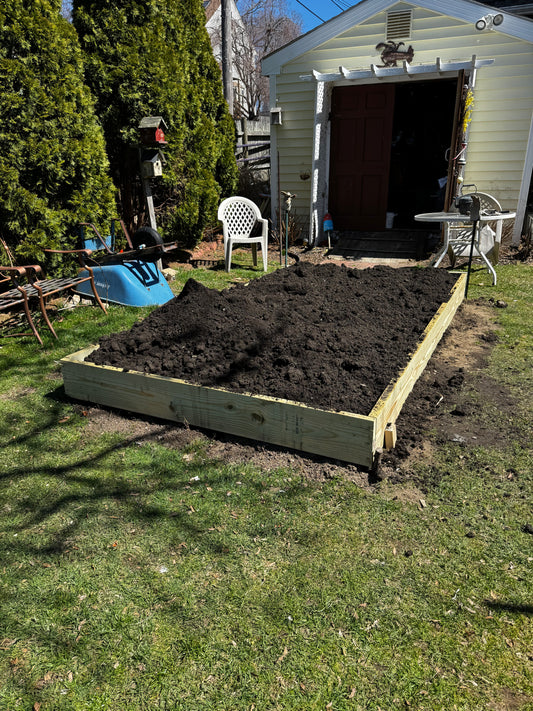
Browse the raised garden bed materials collection for the soil mix and bed lumber. For a fresh raised-bed build before staking, see How to Build a Quick Cedar Raised Bed for a Cambridge Patio Before Mother's Day.
The UMass Extension Vegetable Program has the authoritative variety guidance for Massachusetts gardens — determinate (bush) varieties need shorter stakes; indeterminate (vining) varieties need 6-footers.
Step 1: Choose Stake Side (5 min)
Look at the plant. Pick the windward side — the side the prevailing summer wind comes from (in Quincy, that's southwest to west). The stake goes on that side so the plant leans into it during wind, not away.
Measure 4 inches off the stem. Closer than that, the stake tears roots. Farther than 6 inches, the tie has to bridge too much air and the plant whips in storms.
Step 2: Drive the Stake (5 min per stake)
Hold the stake vertical. Use the rubber mallet to drive it 12 inches deep into the bed soil. In Quincy raised beds with the typical loam-compost mix, this goes easy.
For in-ground tomatoes in Quincy backyard clay (common east of Hancock Street), you'll need a steel T-post and a small sledge. 12 inches deep minimum — windy June thunderstorms will lever out anything shallower.
Step 3: First Tie at 12 Inches (3 min per plant)
Once the plant is at 12 inches tall (usually 7–10 days after transplant), tie the main stem to the stake. Use stretchy plant tape or soft twine. Figure-8 pattern — twist between the stem and the stake so the stem doesn't rub.
The tie should be loose enough that you can fit a pencil between the stem and the tie. Tight ties cut into the stem as it thickens and kill the plant by mid-July.
Step 4: Pinch Suckers as You Tie (5 min per plant)
A sucker is the small shoot growing in the V between the main stem and a side branch. For indeterminate varieties, pinch every sucker below the first flower cluster. Above the first flower cluster, leave them.
For determinate varieties (Roma, Celebrity, Mountain Pride), don't pinch suckers — these varieties are pre-programmed to stop at a set height, and pinching reduces yield.
Step 5: Retie Every 12 Inches (Ongoing)
As the plant grows, add a new tie every 12 inches of new growth. Don't move the lower ties — leave them as the structural support and add new ones above. By August, an indeterminate tomato should have 4–5 ties on a 5-foot stake.
For heavy fruiting clusters, add a small sling tie under the cluster itself once the fruit gets to golf-ball size. A loop of soft twine around the cluster, tied to the stake, prevents the cluster from snapping off the main vine.
Step 6: Mulch the Base (5 min)
Once staking is set, mulch the base of each plant with 2 inches of straw or shredded bark — not piled against the stem. Mulch holds moisture, prevents soil splash (which spreads early blight), and keeps the root zone cool through July and August.
For heavy annual flowers (cosmos, dahlias, zinnias over 3 feet), the same staking principle applies — single stake per plant, figure-8 tie, retie every 12 inches.
Common Quincy Backyard Mistakes
Cages instead of stakes for indeterminate varieties. Tomato cages work for determinate (bush) varieties topping at 3–4 feet. Indeterminate varieties (Brandywine, Sungold, Cherokee Purple) outgrow standard cages by mid-July and flop. Stake them.
Staking late. Driving a stake into a 4-week-old root ball tears feeder roots. Stake at transplant.
Tying too tight. A tomato stem doubles in diameter between June and August. Stretchy ties accommodate that growth. Wire and bare zip-ties kill plants.
Staking too shallow. Storms knock over plants on 6-inch-deep stakes. 12 inches minimum; 18 inches in lighter soil.
For staking heavy annuals on a Quincy front porch, the same technique scales down — see 5 Container-Garden Combos for a Brookline Front Porch in May for container planting where staking is a key annual-flower technique. For a broader native-plant-staking question — most natives don't need staking — see the Native Plant Trust plant database.
For watering schedule on newly staked plants, see How Often Should I Water New Plantings in May? A Middlesex County Q&A — same timing applies to staked tomatoes in Quincy.
What This Means for You
45 minutes on a Tuesday evening in early May, and your Quincy backyard tomatoes are set for the summer. Order stakes, ties, and any soil top-up through the Quincy landscape supply routes. By the time the first cluster sets fruit in late June, the staking job will look obvious — and you'll be one of the few backyards in Wollaston where the August thunderstorm doesn't take down half the row.