Quick Answer
Yes, mulch most of your Plymouth County vegetable garden — but not all of it, and not with hardwood. The right mulch for vegetables is straw or shredded leaves (light, decomposes into soil within a season). Tomatoes, peppers, and cucurbits love mulch. Lettuce, spinach, and root crops want bare soil. Apply 2 inches deep after seedlings are 4 inches tall — too early traps cold soil, too late lets weeds win. The wrong mulch (hardwood, dyed mulch, fresh wood chips) actively hurts vegetable beds.
The Vegetable Mulch Confusion
Plymouth County vegetable gardens range from raised-bed kits in Carver backyards to long row gardens in Halifax. Almost everyone gets the mulch question wrong the first time — either skipping it entirely (and battling weeds all summer), going too heavy with hardwood (which steals nitrogen from veggies), or applying too early (which slows soil warm-up and stunts the early crop).
This Q&A walks through the actual mulch question for vegetables: what to use, when to apply, which crops want bare soil, and how mulch interacts with Plymouth County's soil and weather.
Q: Why mulch a vegetable garden at all?
A: Five reasons, in order of importance.
- Weed suppression — the single biggest labor saver in any vegetable garden. A 2-inch mulch layer cuts weeding time by 70–80%.
- Moisture retention — mulched soil dries out half as fast as bare soil. Critical in Plymouth County's August.
- Soil temperature regulation — keeps roots cooler in July–August, which most heat-stressed cool-season crops appreciate.
- Soil structure improvement — straw and leaf mulch decompose into compost in place, building soil over years.
- Disease prevention — mulch keeps soil from splashing onto lower tomato leaves during rain (cuts early blight infection rates dramatically).
Q: What's the right mulch for a vegetable garden?
A: Straw, shredded leaves, or grass clippings. Each works.
- Straw (oat, wheat, or salt-marsh hay) — the gold standard. Light, decomposes in one season, doesn't tie up nitrogen. Avoid hay (with seed heads) — you'll plant weeds.
- Shredded leaves — free if you saved them from fall. Decomposes faster than straw. Best for established beds, not newly seeded.
- Grass clippings (untreated lawn only) — apply in thin 1/2-inch layers, allow to dry between applications. Heavy fresh clippings mat and rot.
- Compost — applied 1 inch deep as a top-dress, doubles as mulch and slow-release fertilizer. Browse the mulch and compost selections for bulk options.
Q: What about hardwood, hemlock, or cedar mulch?
A: Skip them in vegetable beds. Wood-based mulches are made for ornamental beds and trees, not vegetables. They tie up nitrogen as they decompose (the bacteria pulling N from the soil to break down lignin), starve veggies of nutrients in year one, and take 2–3 years to fully integrate.
Hardwood mulch in the vegetable garden is the most common Plymouth County mulch mistake. Reserve hardwood, hemlock, and cedar for the perennial beds (see Hemlock vs Pine Bark Mulch: A Plymouth County Side-by-Side for the perennial-bed picks).
For more on mulch depth, see The Two-Inch Rule: Why Most Mulch Beds Are Either Too Thin or Way Too Deep.
Q: When should I apply mulch in Plymouth County?
A: After seedlings are 4 inches tall and soil temps are above 65°F. Usually mid-to-late May for tomatoes, peppers, and cukes; early June for warm-season transplants.
Don't mulch too early. Mulching cold spring soil traps the cold and slows warm-up. Plymouth County soil temps don't reliably hit 65°F until late May; mulch before that and your tomatoes sulk for weeks.
Don't mulch too late. Once weeds are established, mulch can't smother them — you'll be weeding through the mulch all summer. Apply right after the first weeding pass.
Q: Which vegetables LOVE mulch?
A: Heat-loving warm-season crops.
- Tomatoes — mulch is non-negotiable. Cuts blight, retains moisture during dry spells, prevents soil splash on lower leaves.
- Peppers — same as tomatoes; mulch from when transplanted onward.
- Cucumbers, zucchini, summer squash, melons — mulch the entire bed once vines are established.
- Pole beans, eggplant — mulch reduces water stress at the critical fruit-setting stage.
Apply 2 inches of straw or shredded leaves around these plants once they're past the seedling stage.
Q: Which vegetables want bare soil?
A: Cool-season seeded crops and root crops.
- Lettuce, spinach, kale, arugula — direct seeded; mulch chokes germination. Wait until plants are 3 inches tall, then mulch lightly.
- Carrots, beets, radishes, parsnips — root crops in dense rows. Mulch interferes with thinning and harvest. Bare soil better.
- Onion, garlic, leek — bare soil for the first half of the season. Light mulch optional in mid-summer for moisture retention.
- Direct-seeded peas, beans early — wait until plants are up before mulching.
Q: How thick should the mulch layer be?
A: 2 inches, no more. Thicker mulch suffocates soil microbes, holds excessive moisture (which encourages slugs and fungal disease), and slows the soil from warming on cool mornings.
Top up mid-season if the layer thins. Refresh once in late June and once in late July is typical for a Plymouth County garden.
Q: Does mulch attract slugs and pests?
A: Yes — and the fix is technique, not skipping mulch.
Slug pressure increases under any mulch. Three mitigations:
- Pull mulch back from plant stems by 2 inches — gives slugs no overnight hiding place at the plant base
- Apply iron-phosphate slug bait at vulnerable crops (lettuce, hosta-adjacent veggies)
- Choose straw over leaves in slug-heavy seasons — straw dries faster than packed leaf mulch
For broader pest guidance, the UMass Vegetable Program is the authoritative MA-region reference.
Q: How does vegetable mulch interact with the compost program?
A: They feed each other. A vegetable garden mulched with straw becomes a self-composting system over the season — by October, the straw is half-broken-down into the soil. Top-dress with finished compost in spring before re-mulching.
For compost source comparisons in Plymouth County, see Three Bulk Compost Sources Compared for Plymouth County Vegetable Gardens. The US Composting Council sets the quality benchmarks for any bulk compost you buy.
Q: What about black plastic mulch?
A: Effective for tomatoes and peppers, ugly in a backyard. Plastic mulch warms the soil 5–10°F faster than bare soil, eliminates weeds, and conserves moisture. Used commercially. For backyard gardens, the visual cost rarely justifies the agronomic benefit. Stick with straw.
Q: How does this fit with raised bed gardens?
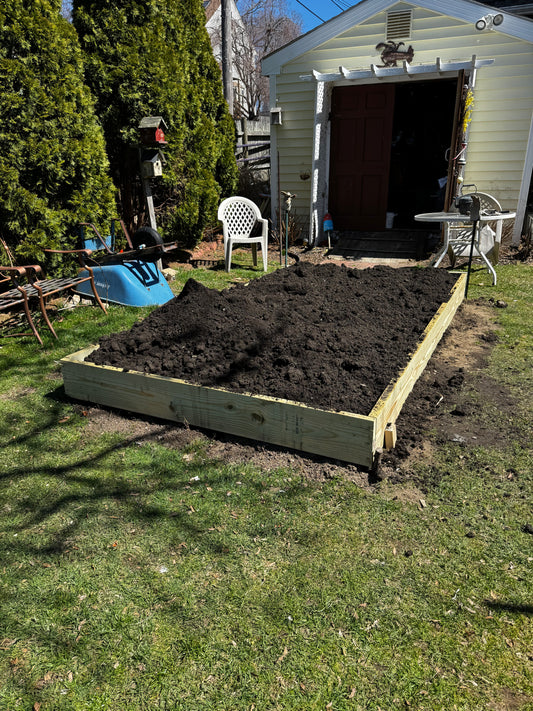
A: Same rules apply. Raised beds in Plymouth County (the standard 4x8 cedar-frame box on a Halifax patio) mulch with straw or shredded leaves. Hardwood still doesn't belong in the bed. For raised-bed-specific guidance, see How Do I Build a Raised Garden Bed in Massachusetts? A Complete 2026 Guide and How to Build a 4x8 Raised Bed in a Watertown Backyard in One Weekend.
What This Means for You
Mulch the warm-season fruits (tomatoes, peppers, cukes, melons) with 2 inches of straw after seedlings are established and soil is warm. Skip the lettuce row. Skip the carrot row. Apply in late May, top up in late June, and the garden almost weeds itself.
For Plymouth County gardeners, Ottr stocks bulk straw, screened compost, and bagged mulch — see the Plymouth County landscape supply routes for delivery.