Quick Answer
A 4'x8'x12" cedar raised bed is a one-weekend Watertown build: Saturday morning for materials pickup and frame assembly, Saturday afternoon for siting and hardware cloth, Sunday morning for soil delivery and fill, Sunday afternoon for first planting. Total time: 8–10 working hours. Total cost: $350–$420 for cedar, hardware, soil. Cut list and step-by-step below.
What You're Building
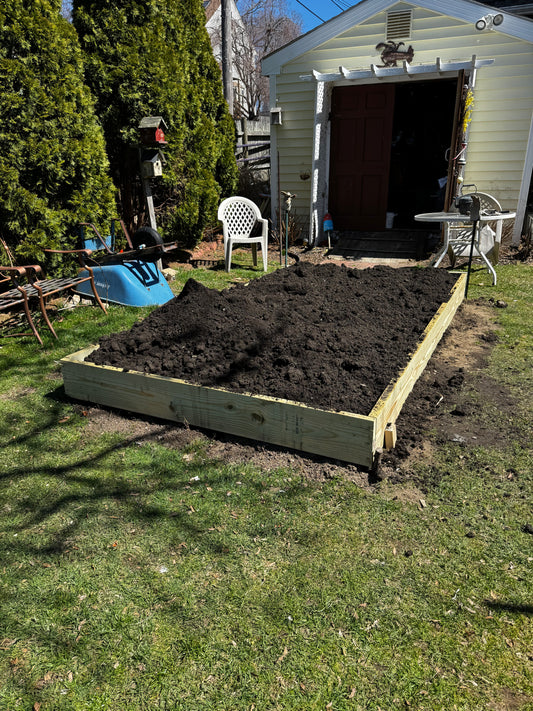
A standard 4'x8'x12" cedar raised bed: three stacked 2x12 boards on the long sides, two stacked 2x12 boards on the short sides, joined at the corners with 4x4 cedar posts and deck screws. Hardware cloth on the bottom blocks voles. Filled with 1.2 cubic yards of loam-compost blend.
Lifespan: 10–15 years with untreated cedar. Total holding capacity: 32 cubic feet of soil. Growing area: 32 sq ft.
Cut List
From two 2x12x8 ft cedar boards (long sides) and two 2x12x4 ft cedar boards (short sides — most lumberyards will cut to length, otherwise buy 2x12x8 and cut once at 4 ft):
- 2 long sides (already 8 ft) × 1 row only — for a single-tier 6" bed
- For a 12" two-tier bed: 4 long sides + 4 short sides = stack two boards high
For a 12" deep bed (recommended): - 4 × 2"x12"x8 ft cedar (long sides — 4 boards, 2 per side stacked) - 4 × 2"x12"x4 ft cedar (short sides — 4 boards, 2 per side stacked) - 4 × 4"x4"x14" cedar posts (corner posts)
Adjust if your local Watertown lumberyard stocks different dimensional sizes — Russell's, Coombs, or any of the larger yards in nearby Newton or Waltham will have cedar 2x12.
Hardware
- 32 × 3" deck screws (exterior, coated for cedar)
- 1 × 4'x8' sheet of ½" hardware cloth (for vole-proof bottom)
- 1 × box of poultry-wire staples (½" or ¾")
- Optional: corner brackets (interior or exterior, structural)
Tools
- Circular saw or miter saw (if cutting boards down)
- Drill with #2 Phillips bit
- Level (4 ft)
- Tape measure
- Square
- Tin snips (for hardware cloth)
- Hammer or staple gun
Saturday Morning — Material Pickup and Frame Assembly
8:00 AM — Pickup. Drive to your lumberyard. Cedar 2x12 stocks at most Watertown-area lumberyards; call ahead if you need them to cut shorts. Pick up hardware cloth, screws, and 4x4 cedar posts.
9:30 AM — Build the frame. Lay one long board (2x12x8 ft) and one short board (2x12x4 ft) flat in the driveway forming an "L". Set a 4x4 cedar post at the corner, flush with the outside edges of both boards. Drive 4 deck screws through each board into the post (8 total per corner). Repeat for all four corners — you now have a single-tier 6"-deep frame.
11:00 AM — Stack the second tier. Set the second set of long and short boards on top of the first. The 4x4 corner posts continue up — drive 4 more screws per corner through the upper boards into the posts. The bed is now 12 inches deep.
The 14"-tall corner posts will protrude 2" below the bottom edge of the frame — these become anchoring stakes when you set the bed in the yard.
Saturday Afternoon — Siting and Hardware Cloth
1:00 PM — Site the bed. Pick the spot with 6+ hours of direct sun. In Watertown, that's usually the south or southwest side of the house, away from mature oak or maple canopy. Level the ground footprint with a rake — you don't need perfect, but no high spot more than ½" above the surrounding grade.
2:00 PM — Hardware cloth. Flip the frame upside down. Lay the 4x8 sheet of ½" hardware cloth across the bottom. Trim to fit with tin snips. Staple every 6 inches along the edges into the bottom edge of the cedar.
This blocks voles and groundhogs from tunneling up through the soil.
3:00 PM — Set the bed. Flip right-side up, lift into position over the prepared site, and press down to seat the corner-post stakes 2" into the ground. Check level — adjust by digging out under high corners or shimming with crushed stone.
Sunday Morning — Soil Delivery and Fill
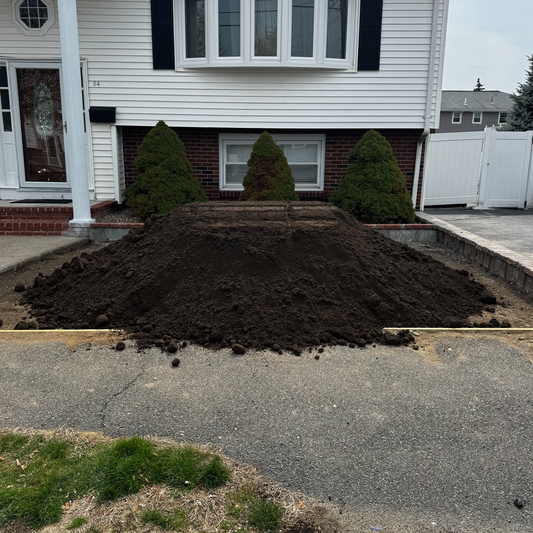
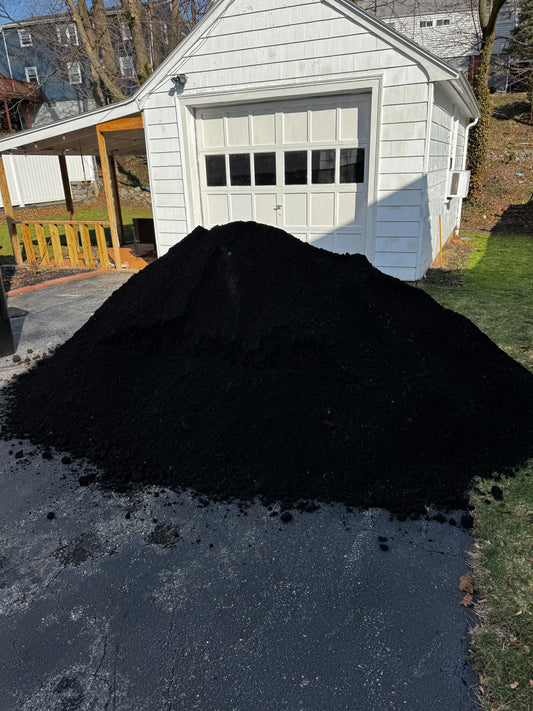
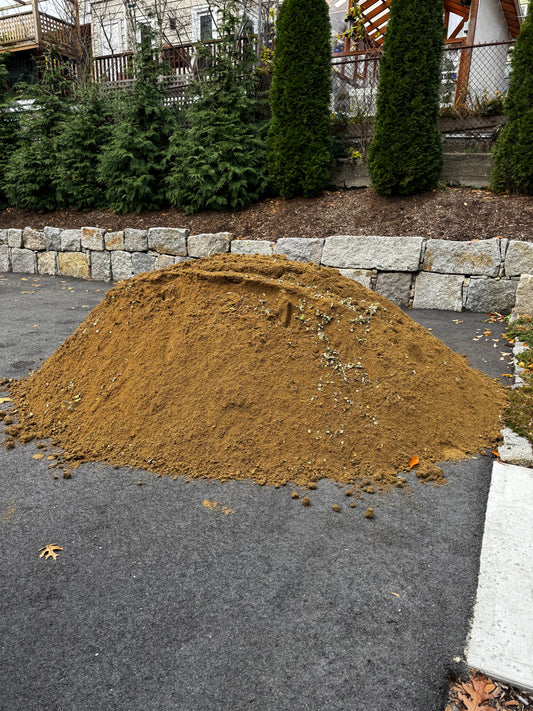
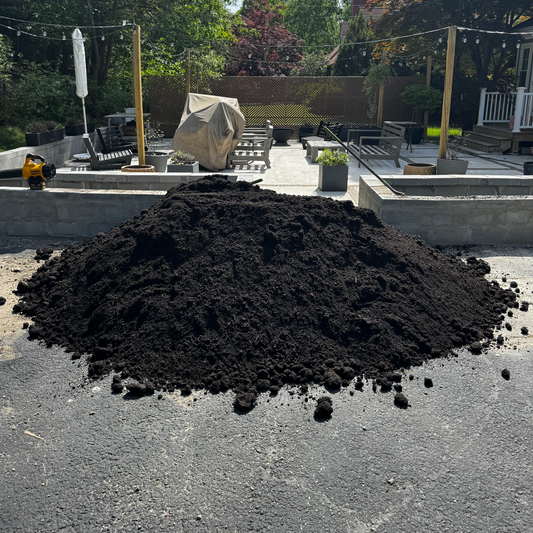
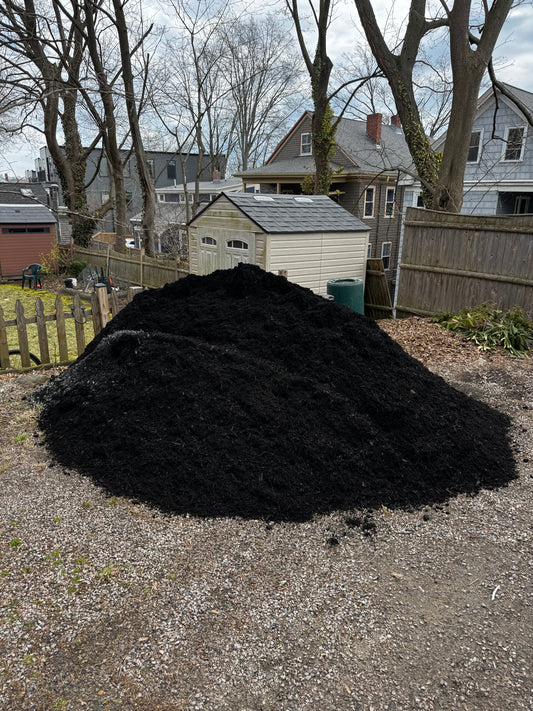
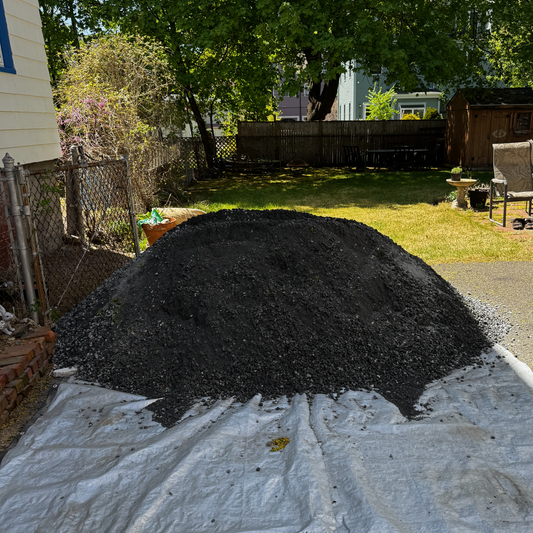
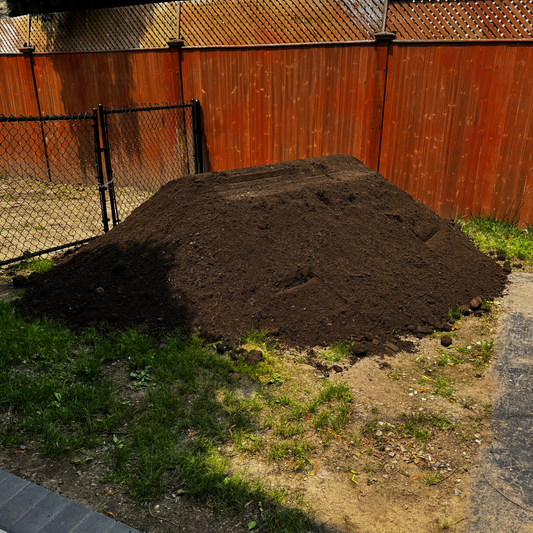
8:00 AM — Order delivery. The day before, you'll have already ordered 1.2 cubic yards of loam-compost blend through the raised garden bed materials collection. Watertown is 14 miles from Plymouth — most deliveries land before 10 AM if booked Saturday.
For the loam-specific ordering walkthrough, how to order a yard of loam for a Watertown raised bed build covers the dispatcher conversation.
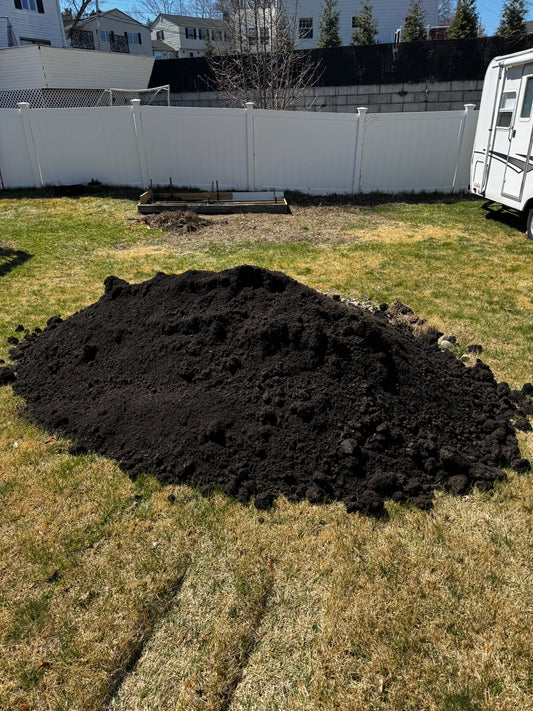
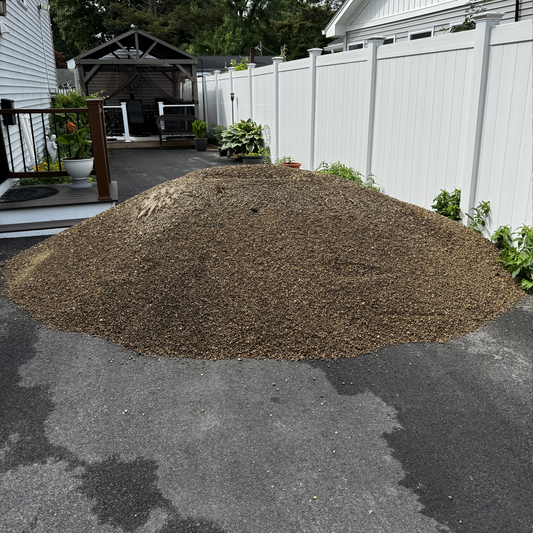
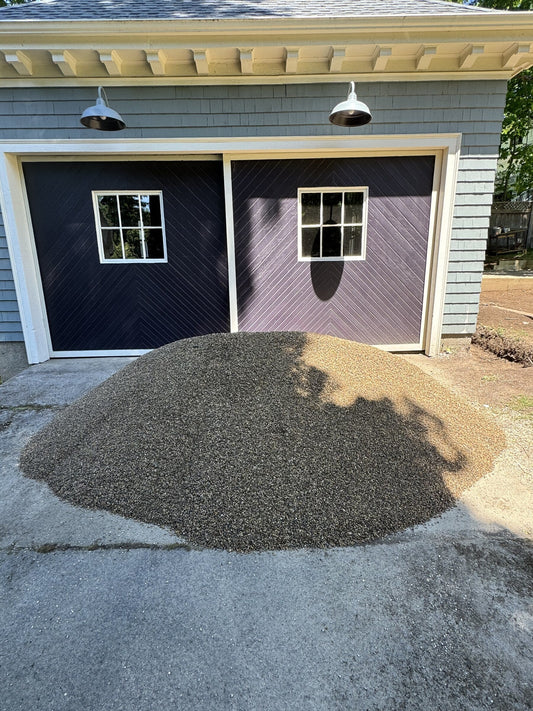
10:00 AM — Fill the bed. Wheelbarrow loam-compost blend from the driveway pile to the bed. Fill in 6"-deep lifts, watering each lift lightly to settle. Don't pack — vegetables want loose soil. Stop 1 inch below the top of the frame to leave room for mulch later.
For the layered-fill approach (mineral base + compost top), see how to layer a Somerville raised bed: loam, compost, and mulch in the right order.
Sunday Afternoon — First Planting
1:00 PM — Plant cool-season crops. Late March in Watertown is right for peas, spinach, lettuce, radishes, kale, and chard. Soil temps in the new bed will sit at 52–58°F — enough for cool-season germination.
For specific crops to plant at end of March, see 5 crops to plant in a Plymouth raised bed at the end of March.
3:00 PM — Water. Soak the bed thoroughly to settle the soil. The bed will drop ¾ to 1 inch over the next 48 hours as soil settles. Top up Monday with another wheelbarrow of blend if needed.
What This Cost
For a Watertown build, late March 2026:
- Cedar lumber (4 × 2x12x8, 4 × 2x12x4, 4 × 4x4 posts): $220
- Hardware (deck screws, hardware cloth, staples): $35
- Loam-compost blend (1.2 yards delivered): $80
- Total: $335
Add $20 for a soil thermometer if you don't have one — useful for the rest of the season.
Common Watertown Build Mistakes to Avoid
- PT lumber for vegetables. Don't. Cedar only. Penn State Extension's pressure-treated wood research is a useful peer reference on copper-leaching specifics for vegetable beds.
- Skipping hardware cloth. Voles will find a Watertown bed within the first season.
- Filling with cheap fill dirt. See the rest of 5 raised garden bed mistakes Newton homeowners make their first year for the full set.
For broader vegetable-specific timing across MA, the UMass Vegetable Program is the regionally-tuned reference.
The short version: 8 hours over a Saturday and Sunday, $335, ten-year lifespan, immediate first planting. Watertown weekend project.