Quick Answer
Five raised bed layouts for Somerville's typical 200–600 sq ft backyards: #1 single 4x8 against a fence (entry-level, 32 sq ft growing area), #2 L-shape against two fence lines (90 sq ft), #3 three parallel 2x8 narrow beds (48 sq ft, fits side yards), #4 U-shape walk-in garden (130 sq ft, requires 12x12 yard), #5 vertical-tier hillside cascade (60 sq ft on a sloped lot). Each layout below with dimensions, soil order, and what fits a Somerville triple-decker reality.
Why Somerville Asks This Question
Somerville lots are tight. A typical Davis Square or East Somerville triple-decker yard is 20'x30' net usable after subtracting the house, the deck, the back gate, and the AC compressor. A Spring Hill colonial gets 30'x40'. A Powderhouse Square ranch might hit 50'x50'. Across all of them, fitting productive raised beds requires layout-thinking — not just dropping a 4x8 in the middle.
These five layouts are the ones that actually fit Somerville yards.
#1 — Single 4x8 Against a Fence (Best for: first bed, narrowest yards)
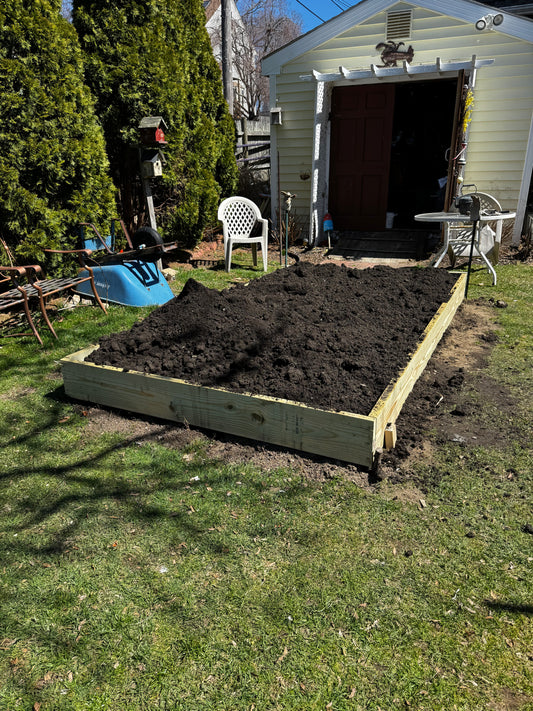
The starter layout. A single 4'x8'x12" bed pushed against the back fence with a 3 ft path in front. Total footprint: 8x7 ft. Growing area: 32 sq ft.
Wins when: First-year garden. 200–300 sq ft yard. Yard is 8+ ft wide back to fence.
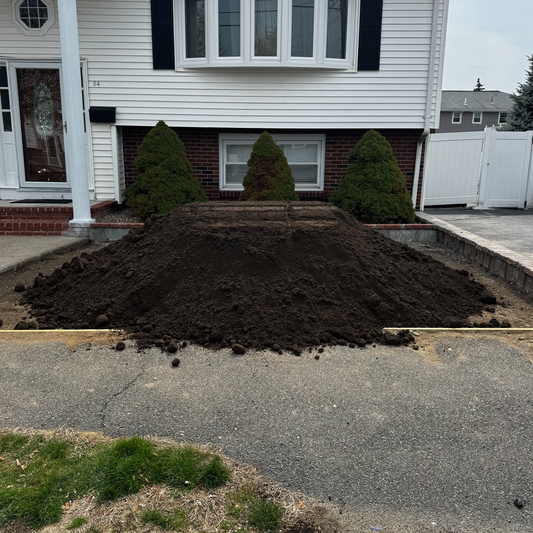
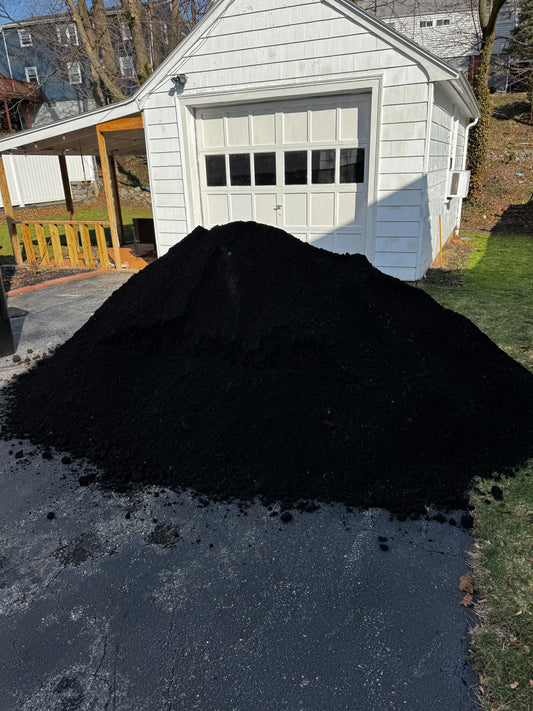
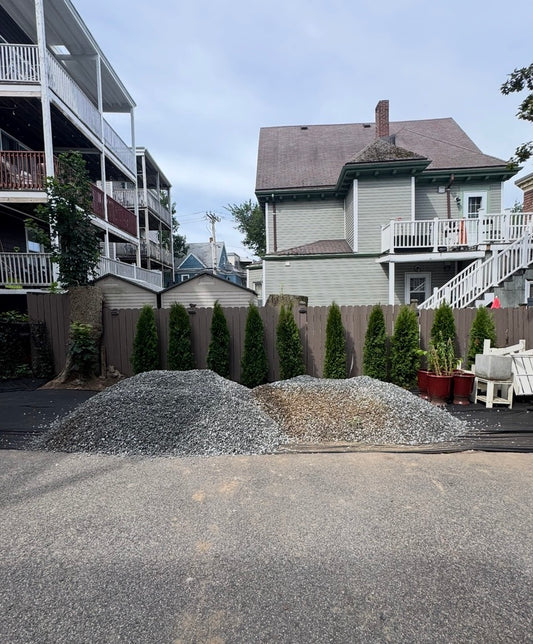
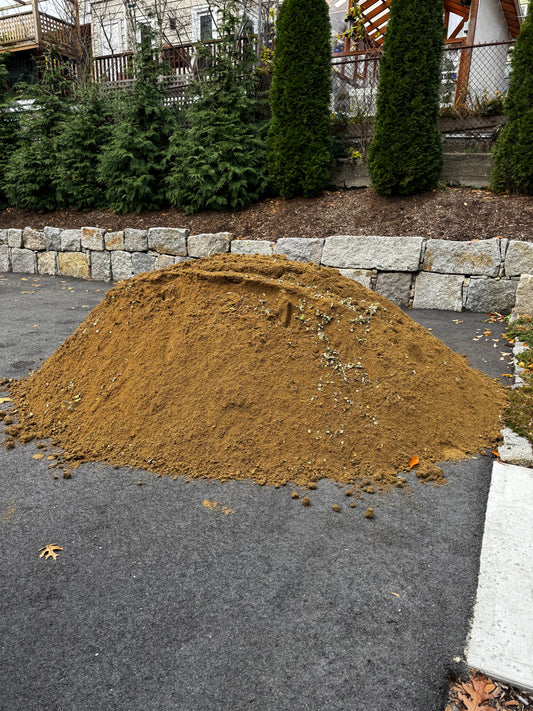
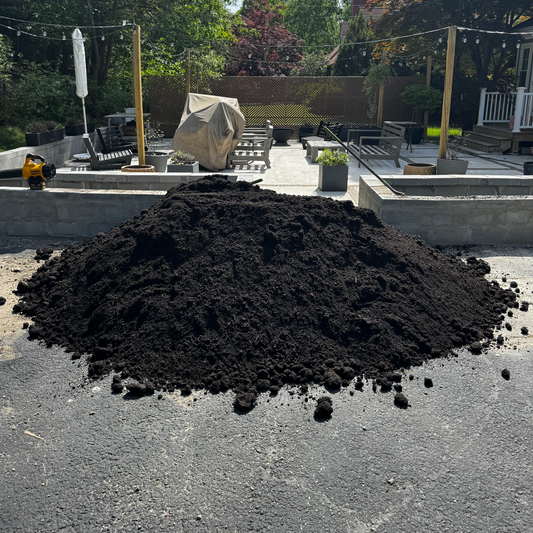
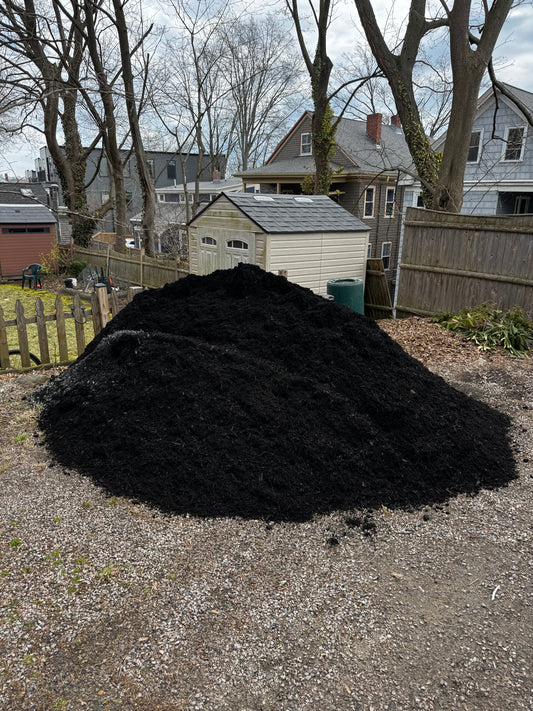
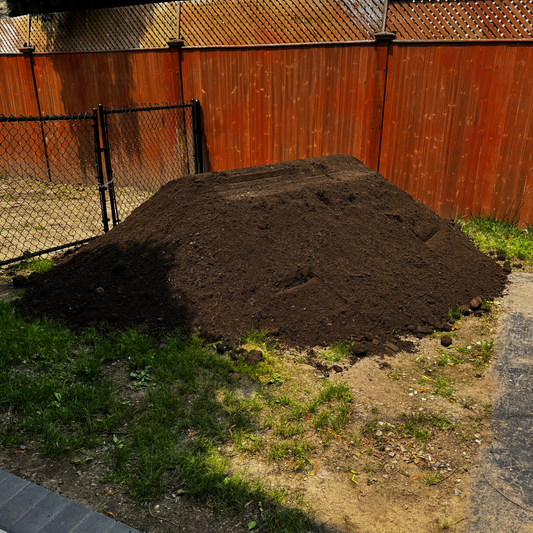
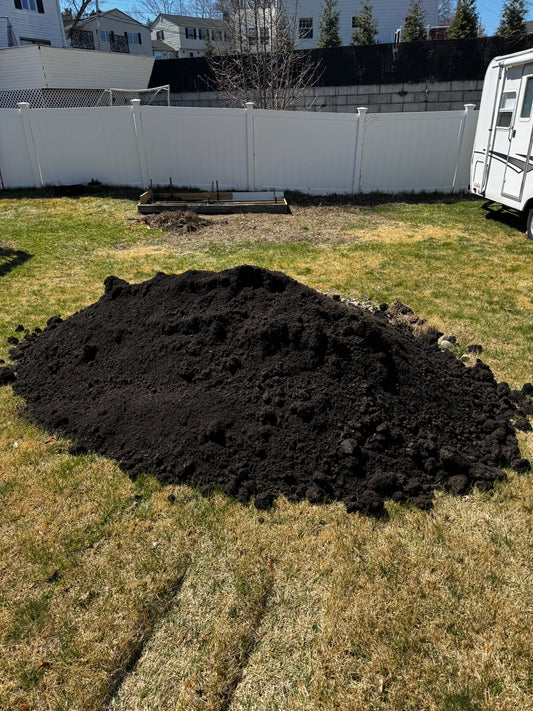
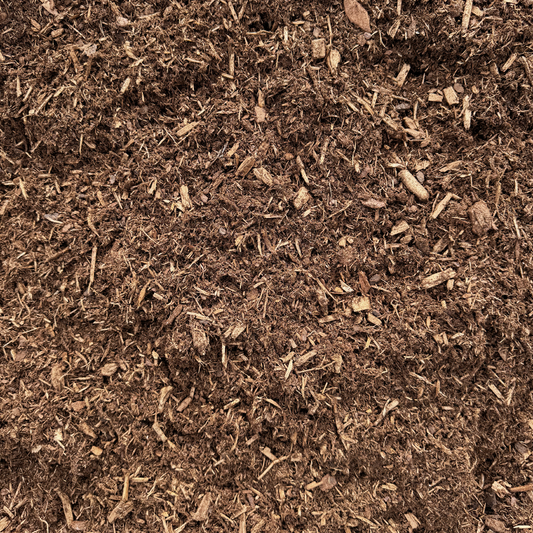
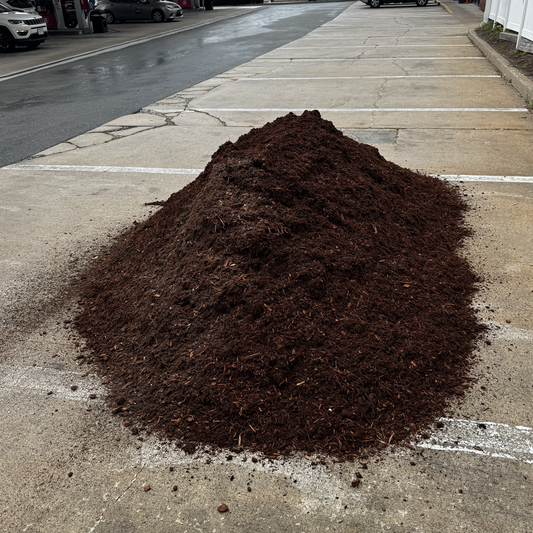
Soil order: 1.2 cubic yards of loam-compost blend through the raised garden bed materials collection.
Crop plan: Two tomatoes, six peppers, herbs along the front edge, one row of bush beans or lettuce against the back. ~$200 of summer vegetables.
For the build technique on a single 4x8, see how to build a 4x8 raised bed in a Watertown backyard in one weekend.
#2 — L-Shape Against Two Fence Lines (Best for: corner yards, established gardeners)
Two beds at right angles: a 4'x8' along the back fence and a 4'x6' perpendicular along the side fence, with a 3 ft path inside the L. Total footprint: 11x10 ft. Growing area: 56 sq ft (32 + 24).
Wins when: L-shaped backyard typical of Somerville triple-deckers where the kitchen and the back porch carve a corner. Year-two upgrade from layout #1.
Soil order: 2 cubic yards of loam-compost blend.
Crop plan: Heavy feeders (tomatoes, peppers, squash) in the long leg; quick-cycle crops (lettuce, radishes, beans) in the short leg. The path between gives standing room for harvest.
#3 — Three Parallel 2x8 Narrow Beds (Best for: side yards, alleyways)
Three 2'x8'x12" beds spaced 3 ft apart, oriented north-south for max sun. Total footprint: 8x14 ft. Growing area: 48 sq ft.
Wins when: Side-yard garden in Somerville's tight alley spaces. The narrow 2 ft width is reach-in from one side, perfect for a fence-line garden.
Soil order: 1.8 cubic yards of loam-compost blend.
Crop plan: Bed 1: tomatoes/peppers (heavy feeders). Bed 2: lettuce/spinach/herbs (light feeders, quick rotation). Bed 3: bush beans/cucumbers (medium feeders). Rotate annually.
For the build approach when working in tight side-yard access, see how to layer a Somerville raised bed: loam, compost, and mulch in the right order.
#4 — U-Shape Walk-In Garden (Best for: dedicated gardeners, 12x12+ yards)
Three beds in a U: 4'x8' back, 4'x6' each side. Walk-in path 3 ft wide between. Total footprint: 12x12 ft. Growing area: 80 sq ft (32 + 24 + 24).
Wins when: Powderhouse Square or Spring Hill yards with 12x12 of dedicated garden space. The walk-in path turns the garden into a workspace — you can stage tools, kneel anywhere, and harvest without bending awkwardly.
Soil order: 3 cubic yards of loam-compost blend.
Crop plan: Back bed (full sun): tomato/pepper/eggplant. Side beds: rotation of cool-season (peas, lettuce) early then warm-season (cucumber, beans) later. Herbs along path edges.
For the full pillar guide on raised bed builds across MA, see how do I build a raised garden bed in Massachusetts? A complete 2026 guide.
#5 — Vertical-Tier Hillside Cascade (Best for: sloped lots, retaining-wall integration)
For Somerville hillside lots — Winter Hill, Prospect Hill — a cascading three-tier set of 4'x8'x12" beds, each 2 ft below the previous, integrated into a retaining-wall geometry. Total footprint depends on slope; growing area 60–96 sq ft.
Wins when: The lot drops 4–6 ft across the backyard. Instead of fighting the slope with a single grading job, the beds become the retaining wall.
Soil order: 4–5 cubic yards of loam-compost blend depending on tier sizes.
Crop plan: Top tier (driest, most sun): herbs and Mediterranean crops (rosemary, sage, thyme). Middle: tomatoes/peppers. Bottom (most water-collecting): leafy greens, brassicas.
This layout requires actual carpentry — frames need to be anchored against soil pressure. Hire a contractor for the structural work; finish the soil and planting yourself. For drainage management around the tiered beds, what goes in a French drain? A complete Massachusetts homeowner guide covers the geometry.
How to Pick Your Layout
A decision flow for Somerville:
- Yard <250 sq ft: Layout #1.
- Corner-shaped yard: Layout #2.
- Long narrow yard or side-yard alley: Layout #3.
- Yard 300+ sq ft, dedicated to gardening: Layout #4.
- Sloped lot: Layout #5.
For crops to plant in any of these layouts at the end of March, see 5 crops to plant in a Plymouth raised bed at the end of March — same calendar applies to Somerville.
Where Native Plants Fit
A Somerville layout doesn't have to be all-vegetable. The Native Plant Trust maintains a database of MA-native species that work in raised-bed contexts — useful for ornamental tier additions or for converting a half-bed to native pollinator support. Mixing one bed of natives into a layout #4 U-shape adds bee and butterfly habitat without sacrificing vegetable production.
For broader vegetable-specific guidance and crop rotation patterns, the UMass Vegetable Program covers the regionally-tuned recommendations.
What This Costs in Somerville
Build costs (cedar lumber + hardware + soil delivery, DIY assembly):
- Layout #1: $350–$420
- Layout #2: $620–$740
- Layout #3: $480–$580
- Layout #4: $920–$1,100
- Layout #5: $1,400–$2,200 (carpentry add)
Year one yield in any of them: $150–$400 of vegetables. Year three: $400–$900.
The short version: pick the layout that fits the yard, order soil by the cubic yard, build in cedar, plant according to the rotation. Five layouts, every Somerville lot served.