Quick Answer
Coastal Plymouth County properties — Marshfield, Scituate, Duxbury, Plymouth, Cohasset — face two erosion problems at once: tidal/storm surge at the bottom of slopes and stormwater runoff washing soil down them. Five materials handle most of the work: riprap (large stone) for tidal toe protection, geotextile fabric under everything, dense-pack 3/4" stone for heavy traffic slope drives, river rock for decorative drainage swales, and straw wattles + native plantings for the upper slope. Below: when each wins, what each costs by the cubic yard, and how to layer them.
Why Coastal Plymouth County Is Different
Plymouth County's coast gets it from both sides. Storms drive saltwater up the slope from the bottom; spring snowmelt and summer downpours wash topsoil down it from the top. Properties between Brant Rock and White Horse Beach lose two to four inches of toe edge in a typical year and more during a major nor'easter.
The EPA Stormwater program sets the federal baseline for control, and the MA Wetlands Protection Act adds stricter rules within 100 feet of the coastal bank. Most of the work below should be confirmed with your local Conservation Commission before any installation that disturbs more than 100 sq ft.
#1 — Riprap (Large Stone, 12"–24") — for tidal toe protection
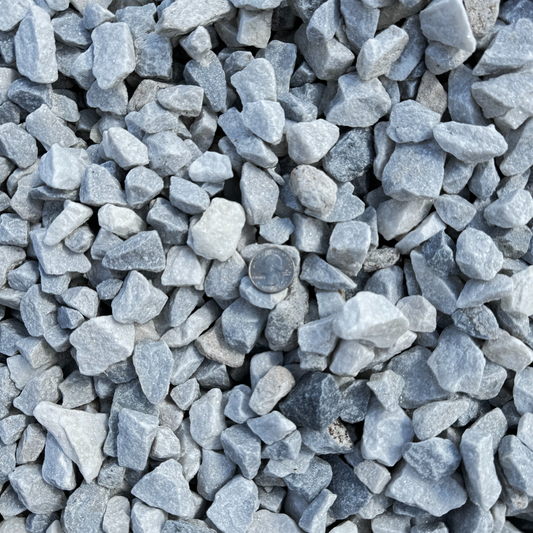
The classic seawall alternative. 12" to 24" stone placed at the bottom of a slope to break wave energy and lock the toe in place.
Wins when: A coastal-bank property with a documented erosion line. Properly sized riprap (heavier than the calculated wave force) absorbs storm impact and prevents toe undermining.
Stops winning at: Permitting. Riprap installations on coastal banks need MA DEP and ConsCom approval — start the process in February for a fall install.
Cost: Premium per ton due to size and trucking. Order through the full catalog with advance scheduling.
#2 — Geotextile Fabric — under every other material
Woven or nonwoven fabric placed beneath stone to prevent soil migration and stone sinking.
Wins when: Always. Every layered erosion control system on a coastal property uses geotextile as the bottom layer. Skip it and the stone slowly disappears into the slope.
Stops winning at: As a standalone solution. Fabric without weight on top blows in wind and gets shredded.
Cost: Inexpensive per square foot relative to the protection it provides. Available in residential rolls.
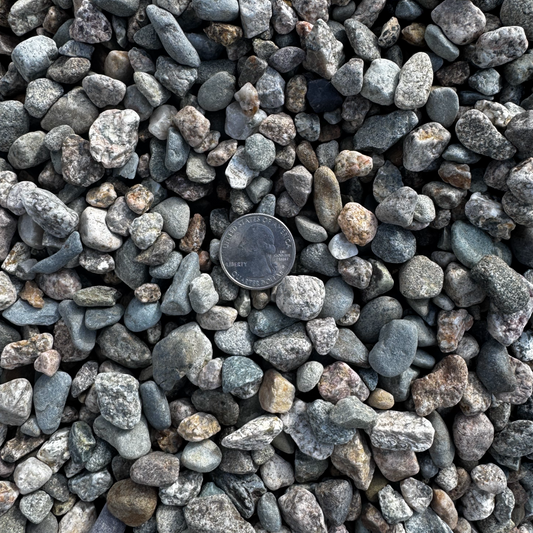
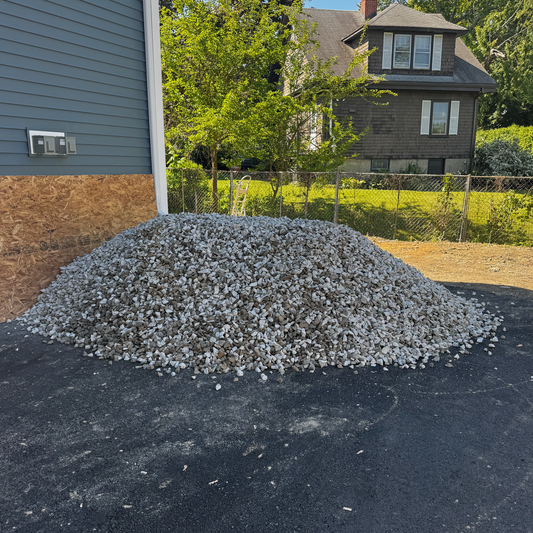
#3 — Dense-Pack 3/4" Stone — for slope drives and walkable paths
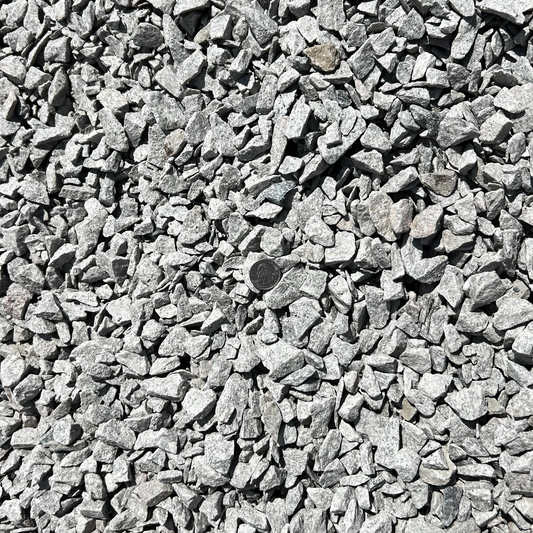
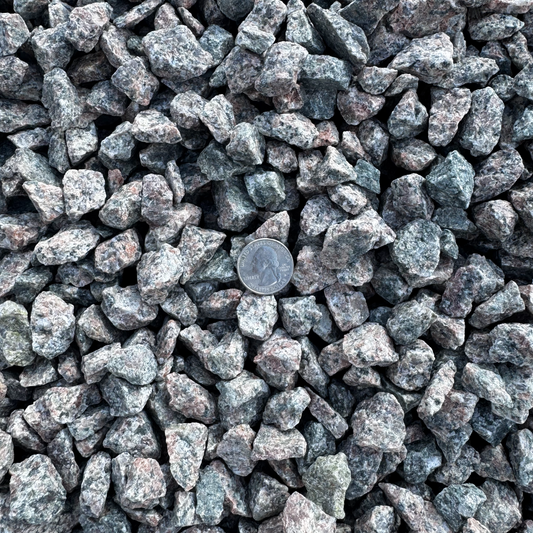
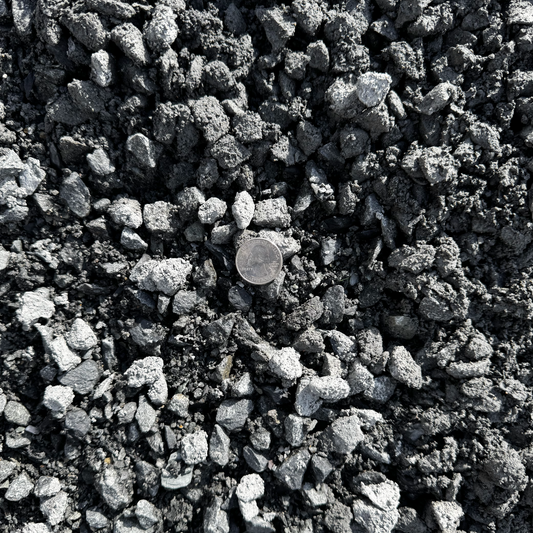
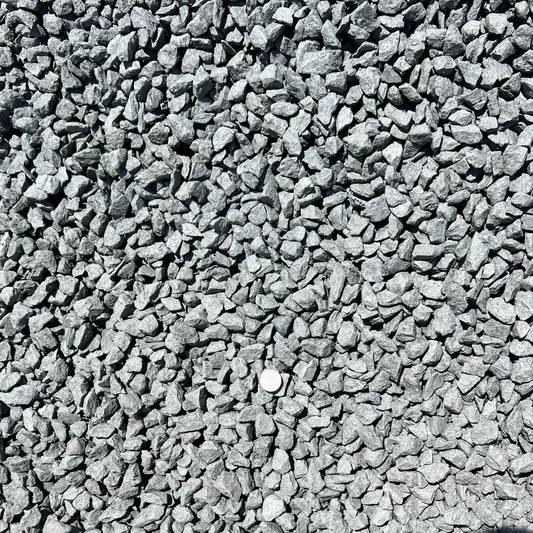
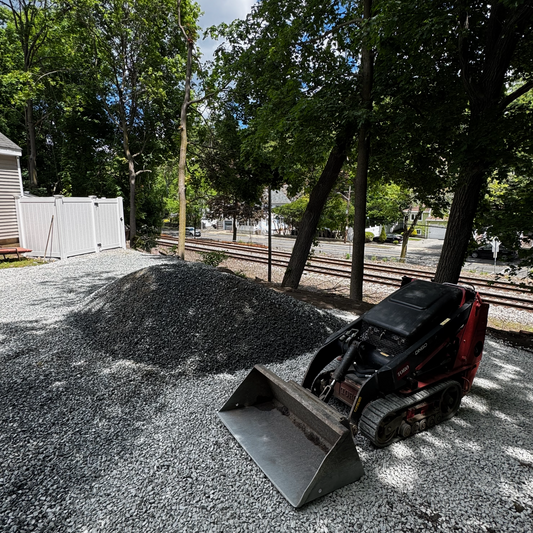
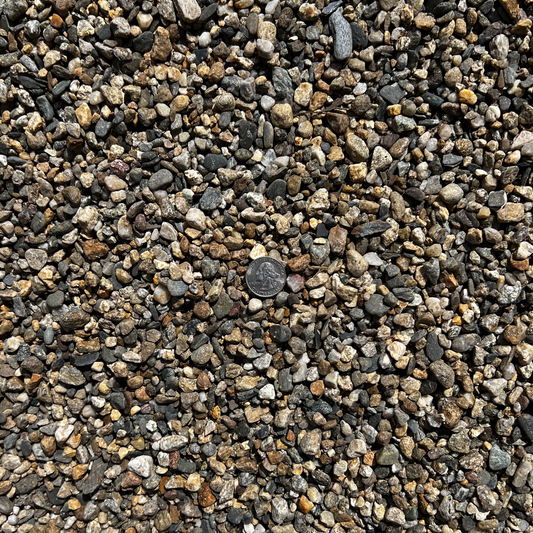
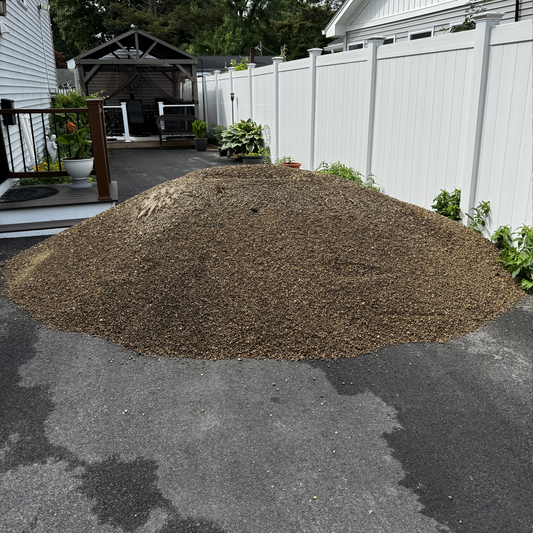
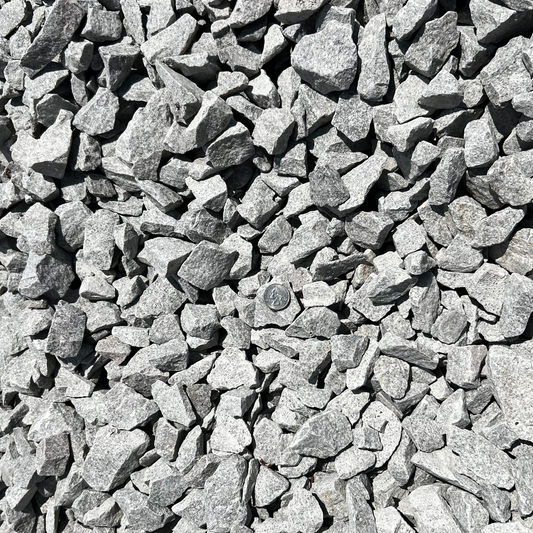
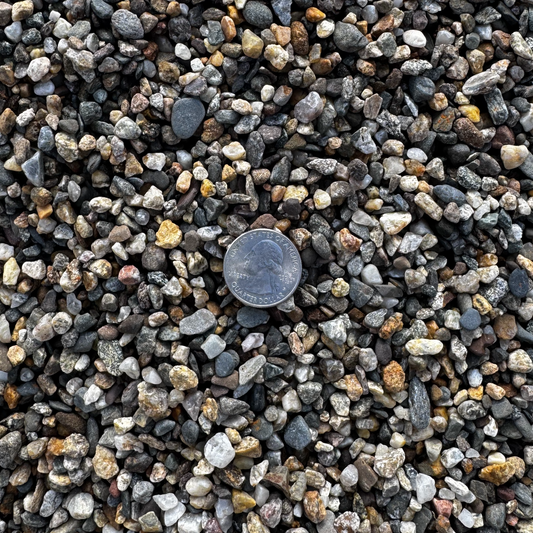
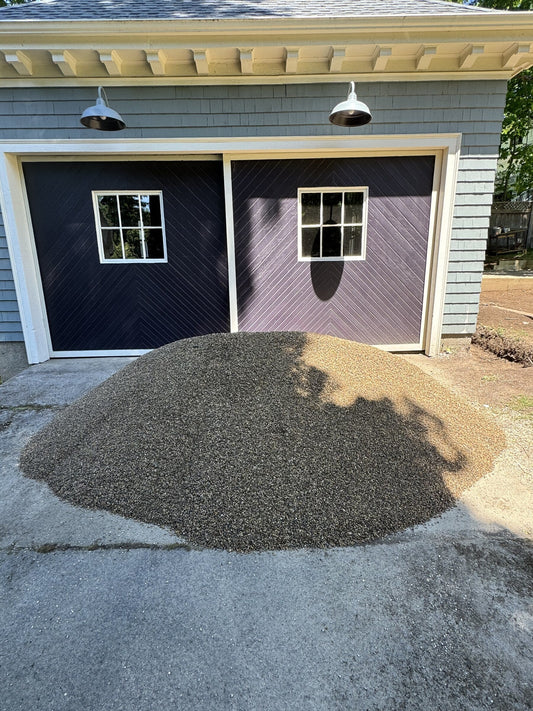
Tightly graded crushed stone that compacts to near-concrete hardness. The right material for the slope-side gravel driveways common in Plymouth's older neighborhoods.
Wins when: A sloped service drive (Plymouth's Manomet, Cohasset's Atlantic Ave) needs a stable surface that drains. Build over geotextile, compact in 3" lifts.
Stops winning at: Decorative use. Dense-pack is gray and utilitarian. For visible drainage features, switch to river rock.
For the full sub-base spec, see How to Set a Plymouth Crushed Stone Driveway Base That Lasts a Decade.
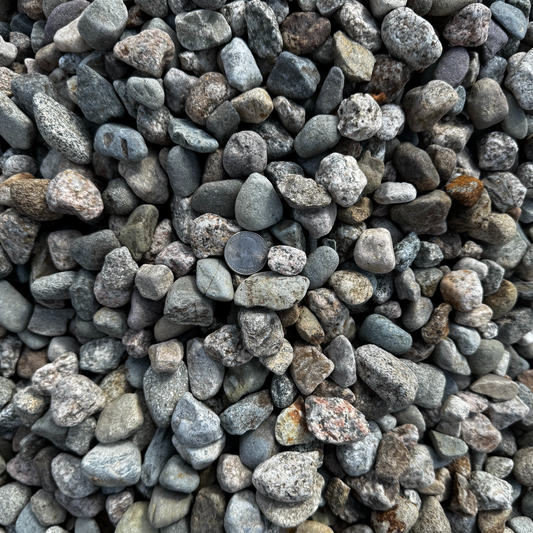
#4 — River Rock — for decorative drainage swales
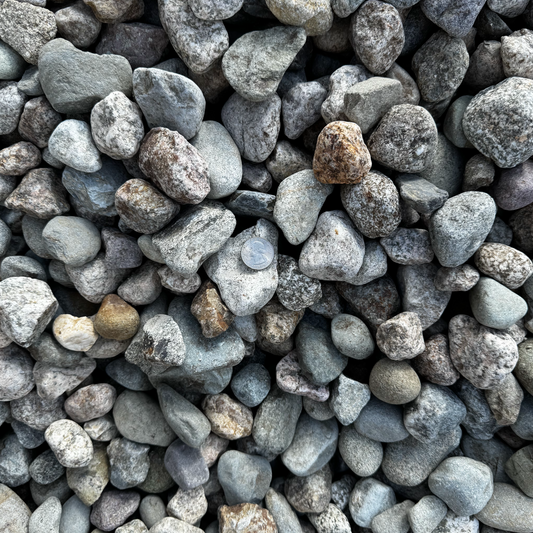
3" to 6" rounded stone placed in a designed swale or dry-creek-bed channel to handle stormwater runoff visibly and attractively.
Wins when: A backyard slope where the runoff path is visible from the house. River rock turns a drainage problem into a landscape feature. The technique is detailed in How to Build a Dry River Bed for Yard Drainage in a Scituate Backyard.
Stops winning at: High-velocity flow zones. River rock displaces in major storm runoff — pair with embedded larger stones at flow turns.
Cost: Mid-to-premium per cubic yard. Available in the Decorative Stone collection.
#5 — Straw Wattles + Native Plantings — for upper slope establishment
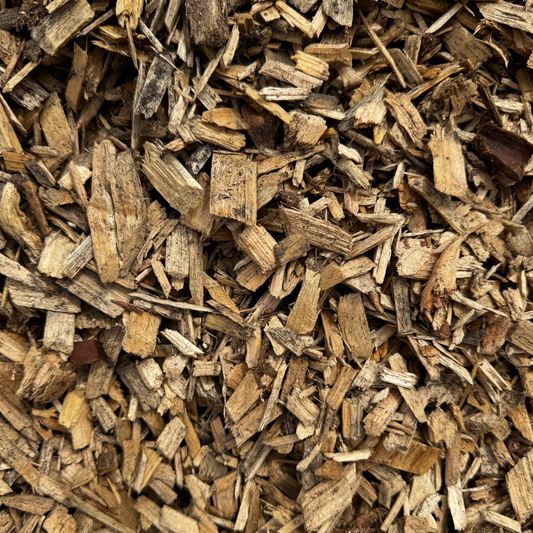
Biodegradable fiber tubes (wattles) staked along contour lines to slow runoff while native deep-rooted plants establish.
Wins when: The upper slope is bare or recently graded and you need vegetation to take over within 18 months. The wattles hold soil while plants establish; the plants lock the slope long-term. Pair with little bluestem, beach plum, bayberry — see 5 Native MA Plants That Thrive in Average Norfolk County Suburban Yards for the planting list (most apply to coastal Plymouth too).
Stops winning at: Wave-zone or high-velocity flow areas. Wattles are for sheet flow on slopes, not for the toe.
Cost: Inexpensive per linear foot. The plantings carry the bulk of the long-term cost.
How to Stack These on a Real Coastal Plymouth County Property
A typical 50-foot coastal-bank property in Marshfield or Duxbury combines all five:
- Toe (lowest 8 ft of slope): geotextile + riprap, permitted with ConsCom
- Mid-slope service drive (if any): dense-pack 3/4" over geotextile
- Decorative drainage channel down the side: river rock dry creek bed
- Upper slope bare areas: straw wattles plus native plantings
Order timing matters. Riprap delivery has a 3–4 week lead in spring; dense-pack and river rock are usually 1–2 weeks. The full catalog shows current per-cubic-yard pricing and trucking lead times for Plymouth County coastal towns. For residential drainage that doesn't trigger ConsCom review, 5 Driveway Drainage Issues Brockton Homeowners Can Diagnose Right Now covers the simpler upland fixes.
For background on what works in MA coastal soils and which native plants stabilize them, UMass Extension's coastal landscape resources and the EPA's stormwater program are the two cleanest sources.