Quick Answer
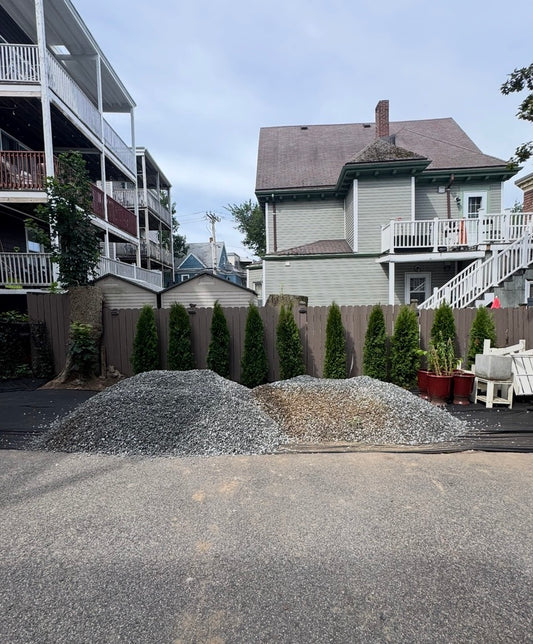
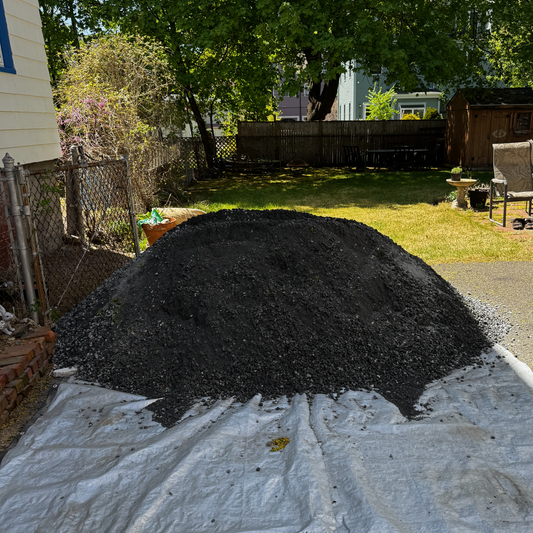
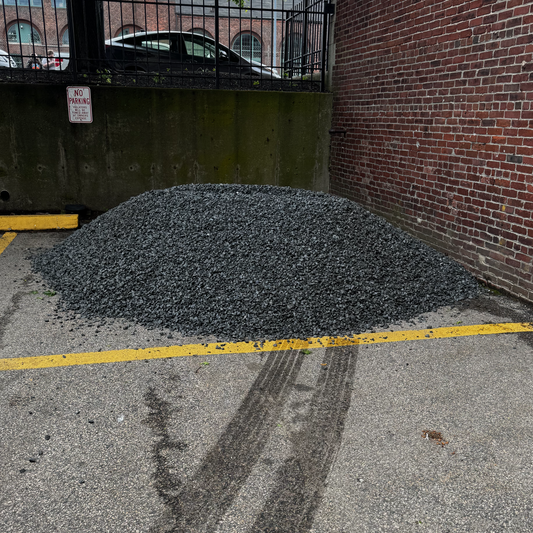
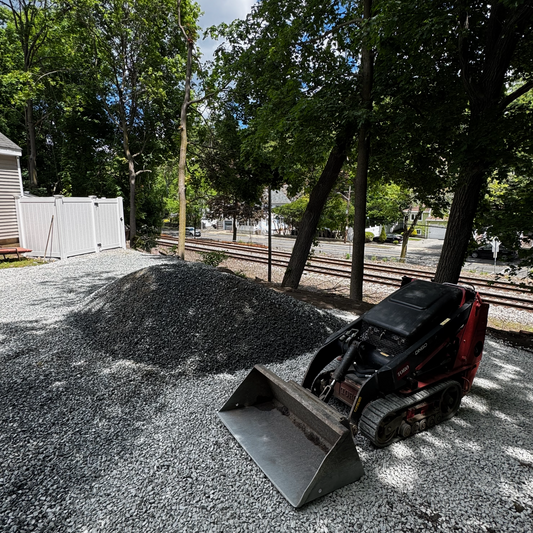
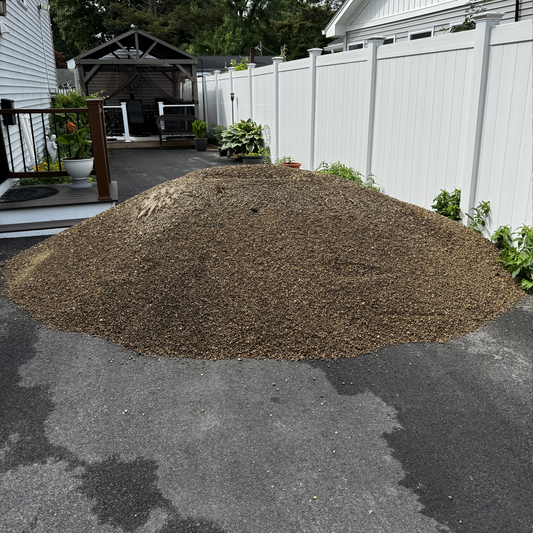
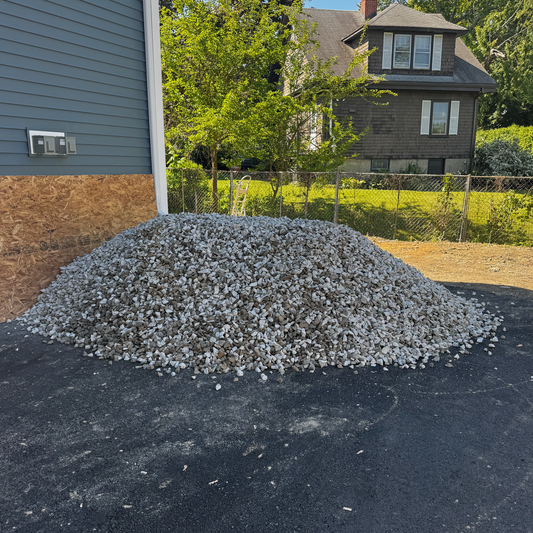
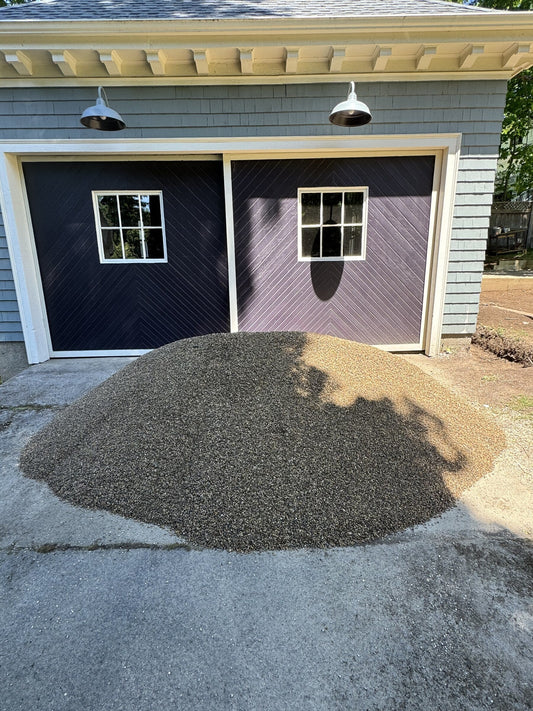
A pallet of stone (roughly 1.5 cubic yards delivered) handles five common Stoneham backyard drainage problems in a single weekend: a downspout dry well, a 10-foot French drain, a side-yard runoff swale, a low-spot infiltration bed, and a stepping-stone path through a wet zone. Below: how much stone each takes, the spec for each, and which crushed-stone size to order. Most Stoneham yards (Whip Hill, Spring Street, Marble Street neighborhoods) have at least two of these issues.
Why Stoneham Yards Get Wet
Stoneham sits on heavy clay over fractured bedrock. Spring snowmelt and summer downpours pool because water can't infiltrate the clay layer fast enough. The result: the soggy back corner, the basement-wall stain, the brown patch in the lawn that doesn't dry until July.
Stone-based drainage solves these by giving water a place to go and a path to get there. The EPA Stormwater program recommends infiltration-based residential drainage where possible — which is what these five fixes accomplish.
Material You'll Need (One Pallet = ~1.5 Cubic Yards)
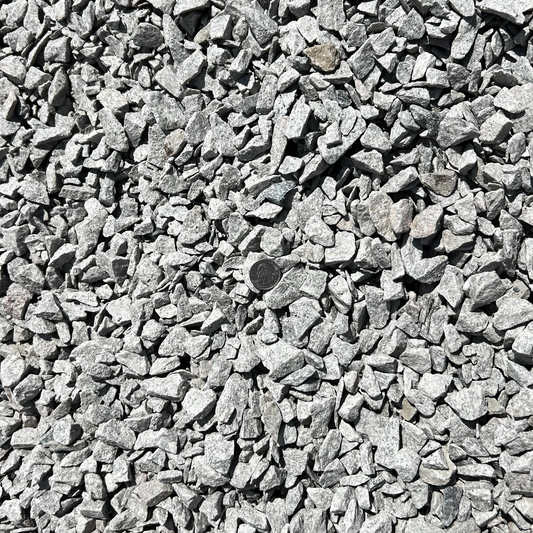
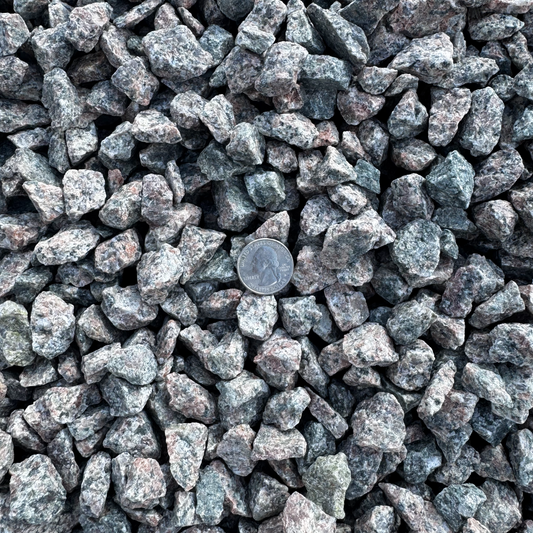
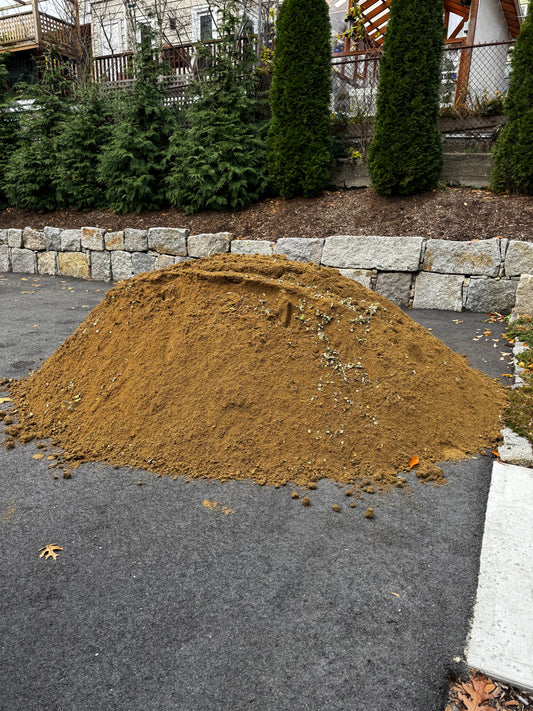
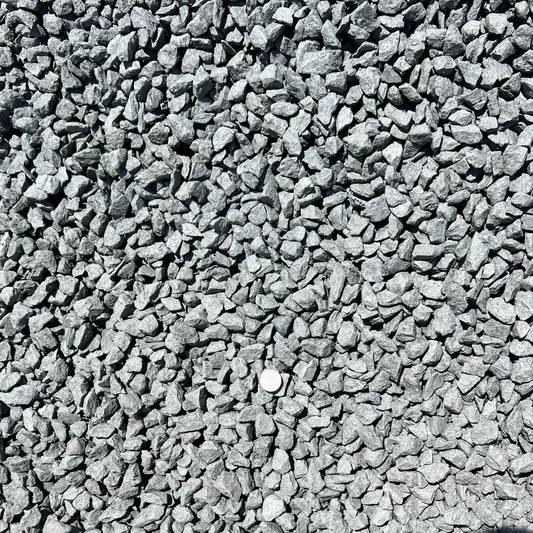
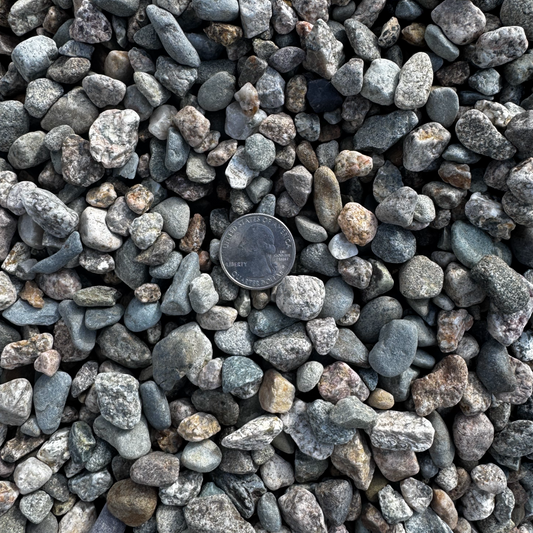
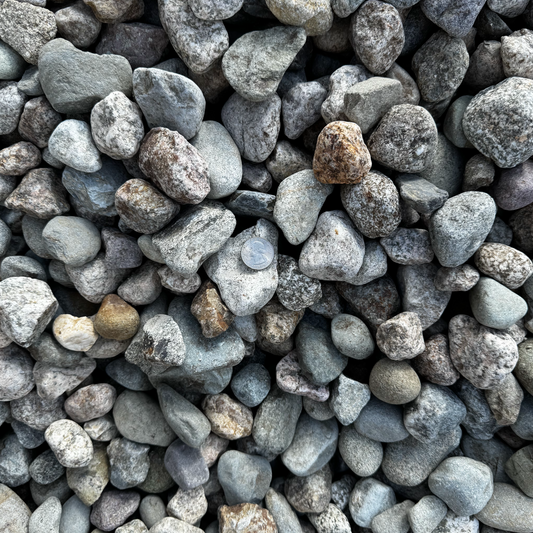
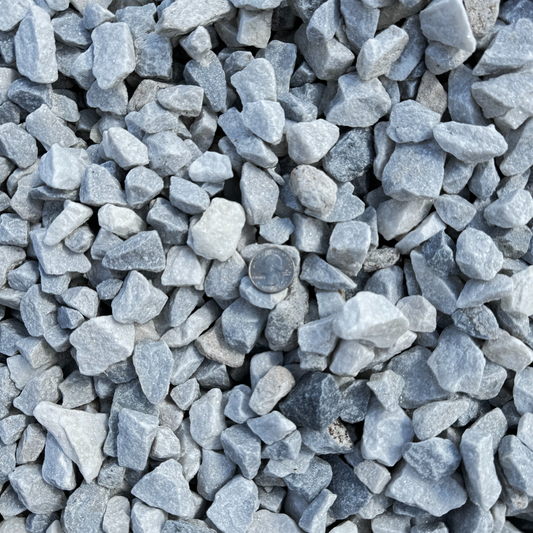
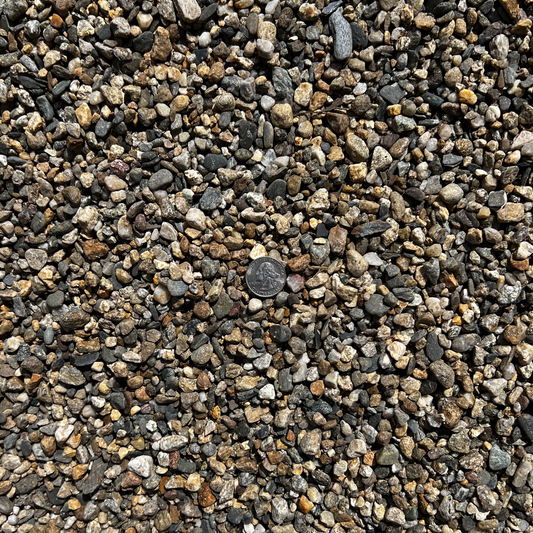
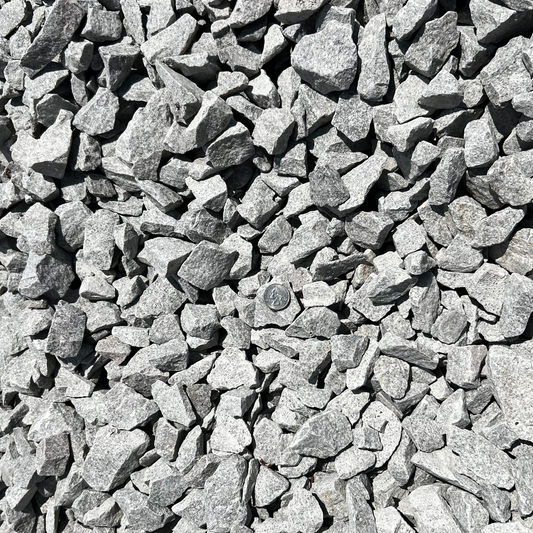
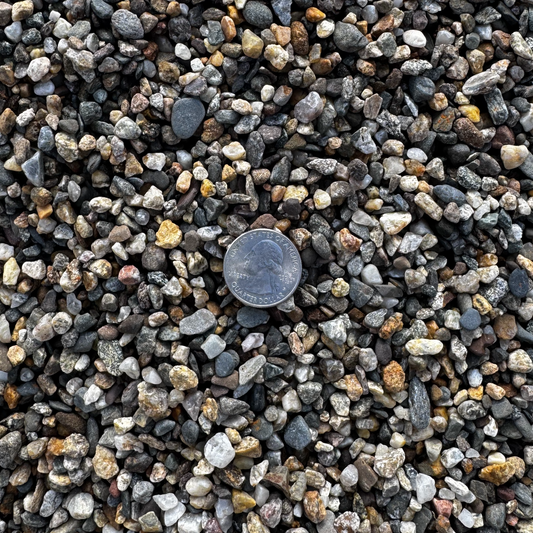
- 3/4" washed stone (the workhorse — clean, no fines, drains): 1 cubic yard for most fixes
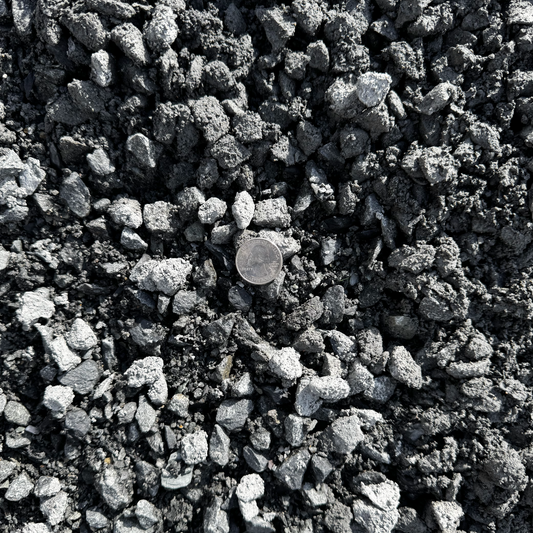
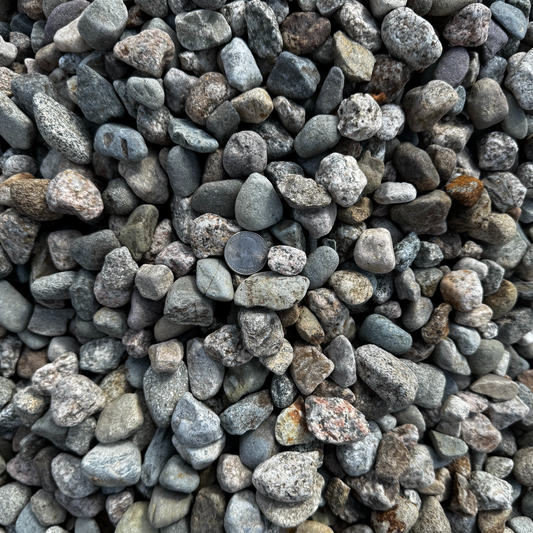
- 1.5" crushed (for the swale base layer if doing #3): 0.5 cubic yard
- Geotextile fabric (under everything)
- Perforated 4" PVC pipe (for #1 and #2)
Order through the Crushed Stone collection. For Stoneham delivery, the Stoneham Landscape Supply page handles small-load scheduling. For a deeper French drain build that scales beyond what's covered below, the What Goes In a French Drain? A Complete Massachusetts Homeowner Guide walks the full pillar.
Fix #1 — Downspout Dry Well (~0.3 yards stone, 2 hours)
The problem: Downspout dumps 200+ gallons next to the foundation in a heavy rain.
The fix: Dig a pit 3 feet wide × 3 feet deep × 3 feet long, 6+ feet from foundation. Line with geotextile. Place a perforated 4" pipe from downspout to the pit. Fill pit with 3/4" washed stone to within 6" of finished grade. Cover stone with geotextile, top with topsoil and turf or mulch.
Why it works: The pit gives water 27 cubic feet of void space to infiltrate slowly. Standard suburban roof + downspout combinations rarely overload it.
Fix #2 — Short French Drain (~0.4 yards stone, 4 hours)
The problem: Sheet flow across the yard from a slope or neighbor's grade.
The fix: Trench 10 feet long × 12" wide × 18" deep along the contour. Line with geotextile. Lay perforated pipe in the trench (slope 1% toward the daylight end). Fill around and over with 3/4" washed stone. Wrap geotextile back over the top of the stone. Cover with 4" of topsoil and turf or mulch.
Why it works: The pipe carries the water away; the surrounding stone collects sheet flow into the pipe. Daylight end discharges to a lower spot, swale, or rain garden. Pairs well with a dry river bed for the discharge end.
Fix #3 — Side-Yard Runoff Swale (~0.4 yards stone, 3 hours)
The problem: Water sheets along the side yard between Stoneham's tightly spaced houses, eroding the lawn and pooling at the back corner.
The fix: Dig a shallow swale (2 feet wide, 6 inches deep, gently sloped toward the back) along the side-yard contour. Line with geotextile. Fill with a 3" base of 1.5" crushed, topped with 3" of 3/4" washed stone or river rock. Plant the edges with deep-rooted natives (see 5 Native MA Plants That Thrive in Average Norfolk County Suburban Yards).
Why it works: The swale slows and channels water, the stone prevents erosion, the plants stabilize the edges. Looks like a designed feature, not a drainage hack.
Fix #4 — Low-Spot Infiltration Bed (~0.3 yards stone, 3 hours)
The problem: A 4'×6' chronic low spot that pools after every rain.
The fix: Excavate the low spot 12" deep. Line with geotextile. Fill with 8" of 3/4" washed stone. Wrap geotextile over. Top with 4" of mixed loam and compost. Replant with native moisture-tolerant species (joe-pye weed, swamp milkweed, blue flag iris).
Why it works: The stone bed creates 8 inches of infiltration capacity below grade. Surface looks like a planted bed; underneath is a stone reservoir. The local sub-base drains in 2–4 hours after most rain events.
Fix #5 — Stepping-Stone Path Through a Wet Zone (~0.4 yards stone, 4 hours)
The problem: A persistent muddy path between deck and shed or back gate.
The fix: Lay a stepping-stone path on a stone base. Excavate 6" deep along the path line. Line with geotextile. Fill with 4" of 3/4" washed stone, then 1" of stone dust. Set steppers (bluestone or fieldstone) into the dust, level each. Stone gaps allow drainage; the steppers carry the foot traffic. The technique is detailed in Building a Stepping-Stone Path Through a Cambridge Side Yard.
Why it works: You're not fighting the wet zone — you're working with it. Water still drains through the stone base; you just walk dry-footed across the steppers.
A Realistic Stoneham Weekend Schedule
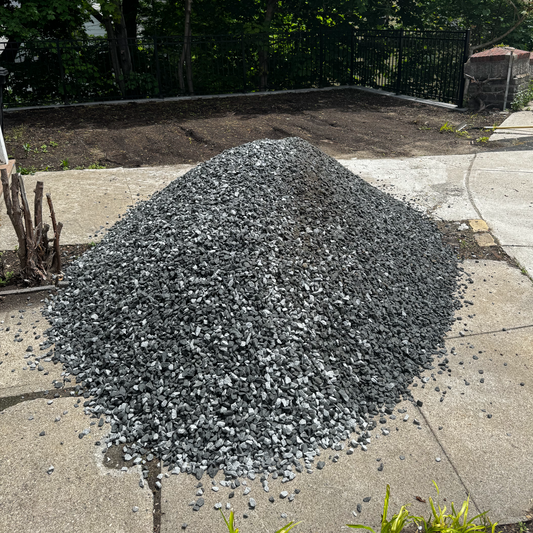
Saturday morning: Take delivery of a 1.5-yard pallet of mixed stone, a roll of geotextile, and 20 feet of 4" perforated PVC. Total cost roughly $200–$300 in materials.
Saturday afternoon: Tackle Fixes #1 and #4 (downspout dry well and low-spot infiltration). Both require excavation but compact work.
Sunday morning: Fix #2 (10-foot French drain).
Sunday afternoon: Fix #3 OR #5 depending on which problem your yard has.
A typical Stoneham backyard knocks out 2–3 of these in one weekend with one homeowner. The remaining ones can wait for the next dry weekend.
What to Watch For During the First Big Rain
- Downspout dry well: Water entering the inlet, not pooling around foundation. Pit fills slowly, drains over 4–6 hours.
- French drain: Daylight end actively discharging during peak rain. Up-slope side stays drier than before.
- Swale: Water flowing through the channel without overtopping the edges.
- Infiltration bed: Surface stays at most slightly damp; no standing water more than 2 hours after rain.
If anything fails on the first big rain, the spec was wrong. Excavate, check the slope, recheck the geotextile, refill. Iteration is normal in DIY drainage.
For deeper drainage diagnosis on driveway-side problems, 5 Driveway Drainage Issues Brockton Homeowners Can Diagnose Right Now walks through the variants. For broader stormwater background, UMass Extension Landscape and EPA Stormwater cover the residential-scale guidance.