Quick Answer
Suffolk County December salt strategy comes down to 5 rules: stay under ¼ pound per square foot per application, switch to Salt & Sand 20/80 within 6 feet of any planting, pre-salt 2 to 6 hours before forecast snow, store bulk in a dry indoor bin to keep it spreadable, and broom snow first, salt second — never the other way around. Boston, Chelsea, Revere, and Winthrop driveways tend to over-apply by 2x. Half the salt, applied at the right time, gives the same outcome.
Why Suffolk County Salt Math Is Different
Suffolk County driveways are smaller and more salt-adjacent than suburban MA: triple-decker walks in Dorchester, narrow Charlestown driveways, sidewalk-bordered Beacon Hill walks. Salt overflow goes straight into the storm drain or the small front bed. The chloride load reaching Boston Harbor in a typical winter is measurable — and over-application is a tax on it.
If you set up the holiday display already, see Top 5 Christmas Garden Touches for Middlesex County Yards — the salt-protection logic for those displays applies to Suffolk County yards.
1. Stay Under ¼ Pound per Square Foot per Application
The single most-violated rule in Suffolk County. ¼ pound per sq ft = 1 cup per 50 sq ft. A typical Boston two-car driveway (600 sq ft) needs 150 lb total per application — not 300, not 400. Heavy-handed salting kills concrete (scaling), kills curb-edge grass, and runs straight into Boston Harbor.
For per-driveway math, see How to Calculate Salt-Sand for a Dorchester December Driveway.
2. Switch to Salt & Sand 20/80 Within 6 Feet of Plantings
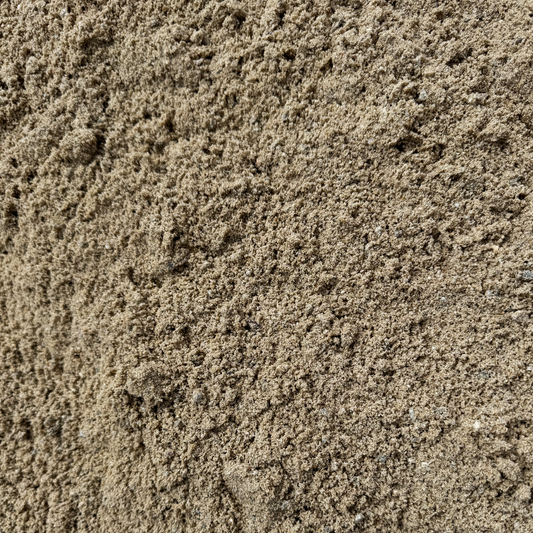
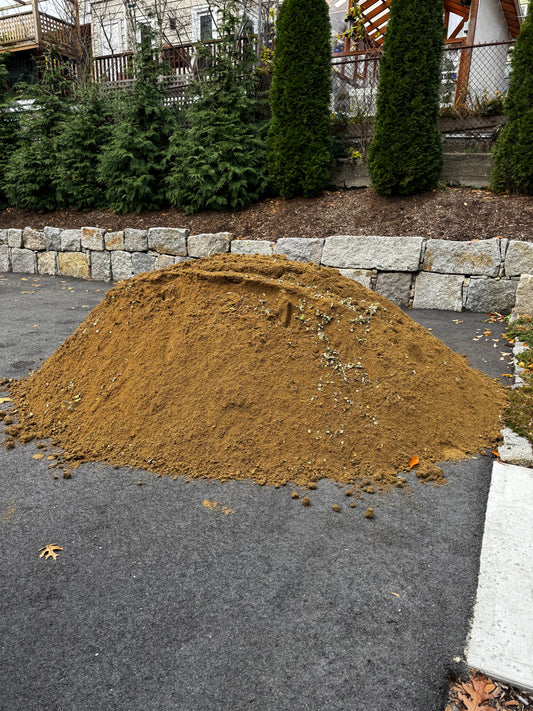
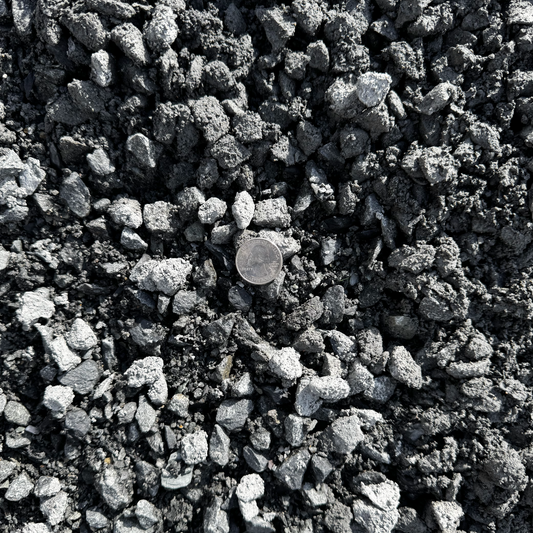
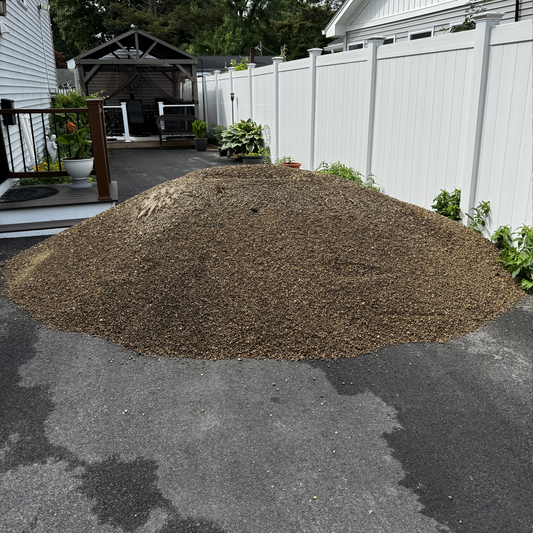
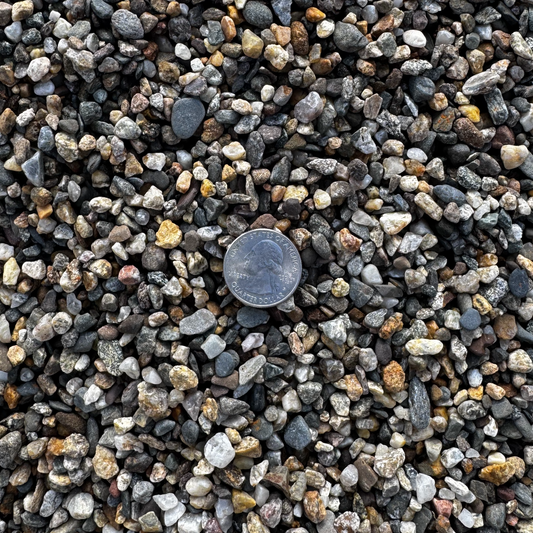
Any stretch of driveway, walk, or step within 6 feet of a planting bed, lawn edge, or curb-edge tree should run Salt & Sand 20/80 (20% salt, 80% sand). One-fifth the chloride load of straight rock salt. Same traction.
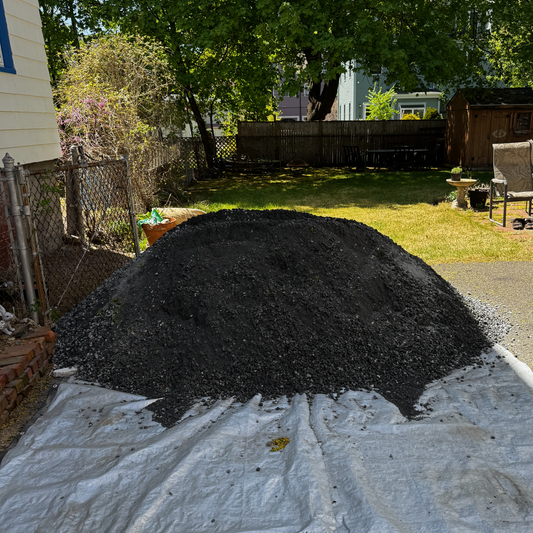
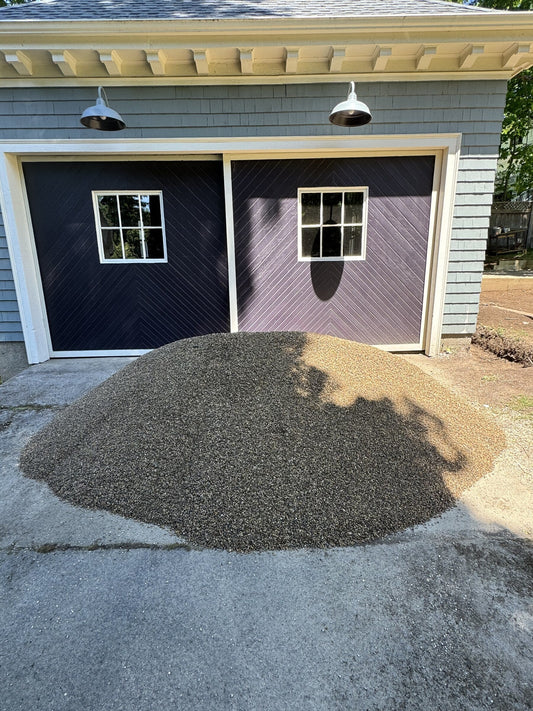
Order by the cubic yard from the Snow & Ice Management collection.
3. Pre-Salt 2 to 6 Hours Before Forecast Snow
A light pre-salt application 2 to 6 hours before snow prevents the snow-to-pavement bond. Less product, less work, less cleanup. The full pre-salt routine is in What's the Right Pre-Salt Routine for a Wellesley Walkway? — Suffolk County applies the same way.
4. Store Bulk Salt in a Dry Indoor Bin
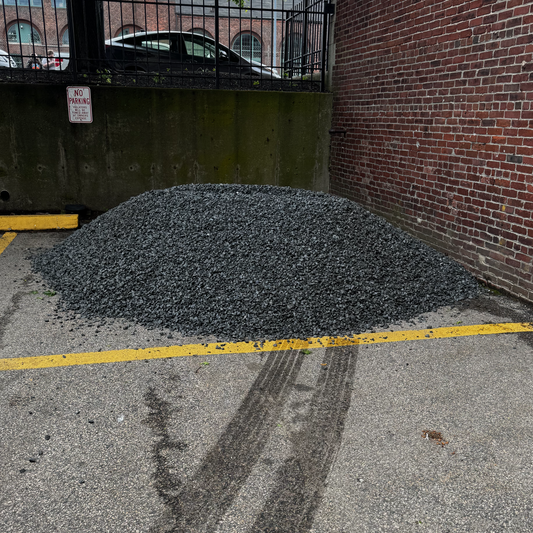
Suffolk County garages and basements are humid. Bulk salt left uncovered absorbs ambient moisture and clumps into a brick by mid-January. Store in a lidded bin or covered tarp indoors. The first time you try to spread brick-clumped salt with a frozen scoop at 5 AM, the value of the bin becomes obvious.
For pre-order and storage logic at scale, see How to Pre-Order Bulk Rock Salt for a Plymouth County Property.
5. Broom Snow First, Salt Second
The classic Suffolk County mistake: salt first, then try to broom or shovel. The salt makes the snow slushy and 3x heavier to lift. Always broom or shovel snow off the dry surface first, then apply salt to the residual ice or compacted layer. You'll use half the salt and finish in half the time.
For freeze-thaw refreeze prevention specifically, see 5 Slip-Prevention Tips for Bristol County Front Steps — same logic on Suffolk County stairs.
A Suffolk County Note on Storm-Drain Runoff
Suffolk County storm drains discharge to Boston Harbor, the Mystic River, and the Neponset. Every pound of salt over-applied in your driveway runs through one of those systems. The EPA Smart Salting program tracks chloride concentrations in MA waterways — Suffolk County winter peaks already hit the threshold where freshwater aquatic life sees damage.
Less salt, applied better, is the move at every level.
What's Next in December
December 16 covers brine application for Plymouth driveways — see How to Apply Pre-Treatment Brine in a Plymouth Driveway for the next how-to.