Quick Answer
A Dorchester salt-sand calculation takes 15 minutes: measure your driveway in length × width = square feet, multiply by 0.25 pounds per square foot for per-storm volume, pick 50/50 (moderate traction) or 20/80 (lawn-adjacent), and convert pounds to cubic yards by dividing by 2,400 (50/50) or 2,600 (20/80). A typical Dorchester triple-decker driveway (700 sq ft) needs 175 pounds per storm — about 0.07 cubic yards of 50/50 blend. Multiply by 10 storms for the season.
Why Dorchester Salt-Sand Math Is Worth Doing
Dorchester driveways are diverse: 200 sq ft narrow alleys behind triple-deckers, 700 sq ft Codman Square shared driveways, 1,200 sq ft Lower Mills colonials. One bag-size answer fits none of them. Five minutes of measuring saves over-buying or under-applying.
If general winter math feels new, see 5 Winter-Material Math Tips for Mattapan Homeowners — same principles in a list format.
Tools Needed
- 25 ft tape measure
- Calculator or phone
- Notepad
That's it. No special tools.
Step 1 — Measure Driveway Length and Width (5 minutes)
Walk the long edge of the driveway with the tape, then the short edge. Round to the nearest foot. If your driveway is irregular (T-shape, jog around the house), break it into rectangles and measure each.
Example: a Dorchester two-car driveway runs 42 feet long by 17 feet wide.
Step 2 — Calculate Square Footage (1 minute)
Length × Width = Square Feet.
For our example: 42 × 17 = 714 sq ft. Add the front walk if you treat it (often 30 to 60 sq ft additional) → call it 750 sq ft total.
Step 3 — Apply 0.25 lb per sq ft for Per-Storm Salt-Sand (1 minute)
Multiply square footage by 0.25 to get pounds per storm.
For our example: 750 × 0.25 = 188 pounds of salt-sand per storm event.
If you're at a heavier rate, you're over-applying. The EPA Smart Salting program recommends staying at or below this rate for plant and watershed protection.
Step 4 — Pick the Blend Ratio (2 minutes)
Decide which blend by zone:
| Zone | Blend | Why |
|---|---|---|
| Driveway center, no plantings nearby | Salt & Sand 50/50 | Faster melt, balanced traction |
| Lawn-edge stretches, beds within 6 ft | Salt & Sand 20/80 | Lower chloride load |
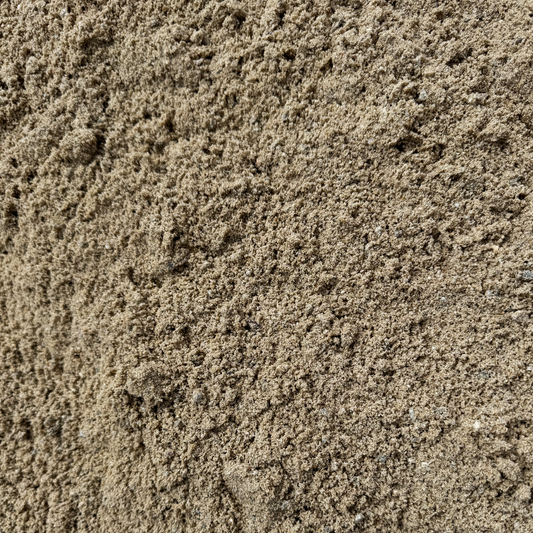
| 2 ft strip adjacent to ornamental plantings | Mason Sand alone | Zero chloride, traction only |
For a typical Dorchester triple-decker driveway, most homeowners use 50/50 for the center and 20/80 along the lawn edge — about a 70/30 split between the two products.
For why these zones matter, see Top 5 Ice-Prevention Materials for Newton Driveways.
Step 5 — Convert Pounds to Cubic Yards (1 minute)
Bulk weights:
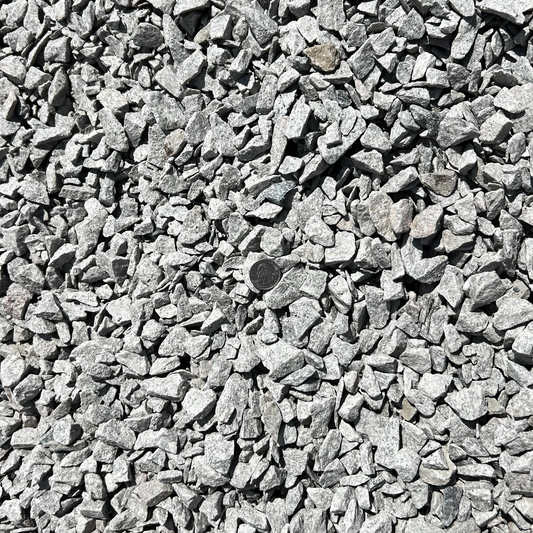
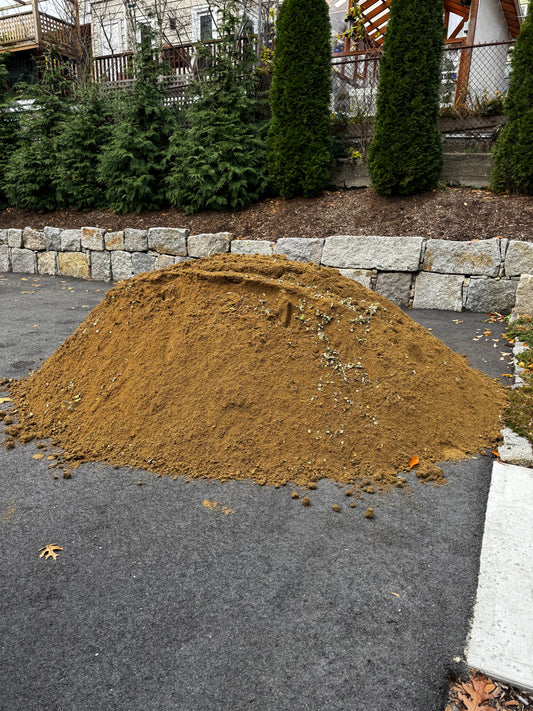
- Salt & Sand 50/50: ~2,400 lb per cubic yard
- Salt & Sand 20/80: ~2,600 lb per cubic yard
For our 750 sq ft Dorchester driveway:
| Storms per season | Total per-storm lb | Total season lb | Cubic yards (50/50) |
|---|---|---|---|
| 8 (mild winter) | 188 | 1,504 | 0.63 yd |
| 10 (typical) | 188 | 1,880 | 0.78 yd |
| 12 (heavy) | 188 | 2,256 | 0.94 yd |
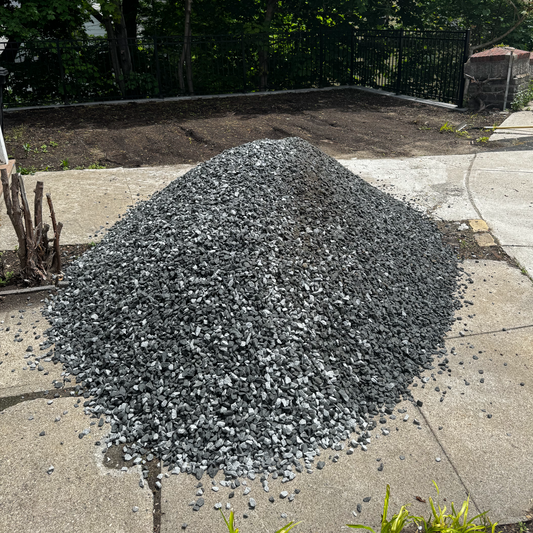
Round up to 1 cubic yard for headroom. Order from the Snow & Ice Management collection. For Dorchester delivery, see the Dorchester Landscape Supply page.
Worked Examples for Common Dorchester Driveway Sizes
| Driveway | Sq ft | Per-storm | Season (10 storms) | Cubic yards |
|---|---|---|---|---|
| Narrow single-car | 360 | 90 lb | 900 lb | 0.4 yd |
| Triple-decker shared | 700 | 175 lb | 1,750 lb | 0.7 yd |
| Two-car standard | 750 | 188 lb | 1,880 lb | 0.8 yd |
| Lower Mills colonial | 1,080 | 270 lb | 2,700 lb | 1.1 yd |
A Pre-Treatment Bonus
If you commit to pre-treating with brine before every storm above 1", your salt-sand needs drop by 30 to 50%. The full brine method is in How to Apply Pre-Treatment Brine in a Plymouth Driveway — same playbook for Dorchester.
For full December stockpile context, see How Much Ice Melt Should I Stockpile in Brockton for December? — Brockton math scales to Dorchester.
What's Next in December
December 22 covers Waltham stockpile math — see How Much Ice Melt Should I Stockpile in Waltham for December?.