Quick Answer
Bristol County front steps stay safe through December with five moves: pre-stage Salt & Sand 20/80 at the door, install rubber stair-tread mats on every concrete step, broom snow within 2 hours of every storm, run handrail support on both sides, and pre-treat with brine before any storm forecast above 1 inch. The biggest single risk in Fall River, New Bedford, and Taunton is the freeze-thaw refreeze cycle — water that puddles on a sun-thawed step at noon refreezes by 4 PM and that's where falls happen.
Why Bristol County Front Steps Are High-Risk
Bristol County winters cycle harder between thaw and freeze than Boston-adjacent towns — coastal moisture from Buzzards Bay, more sun on south-facing steps, and lower snow accumulation but more bare ice. Slip risk doesn't track with snow depth; it tracks with freeze-thaw frequency, and Bristol County leads the region.
If you reset the front bed already, see How to Reset a Brookline Front Bed Before December — the front-step prep is the natural follow-on.
1. Pre-Stage Salt & Sand 20/80 at the Door
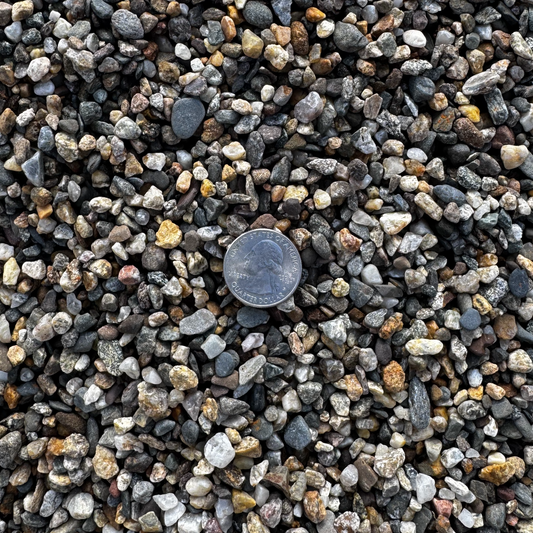
Keep a 5-gallon bucket of Salt & Sand 20/80 inside the front entry. Not the garage. When weather turns at 5 PM and someone's coming over at 6, the bucket has to be 6 feet from the steps, not 60. Open the door, broadcast, done.
The 20/80 blend (20% salt, 80% sand) gives traction with one-fifth the chloride load of straight rock salt — better for front-step concrete and any nearby plantings.
2. Install Rubber Stair-Tread Mats
Rubber stair-tread mats with raised nubs screwed into wood or set with double-sided outdoor tape on concrete cut slip risk by 70%+ vs. bare steps. They're a one-time $40 to $80 investment per stair run that saves a half-dozen broom-and-salt cycles every winter.
For Bristol County's salt-spray-heavy winters, EPDM rubber outlasts vinyl by 3 to 4 seasons.
3. Broom Snow Within 2 Hours of Every Storm
Snow that sits on Bristol County front steps for more than 2 hours at temperatures near freezing bonds to the surface as a thin ice layer. Once that bond forms, salt is twice as expensive to use because you're now melting bonded ice instead of breaking up loose snow.
A push-broom on the front step right after the storm — even if it's still flurrying — keeps the bond from setting. Five minutes of broom work saves 20 minutes of chipping.
4. Run Handrail Support on Both Sides
A two-handrail front step is structurally safer than a one-handrail step regardless of how good your salt routine is. Most pre-1990 Bristol County homes have a single handrail; add the second side as a winter project. The materials cost $80 to $200; the install pencils against a single avoided fall.
5. Pre-Treat With Brine Before Any 1"+ Storm Forecast
A pre-storm brine application stops the bond between snow and concrete from forming in the first place. The window is 2 to 6 hours before snow starts. Apply at 35 to 50 gallons per acre equivalent — for a typical Bristol County front-step run, that's about a quart of brine across the steps and landing.
For the full brine playbook, see How to Apply Pre-Treatment Brine in a Plymouth Driveway — the Plymouth method scales down to Fall River and New Bedford front steps.
For pre-salt routine details, see What's the Right Pre-Salt Routine for a Wellesley Walkway?.
A Bristol County Note on Salt-Sand vs. Straight Rock Salt
Front steps within 4 feet of plantings or fronting on concrete that's less than 30 days old should run Salt & Sand 20/80, not straight rock salt. Bristol County has a higher concentration of historic homes with original concrete that scales easily under heavy chloride exposure.
For the chloride-runoff side of the calculation, the EPA Smart Salting program is the most authoritative regional source.
What's Next in December
December 11 covers the Worcester County first-snow driveway prep — see How to Prep a Worcester County Driveway for the First Snow for the next article in the cluster.