Quick Answer
Calcium chloride is safe for Newton concrete that's at least 30 days cured, applied at the labeled rate of 1/4 to 1/2 pound per square foot. New concrete (under 30 days) scales under any chloride - calcium, sodium, or magnesium. On older concrete, calcium chloride performs similarly to rock salt for surface wear; the actual damage driver is over-application, not chemistry choice. Pair calcium chloride with salt-sand 20/80 at the lawn edge and you protect both the driveway and the curb-edge turf.
Why Newton Homeowners Ask This
Newton's housing stock includes a lot of original mid-century driveways and refurbished aprons from the last 5-10 years. Garden City lots also have lawns within 2-3 feet of curb edges. Owners who paid for a recent concrete pour are right to ask before pouring chloride on it. Below are the eight questions Newton homeowners most commonly ask Ottr's dispatcher in January.
Q: Is calcium chloride safe for new concrete in Newton?
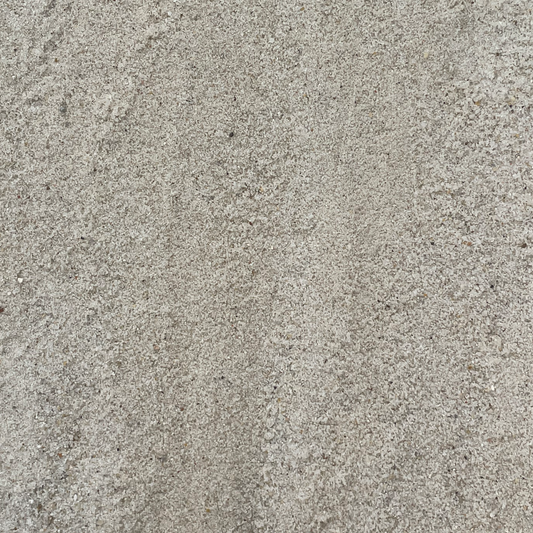
A: Not for the first 30 days. Fresh concrete still curing is porous and vulnerable to scaling from any chloride. Wait at least one full month, ideally one full freeze-thaw cycle, before any calcium chloride application. For driveways poured in November, January is borderline - use mason sand for traction and reserve chloride for next winter.
Q: How does calcium chloride compare to rock salt on aged concrete?
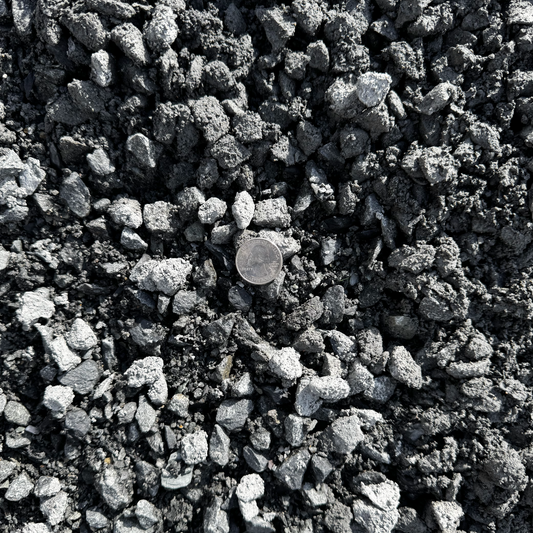
A: On 30+ day-old concrete, both are chloride salts. Calcium chloride at the labeled rate is similar in surface wear to rock salt. The damage driver is over-application, not chemistry choice. Both work fine at residential rates (1/4 to 1/2 pound per square foot for melting); both scale concrete at 2-3x rates.
Q: What temperature should I switch from rock salt to calcium chloride?
A: Below 15 degrees F. Rock salt slows down hard at 15 and stops melting at 10. Calcium chloride works to -25 degrees F and generates heat as it dissolves, so it kicks in fast in deep cold. Newton sees 5-12 nights below 15 degrees F in a typical January-February stretch.
Q: Will calcium chloride hurt my Newton lawn at the curb edge?
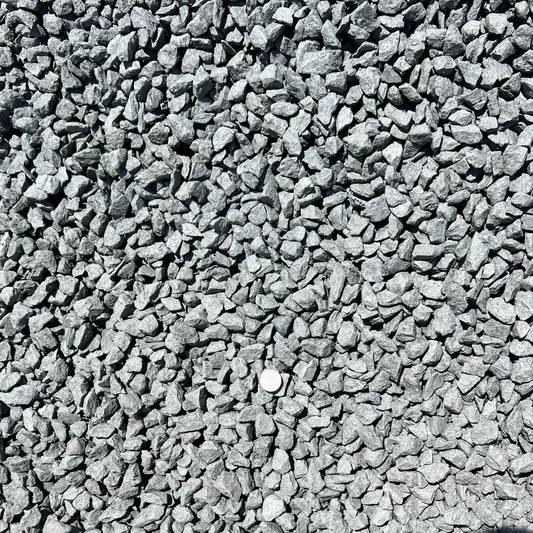
A: Yes, if applied right at the edge. Use Salt-Sand 20/80 (one-fifth the chloride load) in the lawn-adjacent strip and reserve calcium chloride for the central drive. UMass Extension turf research shows soil sodium above 4 mmhos/cm electrical conductivity starts killing cool-season grasses; the lawn-edge zone reaches that level fast under any straight chloride application.
For more on lawn protection in Newton, see the 2026 follow-up Q&A: Does Rock Salt Really Kill Newton Lawns? - same chemistry logic with the recovery playbook.
Q: Is calcium chloride pet-safe?
A: Less corrosive than sodium chloride, but not pet-safe. Calcium chloride still irritates paws on prolonged contact. Pre-rinse paws after walks. For dog households, magnesium chloride is the better choice - effective to about 5 degrees F and significantly gentler on paws.
Q: Can calcium chloride pre-treat my driveway before a storm?
A: Yes - it's the best chemistry for cold-snap pre-treatment. Heat-of-dissolution kicks it in fast even at deep cold, where rock salt would just sit there. Apply 1-2 ounces per square foot to dry pavement 4-8 hours before forecast snow. The bottom layer of incoming snow melts on contact, the plow scrapes cleaner, and you spread less afterward.
For full label-reading on any chloride, see How to Read an Ice Melt Label Step by Step.
Q: Does Ottr stock calcium chloride?
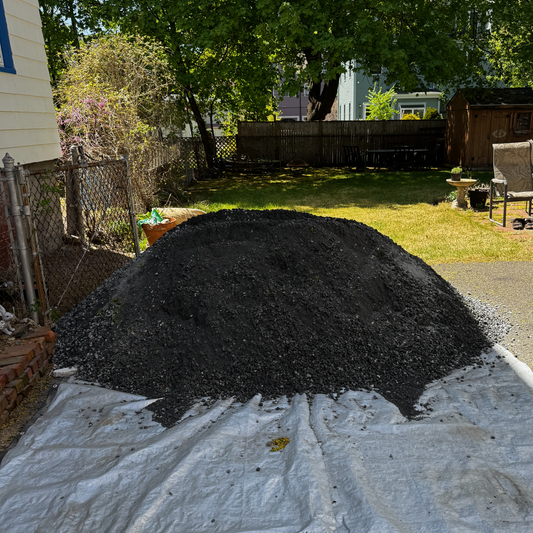
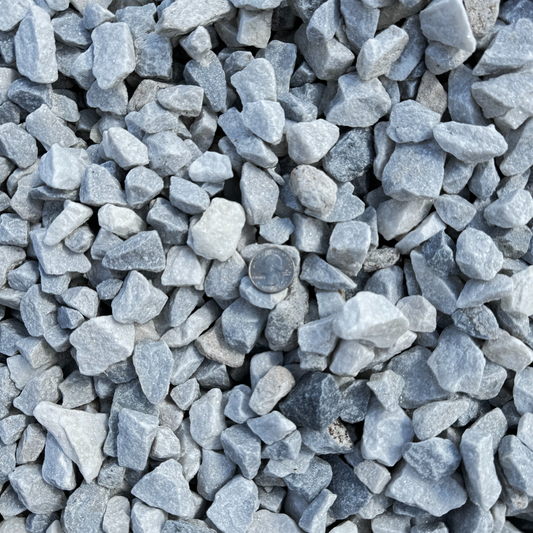
A: Yes - bagged retail in 50-pound bags, plus bulk by advance order for contractors. Browse the Snow & Ice Management collection for the current lineup and the Newton landscape supply collection for local pickup. The full bulk lineup also includes treated rock salt, untreated rock salt, salt-sand 50/50, and salt-sand 20/80 by the cubic yard.
Q: What's the cheapest way to handle Newton's coldest nights?
A: Bulk treated rock salt for 80% of the season + one bag of calcium chloride in reserve. Use rock salt for typical 15-32 degree F storms. Pre-treat with calcium chloride 4-8 hours before forecast sub-15 degree F snow. Switch to salt-sand 20/80 on the lawn-edge strip year-round. This stack typically runs $200-$320 per Newton household per winter versus $400-$600 for an all-bagged, all-rock-salt approach.
The Newton Concrete Playbook
- Concrete under 30 days: No chloride. Use mason sand for traction; let the concrete cure.
- Concrete 30 days to 1 year: Calcium chloride is fine at labeled rate. Avoid over-application.
- Concrete 1+ year, well-aged: Standard winter rotation - rock salt for typical storms, calcium chloride for cold snaps, salt-sand 20/80 at the lawn edge.
- Decorative or stamped concrete: Stick to magnesium chloride or salt-sand 20/80; surface texture is more vulnerable.
For the broader Suffolk County context on this same playbook, see the 2026 deep-dive on snow & ice management.
For broader chloride-runoff and concrete-scaling guidance, EPA Smart Salting and MA DOT salt guidance are the authoritative sources Ottr trusts.