Quick Answer
The five vole-damage repair tips for Scituate lawns: (1) inspect the runways once snow melts, (2) rake debris out and expose bare soil, (3) top-dress with ¼ inch of Topsoil Loam ½" Screened, (4) overseed with a 3-way bluegrass / ryegrass / fescue mix, and (5) prevent next winter with autumn mowing height + mulch pull-back. The damage is fixable in one spring season; most Scituate lawns recover fully by July.
Why Vole Damage Hits Scituate Lawns
Scituate's coastal yards and field-edge properties get heavy vole pressure every winter. Voles tunnel under snow cover, eating grass roots and creating the surface "runways" that show up in March as winding 1–2-inch-wide channels of brown turf. The damage is most visible on the edges of lawns near garden beds, foundation plantings, and stone walls — anywhere voles can transition from cover to grass.
The good news: vole damage repair is straightforward. The five tips below get a damaged Scituate lawn back to green by July.
Tip 1 — Inspect Runways Once Snow Melts
Walk the lawn after the last snow melts, typically mid-March in Scituate. Look for:
- Surface runways — winding 1–2-inch channels of flattened, brown turf
- Bare patches — small (4–12 inch) circular areas where roots were eaten out
- Tunnel entrances — quarter-sized holes at runway endpoints
Map the damage with garden flags. A typical Scituate lawn shows 5–25% of total area affected; properties bordering fields or stone walls may show 30%+.
Don't skip this step. Knowing the total damaged area drives the loam and seed order in tip 3.
Tip 2 — Rake Out Debris and Expose Bare Soil
Use a stiff garden rake to pull dead grass, leaves, and vole droppings out of the runways and bare spots. The goal is clean bare soil in every damage zone. Bag and dispose of debris — vole droppings can carry parasites; don't compost.
For larger damage (20%+ of lawn), a power dethatcher rented from a Scituate equipment yard saves a full day of hand-raking. Set the tines shallow (¼-inch depth); deeper settings tear into healthy turf around the damage.
After raking, the lawn looks worse than it did before — that's expected. Bare soil is what seed and loam adhere to.
Tip 3 — Top-Dress with ¼ Inch of Screened Loam
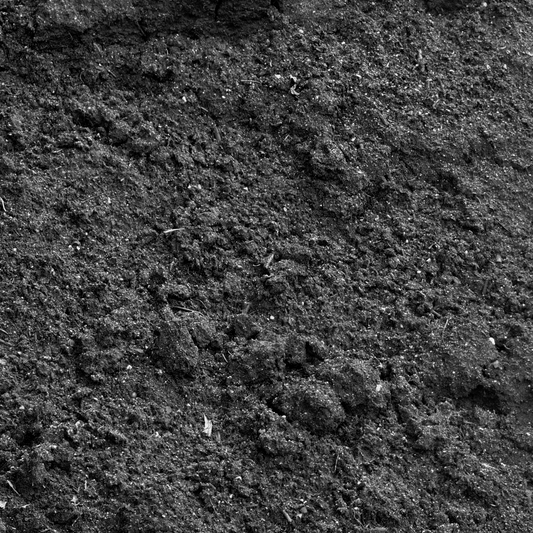
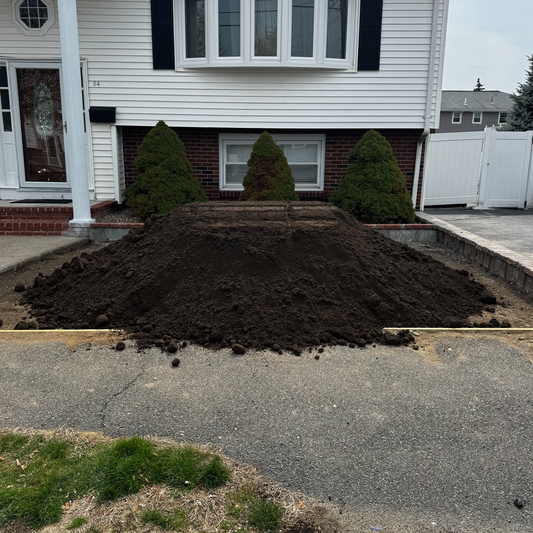
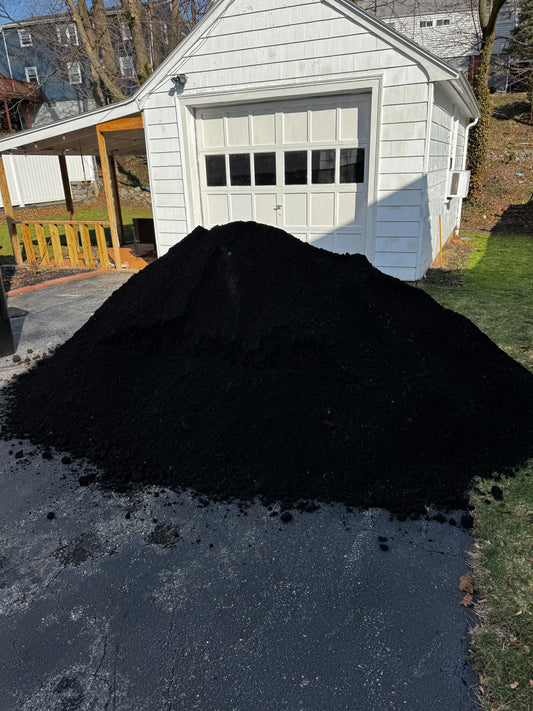
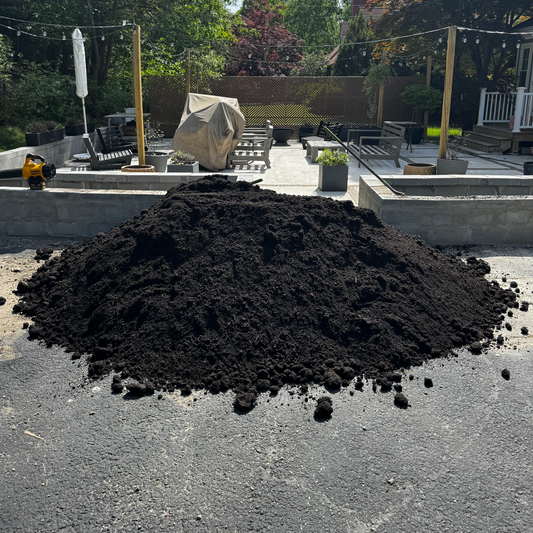
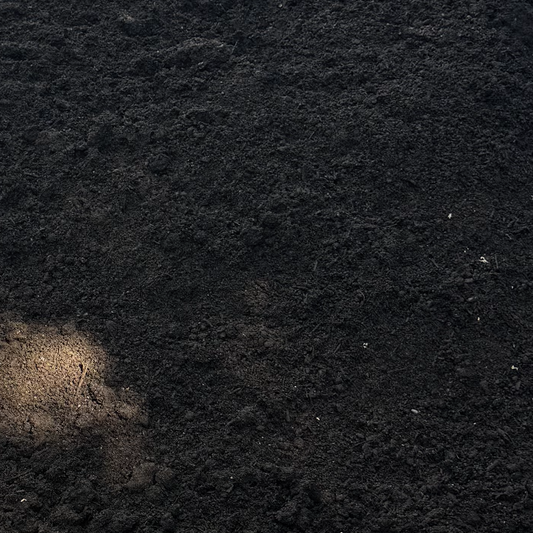
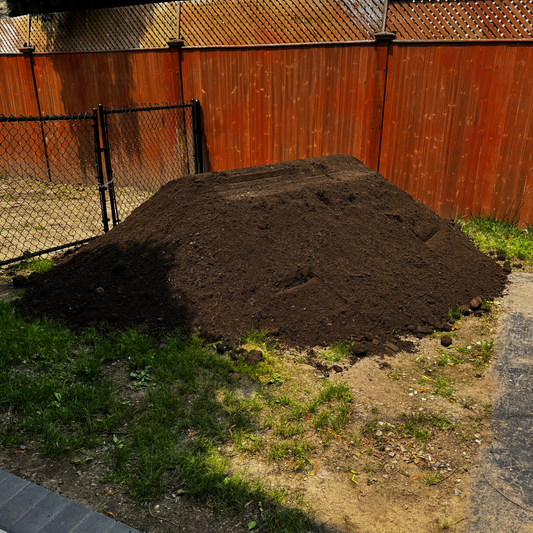
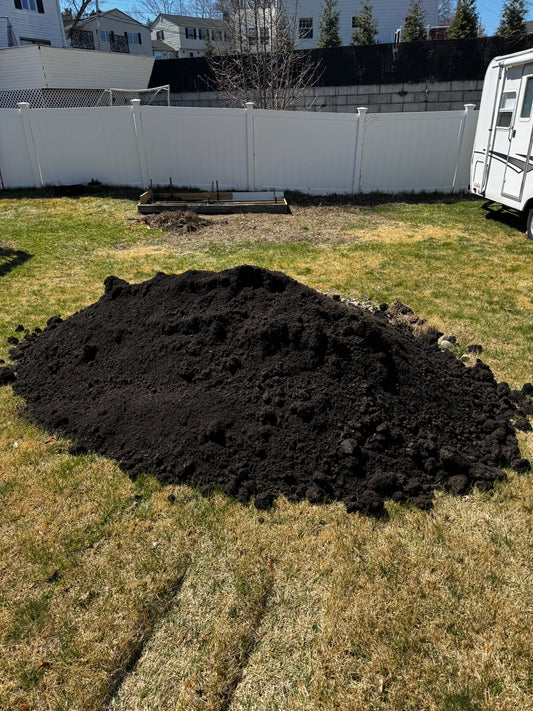
Spread Topsoil Loam ½" Screened over the damaged zones at ¼-inch depth:
- For 100 sq ft of damage: ~0.1 cubic yard (about 3 cubic feet, easy wheelbarrow load)
- For 1,000 sq ft of damage: ~0.8 cubic yard — order 1 yard delivered
The thin loam layer:
- Fills micro-divots from vole tunnels
- Provides clean seed bed
- Hides residual debris
- Improves seed-to-soil contact for germination
Browse the Lawn Leveling & Repair collection for screened loam by the cubic yard, and the Scituate landscape supply page for delivery scheduling. For broader bulk-loam math, see What Is Screened Loam, and Does My Belmont Lawn Need It?.
Tip 4 — Overseed with a 3-Way Mix
Apply a 3-way cool-season mix at 1 lb per 200 sq ft of damage area:
- 70% Kentucky bluegrass (slow but spreads to fill)
- 20% perennial ryegrass (fast germination as nurse crop)
- 10% fine fescue (handles shaded bed-edge damage)
Use a hand spreader for 100 sq ft or less; a broadcast spreader for larger areas. Lightly rake the seed into the loam top-dress so it sits ¼ inch below the surface — UMass Turf Program recommends this depth for cool-season germination.
Water lightly twice a day for the first 14 days. Don't let the seed dry out during germination. After 14 days, transition to deep watering 2–3 times a week.
For the full grass-species comparison, see Top 5 Cool-Season Grass Picks for Brookline Spring Repair — the same picks apply in Scituate.
Tip 5 — Prevent Next Winter
The 2026 vole damage is preventable in fall 2025:
- Mow short for the final cut — 2 inches in late October/early November. Long grass under snow is vole habitat.
- Pull mulch back from lawn edges — vole damage starts where mulched bed meets lawn. Keep a 6-inch bare strip.
- Trim back stone walls and rock piles — clear the 12-inch perimeter where voles transition.
- Don't pile leaves on the lawn over winter — pile them in a designated compost area off-grass.
These four prevention moves cut typical Scituate vole damage by 60–80% the following spring.
Vole Damage vs. Other Late-Winter Lawn Problems
Voles aren't the only culprit. Quick differential diagnosis:
- Vole runways: winding 1–2" channels, surface tunnels visible
- Snow mold: circular 6–12" patches of pink or gray matted grass, no tunnels
- Salt damage: straight stripe along curb/driveway edge, no tunneling
- Plow tear-out: sharp irregular bare zones, no tunneling, often torn sod
Each requires a slightly different fix. For salt damage specifically, the recovery playbook is similar but layered with a salt-flush step. For plow damage, see 5 Plow Damage Fixes for Plymouth County Lawns (the parallel January-late-winter list).
For neighbor context on the decorative-stone work happening at the bed-edges where vole damage starts, see 5 Decorative Stone Picks for Boston Foundation Beds. For the next-week refresh-mulch-bed playbook in Duxbury, see How to Refresh a Tired Mulch Bed in a Duxbury Yard. The 2026 follow-up on Brockton drainage issues sits at Drainage Issues in Brockton.
For region-specific lawn-repair guidance, the UMass Extension Turf Program is the authoritative source for Scituate-zone vole damage recovery and prevention.