Quick Answer
The five decorative stone picks that work best for Boston foundation beds: (1) White Marble Rock ¾" for bright contrast against brick, (2) Riverbed Rock ¾" for natural look, (3) Mixed-Color Granite Rock ¾" for cost-effective texture, (4) Blue Stone Rock ½" for modern uniformity, and (5) Brown Stone Rock ¾" for traditional warmth. All five sit at 2-inch depth over weed fabric for proper coverage. A 4-foot-wide foundation strip 30 feet long needs about 0.9 cubic yards of stone.
Why Decorative Stone at the Foundation
Boston foundation beds — the 3- to 5-foot strip of mulch or stone running along the front and side of the house — take a beating from roof drip, splash, and snow load. Mulch in this zone breaks down in a single year and washes around constantly. Decorative stone, by contrast, lasts a decade with minimal maintenance, hides weed fabric, and gives the foundation a finished look that mulch can't match.
The five picks below are the most-installed Boston foundation stones at Ottr Landscape Supply.
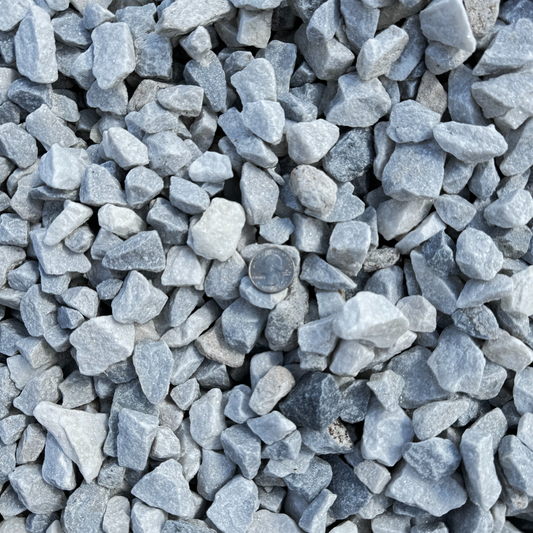
1. White Marble Rock ¾"
Best for: Brick triple-deckers and Federal-style homes; high-contrast designs
White Marble Rock ¾" is a brilliant white aggregate that pops against red brick and dark trim. The most-photographed Boston foundation stone — Beacon Hill, Back Bay, and West Roxbury homeowners use it for the formal look.
Pros: Bright reflection brightens shaded foundation beds; long lifespan; rinses clean. Cons: Most expensive of the five; shows sap and leaf stain over time; needs occasional rinsing.
Order roughly 0.9 cubic yards per 30 linear feet of 4-foot-wide foundation bed at 2-inch depth.
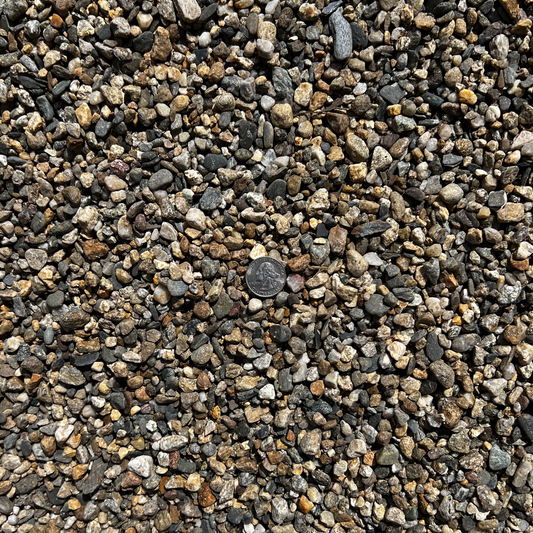
2. Riverbed Rock ¾"
Best for: Coastal-style and contemporary Boston homes; informal, naturalistic
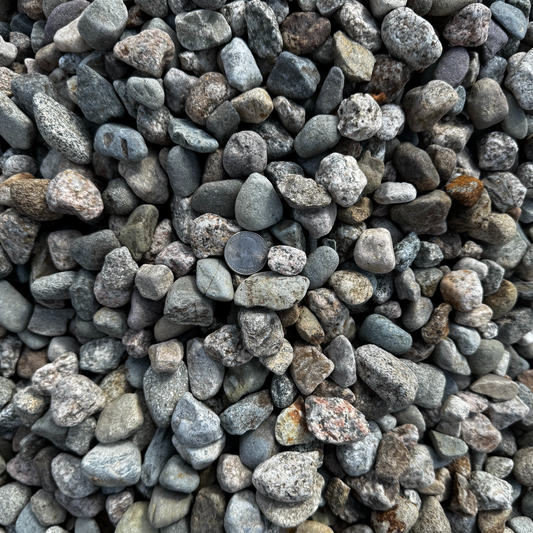
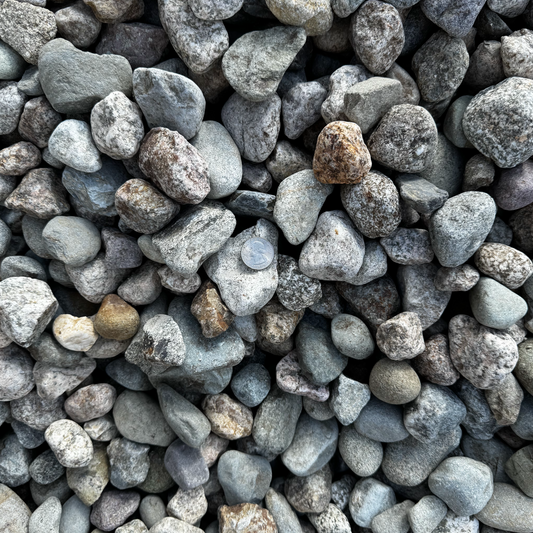
Riverbed Rock ¾" is rounded, multi-color stone that reads as natural rather than installed. It pairs well with shingled coastal-style architecture and contemporary homes that want a relaxed, organic look.
Pros: Mid-range price; natural variation hides debris; rounded grain is comfortable underfoot. Cons: Rolling stones can migrate over time; rounded grain doesn't lock together as tightly as angular alternatives.
Browse the decorative stone collection for current per-yard rates on Riverbed Rock in ¼", ⅜", ¾", and 1.5" sizes.
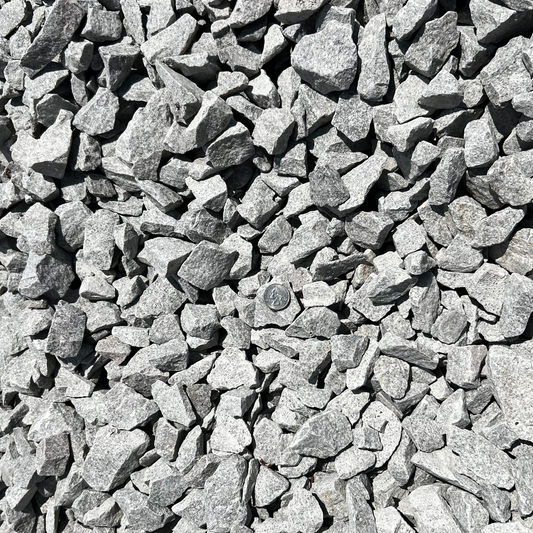
3. Mixed-Color Granite Rock ¾"
Best for: Value-conscious foundation beds; cost-effective texture
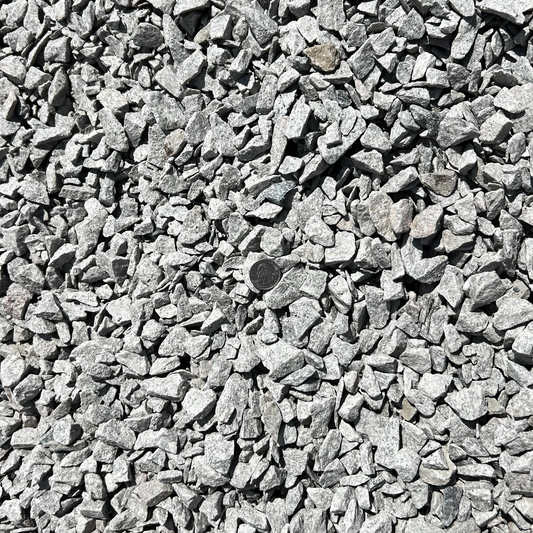
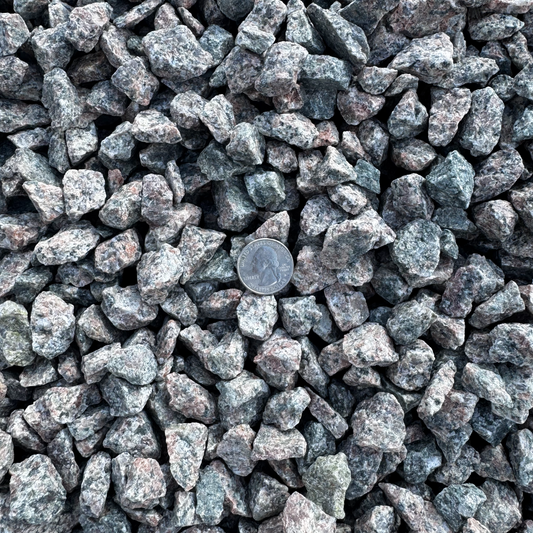
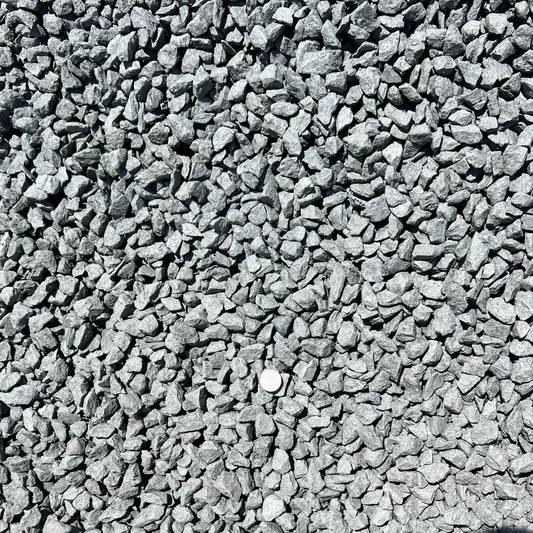
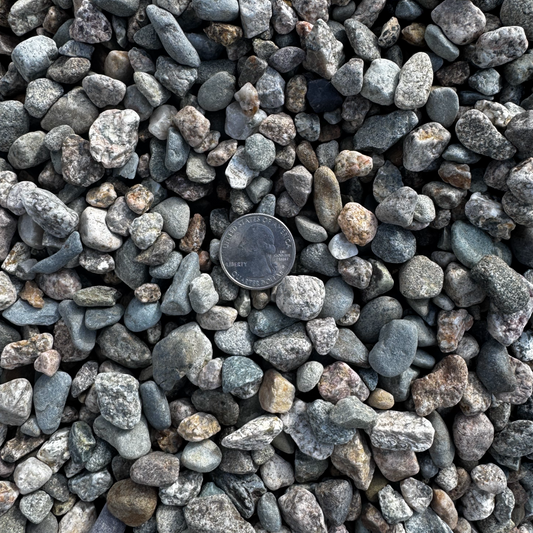
Mixed-Color Granite Rock ¾" is the value pick — angular, multi-tone (gray, beige, light brown), and the lowest-cost option of the five. Most Boston rental properties use this for foundation beds because it looks finished without the premium price.
Pros: Lowest per-yard cost; angular grain locks together; mid-tone color hides debris. Cons: Less visual impact than white marble or distinctive blue/brown options.
For a 30-foot foundation strip, Mixed-Color Granite at ¾" runs roughly 70% of the cost of White Marble at the same coverage.
4. Blue Stone Rock ½"
Best for: Modern Boston homes; minimalist designs; matching bluestone hardscape
Blue Stone Rock ½" — smaller-grain version of the bluestone aggregate — is a uniform medium-blue color that pairs perfectly with bluestone patios and walkways. Modern Boston homes (architect-designed renovations in Jamaica Plain, the Fenway) use it to extend a hardscape palette into the foundation bed.
Pros: Uniform color; coordinates with bluestone hardscape; smaller grain reads as refined. Cons: Premium price; less visible texture from a distance.
Browse Blue Stone Rock options — Ottr stocks ⅜", ½", and ¾" sizes for different design intent.
5. Brown Stone Rock ¾"
Best for: Traditional Boston colonials; warm-tone designs
Brown Stone Rock ¾" is a chocolate-brown angular stone — the warm-tone alternative to gray Mixed-Color Granite. Traditional colonials from Roslindale through West Roxbury use it for the classic warm-foundation look.
Pros: Warm tone complements brown trim and natural wood; angular grain locks; mid-range price. Cons: Color reads less crisp in shaded foundation beds; can blend in too much against dark mulch on the front-yard side.
Brown Stone Rock is also stocked in ⅜" for paths and accent areas.
Installation Basics for All Five
Every decorative stone foundation install in Boston follows the same pattern:
- Remove old mulch down to soil
- Lay 4-oz weed fabric with 6-inch overlap at seams, fastened with landscape staples
- Spread 2 inches of stone evenly across the fabric (do not skimp on depth — fabric shows through at 1 inch)
- Edge with steel or aluminum along the lawn side to keep stone in place
- Refresh annually by rinsing surface debris off with a hose
For neighbor context on the patio layout that often pairs with foundation stone work, see How to Prune Knockout Roses in a Waltham Front Yard. For the next-week parallel on March yard kickoff tasks in Roslindale, see 5 March Yard Kickoff Tasks for Roslindale Homeowners. The 2026 follow-up on Somerville bed layering sits at Layer a Bed in Somerville.
Volume Math
For a typical Boston foundation bed running 4 feet wide × 30 feet long at 2-inch depth:
- 4 ft × 30 ft × 0.167 ft = 20 cubic feet
- 20 ÷ 27 = 0.74 cubic yards
- Add 20% for waste/edges = 0.9 cubic yards ordered
For longer or wider beds, scale linearly. A 50-foot wraparound bed at 5 feet wide and 2 inches deep needs roughly 1.6 yards ordered.
Browse the decorative stone collection for current per-yard rates and the Boston landscape supply page for delivery scheduling.
For region-specific guidance on foundation-bed plant choice and stone compatibility, the UMass Extension Landscape, Nursery & Urban Forestry program has authoritative recommendations.