Quick Answer
The five cool-season grasses that work best for Brookline spring repair: (1) Kentucky bluegrass (lush look, slowest to establish), (2) perennial ryegrass (fastest germination, used in mixes), (3) fine fescue (shade-tolerant, low-water), (4) turf-type tall fescue (drought-tough), and (5) a 3-way Brookline mix combining bluegrass + ryegrass + fine fescue. For most Brookline lawns, a 70/20/10 bluegrass-ryegrass-fescue blend is the right reseed pick. Pair with a ¼" top-dress of Topsoil Loam ½" Screened for the best take.
Why Cool-Season Grass for Brookline
Brookline sits in USDA Zone 6b and has the soil chemistry, summer heat profile, and shade pattern that suits cool-season turf — grasses that grow strongest in spring and fall and slow down in July-August heat. Warm-season grasses (zoysia, Bermuda) don't survive Brookline winters.
Within cool-season turf, five species do most of the work in Brookline lawns. Each has a niche.
1. Kentucky Bluegrass
Best for: Sunny front lawns, traditional New England look Establishment: Slow (14–28 days germination); spreads via rhizomes Mowing height: 2.5–3.5 inches Drought tolerance: Moderate; goes dormant in summer drought, recovers Why pick it: The classic lawn look — dense, fine-textured, rich green. Spreads to fill thin spots over years.
Kentucky bluegrass is the flagship species in Brookline lawn mixes. It's slow to establish from seed but unmatched once mature. For full-replant projects (heavy salt damage along Beacon Street curbs, plow tear-outs), bluegrass is the long-term winner.
2. Perennial Ryegrass
Best for: Quick green-up, overseeding, mix component Establishment: Very fast (5–10 days germination); bunch-type, doesn't spread Mowing height: 1.5–2.5 inches Drought tolerance: Low; suffers in drought, doesn't recover well Why pick it: Fast germination makes it the standard "nurse crop" in seed mixes — gives you green grass while bluegrass establishes underneath.
Perennial ryegrass alone is rarely the right pick — it's a bunch grass that doesn't fill in. As 20–30% of a mix, it's essential. Pure ryegrass lawns thin out within 3–5 years.
3. Fine Fescue (Creeping Red, Hard, Chewings)
Best for: Shaded yards, low-water lawns, low-maintenance Establishment: Moderate (10–14 days germination); creeping red spreads slowly Mowing height: 2.5–4 inches Drought tolerance: High; one of the most drought-tolerant cool-season options Why pick it: The shade-tolerant fescue is what survives under mature Brookline maples and oaks where bluegrass thins out.
Fine fescue species (creeping red, hard, chewings) are interchangeable for residential use. As 10–20% of a mix, they handle the shaded edges of most Brookline lawns.
4. Turf-Type Tall Fescue
Best for: Heavy-traffic zones, drought-prone yards, modern low-water lawns Establishment: Moderate (10–14 days germination); bunch-type Mowing height: 3–4 inches Drought tolerance: Very high; deep root system reaches subsoil moisture Why pick it: The tough modern alternative to a bluegrass-heavy lawn. Reads as slightly coarser than bluegrass but stays green through dry stretches when bluegrass goes dormant.
Modern turf-type tall fescue varieties (Rebel, Falcon, Bonsai) are vastly improved over old K-31 pasture fescue. For Brookline yards converting to lower-maintenance, 70% tall fescue / 30% bluegrass is a strong combination.
5. The 3-Way Brookline Mix
Composition: 70% Kentucky bluegrass + 20% perennial ryegrass + 10% fine fescue Best for: Most Brookline residential lawns (sun-to-part-shade) Why pick it: Combines bluegrass's lush look, ryegrass's fast green-up, and fescue's shade tolerance.
This blend is what most local seed houses sell as "MA premium lawn mix." It's the right choice for the standard Brookline reseed — a 1,000 sq ft front yard that needs spring repair after a winter of salt damage and plow scrape.
How Much Seed and Loam
For a 1,000 sq ft Brookline reseed:
- Seed: 5–6 lbs of the 3-way mix (1 lb per 200 sq ft is the standard rate)
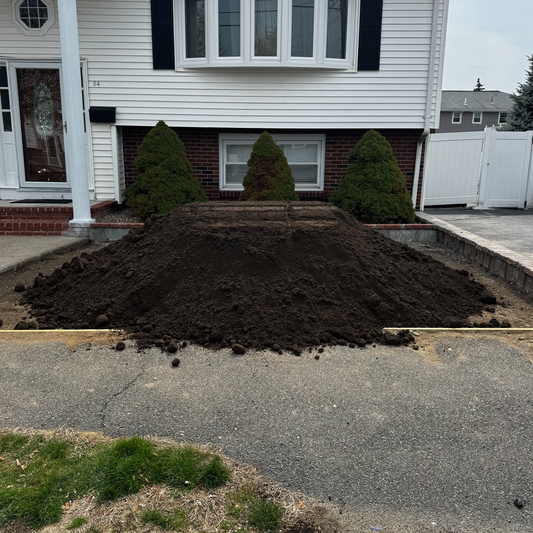
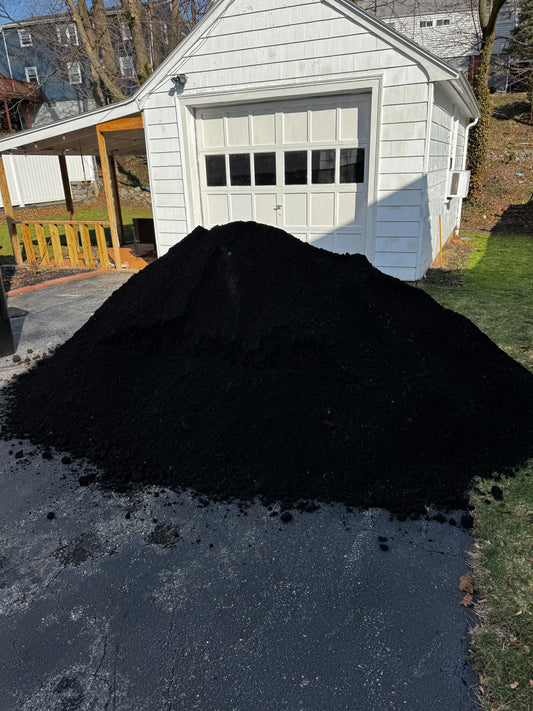
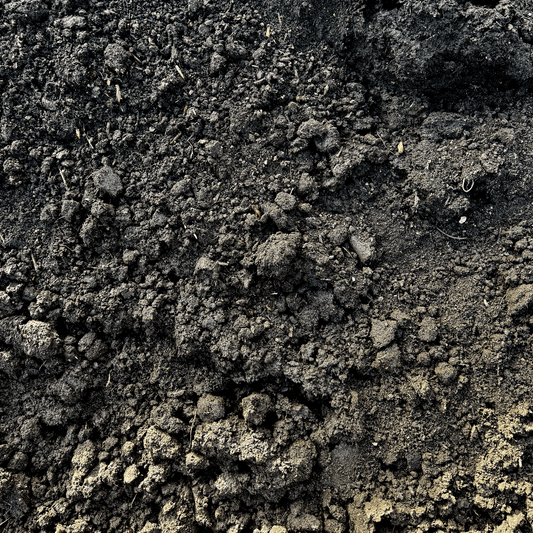
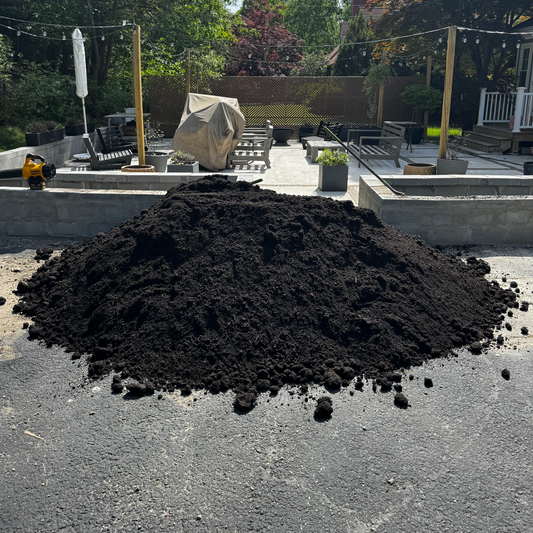
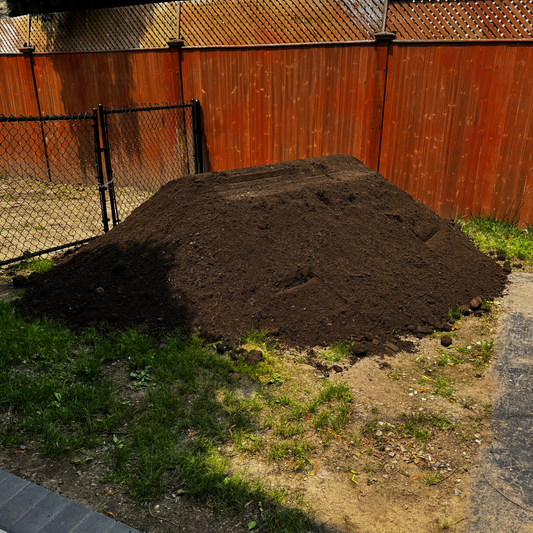
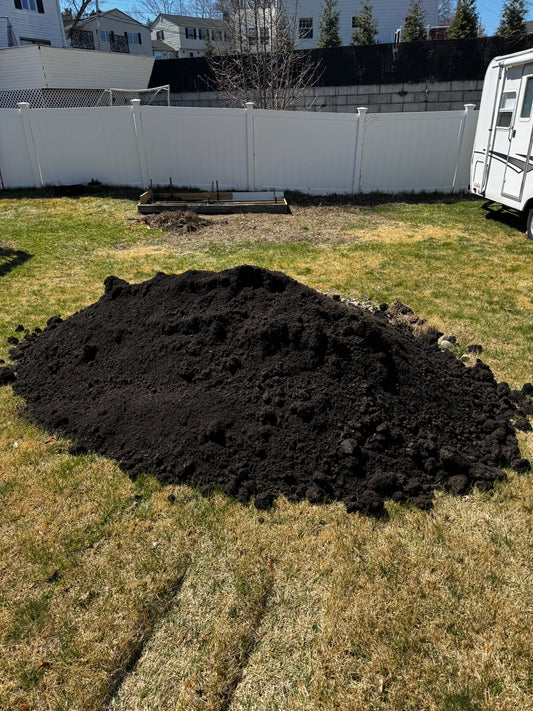
- Topsoil Loam ½" Screened: 1 cubic yard for ¼-inch top-dress
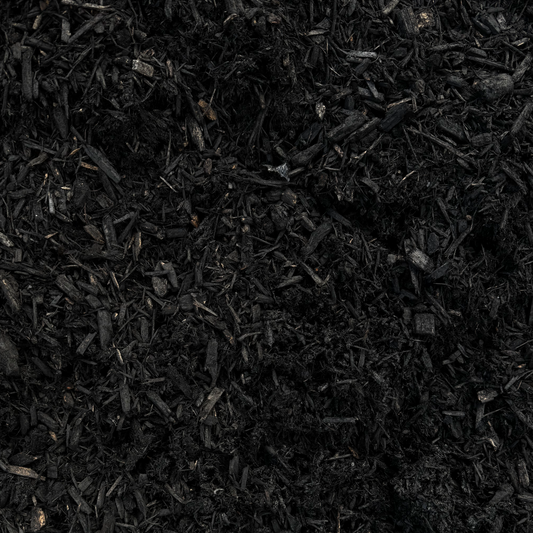
- Compost: ½ cubic yard mixed into the loam for richer establishment
- Starter fertilizer: 1 application per manufacturer specs at planting
Browse the Lawn Leveling & Repair collection for screened loam and the Brookline landscape supply page for delivery scheduling. For neighbor context on the bulk-loam math the same week, see How Much Bulk Loam Does My Middleborough Raised Bed Actually Need?. For the next-week mulch refresh planning, see How to Refresh a Tired Mulch Bed in a Brockton Yard. The 2026 follow-up on Middlesex February outlook sits at February Outlook for Middlesex County.
When to Seed in Brookline
Two windows work for Brookline cool-season seed:
- Spring window: April 15 – May 15, after final frost, before summer heat
- Fall window: August 25 – September 30, the better of the two — moderate temps and reliable rain
Spring seeding requires watering through summer for the lawn to establish before heat stress. Fall seeding establishes through cool autumn weather and overwinter, ready to push in spring. For any new lawn area, fall is the right window. Spring works for repair patches.
For region-specific lawn-establishment guidance, the UMass Extension Turf Program has the most authoritative recommendations for Brookline conditions.