Quick Answer
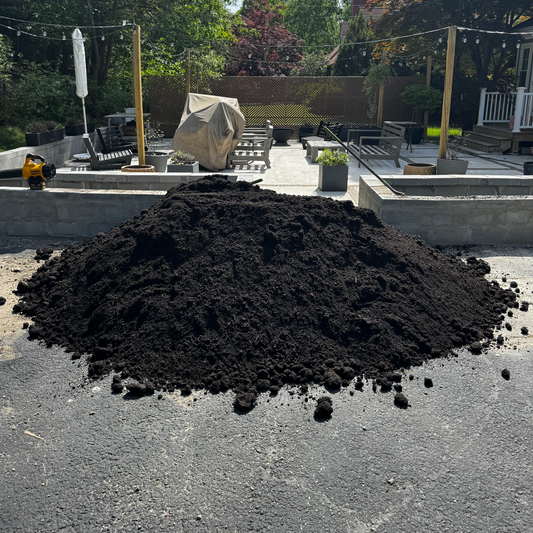
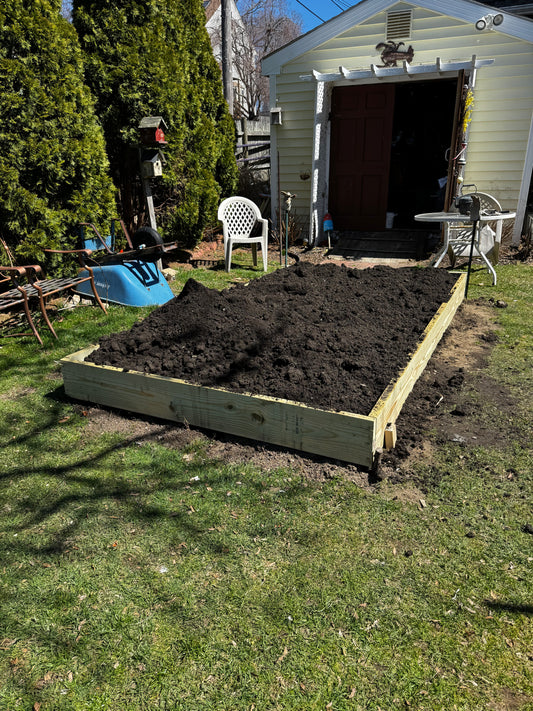
A standard 4×8×12-inch raised bed in Middleborough holds 32 cubic feet of soil — that's about 1.2 cubic yards. Order 1.5 yards to allow for settling and topping up after the first watering. The best vegetable-bed mix is 60% Topsoil Loam ½" Screened, 30% compost, 10% coarse sand. For deeper beds (18-inch sides), order roughly 2 yards for the same 4×8 footprint. Math is simple — length × width × depth in feet ÷ 27 = cubic yards.
Why This Math Matters in Middleborough
Middleborough is one of the densest concentrations of new raised-bed construction in southeastern MA. Yards from East Middleborough through the village center get 4×8 cedar beds installed every spring, and most homeowners buy too little loam the first time and fight a half-empty bed all season.
This Q&A walks through the volume math, the right soil mix, and the order details so you call the supplier with confidence in February.
Q: How much bulk loam fills a 4×8×12-inch raised bed?
A: 32 cubic feet, or about 1.2 cubic yards.
The formula:
Length (ft) × Width (ft) × Depth (ft) = Cubic feet
For a 4×8×12-inch bed: - 4 ft × 8 ft × 1 ft (12 inches = 1 ft) = 32 cubic feet - 32 ÷ 27 = 1.2 cubic yards
Order 1.5 yards to allow: - 10% settling after the first 2–3 waterings - 5% spillage during fill - Top-up margin for adding compost in late spring
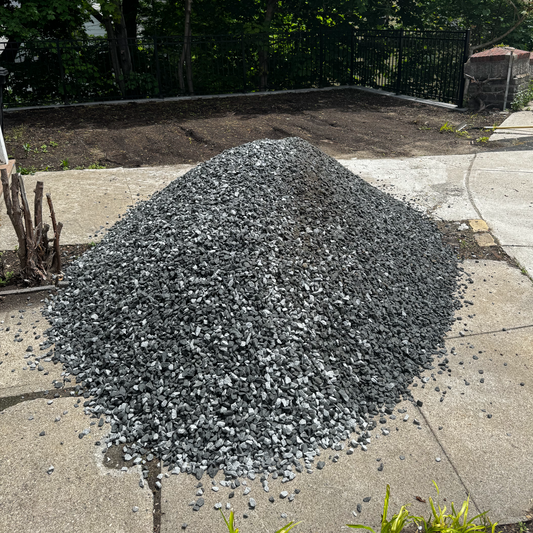
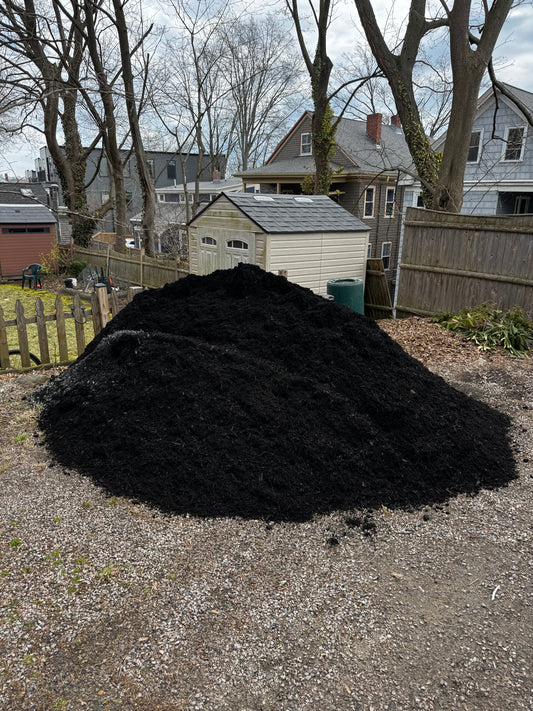
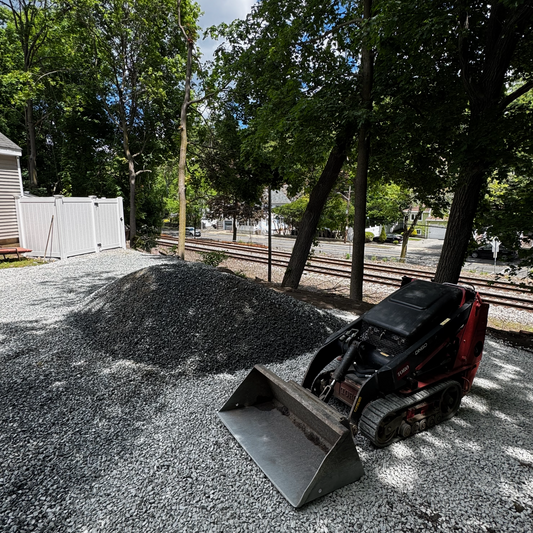
A 1.5-yard delivery is a quarter of a 14-yard truck — a routine residential drop in Middleborough.
Q: What's the difference between Topsoil Loam and Super Loam?
A: Two products for two jobs.
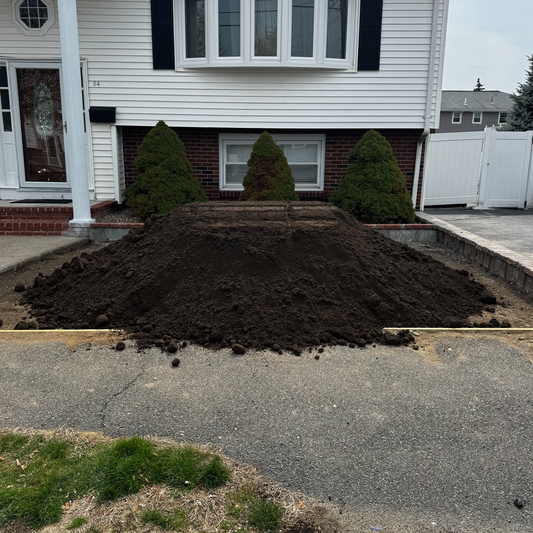
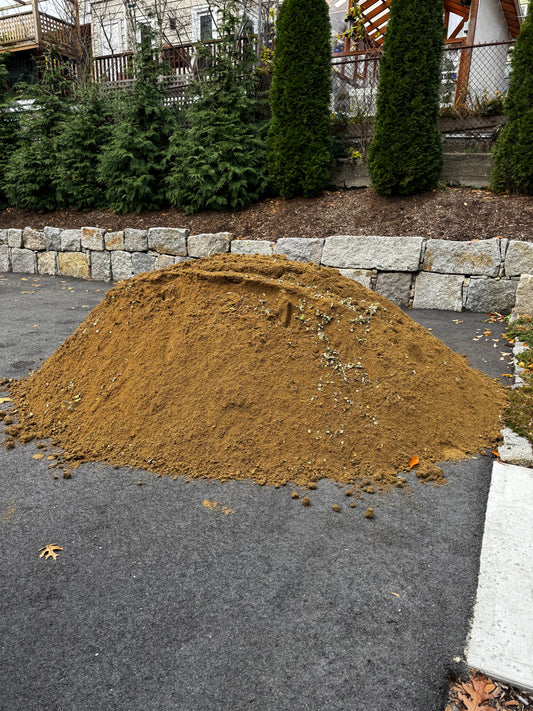
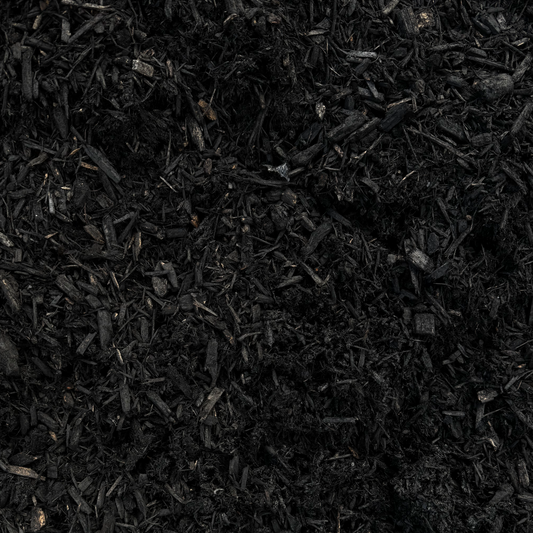
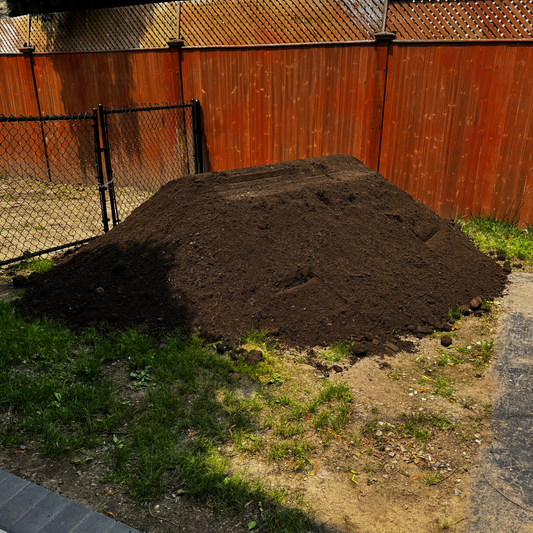
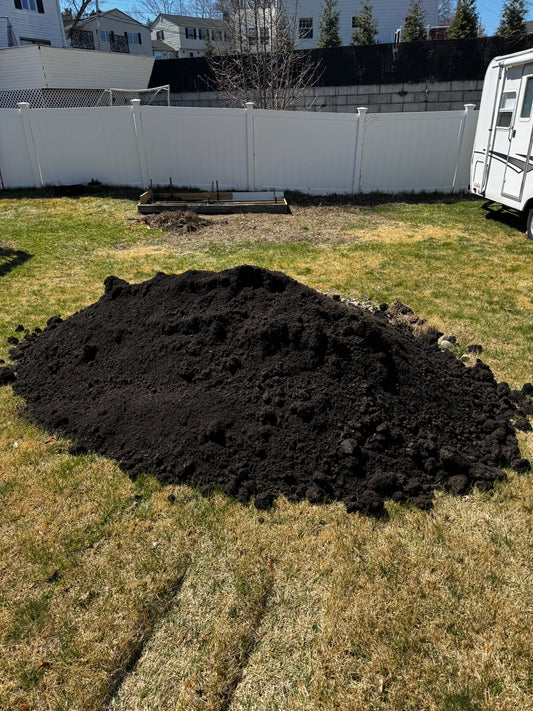
- Topsoil Loam ½" Screened — general-purpose screened loam, good for lawn repair, foundation beds, and standard raised-bed vegetable plots. The reliable workhorse.
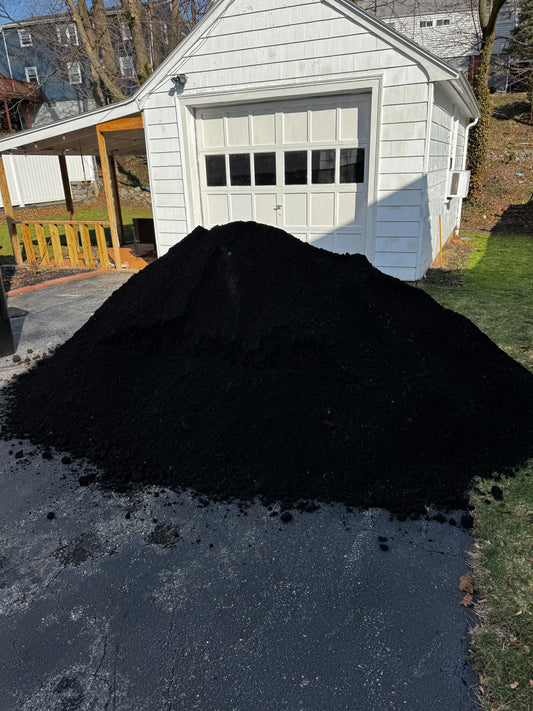
- Super Loam — higher organic content blend, designed for vegetable beds and intensive flower gardens. More expensive per yard, more nutrient-dense.
For a Middleborough vegetable raised bed, Super Loam plus compost is the premium pairing. Topsoil Loam plus compost is the value pairing — works well, costs less.
Browse the Raised Garden Bed Materials collection for both products and the Middleborough landscape supply page for delivery scheduling.
Q: Can I just fill the bed with loam, or do I need a mix?
A: Pure loam compacts over time. A mix performs better.
The classic raised-bed vegetable mix:
- 60% loam (Topsoil Loam ½" Screened or Super Loam)
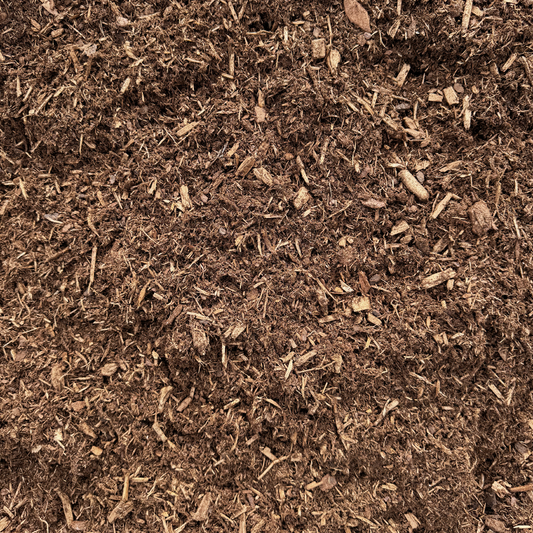
- 30% compost (well-aged, screened)
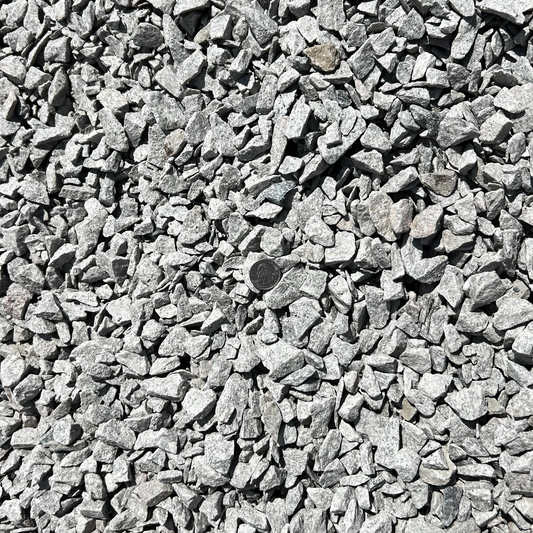
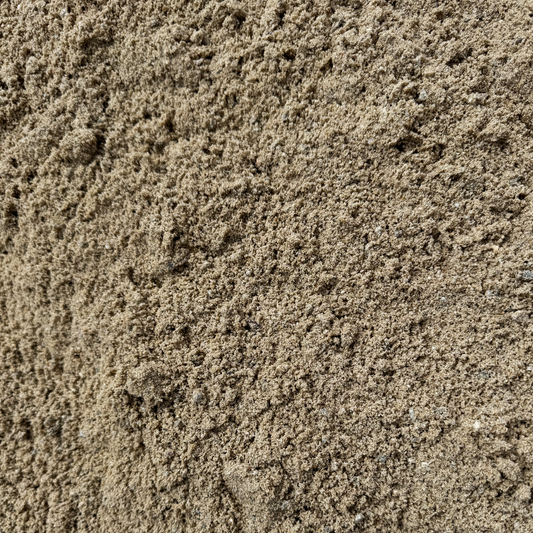
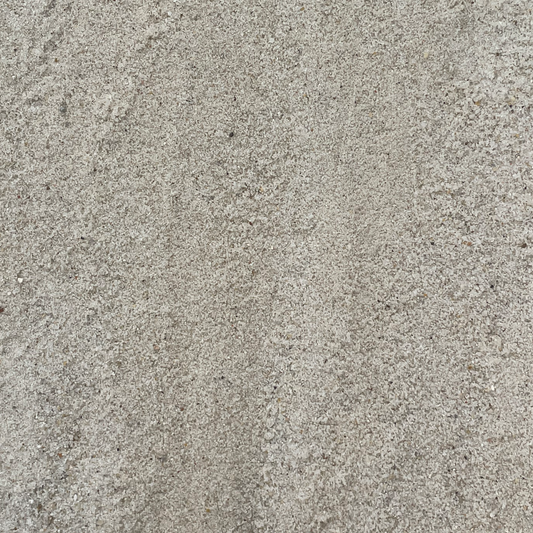
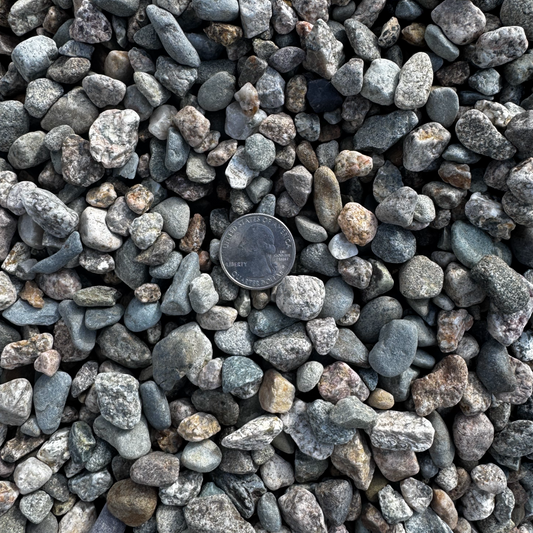
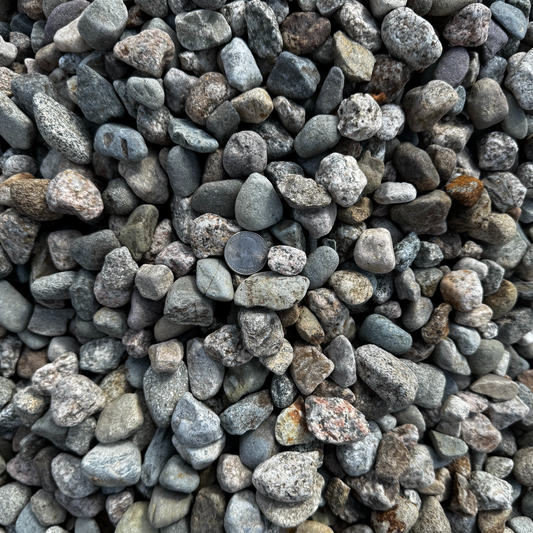
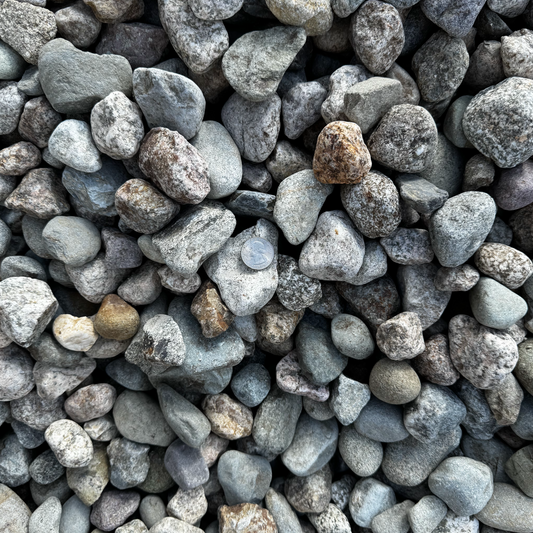
- 10% coarse sand (Coarse Sand or Concrete Sand)
For a 1.5-yard order on a 4×8×12 bed: - 0.9 yards Topsoil Loam - 0.45 yards compost - 0.15 yards Coarse Sand (round up to 0.25 yards minimum order)
The mix gives you drainage, water retention, and root penetration all at once. Pure loam compacts under repeat watering and chokes roots.
Q: How deep should soil be in a raised bed?
A: 12 inches minimum for most vegetables. 18–24 inches is better for tomatoes and carrots.
- 6 inches: lettuce, spinach, herbs, radishes — surface rooters
- 12 inches: beans, peppers, peas, broccoli — most vegetables
- 18 inches: tomatoes, eggplant, summer squash — moderate rooters
- 24 inches: carrots, parsnips, deep-tap-root brassicas
Most Middleborough raised beds are built 12 inches deep. If you're a tomato or carrot grower, build 18 or 24 inches. The extra height pays back in yield.
Q: Do I need to layer wood or cardboard at the bottom?
A: Optional, with two main approaches.
- Cardboard or newspaper layer — placed bottom-up before fill, suppresses weeds for one season, then breaks down. Most Middleborough beds use this.
- Hugelkultur layering — logs, branches, leaves at the bottom of a deep bed (12 inches of wood + 12 inches of soil mix). Reduces soil volume needed by 20–30%, improves long-term drainage, releases slow nitrogen as the wood decays. Best for 18–24" deep beds.
Both are optional. A bed filled entirely with the 60/30/10 mix performs fine.
Q: How long does the soil last before I need to top up?
A: 2–3 inches of settle per year is typical.
After the first season, expect to top up with ¼ cubic yard of compost per 4×8 bed annually. The settling continues for about 3 years, then stabilizes. Plan an annual compost top-up as part of spring maintenance.
For neighbor context on the patio layout that often pairs with new bed construction, see How to Lay Out a Backyard Patio in a Boston Lot. For the parallel hardwood-mulch uses around a Somerville property, see Top 5 Hardwood Mulch Uses Around a Somerville Property. The 2026 follow-up on Boston lawn green-up sits at Lawn Green-Up in Boston.
Q: Should I do a soil test on the loam before filling?
A: Not necessary for fresh bulk loam, but useful in year 2.
Bulk loam from a reputable supplier like Ottr arrives at neutral pH (~6.5) with healthy structure. After a year of vegetable cropping, pH may drift acidic, especially if you mulched with pine bark. Mail a sample to the UMass Soil and Plant Nutrient Testing Lab before each spring's planting in years 2 and beyond.
Q: What about lasagna gardening or no-till layering?
A: Both work; both shift the soil math.
- Lasagna gardening — alternating layers of brown (cardboard, leaves) and green (compost, food scraps) over a season, breaks down into rich planting medium by spring
- No-till layering — heavy compost top layer over existing soil, no mixing
Both reduce the bulk-loam need, but they require 6–12 months of break-down time before planting. For an early-spring 2025 planting, you need bulk loam delivered now.
Q: When should I order in Middleborough for a March install?
A: By February 25 for early-March delivery.
The supplier's March schedule fills up fast. A late-February order locks the February pricing (no spring bump) and gets you on the calendar before contractors block the truck routes. For the broader bulk loam vs big-box bagged topsoil question, see Ottr Screened Loam vs Big-Box Topsoil.
For region-specific vegetable-garden guidance, the UMass Extension Vegetable Program is the most authoritative source, with monthly task lists for southeastern MA gardens.
The Short Version
For a 4×8×12 Middleborough raised bed: 1.5 yards of loam-compost-sand mix in a 60/30/10 ratio. Order by Feb 25 for early-March delivery. Top up with ¼ yard of compost each spring after.