Some yards lose ground a little at a time. A property in Cohasset, MA had been doing it for years — a lawn sitting on a steep pitch, thin soil over ledge, and every heavy rain carrying another layer of it downhill. What used to be usable back yard had turned into a slope nobody could stand on, let alone mow.
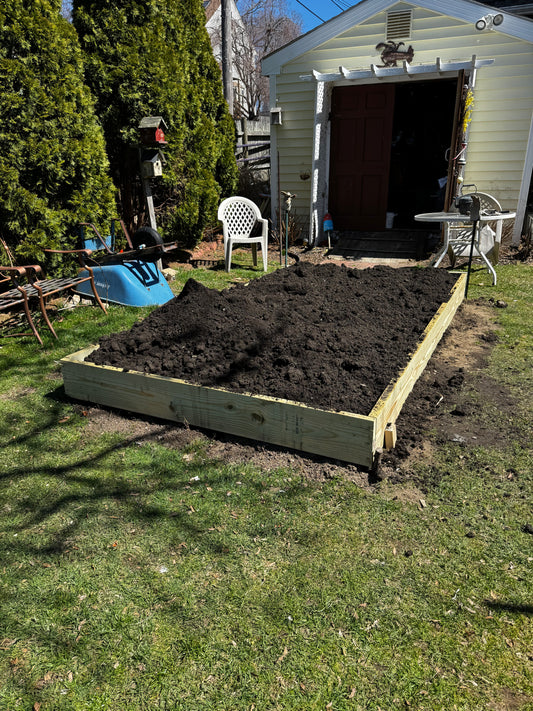
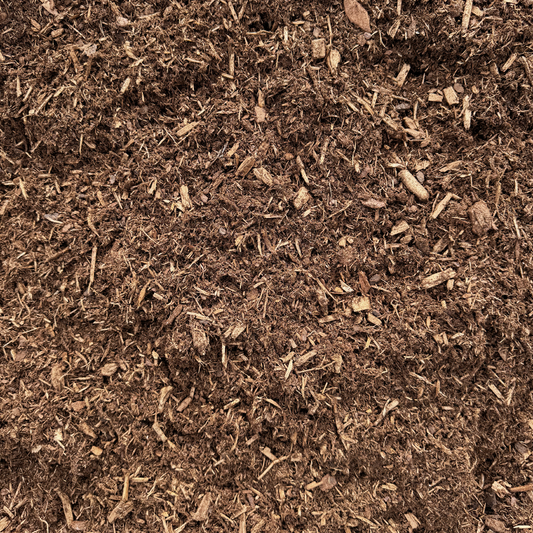
The fix was two moves: a segmental block retaining wall about three feet tall cutting across the grade to create a level terrace, and 6 cubic yards of Screened Loam to fill in behind it and rebuild the washed-out areas above and below.
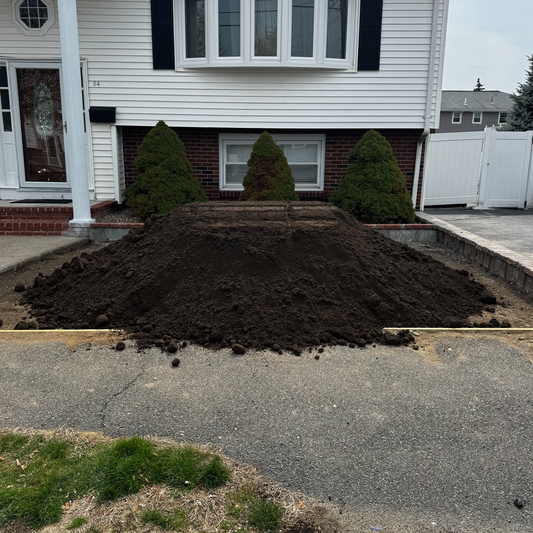
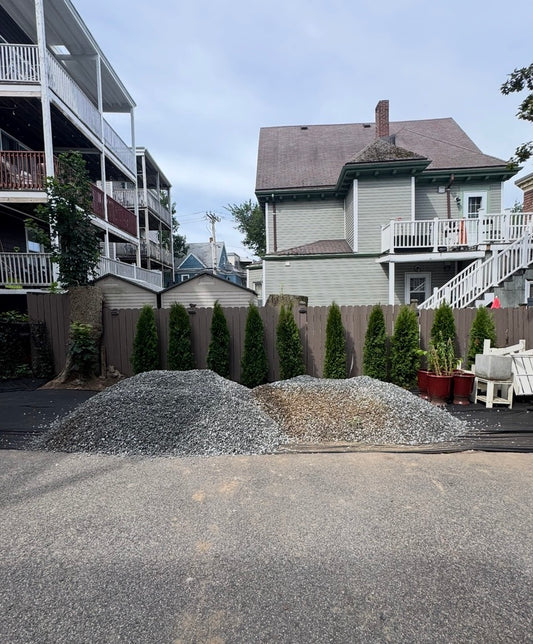
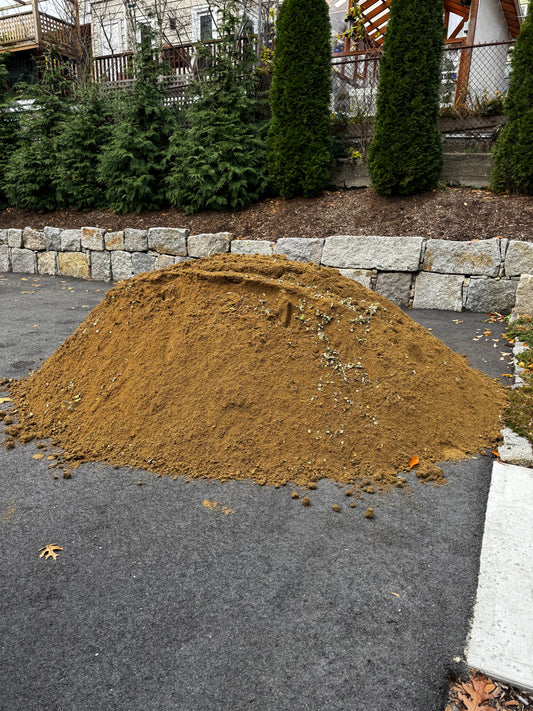
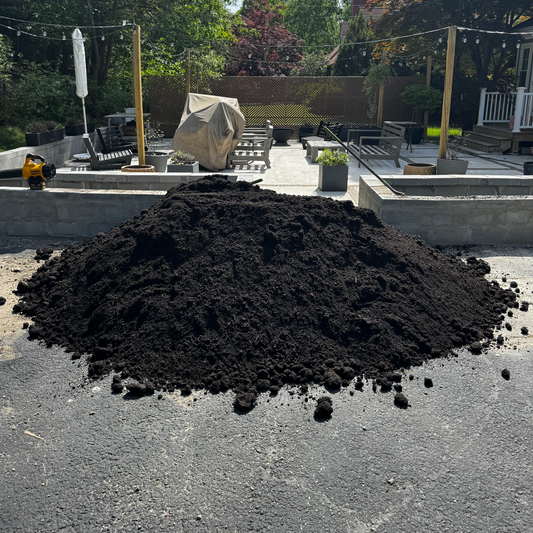
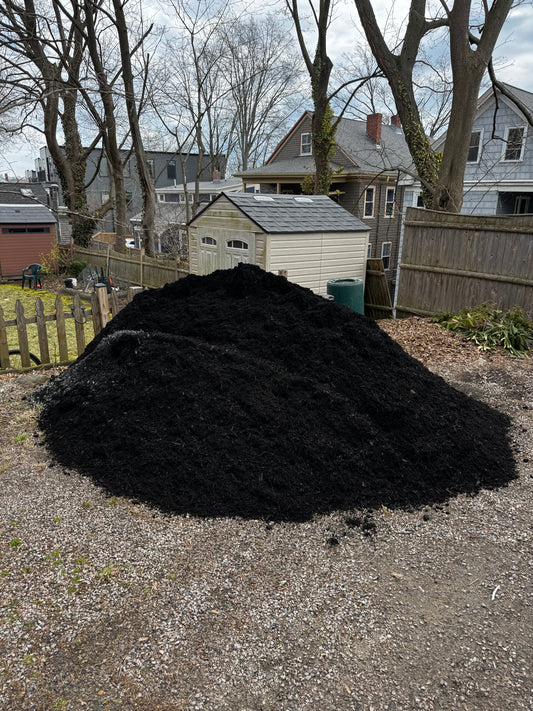
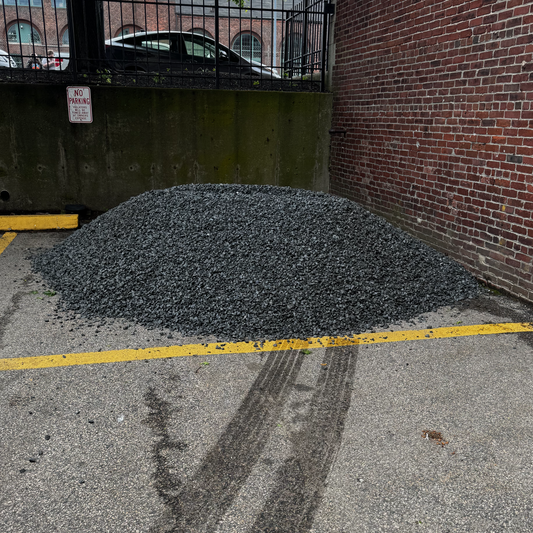
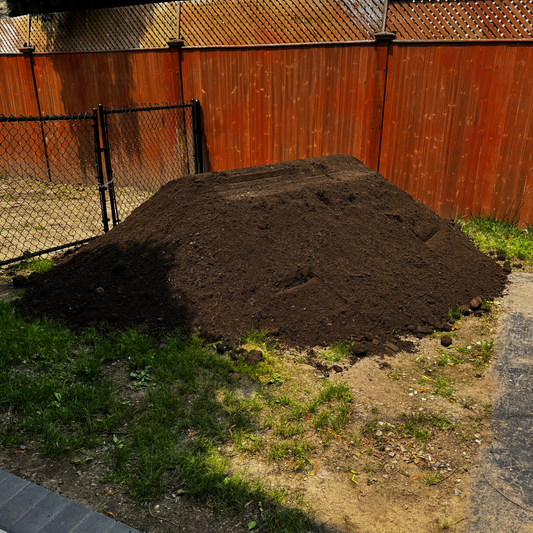
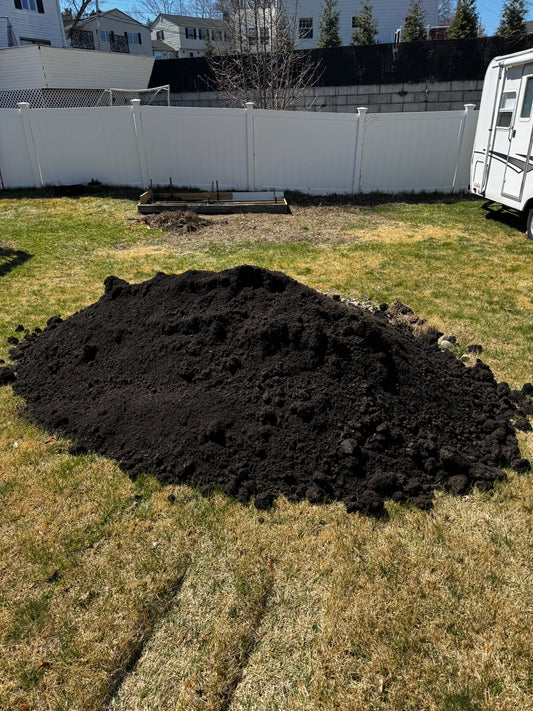
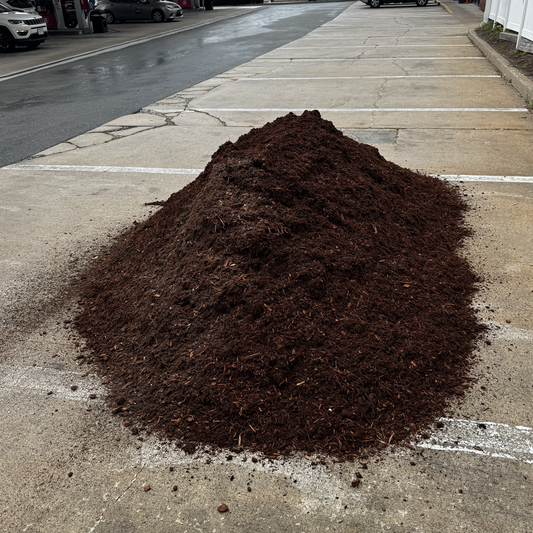
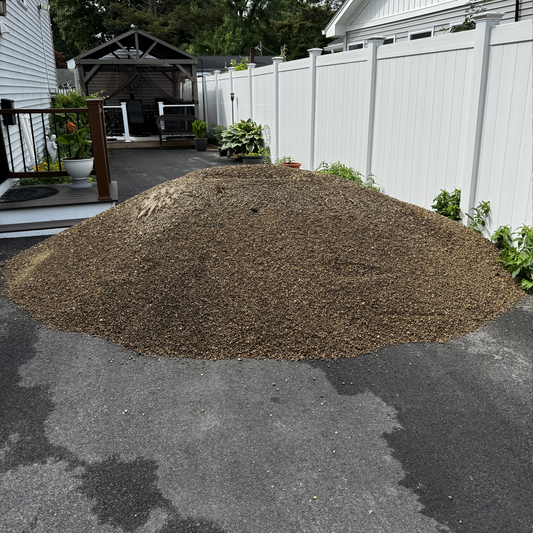
That's the load in the photo above — dropped on the driveway on a tarp, a stone's throw from the new fence line, on a grey South Shore afternoon that looked very much like it was about to make the erosion problem worse.
Why Cohasset yards erode
Cohasset is a Norfolk County town that geography forgot to attach to the rest of Norfolk County — an exclave ringed entirely by Plymouth County towns, sitting on the stretch of coast where the South Shore turns rocky. The ground here is granite ledge with a comparatively thin layer of soil over the top of it.
That combination is what drives the erosion. On a flat lot, rain soaks in. On a pitched lot with ledge underneath, there is nowhere for water to go but sideways, and it takes the loose topsoil with it. Add a coastal storm season and a few years pass unnoticed until somebody measures how much lawn is actually left.
A retaining wall interrupts the slope. It doesn't stop water — nothing stops water — but it turns one long fast run into two short slow ones, and it gives you a flat terrace on the uphill side that holds soil instead of shedding it.
What goes behind a retaining wall — and what doesn't
This is the part worth getting right, because it's where homeowner-built walls fail, and it's the one place in this project where loam is the wrong material.
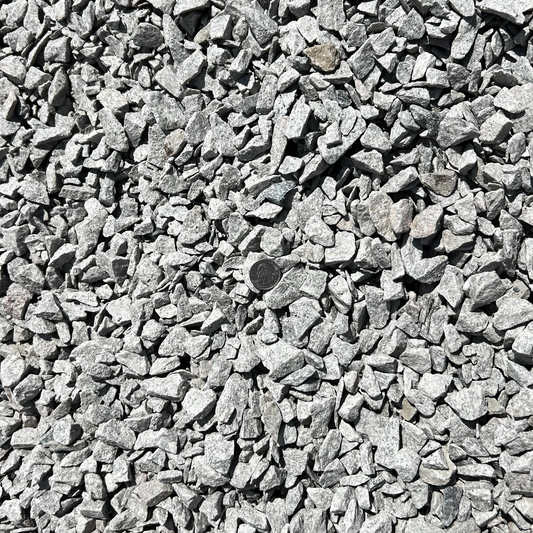
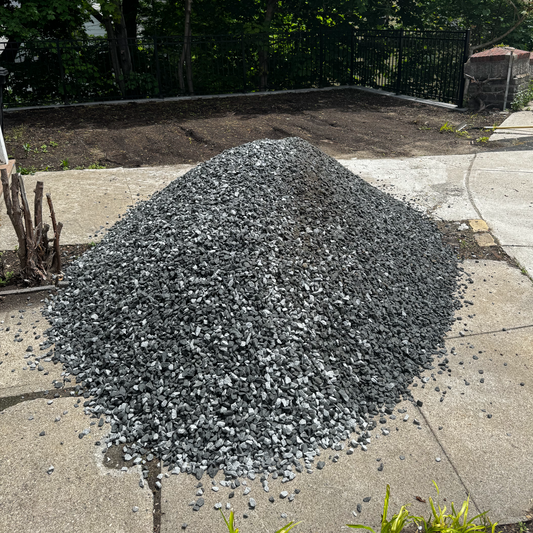
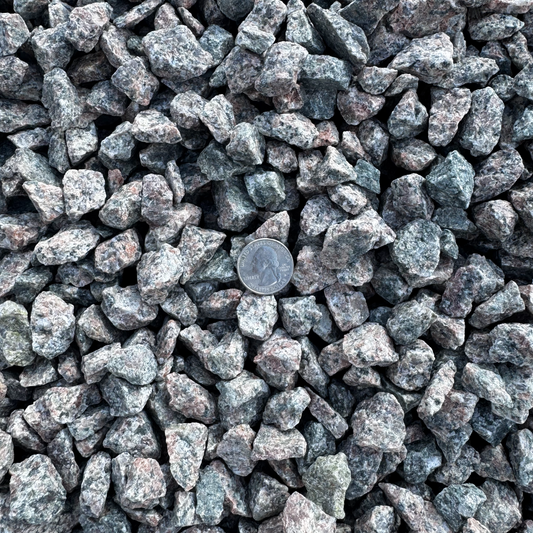
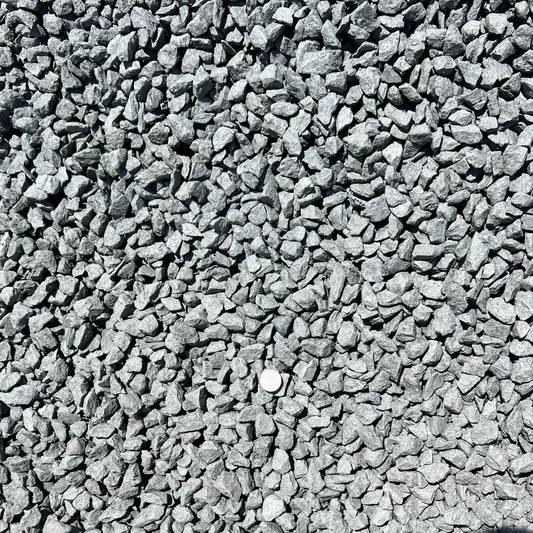
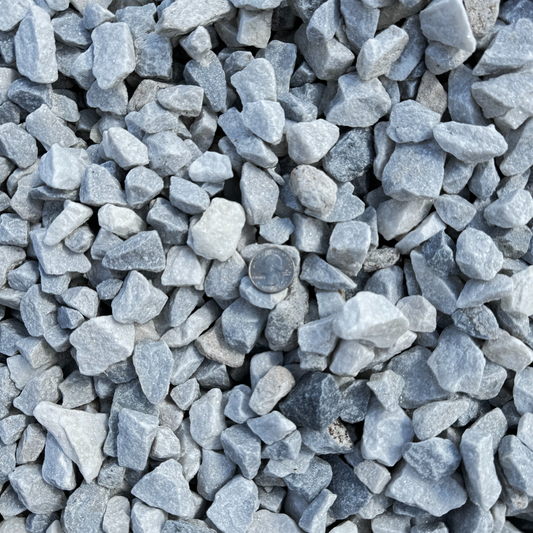
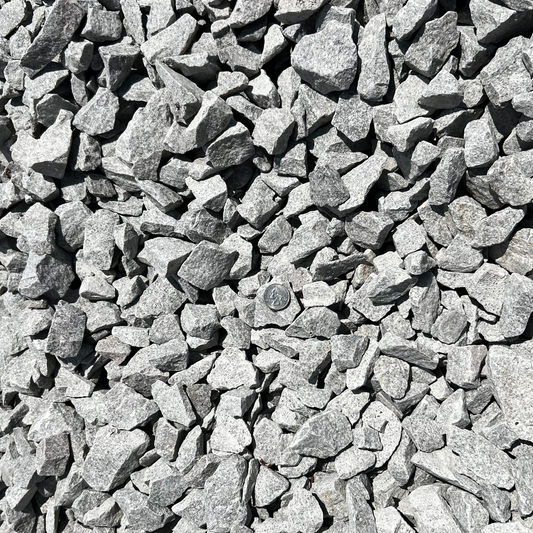
Directly against the back face of the wall you want clean, free-draining crushed stone — roughly 12 inches of it, full height, with a perforated drain pipe at the bottom running out to daylight. #57 Stone is the standard choice: no fines in it, so water falls straight through and leaves.
Soil in that zone does the opposite. Loam is built to hold water — that is the entire point of it — and water held behind a wall becomes hydrostatic pressure. A saturated three-foot backfill pushes on the block with a force that has nothing to do with the weight of the soil itself, and it is the most common reason a DIY wall bulges, leans, and eventually walks out at the base a few winters later. Freeze-thaw finishes what the water starts.
So the order of operations is: stone against the wall, loam behind and above it. The loam fills the rest of the terrace, brings the grade back to level, and grows grass. The stone does the structural work. Two different jobs, two different materials.
Loam or fill dirt for raising grade?
Fair question, and the honest answer depends on how deep you're going.
Fill Dirt at $45/yd is structural fill — what you use to raise a grade by a foot or more, because it compacts well and costs less. Nothing grows in it, so it gets capped with 4–6 inches of loam on top.
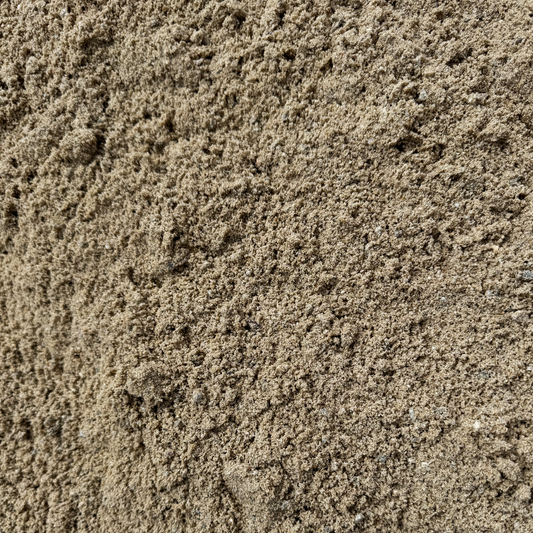
Loam (Screened) at $55/yd is topsoil — half-inch screened, balanced sand-silt-clay, pH 6.0–7.5, 3–7% organic matter. It grows grass.
On this job the lifts were shallow enough — nowhere more than about eight inches — that splitting the order into two materials would have meant two piles, two calculations and no real saving. Straight loam was the simpler call. If the terrace behind the wall had needed two feet of fill, the answer would have flipped: fill dirt for the bulk, loam for the top.
The yardage math
One formula, the same one for every bulk material we sell:
cubic yards = (square feet × depth in inches) ÷ 324
A cubic yard of screened loam covers about 100 square feet at 3 inches, or 75 square feet at 4 inches. Here is how 6 yards got spent:
- ~2.5 yards — filling in behind the wall, above the drainage stone, to bring the new terrace up to a level surface
- ~3 yards — re-establishing grade across roughly 300 square feet of washed-out slope at an average 3 inches deep
- ~0.5 yard — held back for the settling that always turns up after the first real rain
That last line is not padding. Loam settles roughly 10–20% once it is wet and walked on, and a slope that looked finished on Sunday will show low spots by the following weekend. Order about 10% extra and keep the remainder tarped, rather than paying for a second delivery to place half a yard.
What a cubic yard of loam covers
| Depth | Coverage per cubic yard |
|---|---|
| 1" (top-dressing) | ~324 sq ft |
| 2" | ~160 sq ft |
| 3" | ~100 sq ft |
| 4" (minimum for sod) | ~75 sq ft |
| 6" | ~54 sq ft |
Rebuilding eroded grade so it doesn't wash again
- Don't bury living grass more than an inch at a time. Existing turf grows up through a thin top-dress. Under three or four inches it suffocates and rots, and rotting sod beneath new loam is exactly the soft layer you don't want on a slope. Where the fill is going deeper, strip or kill the turf first and treat it as a new lawn.
- Work in lifts. Four to six inches at a time, each one raked out and walked in, rather than one deep dump. Deep loose fill on a grade is just erosion that hasn't happened yet.
- Firm it, don't compact it. Structural fill wants a plate compactor. Loam does not — compact it hard and nothing roots into it. Foot traffic or a light roller is enough.
- Get seed down immediately. Bare loam on a slope is the most erodible surface on the property. Seed, then straw or an erosion-control blanket, the same day if you can manage it.
- Give water somewhere to go. A shallow swale above the terrace, or a downspout extension routed away from the fill, does more for the long-term result than another yard of soil.
Timing note: mid-August through late September is the best window of the year for this work in Greater Boston. The soil is dry enough to move without turning to paste, and cool-season grass seed goes into warm ground with autumn rain ahead of it — far better establishment odds than a spring seeding fighting summer heat.
Six yards is about 6 to 7 tons. Screened loam runs 2,000–2,400 lbs per cubic yard. That works out to roughly 40 wheelbarrow loads — and on a Cohasset hill, most of them uphill. Plan the route, work early in the day, and get the tarp down before the pile lands rather than after.
What it cost, delivered to Cohasset
| Line | Amount |
|---|---|
| Loam (Screened) — 6 cubic yards @ $55.00/yd | $330.00 |
| Delivery — 1 load to Cohasset, MA (02025) | $100.00 |
| Subtotal before tax | $430.00 |
Cohasset sits about 17.6 driving miles from our Dorchester yard — comfortably inside the 30-mile flat-rate zone, so delivery is the flat $100 per load with no mileage added. Massachusetts sales tax applies to the material, not the delivery.
Six yards is also exactly one load. Our dump truck carries up to 6 cubic yards of soil per trip, and the delivery fee is charged per load rather than per yard — so on a job like this it costs the same to bring six yards as it would to bring two. Measure properly and order once.
Frequently asked questions
Can you backfill a retaining wall with loam or topsoil?
Not directly against the wall. The first 12 inches behind the block should be clean crushed stone with a perforated drain at the base, so water leaves instead of building pressure. Loam goes behind and above that drainage zone, where it fills the terrace and grows grass.
How much loam do I need to level an eroded slope?
Measure the area, decide your average depth, then run (sq ft × depth in inches) ÷ 324. Roughly 300 square feet at 3 inches is about 3 cubic yards. Add 10% for settling. Our material calculator does the arithmetic for you.
Should I use loam or fill dirt to raise a grade?
Fill dirt for anything deeper than about a foot — it's structural, it compacts, and it's cheaper — then cap it with 4 to 6 inches of loam so grass has something to root into. For shallower work, straight loam is simpler and avoids a second pile.
How much does a yard of screened loam weigh?
About 2,000 to 2,400 lbs, or 1.0 to 1.2 tons, depending on moisture. A full 6-yard load is 6 to 7 tons — more than most consumer pickups should carry, which is why it comes by dump truck.
Will new loam wash off my slope?
Bare soil on a grade absolutely will. Place it in shallow lifts rather than one deep layer, seed it the same day you finish grading, and cover with straw or an erosion-control blanket until it knits. Routing surface water away from the fill matters more than any of it.
Do you deliver loam to Cohasset?
Yes — same-day and next-day bulk delivery, no minimum order, flat $100 per load. Cohasset is one of our shorter South Shore runs, and we cover Hingham, Scituate, Norwell and Hull on the same routes.
Reclaiming your own slope?
Run the numbers on the material calculator, then order Loam (Screened) by the cubic yard — and if there's a wall in the plan, add #57 Stone for the drainage zone at the same time.
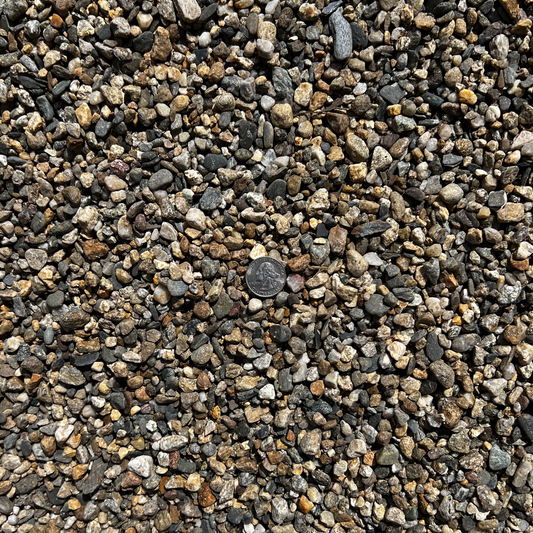
See everything we deliver to Cohasset, browse our range as a Cohasset gravel supplier, or read the terms on our delivery page. Building a base for something rather than growing on it? Our #610 shed pad delivery in Bellingham covers the compaction side of the same kind of project, and our one-yard pea stone delivery in Milford shows what a small decorative order looks like from the same truck. Regrading a lawn instead of holding one back? Our 6-yard loam delivery in Hanson covers leveling a backyard before fall seeding.