A homeowner in Bellingham, MA ordered a shed this summer — an 8' × 10' storage building for the back corner of the yard, delivered fully built on a trailer. The shed company asked one question before they'd schedule the drop: is the pad ready?
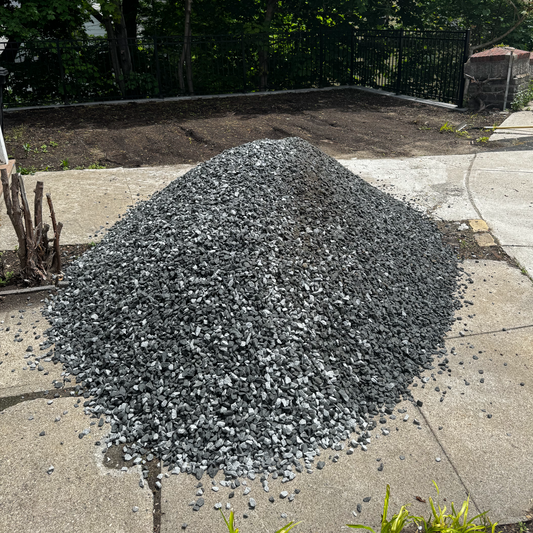
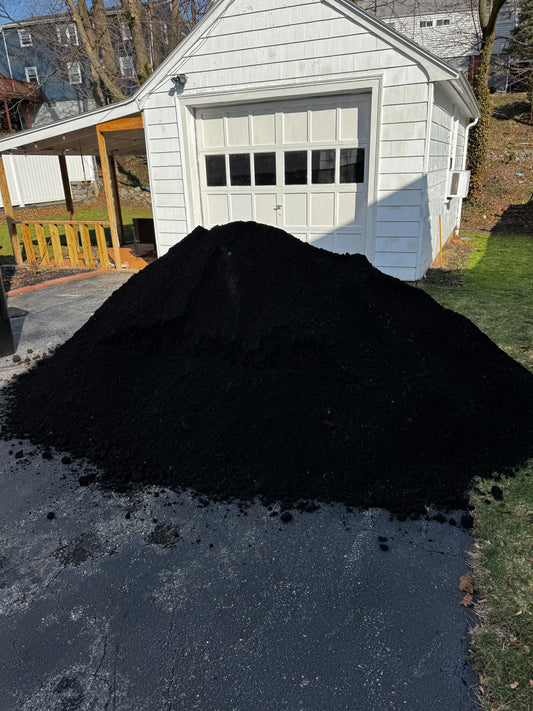
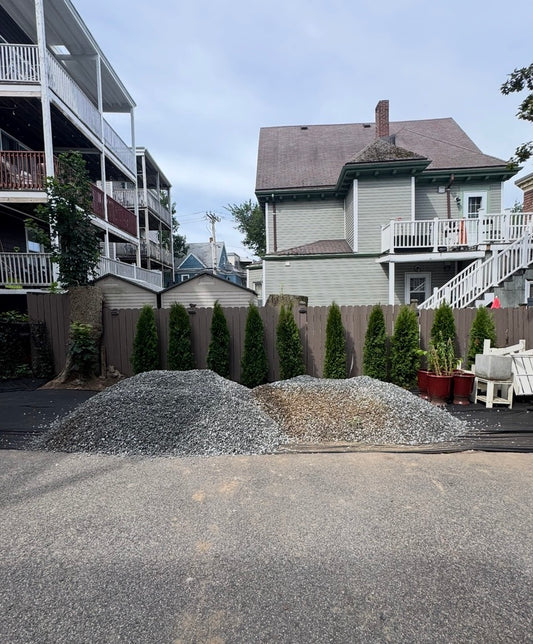
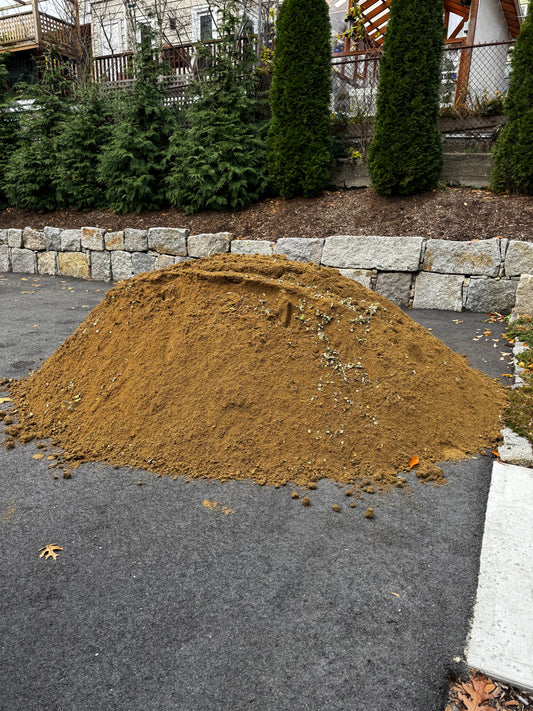
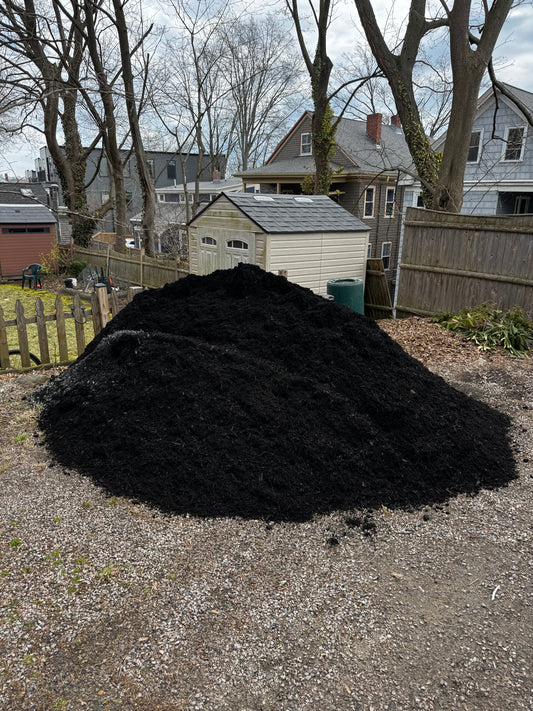
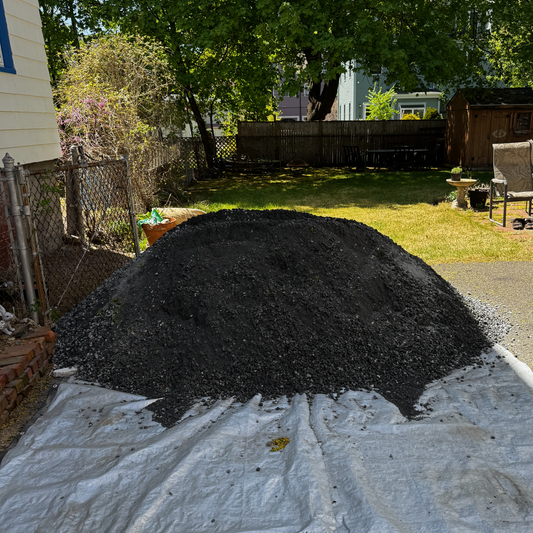
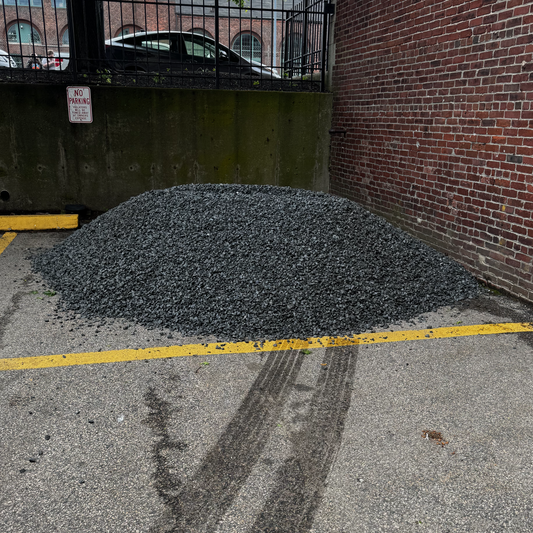
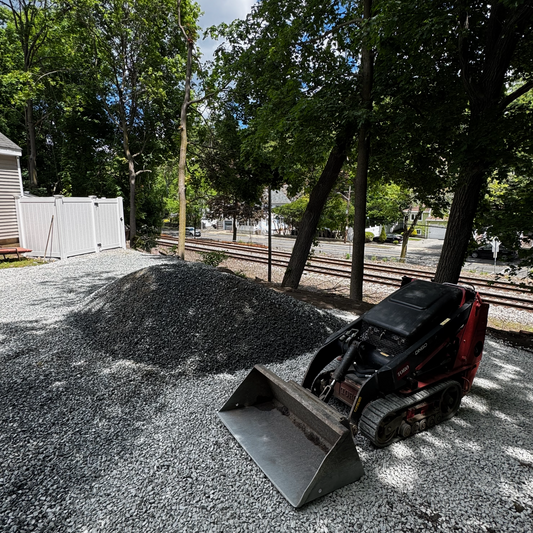
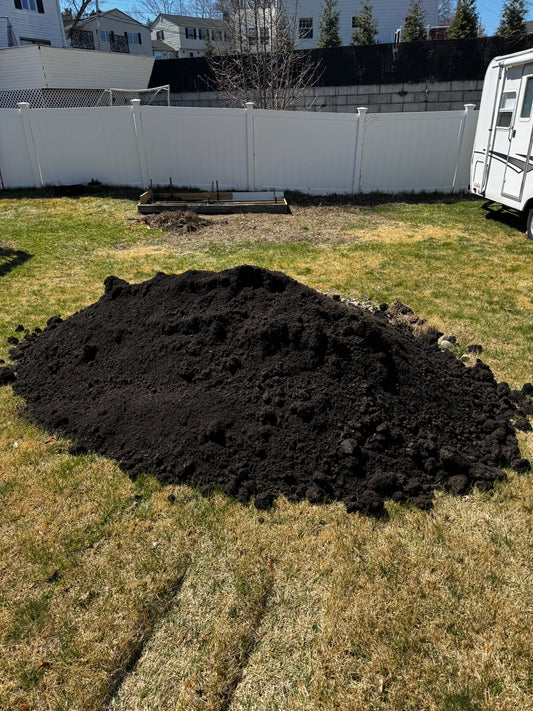
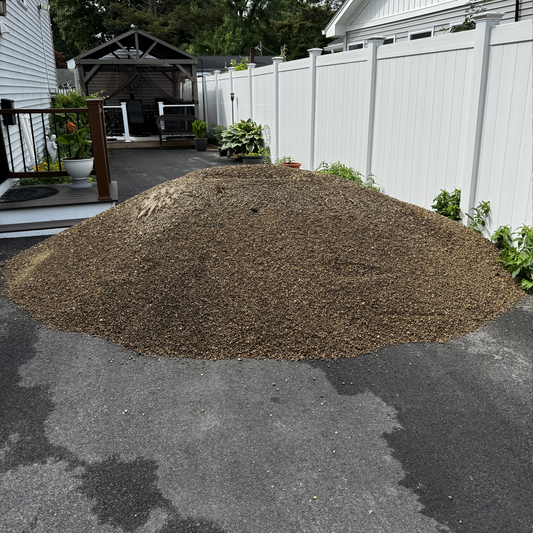
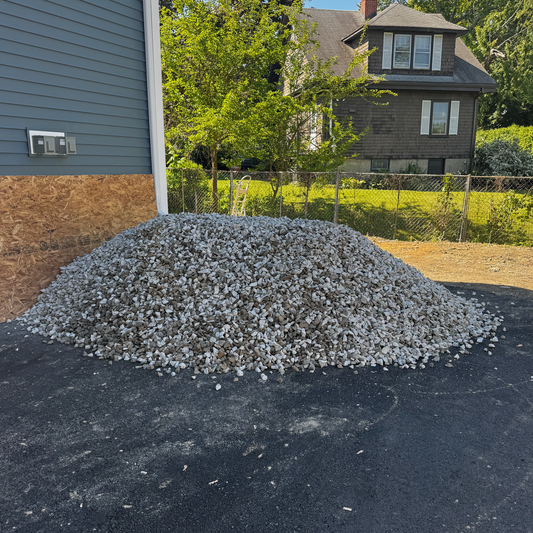
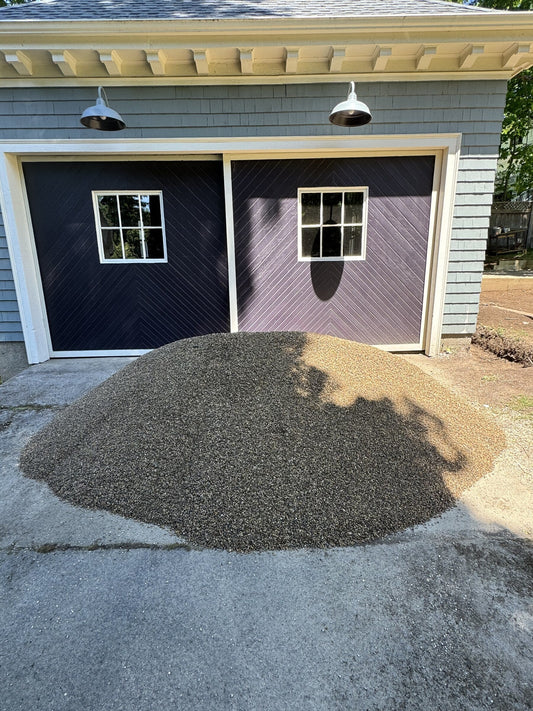
It wasn't. So the week before, we ran 6 cubic yards of #610 Stone out to a driveway off the 495 side of town. That's the pile in the photo above — dense-graded crushed granite, dumped curbside on the apron, one truck, one trip.
Here's the whole job: what the material is, how the yardage was worked out, and what it cost delivered.
Why #610 and not something prettier
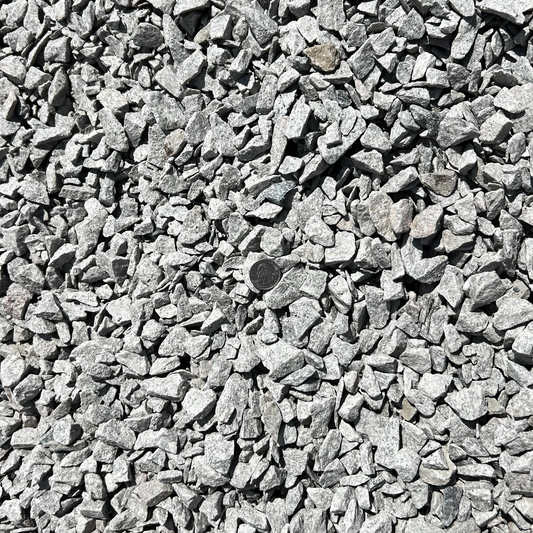
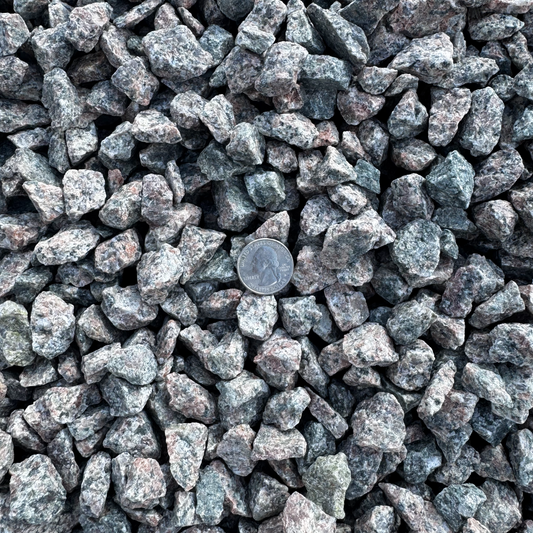
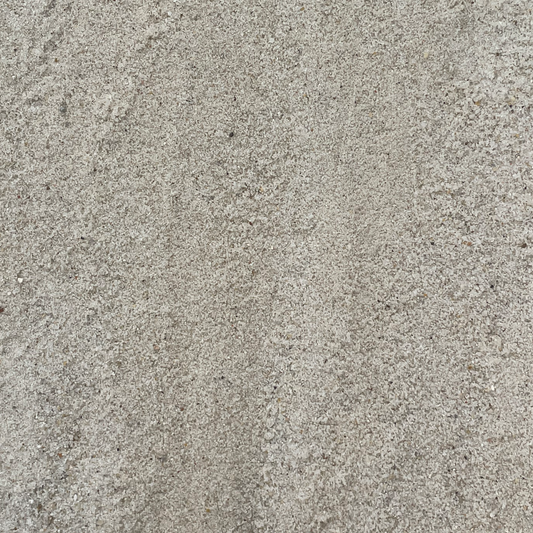
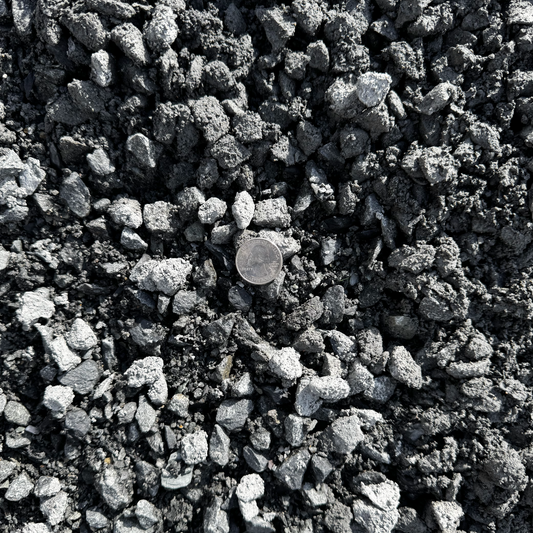
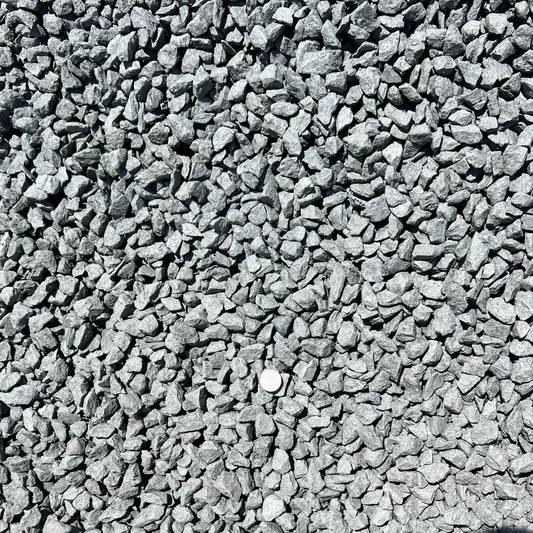
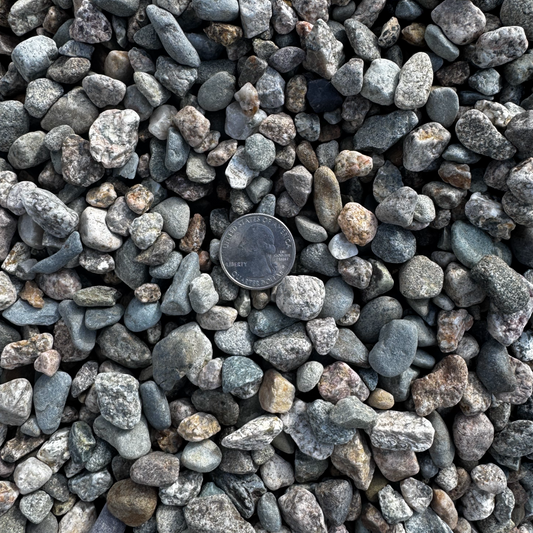
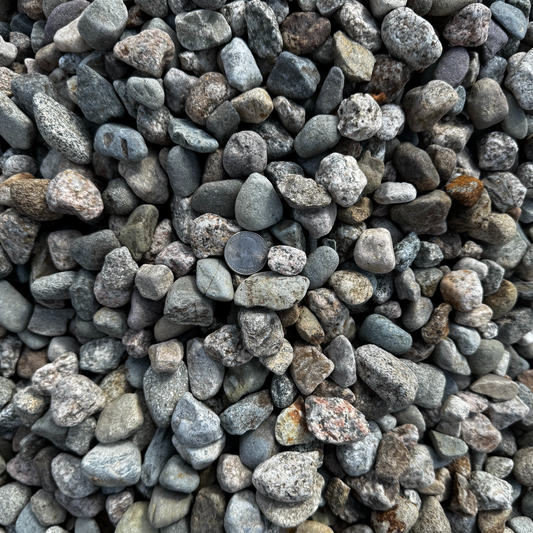
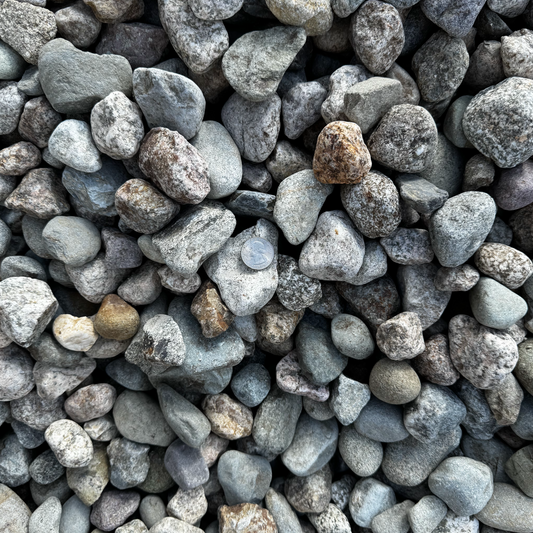
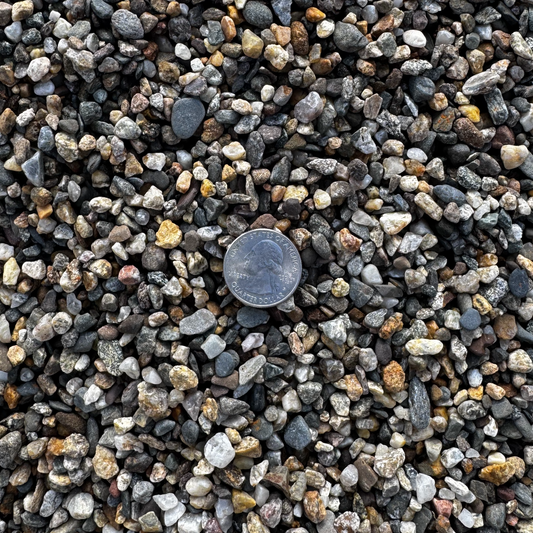
#610 Stone is dense-graded crushed granite — a continuous gradation from 1" down to stone dust. The angular pieces interlock, the fines fill the voids between them, and under a plate compactor the whole layer locks up into something you can walk a wheelbarrow across without leaving a track.
That is the entire point of a shed pad. A shed doesn't need a pretty surface; it needs a flat, firm, load-bearing mat that won't settle unevenly under well over a thousand pounds of building, plus everything that ends up inside it. Dense-graded base is the material engineered for exactly that job. It's the spec contractors call out as Mass DOT M1.03.1 / AASHTO M147, the same base that goes under driveways and segmental retaining walls.
If you've seen it sold under another name, you've probably seen all of them: 610, crusher run, dense grade, DGA, processed gravel, road base. We also list the identical material under its residential name, Dense Pack ¾" to minus — same stone, two ways to ask for it.
The yardage math for an 8×10 shed pad
The pad should be bigger than the shed. Twelve inches of stone past the footprint on every side means rain coming off the roof edge lands on gravel instead of chewing a trench into the lawn and splashing dirt up the siding.
So an 8' × 10' shed gets a 10' × 12' pad — 120 square feet.
Depth was 6 inches compacted. That's the number we'd give anyone in eastern Massachusetts for a shed on ordinary soil: 4 inches is the bare minimum for a small garden shed, 6 inches is right for a real storage building, and 8 inches is for anything you'll drive a mower or an ATV into.
From there it's one formula, the same one for every bulk material we sell:
cubic yards = (square feet × depth in inches) ÷ 324
120 sq ft × 6" ÷ 324 = 2.2 cubic yards — and that's the finished, compacted volume. Dense-graded base loses roughly a fifth of its bulk when you compact it, so you order about 20–25% more than the finished number. Call it 3 yards for the pad.
What a cubic yard of #610 covers
| Compacted depth | Coverage per cubic yard |
|---|---|
| 2" | ~160 sq ft |
| 3" | ~108 sq ft |
| 4" (walkway / light pad) | ~80 sq ft |
| 6" (shed pad) | ~54 sq ft |
Why the order was 6 yards, not 3
Because the delivery fee is charged per load, not per yard, and our dump truck carries up to 6 cubic yards of stone per trip. Three yards and six yards cost the same to deliver. Once you've got a truck coming, the marginal cost of the extra material is just the material.
So the order got padded out with the two things that always come up on this kind of job:
- 3 yards — the 10×12 shed pad at 6" compacted
- 2 yards — a 3'-wide, 45'-long gravel path from the driveway to the shed door at 4" deep, so the mower and the wheelbarrow stop rutting the lawn
- 1 yard — leveling a low spot by the gate and topping the pad edges after compaction
That is the honest reason most of our shed-pad orders come in around 5 or 6 yards rather than 3. The second delivery is the expensive part, not the second yard.
How it was built
- Strip the topsoil. Dig out 6–8 inches, all the way down past the organic layer. Base stone laid on top of sod will settle, no matter how well it's compacted, because the sod underneath it rots.
- Grade the subgrade to drain. A slight fall away from the shed, toward daylight. Water that gets under the pad has to have somewhere to go.
- Lay geotextile fabric if the subgrade is soft or clayey. It stops the fines from pumping down into the soil and the soil from working up into the base. Cheap insurance; skip it only on sandy, firm ground.
- Fill in 2–3" lifts, compacting each one. This is the step people skip and it's the step that matters. Six inches dumped and compacted once is not a 6-inch base — it's a firm crust over loose stone. Two or three passes with a rented plate compactor per lift, misting lightly with a hose if the material is bone dry.
- Screed it flat and check it in both directions. Most shed manufacturers want the pad level within an inch or two across its whole length. A long straightedge and a level beat eyeballing it.
Six yards is about nine tons. #610 weighs roughly 2,800–3,000 lbs per cubic yard — heavier than clean stone because of the fines. A full 6-yard load is somewhere near 8.4 to 9 tons before you add the truck.
That number decides two things: you're not picking this up in a pickup, and you should think about where the pile goes before the truck arrives. Moving 6 yards by hand is roughly 54 wheelbarrow trips. The pad alone is about 27. Plan the shortest route you can and start early in the day.
What it cost, delivered to Bellingham
| Line | Amount |
|---|---|
| #610 Stone — 6 cubic yards @ $76.00/yd | $456.00 |
| Delivery — 1 load to Bellingham, MA (02019) | $152.00 |
| Subtotal before tax | $608.00 |
Bellingham sits out past Franklin on the western edge of Norfolk County, beyond our 30-mile flat-rate zone. Delivery is $100 per load within 30 miles of the Dorchester yard and $4 per mile after that, which puts Bellingham at $152 a load. Enter your ZIP at checkout and the exact figure is calculated for you. Massachusetts sales tax applies to the material, not the delivery.
For comparison: a cubic yard is 27 cubic feet, so 6 yards is 162 cubic feet — roughly 324 half-cubic-foot bags of stone from a big-box store, hauled a few hundred pounds at a time. The math stops being close very quickly.
Frequently asked questions
What kind of gravel goes under a shed?
Dense-graded crushed stone — #610, crusher run, or dense pack. You want a material with fines in it, because the fines are what let it compact into a solid mat. Clean, single-size stone drains beautifully but never locks up, so it stays loose underfoot.
How thick should a shed gravel pad be?
Four inches compacted is the minimum for a small garden shed on firm ground. Six inches is the sensible default for an 8×10 or larger storage building. Go to eight inches if you'll be driving a mower, ATV, or trailer onto it. Always compact in 2–3" lifts.
How many yards of #610 do I need for a shed pad?
Take the pad area — the shed footprint plus a foot on every side — and run (sq ft × depth in inches) ÷ 324, then add about 20% for compaction. A 10×12 pad at 6 inches works out to roughly 3 cubic yards ordered. Our material calculator does it for you.
My shed company specified clean ¾" stone. Is #610 wrong?
Not wrong — different. Some manufacturers spec clean stone inside a timber frame, because clean stone needs no compaction and the frame holds it in place. #610 is the choice when you want a compacted pad that holds its own shape without a frame, and it's the more common approach for a pad that has to stay dead level under a heavy building. If your shed company hands you a written spec, follow it; if they just said "gravel pad," this is the gravel they mean.
Does the pad need to go below the frost line?
No. A gravel pad is a floating foundation — it moves with the ground rather than resisting it, which is exactly why it works for a shed. What keeps it stable through a Massachusetts winter is getting the organics out, grading the subgrade so water drains away instead of pooling under the shed, and compacting properly. Frost-depth footings are for structures that can't move at all.
Do I need a permit for a shed in Bellingham?
Massachusetts building code generally exempts small one-story detached accessory structures from a building permit, but the threshold and the zoning setbacks vary by town. Check with the Bellingham Building Department before you decide where the pad goes — moving a shed is easy, moving a compacted gravel pad is not.
Do you deliver #610 to Bellingham?
Yes — same-day and next-day bulk delivery, no minimum order. We run the same route through Franklin, Medway, Millis, Norfolk and Wrentham.
Planning a shed pad this season?
Late summer and early fall are the easiest time of year to do this work in Greater Boston — the ground is dry, compaction goes quickly, and delivery slots are wide open compared to the spring rush.
Run your numbers on the material calculator, then order #610 Stone by the cubic yard. If you're in town, see everything we deliver to Bellingham, or browse our full range as a Bellingham gravel supplier. Delivery details and per-load pricing are on our delivery page.
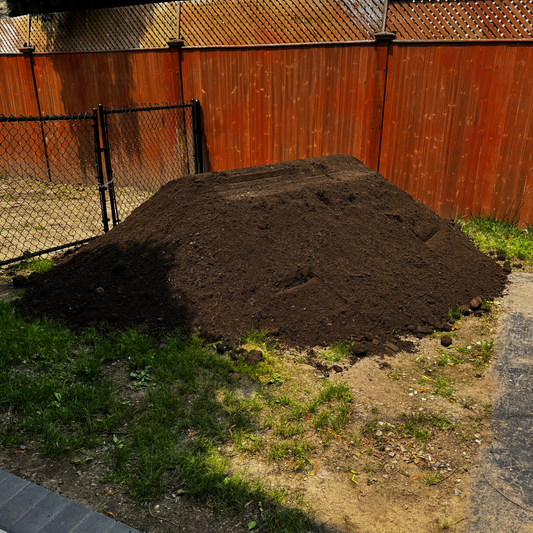
Working with soil rather than base stone? Our 6-yard screened loam delivery in Cohasset covers rebuilding an eroded slope and what belongs behind a retaining wall. At the other end of the scale, our one-yard pea stone delivery in Milford shows why decorative pea gravel belongs around pavers and never underneath them. And if it's a lawn regrade rather than a base or a wall, our 6-yard loam regrade in Hanson covers leveling a backyard before fall seeding.