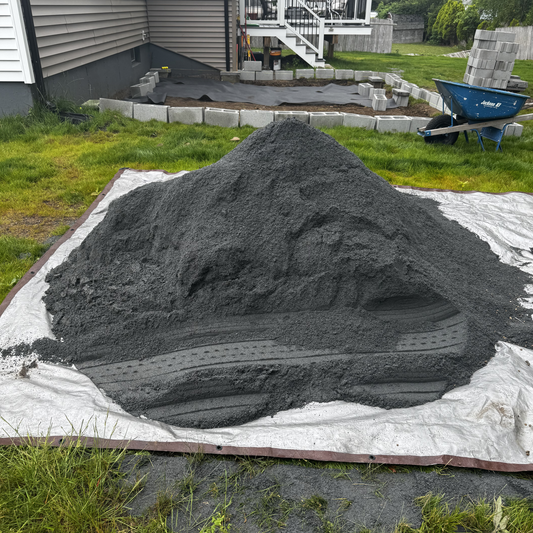
A backyard in Hanson, MA had gone lumpy over the years — a low spot by the patio that pooled after every storm, a shallow dip along the back fence line, and a lawn that never quite recovered from where a tree came out a few seasons back. Before reseeding this fall, the ground needed to be true again.
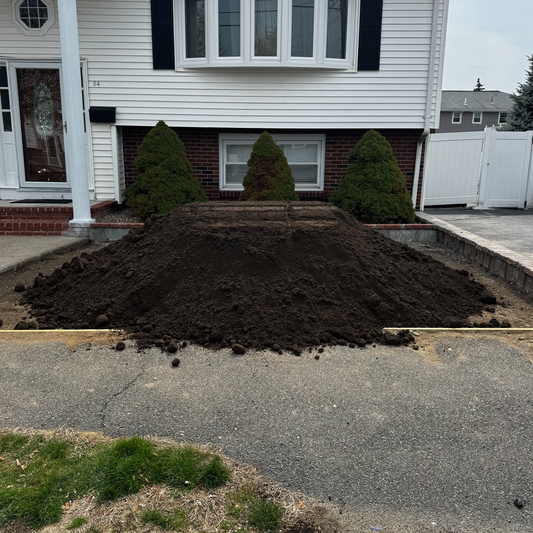
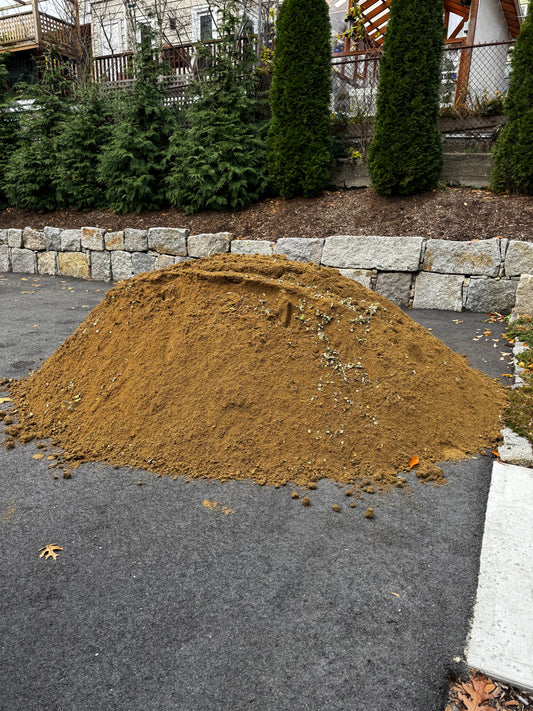
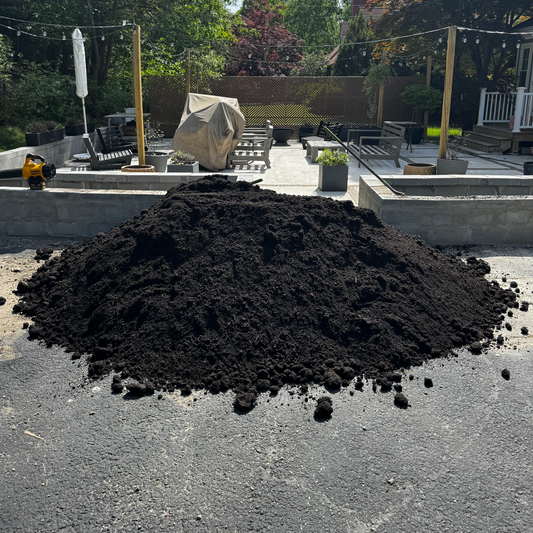
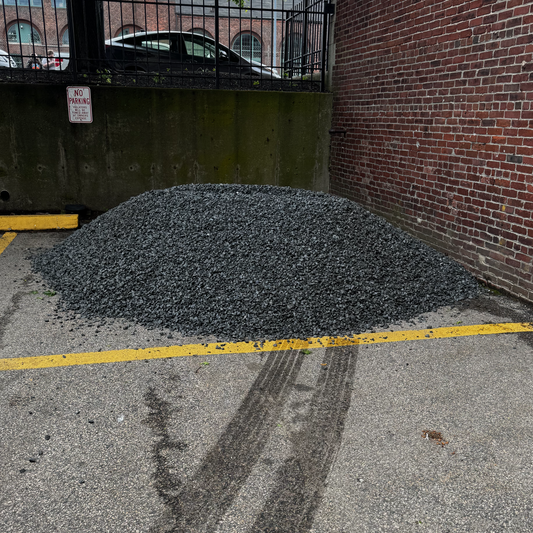
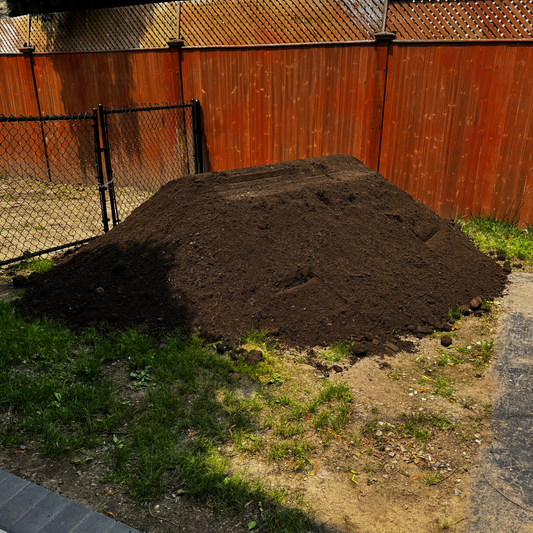
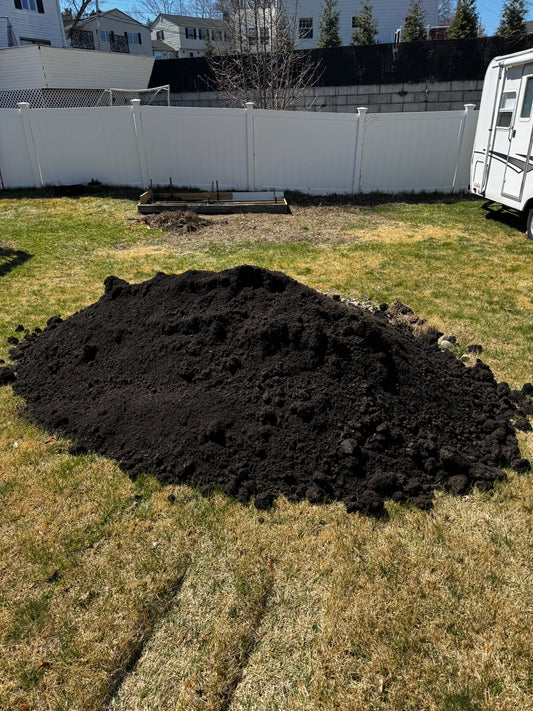
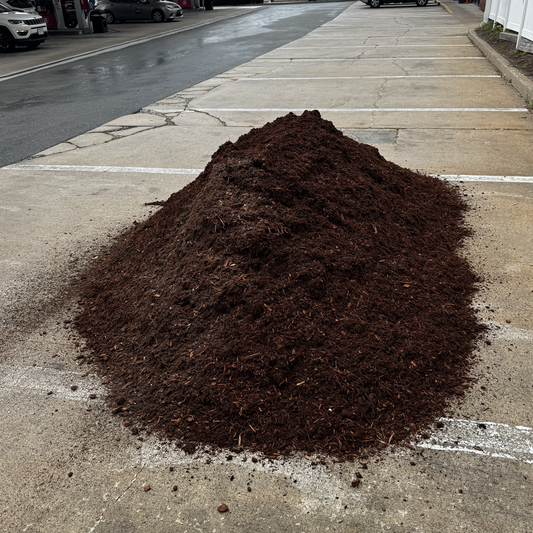
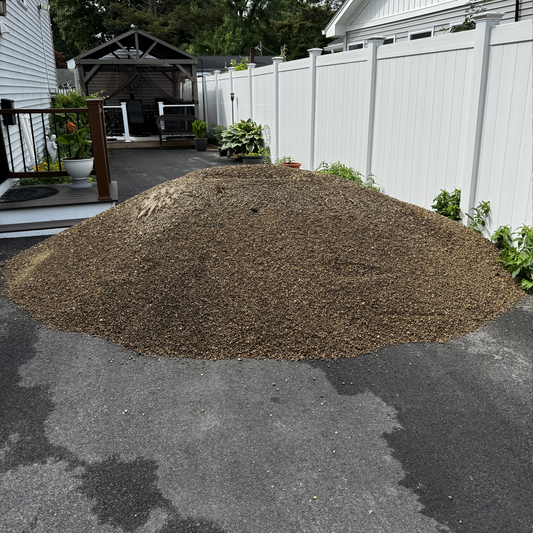
So we ran 6 cubic yards of Screened Loam out to the driveway apron — that's the pile in the photo above, dumped and ready to spread before the truck pulled out. One load, one trip, enough to regrade the low ground and skim-coat the rest of the lawn before seed goes down.
Here's how the yardage was worked out, what belongs under a regrade like this, and what it cost delivered.
Why loam, not fill dirt
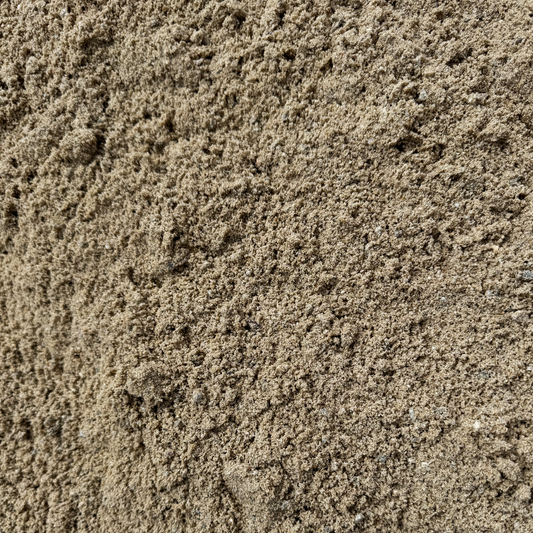
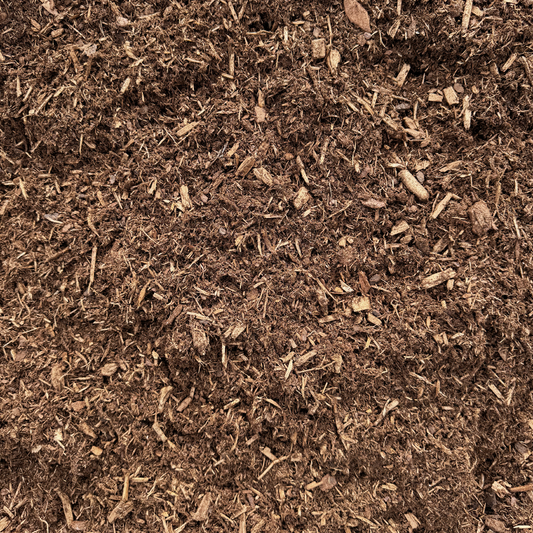
Screened Loam is topsoil that's been run through a ½" screen to pull out rocks, roots and clumps, leaving a workable blend of sand, silt and organic matter — the mix a lawn actually grows in. That's what makes it the right material for a regrade that's about to get seeded: it's the finish layer, not the fill.
Fill Dirt solves a different problem — moving a lot of earth cheaply to raise a grade by a foot or more. It isn't screened and isn't consistent, and grass struggles to root in it. The rule we give homeowners: fill dirt does the bulk work below about a foot of elevation change, and loam caps it with 4–6 inches of soil seed can actually grow in. On a job like this one, where the low spots were only a few inches down, there was no bulk fill to do — it's loam the whole way, spread directly over the graded ground.
The yardage math for a backyard regrade
The first move on any regrade is deciding what's actually low. We walked the yard with a screed board and marked two kinds of ground: spots that were genuinely sunken, and the rest of the lawn, which just needed a light skim to true up the surface before overseeding.
Same formula we use for every bulk material we sell:
cubic yards = (square feet × depth in inches) ÷ 324
The split for this job
- 4 yards — regrading roughly 430 sq ft of sunken ground along the back fence and around an old patio slab, averaging 3 inches deep, to bring it level with the surrounding lawn
- 2 yards — topdressing the remaining roughly 1,200 sq ft of lawn at about ½ inch, just enough to true up the whole grade and give new seed a level, even bed
430 sq ft × 3" ÷ 324 = 3.98 cubic yards, rounded up to 4. The topdressing pass: 1,200 sq ft × 0.5" ÷ 324 = 1.85 cubic yards, rounded up to 2. Six yards, one load.
What a cubic yard of loam covers
| Depth | Coverage per cubic yard |
|---|---|
| 1" (light topdress) | ~324 sq ft |
| 2" | ~162 sq ft |
| 3" | ~100 sq ft |
| 4" (regrade fill) | ~80 sq ft |
Why order 6 yards instead of 4
Delivery is priced per load, not per yard, and our dump truck carries up to 6 cubic yards of soil per trip. Four yards and six yards cost exactly the same to get here. Once the truck is already coming, the smart move is to order enough to finish the whole yard in one pass rather than call for a second delivery to topdress the rest of the lawn later.
Don't bury the grass
The mistake that undoes a regrade: dumping loam straight over live turf without dealing with what's underneath first. Buried grass and thatch decompose under the new soil, the ground settles unevenly as it breaks down, and months later the "level" yard has the same low spots it started with — just under a fresh few inches of dirt.
Before the loam went down here, the sunken spots were scalped to bare dirt: mow the area low, rake out dead grass and thatch down to soil, and scarify the surface with a rake so the new loam bonds to the ground instead of sitting on top of it like a shim. Only then does the loam go on, raked smooth and lightly firmed — not compacted hard, just settled enough that it won't wash out in the first rain.
For the wider skim-coat areas over existing lawn, a thin ½" layer can go straight over mowed-short grass and be worked in with the back of a rake or a drag mat, because it's thin enough to filter down between the blades instead of smothering them.
Six yards of loam is roughly 6 to 7 tons. Screened loam runs about 2,000–2,400 lbs per cubic yard — lighter than sand or stone, but still not something you're moving in a pickup bed.
Spread by wheelbarrow, that's about 40 loads. Stage the pile close to the work and plan the route before the truck leaves — a shorter carry is the difference between an afternoon job and a weekend one.
What it cost, delivered to Hanson
| Line | Amount |
|---|---|
| Loam (Screened) — 6 cubic yards @ $55.00/yd | $330.00 |
| Delivery — 1 load to Hanson, MA (02341) | $100.00 |
| Subtotal before tax | $430.00 |
Hanson sits inside our 30-mile flat-rate zone, so delivery is a flat $100 per load — no mileage added. Enter your ZIP at checkout and the exact figure is confirmed before you pay. Massachusetts sales tax applies to the material, not the delivery.
For comparison: a cubic yard is 27 cubic feet, so 6 yards is 162 cubic feet — something like 84 two-cubic-foot bags from a big-box store, carried out a few at a time.
When to regrade before fall seeding
Late August through mid-September is the window to regrade a Massachusetts lawn before seeding. The soil is workable, days are still warm enough for loam to settle and firm up, and grass seed put down by mid-September has time to root before the ground goes dormant. Regrade first, seed second — doing both at once just means walking new seedlings into the mud while you're still hauling wheelbarrows.
Hanson, Plymouth County
Hanson sits in Plymouth County, cranberry country — Ocean Spray got its start here in 1930, when three growers founded the cooperative, then called Cranberry Canners, to can and market fruit from the bogs that still ring the town. It's a reminder of how long this soil has been worked; a backyard regrade is a small version of the same thing people here have been doing to this ground for generations.
Frequently asked questions
How much loam do I need to regrade a backyard?
Measure the low spots separately from the areas that just need a light topdress, then run (square feet × depth in inches) ÷ 324 for each and add them together. A typical backyard regrade — a few hundred square feet of real low ground plus a skim coat over the rest of the lawn — lands around 5 to 6 cubic yards. Our material calculator does the math for you.
Can you put loam over grass to level a yard?
Only for a thin skim coat, about ½ inch or less, worked in with a rake so it filters down to the soil instead of smothering the grass. Anywhere the ground is genuinely low, scalp the grass down to bare dirt first — burying live turf under a few inches of loam traps organic matter that decomposes and causes the new fill to settle unevenly.
What's the difference between loam and fill dirt for grading?
Fill dirt is unscreened bulk earth for raising a grade by a foot or more where nothing will be planted right away. Loam is screened topsoil for the finish layer — the top 4 to 6 inches wherever grass, garden beds, or seed are going down. For small regrades like this one, where the low spots are only a few inches deep, loam alone does the whole job.
How much does loam delivery cost in Hanson, MA?
Hanson is inside our 30-mile flat-rate zone, so delivery is a flat $100 per load regardless of how many of the 6 yards per load you order. Enter your ZIP at checkout to confirm.
When's the best time to regrade a lawn before seeding in Massachusetts?
Late August into mid-September, so the graded soil has time to firm up and the new seed has roots down before the ground cools. Waiting past early October risks late germination that doesn't survive the first hard frost.
Do you deliver loam to Hanson, MA?
Yes — same-day and next-day bulk delivery, no minimum order. We run the same route through Whitman, Halifax, Pembroke and East Bridgewater.
Regrading before fall seeding?
Run your numbers on the material calculator, then order Screened Loam by the cubic yard. If you're in town, see everything we deliver to Hanson, or browse our full range as a Hanson gravel supplier. Delivery details and per-load pricing are on our delivery page.
Backfilling behind a retaining wall instead of leveling a lawn? Our 6-yard screened loam delivery in Cohasset covers what belongs against a wall and what doesn't. Working with base stone or decorative gravel instead? See the #610 shed pad in Bellingham and the pea stone walkway in Milford.