Quick Answer
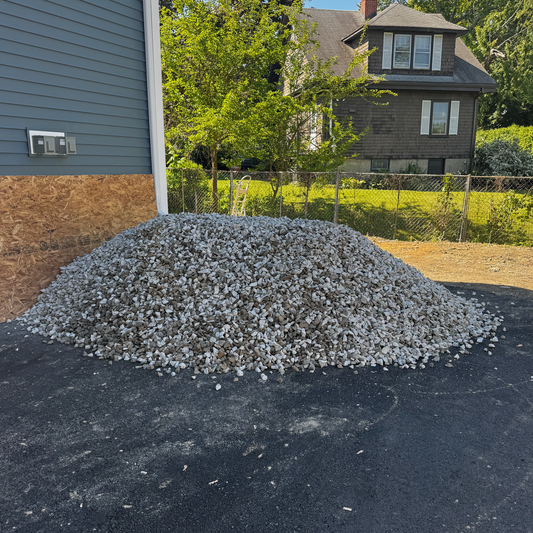
A typical Roslindale driveway (one-car: 400–600 sq ft; two-car: 600–900 sq ft) needs 0.5 to 1.0 cubic yard of rock salt or salt-sand for a full winter season — roughly 18–25 application events in a normal Roslindale year. Apply at 2–4 oz per square foot per event (about a coffee-cup full per 25 sq ft). For a 700 sq ft Roslindale two-car driveway, that's 0.7 cubic yards of bulk product, ordered before November 25 to lock pre-storm pricing.
Why Roslindale Driveways Are Different
Roslindale sits on hillsides — Bellevue Hill, Mount Hope, the Roslindale Square slopes. The grade adds two driveway-specific challenges: water and meltwater run downhill onto the apron (creating ice patches at the curb edge), and shaded driveways on north-facing slopes stay icy days longer than sunny driveways. Both push application rates up versus a flat Cambridge or Brookline driveway.
For broader pre-order strategy, see How to Pre-Order Bulk Rock Salt for a Plymouth County Property and Bulk Rock Salt vs Bagged for Hyde Park Homes.
Q: What's the application rate for rock salt on a residential driveway?
A: 2–4 ounces per square foot per application event. That's roughly a coffee-cup-full per 25 sq ft of driveway. A typical Roslindale 700 sq ft two-car driveway uses 3.5–7 lbs of salt per application — call it 5 lbs per event.
A standard winter sees 18–25 application events in Roslindale (storms + freezing-rain events + post-storm refreezes). That math gives you:
- 5 lbs × 22 events = 110 lbs per season
- A cubic yard of rock salt weighs ~2,200 lbs
- 0.05 cubic yards is the minimum — but most homeowners want headroom
The reason most homeowners order 0.5–1.0 cubic yards: walks, steps, the curb cut, and over-application on icy mornings. The driveway alone uses 110 lbs; the rest of the property uses an equal amount.
Q: How do I measure my driveway's square footage?
A: Length × width, rounded up. Most Roslindale driveways are 18–22 feet long × 9–10 feet wide for one-car, and the same length × 18–20 feet for two-car. Measure at the widest point and multiply by length. Round up — extra 50 sq ft of allowance is fine.
For full sizing math, see How to Calculate Salt-Sand for a Dorchester December Driveway — same logic for Roslindale.
Q: Should I use Untreated Rock Salt or Treated Rock Salt?
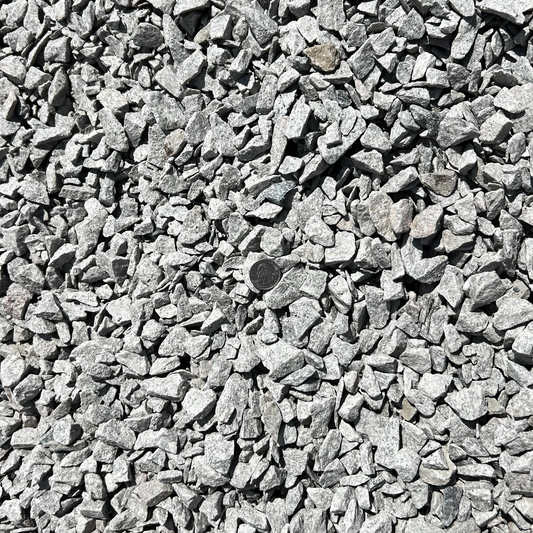
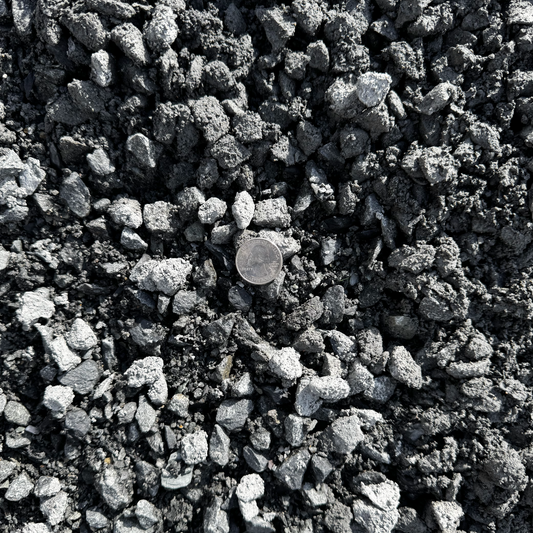
A: Depends on overnight lows. Untreated sodium chloride works down to about 15°F. Below that, the melt rate slows dramatically and the salt is mostly inert until temps rise. Treated rock salt — pre-blended with calcium-chloride brine — works down to 0°F and faster at any temperature.
For a typical Roslindale winter (overnight lows mostly in the 15–25°F range), Untreated is fine. For shaded north-facing driveways, very steep grades, or overnight commitments below 10°F, Treated is worth the 30% premium.
Q: What's the difference between rock salt and salt-sand?
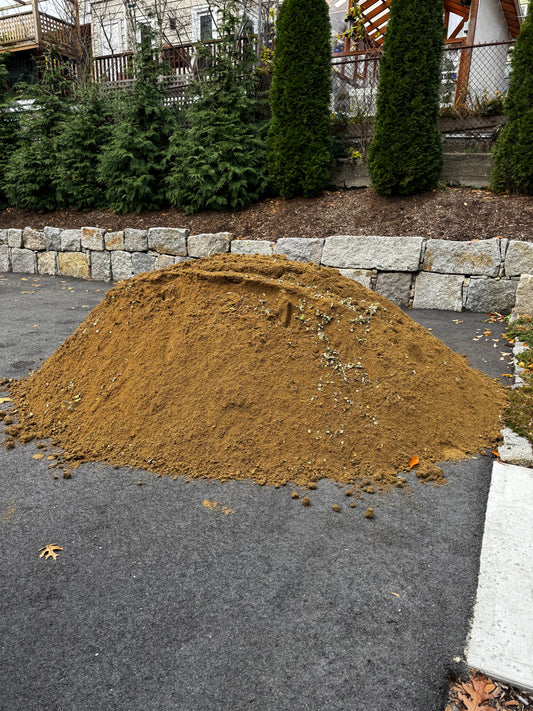
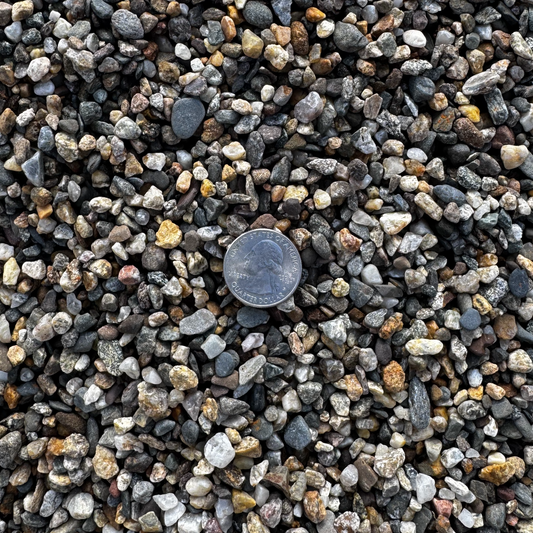
A: Salt melts; sand provides traction. Rock salt is sodium chloride only — fast melting, but slippery for cars and pets walking on it before melt completes. Salt-sand blends include sand for grip during the 5–15 minute window before salt fully activates.
- Salt & Sand 50/50 — half salt, half sand. Heavy melt + heavy traction. Best for shaded Roslindale driveways that ice and stay icy.
- Salt & Sand 20/80 — 20% salt, 80% sand. Mostly traction. Best for the lawn-adjacent strip and steps where you want to protect concrete and grass.
For Roslindale steep-driveway use, the 50/50 blend is often the right call for the central drive, with 20/80 at the lawn edge.
Q: How much should I apply per storm?
A: Pre-storm dust + post-plow application. The most effective Roslindale driveway protocol:
- 2 hours before snowfall: Light dusting (~1 oz per sq ft) of salt or salt-sand on the driveway. This prevents bonding of snow to asphalt.
- After plow: Apply 2–3 oz per sq ft on cleared driveway. Walk and steps get a heavier dose (3–4 oz per sq ft).
- Refreeze events: 2 oz per sq ft, focused on the bottom-of-driveway curb-edge ice.
Don't dump piles. Spread evenly with a hand spreader or scoop. Pile concentrations damage concrete and don't melt faster than spread applications.
Q: What about the lawn edge — won't salt damage my grass?
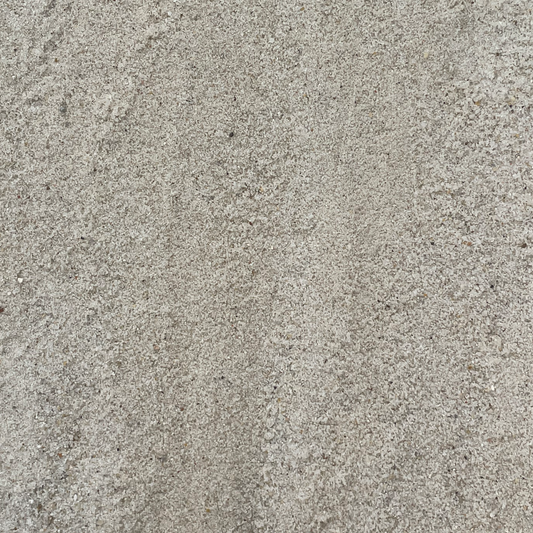
A: Yes, if you use rock salt at the curb edge. The fix is staging Salt & Sand 20/80 for the last 2 feet of driveway adjacent to the lawn, and mason sand alone for any spots actually touching the lawn or planting beds.
For full salt-damage logic, see Why Is My Bristol County Curb Edge Lawn Brown in January? and How to Diagnose Salt Damage on a Belmont Lawn.
Q: How do I store the bulk pile through the winter?
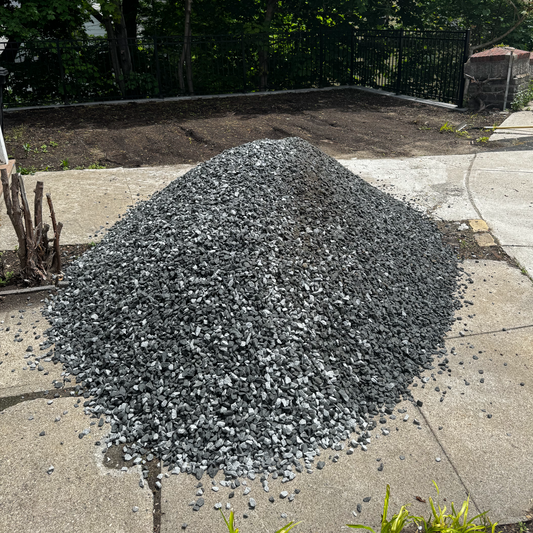
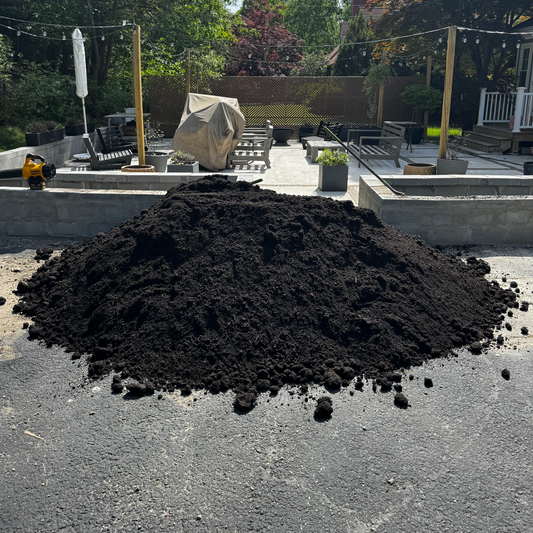
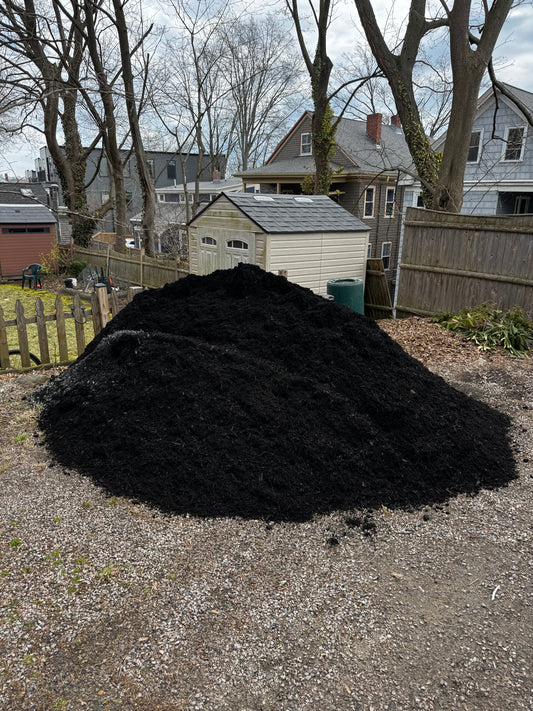
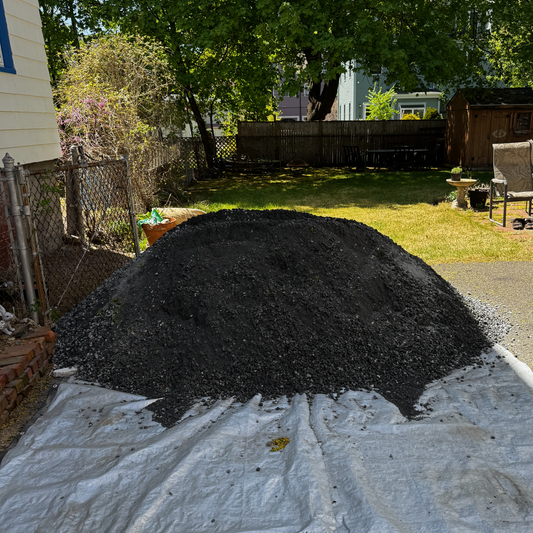
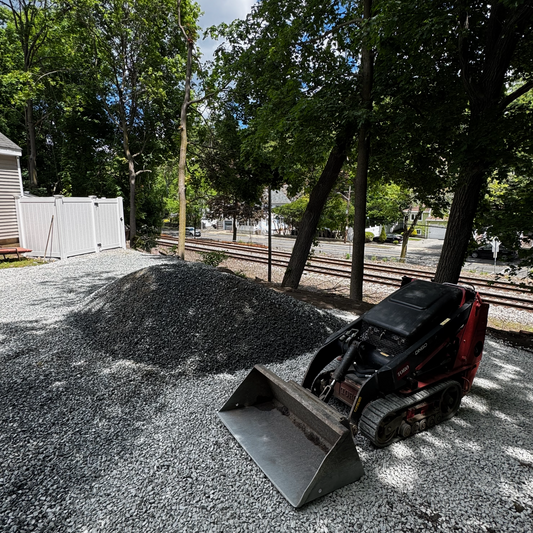
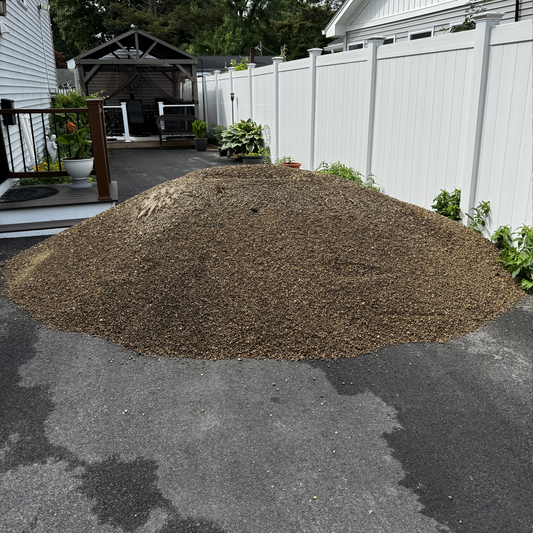
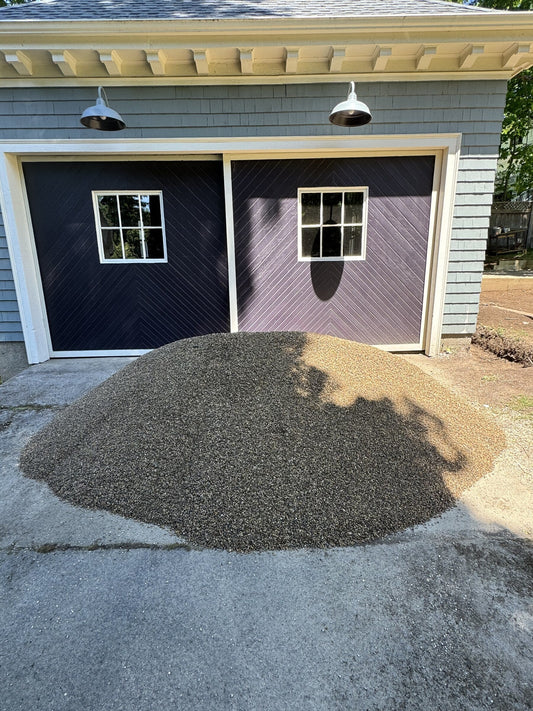
A: Tarp it or build a bin. A bulk pile dumped on the driveway works for 2–3 days. After that, exposure to rain and snow turns it into a bricked, clumped mass. Two options:
- Tarp — covers a 1-yard pile fine; keeps moisture out
- Lidded bin — for ½-yard or larger ongoing storage; see How to Build a Weatherproof Salt-Sand Bin for a Quincy Property.
Q: Can I just use bagged salt from a hardware store?
A: For under 2 cubic yards equivalent, the math works either way; for over that, bulk wins by 30–50%. A 50 lb bag of bagged rock salt at Home Depot Hyde Park runs $9–$12. A cubic yard at Ottr ($X/yd contractor rate) is roughly 44 bag-equivalents at half the per-pound cost. For a typical Roslindale property using ~½ yard, bulk delivered is the win.
Q: When should I order?
A: November 18–25 for the best lead time and pricing. Once a Winter Storm Watch lands on the forecast (typically early December), lead times stretch to 7–10 days and pre-storm pricing creeps up.
Browse the Snow & Ice Management collection for current pricing. For Roslindale-specific delivery, see the Roslindale landscape supply collection.
Q: Are there Roslindale-specific environmental concerns?
A: Yes — runoff to the Stony Brook system. Roslindale's stormwater drains toward the Stony Brook and ultimately into the Charles River watershed. Over-applying chloride in the Bellevue Hill / Mount Hope corridor contributes to the well-documented chloride problem in the Charles. The fix: apply at 2–4 oz per sq ft, not 6+ oz, and use Salt & Sand 20/80 at lawn edges and walks where chloride load reduction matters most.
The EPA Smart Salting program maintains the authoritative residential salt-reduction guidance.
The short version: a Roslindale two-car driveway needs 0.7 cubic yards of bulk product per winter season. Pre-order by November 25. Use Untreated for the central drive, Salt & Sand 20/80 at the lawn edge, and mason sand alone where you need traction without chemistry.