Quick Answer
A brown stripe along the curb-edge lawn in January means salt damage. Plow-pushed salt slush concentrates chloride 6-18 inches in from the curb or driveway. Salt draws moisture out of grass roots, causing osmotic stress that turns blades brown by mid-winter. Light damage recovers in May; heavy damage needs reseeding in April. The fix this winter: rinse the lawn during the next thaw window. The fix next winter: switch lawn-adjacent strips to salt-sand 20/80 (one-fifth the chloride load).
Why Bristol County Yards See This Pattern
Bristol County - Fall River, New Bedford, Taunton, Attleboro, Norton, and the surrounding towns - sees the standard MA curb-edge salt damage pattern with one local twist: coastal humidity in Fall River and New Bedford slows the snow-melt cycle, so salt sits at the curb edge longer than in inland Plymouth or Norfolk County yards. That extends the chloride-exposure window by 1-2 weeks per storm.
Below: the eight questions Bristol County homeowners ask Ottr's team most often when they spot a brown stripe in late January.
Q: Why is my curb-edge lawn brown in January?
A: Salt damage. Plow-pushed salt slush concentrates chloride at the lawn edge over multiple storms. Salt draws moisture out of grass roots through osmotic stress - the roots can't pull water out of soil that has elevated sodium and chloride content. Blades brown out at the surface; in heavy exposure, the crown (growth point at soil line) follows.
It looks like winter dieback at first glance, but the sharp linear pattern parallel to the curb or driveway is the giveaway. Winter dieback is patchy; salt damage runs in a stripe.
Q: How wide is the typical damage band?
A: 6 to 18 inches in from the curb or driveway edge. On heavily salted streets, the band reaches 24-36 inches. Bristol County streets that get municipal pre-treatment plus sidewalk salting can show damage out to 30+ inches in older established lawns where the soil holds chloride longer.
Q: Will it come back on its own?
A: Light damage yes; heavy damage no.
- Light stripe (blades yellow but green at the soil line): usually recovers by mid-May with normal spring growth. Spring rains flush chloride out of the root zone.
- Heavy stripe (bare or straw-brown to the soil): needs reseeding in April after temps stabilize.
The diagnostic test: pull a small handful of grass blades. If the crown at the soil line is still green and firm, it'll come back. If the crown pulls free with no resistance and is brown, you need to reseed.
Q: Can I rinse the salt out before it does damage?
A: Yes, during a winter thaw. When daytime highs hit 40 degrees F+ and snow at the curb starts melting on its own:
- Take a hose to the curb-edge lawn.
- Wash the salt-laden meltwater away from the grass (toward the street, not into the lawn).
- Aim for 5-10 minutes per affected strip.
This is the single most effective intervention available - and it's free. Skip if ground is still frozen below 2 inches; water needs to drain, not pool. For broader application logic, see How to Diagnose Salt Damage on a Belmont Lawn.
Q: What if my contractor uses rock salt right at the curb?
A: Ask them to switch to salt-sand 20/80 in the lawn-adjacent strip. One-fifth the chloride load, full traction. Most plow operators apply uniform rates across an entire driveway; switching the last 18-24 inches before the lawn to a sand-heavy blend protects the curb-edge turf without sacrificing safety.
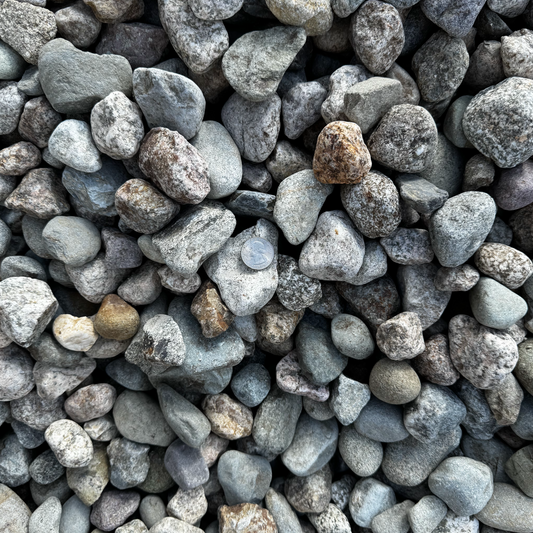
For the blend math, see What's the Right Salt-to-Sand Ratio for Driveways?. Bulk salt-sand 20/80 from Ottr is in the Snow & Ice Management collection.
Q: Will gypsum or pelletized lime fix it?
A: Calcium-based amendments help displace sodium. Apply 25-50 pounds gypsum per 1,000 sq ft to the damage band in early April. Calcium ions displace sodium from soil exchange sites, allowing the chloride to flush out with rain.
This isn't a substitute for reseeding heavily damaged spots - dead grass doesn't regrow from amendment. But for light-to-moderate damage, gypsum + spring rain often gets you a recovered stripe by Memorial Day.
Q: What seed should I use for the reseed?
A: A salt-tolerant Kentucky bluegrass / fine fescue mix with 30-40% tall fescue. Tall fescue is the most salt-tolerant cool-season turf available. Blend it into the standard MA reseed mix for the curb-edge zone:
- 30-40% tall fescue (salt tolerance).
- 30-40% Kentucky bluegrass (recovery and color).
- 20-30% fine fescue (shade and low-input tolerance).
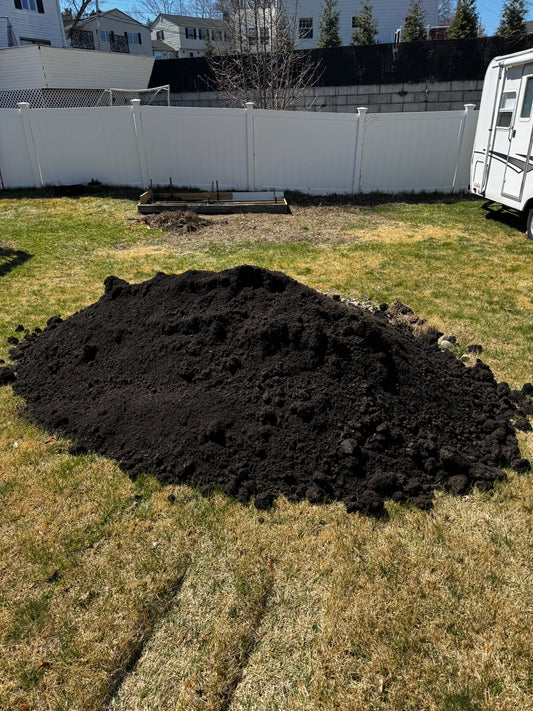
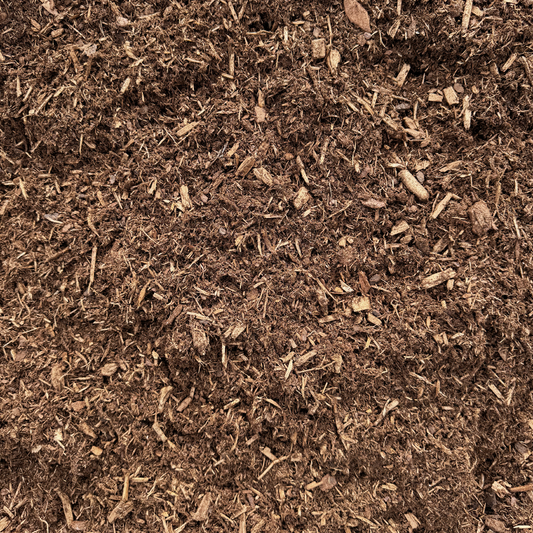
For broader lawn repair material guidance, browse Lawn Leveling & Repair collection for topsoil and amendments.
Q: When should I reseed?
A: April 15 to May 1, after temperatures stabilize and soil hits 50 degrees F at 4 inches.
Process:
- Rake out dead grass from the damage band.
- Top-dress with 1/4 inch compost or screened topsoil.
- Spread seed at recommended rate (about 4 pounds per 1,000 sq ft for the salt-tolerant blend).
- Lightly rake to ensure seed-to-soil contact.
- Water gently for two weeks - keep the surface moist, not soaked.
A second seeding window opens in September if April spots don't fully take.
Bristol County Curb-Edge Recovery Calendar
- December - January: Order salt-sand 20/80 for next-storm lawn-edge use.
- Mid-winter thaw: Hose the curb edge to flush salt.
- April 1-15: Inspect damage, mark spots, apply gypsum to light-damage stripes.
- April 15 - May 1: Reseed bare patches with salt-tolerant mix.
- September: Second seeding window for any spots that didn't take.
For broader Plymouth County context on the same pattern, see January Outlook for Marshfield Soil Conditions. For the 2026 follow-up on Somerville indoor seed starting - same January-into-February planning rhythm applies in Bristol County yards while you're managing curb-edge damage.
For broader turf damage and recovery guidance, the UMass Extension Turf Program is the authoritative MA source.