Quick Answer
A Suffolk County snow-removal crew running 30–80 residential and small-commercial accounts pre-orders 8–22 cubic yards of bulk salt and sand by November 24 to stage for the season. The right product mix: ~50% Untreated Rock Salt, ~25% Salt & Sand 50/50, ~15% Salt & Sand 20/80, ~10% Mason Sand. Stage at a primary yard with a re-fill plan for two December top-offs. Crews that pre-order in November lock pricing 5–10% under storm-watch rates and avoid the inventory crunch when the first major storm forecast lands.
Why November Pre-Order Wins for Suffolk Crews
Suffolk County — Boston, Chelsea, Revere, Winthrop — runs the densest residential snow-removal market in Massachusetts. 70+ accounts per crew is normal. The volume math works only if material is staged before the season starts. Crews that wait until December run into:
- 7–10 day lead times during storm-watch weeks
- 5–10% pricing premium on December delivery
- Stockouts on Treated Rock Salt during cold-snap weeks
- Lost route hours when material doesn't arrive in time
For the contractor-side November cleanup workflow, see November Crew Schedule for Newton Pre-Winter Calls and Final-Cleanup Pricing Sheet for Brookline Crews.
The Suffolk Crew Pre-Order Mix
A typical 50-account Suffolk County residential snow-removal crew uses roughly 12–18 cubic yards of bulk salt and sand across the full season (December through March). The breakdown:
Untreated Rock Salt — ~50% of total volume
The workhorse. Right call for the central driveway on most accounts. Effective to 15°F. Cheapest per yard.
Crew use: Spreader trucks for the bulk-driveway pass.
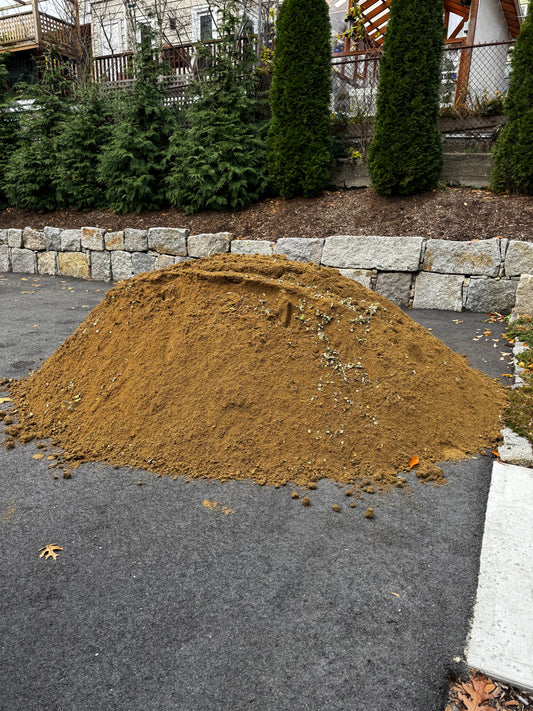
Salt & Sand 50/50 — ~25% of total volume
Heavy melt + heavy traction. Right call for shaded driveways, steep driveways, and the cold-snap weeks below 15°F.
Crew use: Spot-applied via shovel or hand spreader on accounts with grade or shade challenges.
Salt & Sand 20/80 — ~15% of total volume
Light salt, mostly sand. Right call for lawn-edge protection and old concrete/brick walkways.
Crew use: Hand-applied for the last 2–3 feet of driveway adjacent to lawn, plus brick walks and pre-1970 concrete.
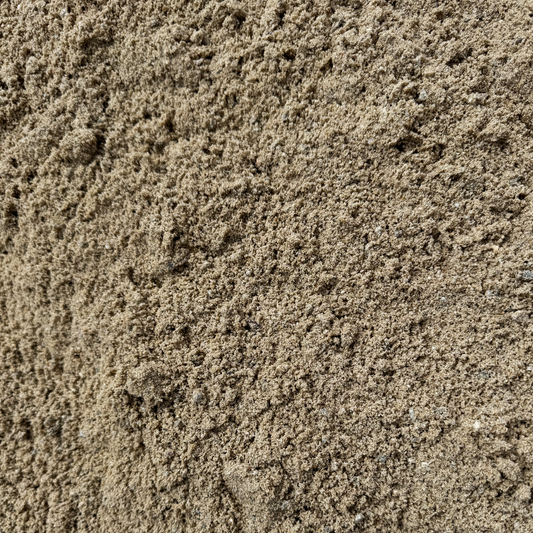
Mason Sand — ~10% of total volume
Pure traction, zero chloride. Right call for the strip directly against planting beds and any cement-sensitive surface.
Crew use: Hand-applied for premium accounts and lawn-protection-focused customers.
For per-product context, see How to Order Bulk Winter Sand for a Plymouth, MA Driveway.
Pre-Order Calendar — Suffolk County Crew
November 17–22: Calculate seasonal need based on prior-year usage + new accounts. Build a per-product yardage list.
November 22–24: Place pre-order with Ottr. Specify: - Cubic yards per blend - Delivery date (or staggered dates) - Drop location at the primary yard - Re-order trigger thresholds (e.g., "call for top-off when 50/50 hits ½ yard remaining")
November 25–30: Receive deliveries. Stage in covered bins by product type. Photograph for inventory baseline.
December 1–10: Final crew briefings. Pre-load spreaders. Stage de-icer at premium accounts.
December 15–20: First top-off after storm-1, if needed.
January–March: Top-off cadence based on storm count.
Bidding Math at Suffolk County Volume
A 50-account residential snow-removal crew running for 4 months of season:
- Material spend (15 yards average at contractor rate): $X (varies by mix)
- Per-account material allocation: ~0.3 yards × ~$X/yd = $X/account
- Account billing: $580–$1,200/season residential, $1,400–$3,800/season small commercial
- Material as % of revenue: 8–15% on residential, 12–18% on commercial
Crews that pre-order in November push the material-percentage line down 2–3 points by avoiding storm-watch premium pricing.
For pricing-sheet methodology, see Final-Cleanup Pricing Sheet for Brookline Crews — extend the same methodology into snow contracts.
Storage Setup at the Primary Yard
A Suffolk County crew yard handling 12–18 yards of seasonal volume needs:
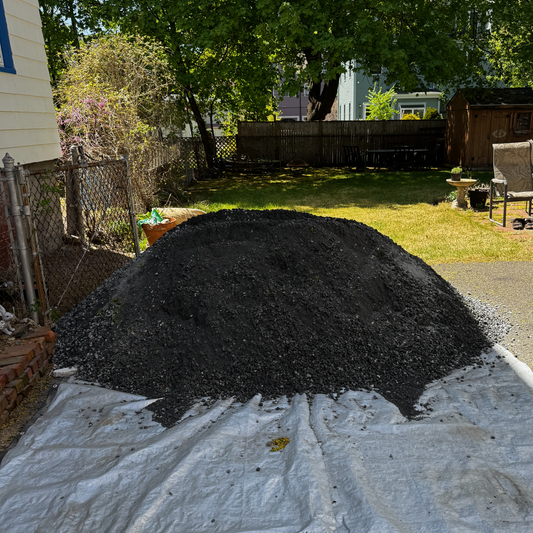
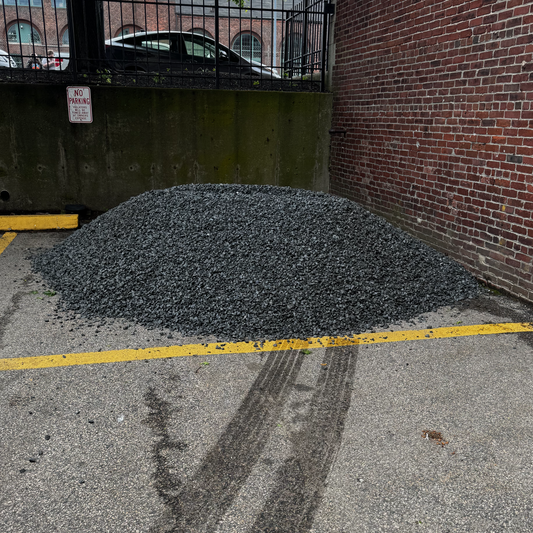
- Covered bay or barn — at minimum tarped piles on a paved or compacted surface
- Separate bins per product — don't mix Untreated, 50/50, 20/80
- Dust control — bulk salt creates fine particulate; respiratory PPE for crew handling
- Loader access — wheel loader or skid steer to fill spreaders
For DIY bin builds at scale, see How to Build a Weatherproof Salt-Sand Bin for a Quincy Property — scale up the design for crew yards.
Common Crew Pre-Order Mistakes
- Single-product over-ordering. Buying 15 yards of Untreated and trying to use it on every surface burns lawn edges and pits old concrete on premium accounts. Tier the order.
- Waiting on the forecast. "I'll order when the first storm shows up on the forecast" = 7-10 day lead times. Pre-order locks you in.
- Skipping Treated for cold-snap accounts. Crews running 24/7 commercial contracts (medical, retail) need Treated Rock Salt for sub-15°F nights. Pure Untreated underperforms.
- No storage plan. Bulk piles dumped on dirt without tarp brick within a week of November rain.
- Underestimating Mason Sand demand. Premium accounts (high-end residential, accounts with mature landscaping) want low-chloride options. Stock more 20/80 and Mason Sand than you think you need.
Suffolk-Specific Considerations
- Boston city ordinances require sidewalk clearing within set time windows. Treated salt's faster activation matters more here than in suburban MA.
- Beacon Hill and historic district properties push hard on low-chloride blends to protect brick and pre-1900 walks. Salt & Sand 20/80 demand on these accounts is double a typical Suffolk lot.
- Multi-unit residential (Brookline, Allston, Brighton three-deckers) often share driveways. Coordinate per-property allocation in advance.
For homeowner-side pre-order context that informs contractor conversations, see Top 5 Salt-Sand Pre-Order Strategies for Plymouth Properties and How Much Rock Salt Do I Need for a Roslindale Driveway This Winter?.
For Suffolk County-specific delivery scheduling and contractor pricing, see the Suffolk County landscape supply collection and the Snow & Ice Management collection.
The MA Department of Transportation winter operations resources maintain authoritative state salt application standards.