Quick Answer
The five highest-leverage salt-sand pre-order strategies for Plymouth, MA properties: (1) pre-book by November 25 to lock pricing and 3-5 day lead time, (2) order tiered blends — Untreated Rock Salt for the central drive, Salt & Sand 20/80 for lawn edges, (3) split bulk drops with a neighbor to clear delivery minimums, (4) build or buy a weatherproof storage bin so the pile doesn't brick up, and (5) schedule a December top-off after the first storm reveals your real usage rate. A typical Plymouth single-family runs 1.5–2 cubic yards across the season.
Why Pre-Order Strategy Matters in Plymouth
Plymouth's coastal exposure means wind-driven storms hit harder than inland MA and salt depletion runs faster on Plymouth driveways than on equivalent Wellesley or Lexington properties. The standard Plymouth winter sees 18–25 application events. Property owners who get the pre-order strategy right save $80–$200 per season versus those scrambling in December.
For broader pre-order procedure, see How to Pre-Order Bulk Rock Salt for a Plymouth County Property and How to Order Bulk Winter Sand for a Plymouth, MA Driveway.
1. Pre-Book by November 25 to Lock Pricing and Lead Time
Why it matters: Once a Winter Storm Watch lands on the 7-day forecast, every Plymouth property owner calls Ottr the same day. Lead times stretch from 3–5 days in November to 7–10 days in storm-watch weeks. Pre-storm pricing creeps up 5–10% versus November pre-order rates.
The move: Place your order between November 18 and 25. Specify cubic yards by blend, drop location, access constraints. Lock the date.
What you save: $40–$80 on pricing for a typical 2-yard order, plus the storm-stress avoidance.
For pricing-update context, see Pre-Winter Salt Pricing Update for Cohasset.
2. Order Tiered Blends for Different Surfaces
The biggest savings on a Plymouth property aren't from quantity — they're from using the right blend on the right surface.
The right tiered approach for a typical Plymouth property:
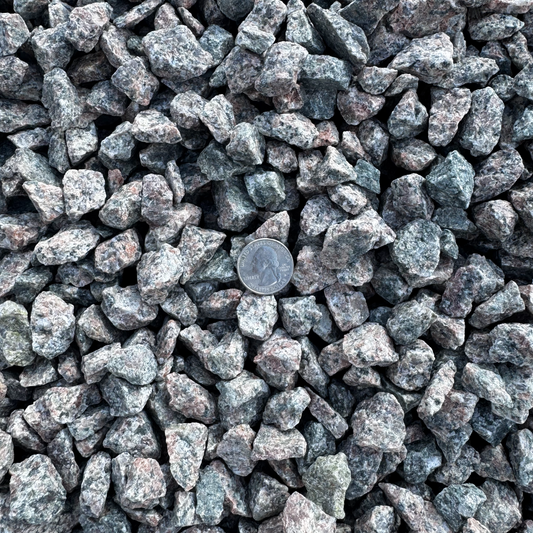
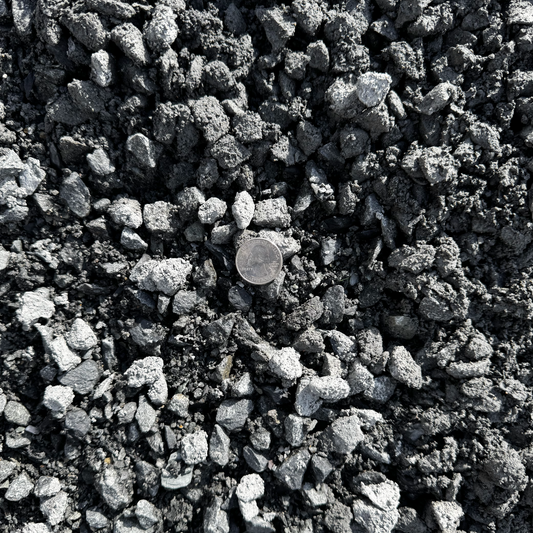
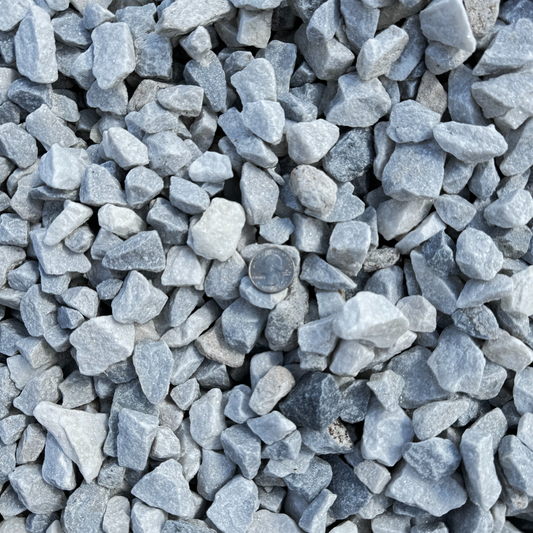
- Central driveway (asphalt): Untreated Rock Salt or Salt & Sand 50/50
- Last 2 feet of driveway adjacent to lawn: Salt & Sand 20/80
- Brick or concrete walks: Salt & Sand 20/80 (low chloride protects masonry)
- Steps and railings: Salt & Sand 50/50 (heavy traction matters)
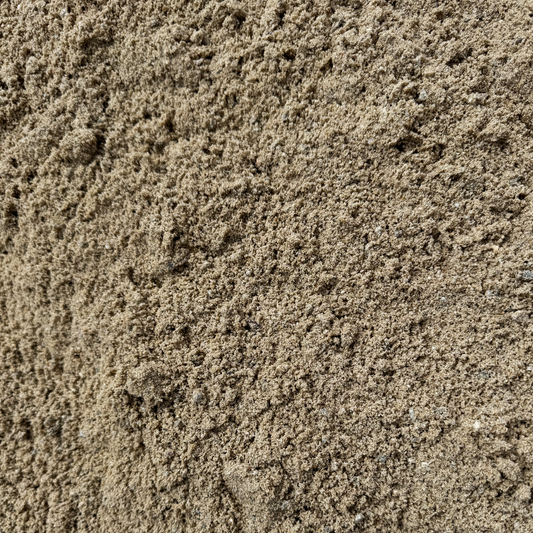
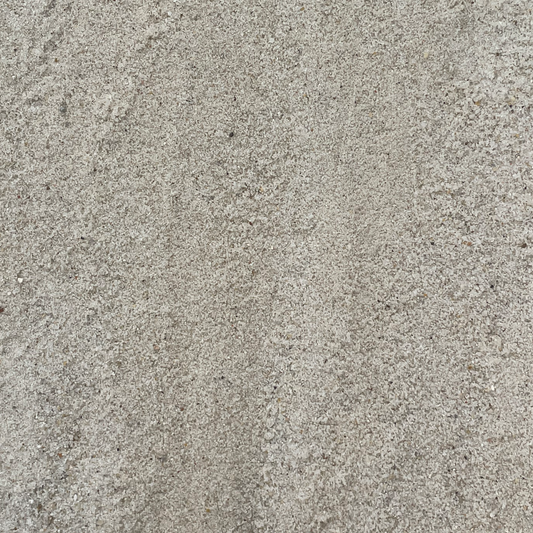
- Strip directly against planting beds: Mason Sand alone
The wrong approach: Ordering 2 yards of Untreated and using it everywhere. The lawn edges burn out, the brick walks pit, and you've wasted melt power on surfaces that didn't need it.
The math: A typical Plymouth single-family wants ~60% Untreated Rock Salt, ~30% Salt & Sand 20/80, ~10% Mason Sand by volume.
Browse the Snow & Ice Management collection for current per-yard rates on each blend.
3. Split Bulk Drops with a Neighbor
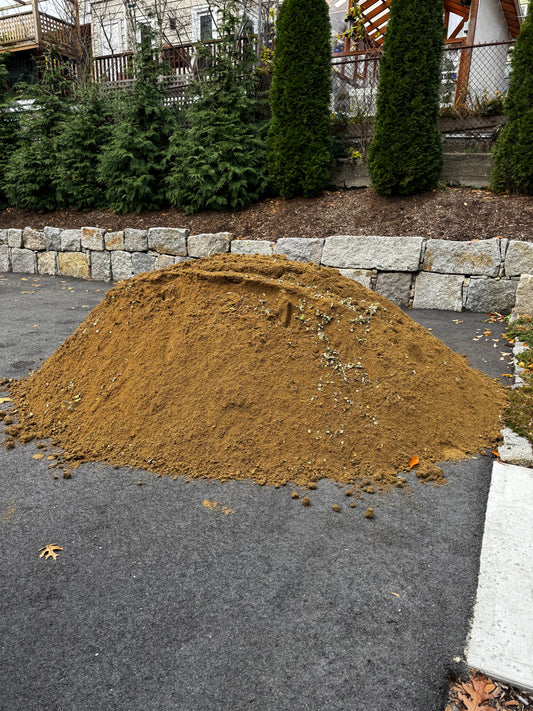
Why it matters: Bulk delivery has a 1-yard minimum. A small Plymouth property with ½-yard real need either over-orders or pays a partial-yard premium.
The move: Coordinate with one or two Plymouth neighbors on the same street. Order a 2-yard drop and split. Each property pays for ⅔ or 1 yard at full-yard pricing.
Logistics: - Specify "split delivery" when ordering — Ottr can do two drop locations on the same truck if they're within 0.5 miles - Or take a single drop on one driveway and shovel-share to the neighbor's bin - Neighbor splits work especially well in Plymouth Center / Kingston-line / North Plymouth where lots are tight
What you save: $30–$60 per neighbor on typical 1.5-yard equivalent orders.
For neighbor-split logistics in similar use cases, see How to Order Bulk Winter Sand for a Plymouth, MA Driveway.
4. Build or Buy a Weatherproof Storage Bin
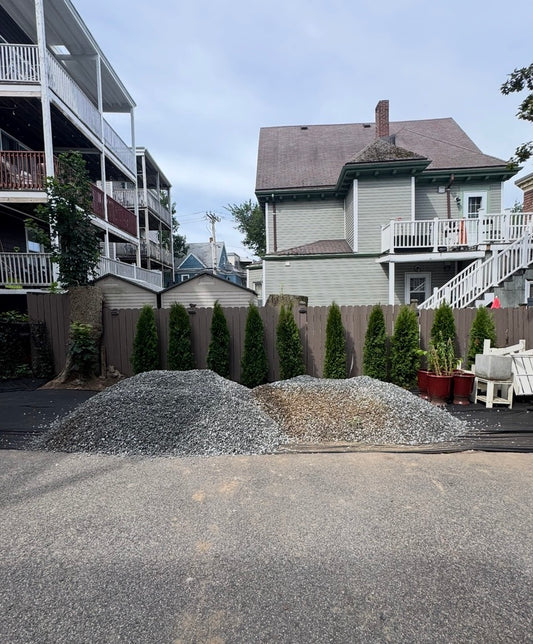
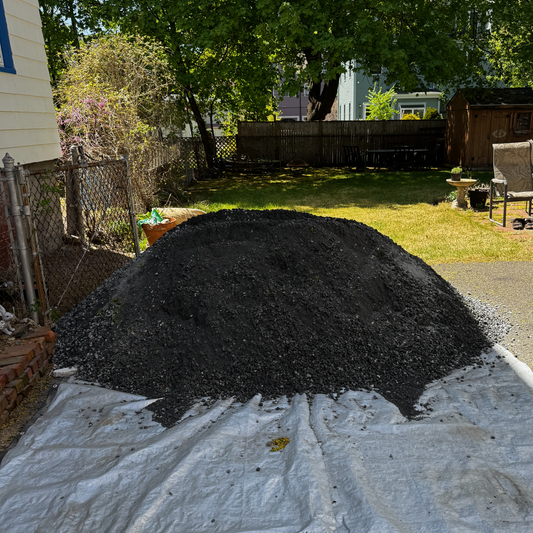
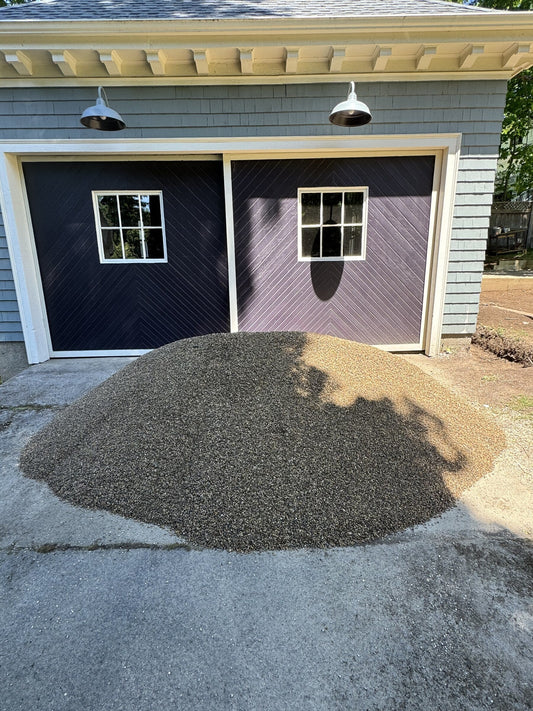
Why it matters: A bulk pile dumped on the driveway and left exposed to Plymouth's Atlantic-edge weather bricks up within 5–7 days. The salt absorbs moisture, clumps, and becomes useless to spread.
The move: Before the November delivery, set up storage:
- DIY bin: 2'×3'×3' plywood bin with hinged lid. Lined with heavy-mil plastic. Sits in the garage corner or under an overhang. See How to Build a Weatherproof Salt-Sand Bin for a Quincy Property for the Plymouth-applicable build.
- Commercial bin: 55-gallon plastic drum with lid (~$80) or food-grade IBC tote with sealed top (~$120). Holds about ⅔ yard.
- Garage corner with tarp + plywood floor: Easiest setup if garage space allows. Tarp keeps moisture out.
What you save: A bricked pile loses 100% of usability. A bin keeps the product loose and spreadable all season.
For the tips-style version, see 5 Salt-Storage Bin Tips for Boston Garages.
5. Schedule a December Top-Off After the First Storm
Why it matters: Most homeowners over- or under-estimate their seasonal need on the first order. The first major storm reveals your actual application rate.
The move: Plan from the start for a December 15–20 top-off if needed. By then:
- You've had 1–2 application events
- You know your actual rate per storm
- You can scale the December order to actual need
Top-off math: - If you ordered 1.5 yards in November and used 0.4 yards in the first storm: order 0.5 yards top-off in December - If you ordered 1.5 yards and used 0.2 yards: skip the top-off and reorder in January if needed
Lead time on December top-offs: Plan for 5–7 days during storm-watch periods. Pre-flag the top-off when you place the November order — Ottr can hold a December delivery slot for you.
Plymouth-Specific Pre-Order Considerations
- Coastal exposure — driveways in Manomet / White Horse Beach / Plymouth Long Beach experience natural salt spray plus wind-driven snow drift. Application rates run 15–20% above inland Plymouth.
- Long driveways — many Plymouth properties have 80+ foot driveways. Calculate sq ft accurately; a 100-foot driveway uses 2.5x what a 40-foot driveway uses.
- Older masonry — Plymouth Center has pre-1900 brick walks and slate steps. Use Salt & Sand 20/80, not Untreated Rock Salt.
For Plymouth-specific delivery, see the Plymouth landscape supply collection. The MA Department of Transportation winter operations resources maintain authoritative state salt application standards.