Quick Answer
Yes — for newly planted, marginally hardy, or shallow-rooted perennials. The job of winter mulch isn't keeping plants warm; it's preventing freeze-thaw heave that pushes crowns out of the ground in February. Apply 2–3 inches of hardwood mulch after the ground freezes (mid-November to early December in Boston), holding back 2 inches from crowns. Skip established, hardy, deeply rooted perennials — they don't need it.
Why This Question Comes Up Every October in Boston
Boston perennial gardeners face two questions in late October: do I cut back, and do I mulch? The cut-back answer is mostly yes (with exceptions for native seed-headers). The mulch answer is more nuanced — and often the wrong call gets made because homeowners think winter mulch keeps plants warm.
For the broader pre-winter mulch strategy, see Top 5 Pre-Winter Mulch Strategies for Plymouth County Yards. For the application how-to, see How to Apply Winter-Protection Mulch in a Middlesex County Bed.
Q: What does winter mulch actually do?
A: It moderates soil temperature, not air temperature. Bare soil through a Boston winter goes through 30–60 freeze-thaw cycles. Each cycle expands and contracts the soil, lifting plant crowns 1/4" to 1" at a time. By March, a perennial planted at grade may be sitting on top of the soil with roots exposed. Mulch insulates the soil so it stays frozen once frozen — fewer cycles, less heave.
Q: Which perennials need winter mulch in Boston?
A: Five categories.
- Newly planted (first or second fall in ground) — roots not established, can't anchor against heave
- Marginally hardy for Boston (Zone 6b/7a borderline) — lavender, certain salvias, gardenia
- Shallow-rooted (chrysanthemums, garden mums, coral bells) — heave faster
- Recently divided — disturbed roots, same as newly planted
- In windy, exposed sites — additional desiccation risk
Q: Which perennials don't need winter mulch?
A: Established, hardy, deeply rooted ones. Examples: peony (3+ year clumps), daylily, hosta (mature), Siberian iris, baptisia, established echinacea. Mulching these is a waste of mulch and can actually trap moisture against crowns and rot them.
Q: When do I apply winter mulch in Boston?
A: After the ground freezes — mid-November to early December. This is counter-intuitive. Most homeowners mulch in October before freeze. The right window is after the first hard freeze sets the soil, so you're locking it frozen, not insulating warm soil that will fluctuate.
For Boston, that means applying winter mulch any time from the third week of November through early December. October mulch top-ups (the 1/2" appearance refresh) are different — those go on before frost.
Q: How thick should winter mulch be?
A: 2–3 inches over crowns; 3–4 inches over root zones. Standard mulch depth (2" generally) is fine for established beds. For newly planted or marginal perennials, go to 3" — but pull mulch back 2 inches from crowns so they're not buried.
The volcanoed-mulch problem at tree trunks applies here too: don't pile mulch against perennial crowns. Holding back keeps the crown breathing.
Q: What mulch material works best?
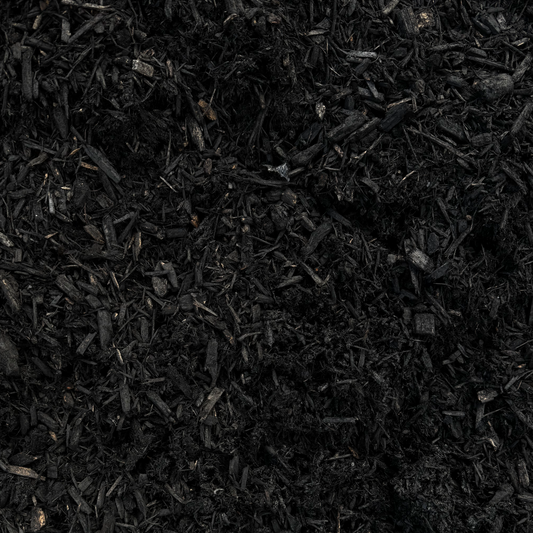
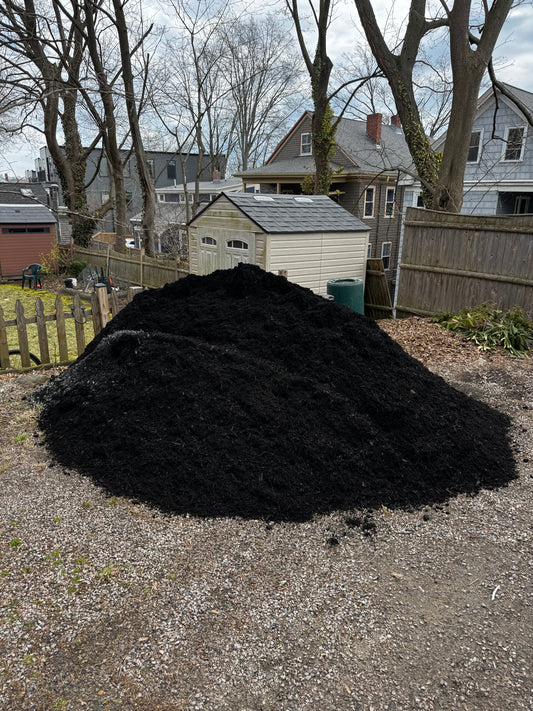
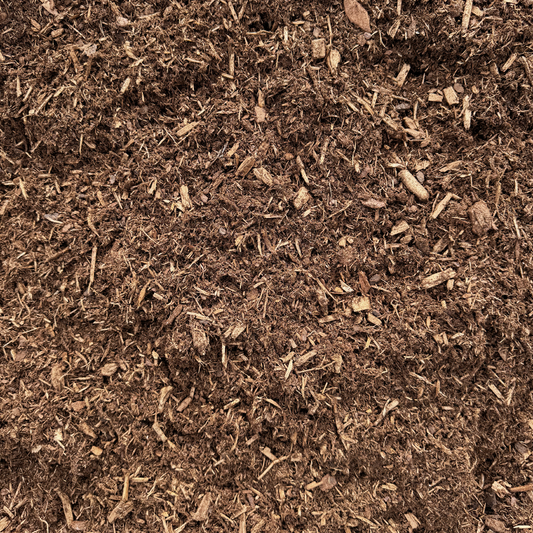
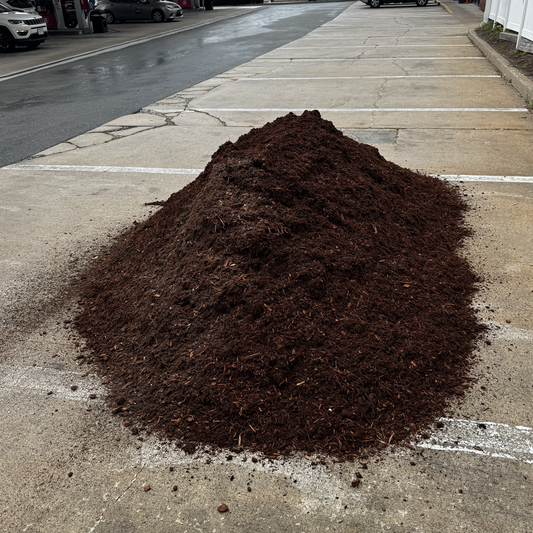
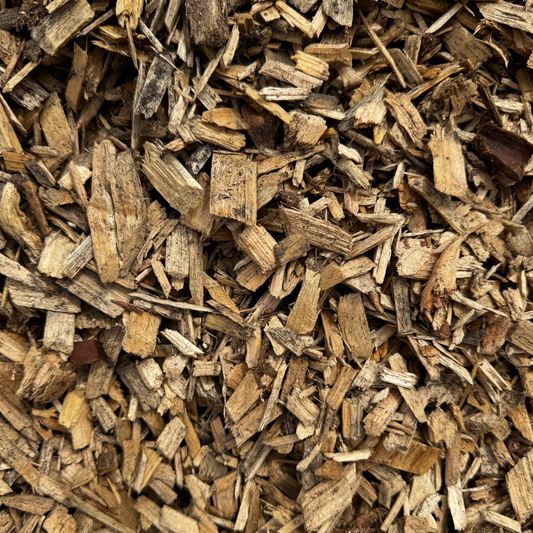
A: Shredded hardwood mulch is the standard. Pine bark and pine needles also work; cedar works but breaks down slower. Avoid:
- Whole leaves (mat and smother)
- Grass clippings (mat and rot)
- Sawdust or wood chips fresh from chipping (can be too acidic if green)
Browse the mulch collection. For the cedar vs hardwood question, see Hemlock vs Cedar Mulch for Duxbury Fall Beds. For pine needle vs hardwood, see Pine Needle vs Hardwood Mulch for Winter Beds.
Q: What about cutting back perennials before mulching?
A: Cut hostas, daylilies, peonies, salvias to 4". Leave seed heads on coneflower, black-eyed Susan, ornamental grasses for songbird forage and winter texture. Apply mulch around the cut-back stubble.
Q: What about tree wrap and shrub burlap — same idea?
A: Different tool, different problem. Tree wrap protects bark from sun-scald and rodent damage; shrub burlap blocks wind desiccation. Winter mulch addresses freeze-thaw heave at the soil. Use all three on tender new plantings; use mulch alone on established hardy perennials.
For tree wrap detail, see 5 Tree-Wrap Tips for Young Scituate Trees. For burlap-vs-cover, see Burlap vs Plant Cover for Bridgewater Tender Shrubs.
Q: Do I remove winter mulch in spring?
A: Pull back, don't remove. In April, when temperatures stabilize and new growth starts emerging, pull mulch back from crowns to let them breathe. The mulch becomes summer mulch in place — you don't haul it away.
Q: Does Ottr deliver mulch to Boston for late-October top-ups?
A: Yes — through November 15 for routine routes. Browse the mulch collection for the lineup. For Boston-specific delivery, see Boston landscape supply. For the full catalog, see the Ottr catalog.
The Boston Recommendation
Mulch new, marginal, shallow-rooted, divided, and exposed perennials. Skip established hardy ones. Apply after ground freeze (mid-November to early December), 2–3 inches, hold back from crowns. Pull back in spring. The UMass Extension Landscape program is the authoritative regional source on overwintering practices.