Quick Answer
The five most common ice melt mistakes in Middlesex County yards: applying too much (homeowners average 2-3x recommended rates), buying the wrong chemistry for the temperature, skipping pre-treatment, using salt right against lawn edges, and storing bulk salt on bare concrete. Fixing all five typically cuts a household's winter chloride budget by 30-40% and prevents most April lawn-edge damage in Cambridge, Newton, Lexington, and Belmont yards.
#1 - Applying Way Too Much
The single biggest mistake. UMass Extension and EPA Smart Salting both put residential application at 1/4 to 1/2 pound per square foot for melting and 1-2 ounces per square foot for pre-treatment. Most Middlesex County homeowners eyeball it and apply two or three times that. The result: salt-burned grass at the curb edge in April, scaled concrete on stoops, and bigger bags purchased every storm.
Fix: weigh one application with a kitchen scale. A standard two-car driveway is roughly 600 square feet, so 150-300 pounds is the upper bound for a melting application - a 50-pound bag stretches to two or three full applications.
#2 - Wrong Chemistry for the Temperature
Cambridge and Lexington nights routinely drop below 15 degrees F in mid-January. Straight rock salt slows down hard below 15 and stops working below 10. Homeowners reach for "more salt" when the answer is calcium chloride (effective to -25 degrees F) for cold-snap nights and pre-treatment.
Keep one bag of calcium chloride in reserve for sub-15 degree F forecasts. See How to Choose the Right Ice Melt for a Worcester County Driveway for the full chemistry chart.
#3 - Skipping Pre-Treatment
Applying 1-2 ounces of salt per square foot to dry pavement 4-8 hours before forecast snow prevents the bottom layer of snow from bonding to the asphalt. The plow scrapes cleaner. You spread less afterward. Net cost is lower.
Catch: pre-treatment doesn't work for storms forecast above 12 inches - the plow sweeps your investment off the driveway. Use it for under-6-inch events. For application math by driveway size, see the 2026 Brookline calculation walkthrough - same logic in Cambridge or Belmont.
#4 - Salt Right Against the Lawn Edge
The damage band on a Middlesex County lawn is 6-18 inches in from the curb every April. The fix is using Salt-Sand 20/80 (one-fifth the chloride load) on the lawn-adjacent strip and reserving rock salt for the central drive. UMass turf research is clear: cool-season grasses (Kentucky bluegrass, fescue) start dying at soil sodium levels above 4 mmhos/cm electrical conductivity, easily reached at the curb after a few heavy applications.
Browse Snow & Ice Management for the salt-sand options. A second look at lawn-edge protection: What's My USDA Hardiness Zone in Norfolk County, MA? covers the cool-season grass species you're trying to protect.
#5 - Storing Bulk Salt on Bare Concrete
Bulk rock salt sitting on a cold garage floor pulls moisture out of the concrete and clumps into a brick. Worse, it scales the slab.
Fix: keep bulk salt in a 30-gallon trash can with a lid, set on a wood pallet or rubber mat to break ground contact. Lifting it 2 inches off cold concrete is enough. A weatherproof outdoor bin works too if you're going through it weekly.
The Quick-Win Stack
For a typical Middlesex County household, these five fixes look like:
- One bag scale-weighed to confirm rate.
- One reserve bag of calcium chloride for sub-15 degree F nights.
- Pre-treat for under-6-inch storms.
- Salt-sand 20/80 on lawn-adjacent strips, rock salt only on the central drive.
- Trash can on a pallet in the garage.
Total annual savings on a Lexington or Newton driveway typically runs $150-$250 plus avoided lawn repair in April. For the lawn-edge recovery side of this, the UMass Extension Turf Program covers diagnosing salt damage when it shows up.
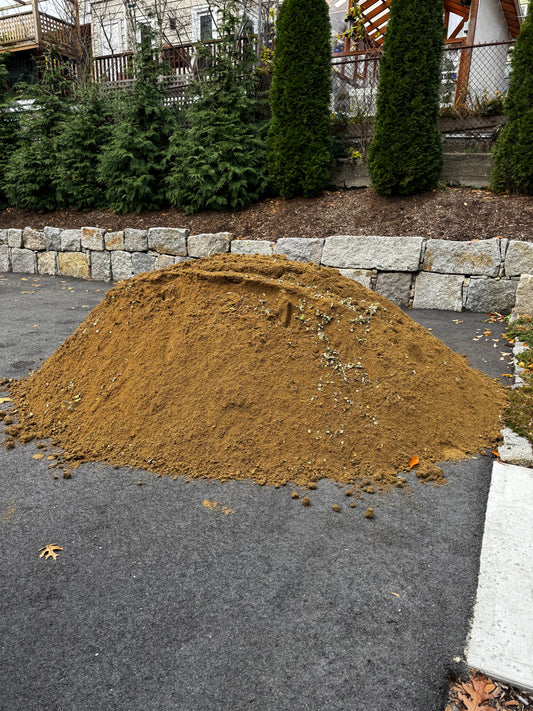
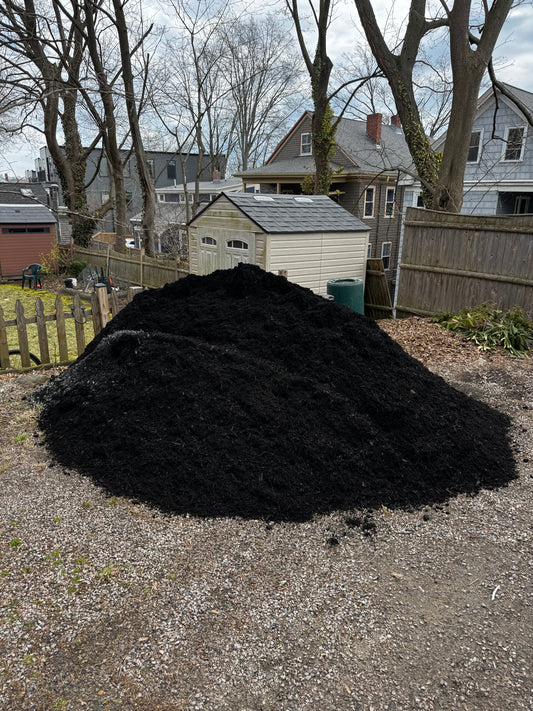
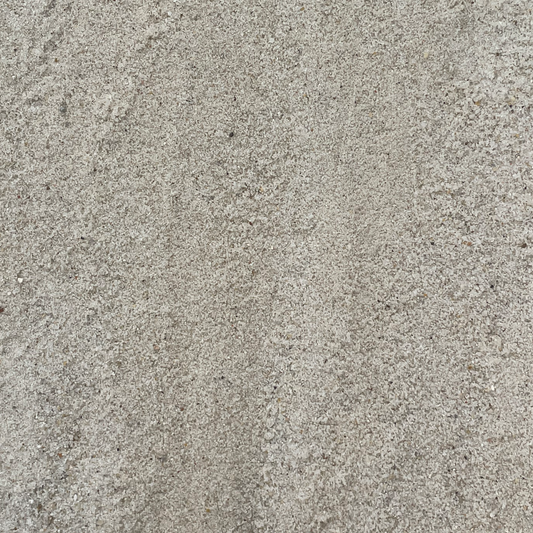
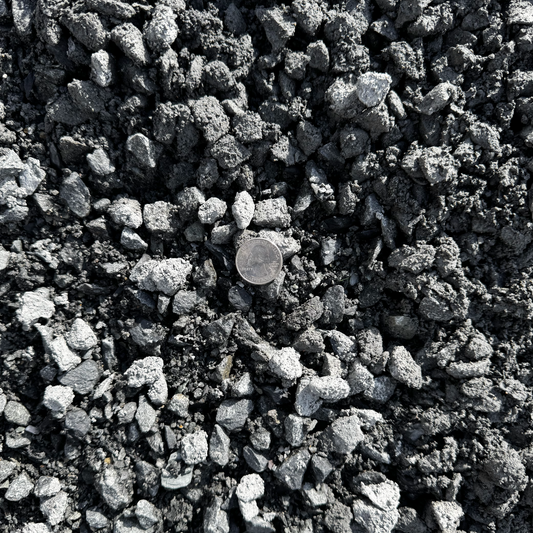
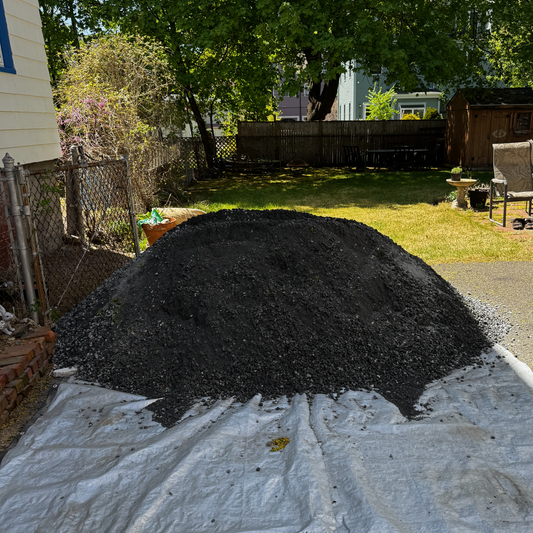
For ordering, Snow & Ice Management collection carries treated rock salt, untreated rock salt, salt-sand 50/50, and salt-sand 20/80 by the cubic yard - half the per-pound cost of bagged.