Quick Answer
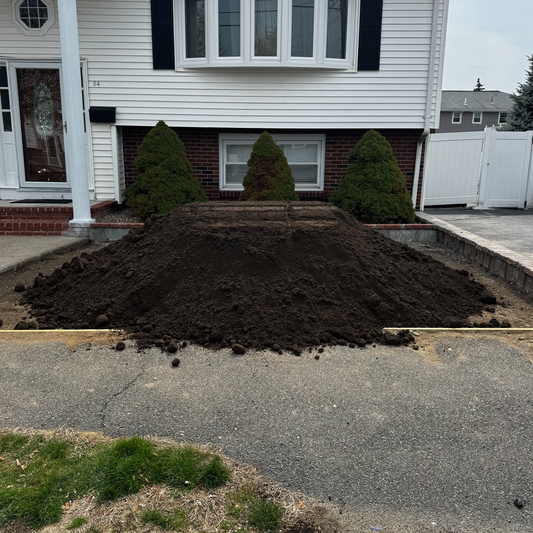
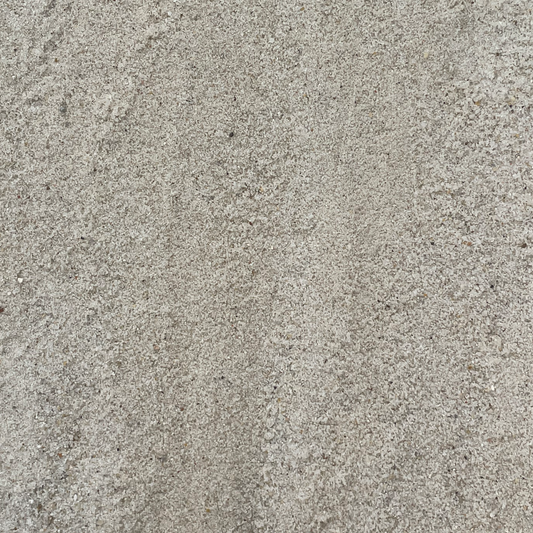
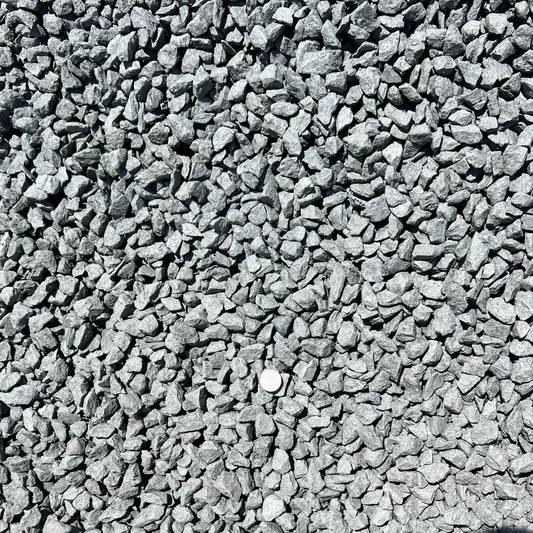
For a Quincy garden, use both - layered, not mixed. Topsoil is the structural base that holds plants and water. Compost is the nutrient-and-microbe layer that feeds them. The right approach for most Quincy raised beds and in-ground vegetable plots: 8-10 inches of Topsoil Loam 1/2-inch Screened as the bulk base, then 2-3 inches of mature compost worked into the top 6 inches. Skip the "topsoil-only" approach (no nutrients) and the "compost-only" approach (too rich, retains too much water). Layered is the right answer.
Why Quincy Gardens Need This Choice Spelled Out
Quincy yards - Squantum, Wollaston, North Quincy, Houghs Neck, Marina Bay - sit on tight lots with mixed soil conditions. Some yards are sandy near the coast (Squantum, Houghs Neck). Others are clay-and-fill closer to the older neighborhoods. Most Quincy in-ground gardens need both structural support (topsoil) and nutrient improvement (compost).
This Q&A walks through the questions Quincy homeowners ask in March when planning April vegetable beds.
Q: What's the actual difference between compost and topsoil?
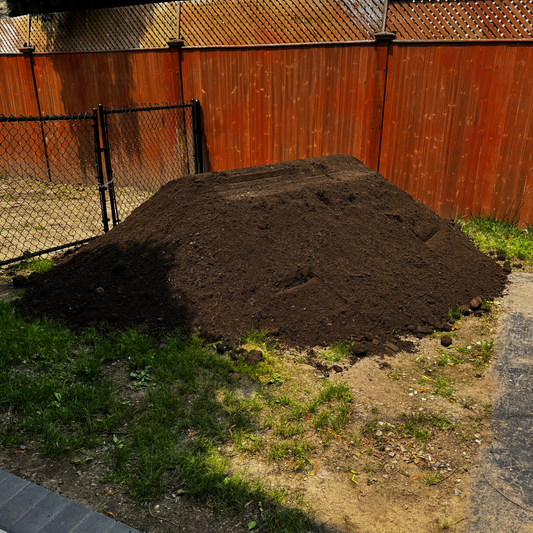
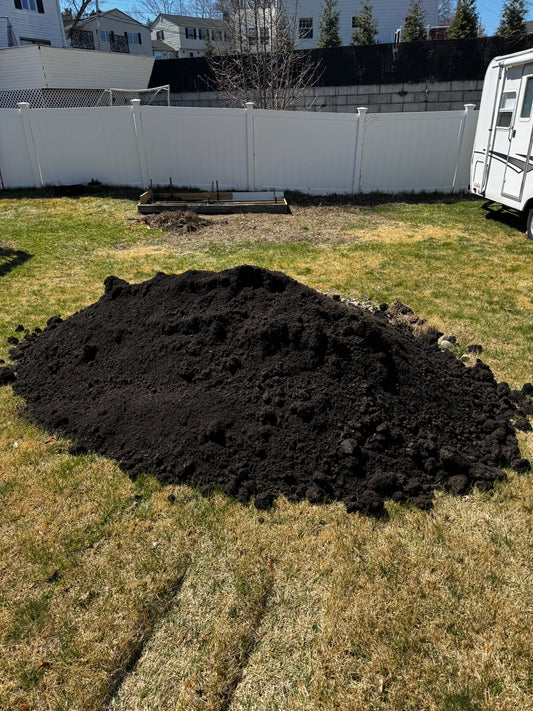
A: Compost is decomposed organic matter; topsoil is mineral soil with some organic matter mixed in. Compost is roughly 30-50% organic matter by volume. Topsoil is 5-15% organic matter mixed with sand, silt, and clay particles. Compost feeds plants and microbes. Topsoil holds plants and water.
A garden bed needs both. Compost alone is too "fluffy" - water drains too fast and roots can't anchor. Topsoil alone is too low in nutrients - plants grow slowly and microbial activity is limited.
Q: Which one do I use for a brand-new vegetable bed?
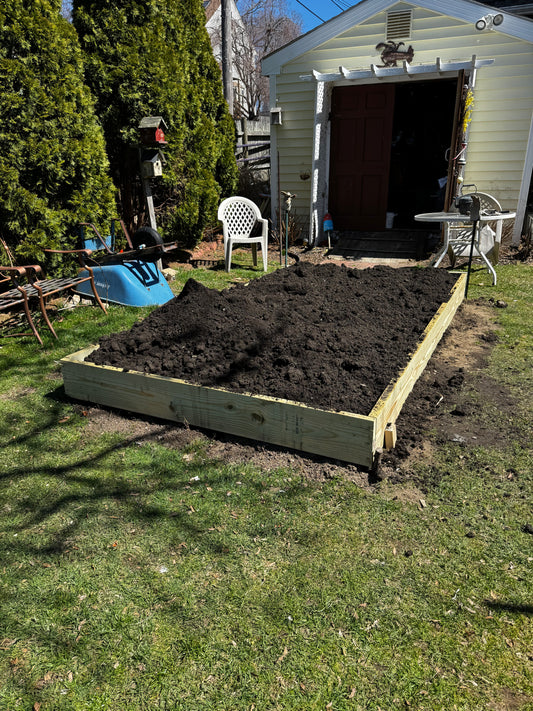
A: Both, layered. For a typical Quincy 4x8 raised bed:
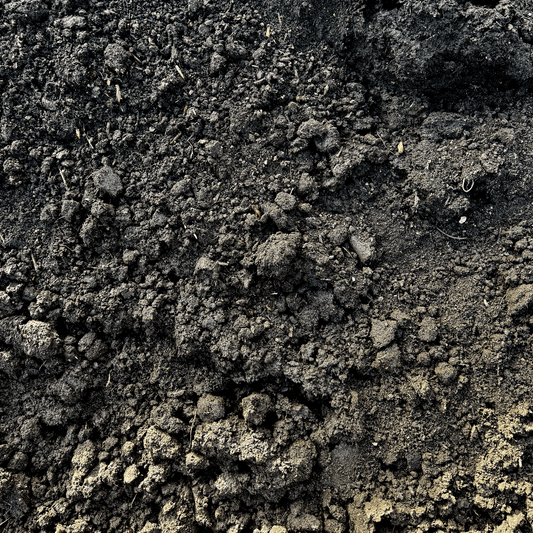
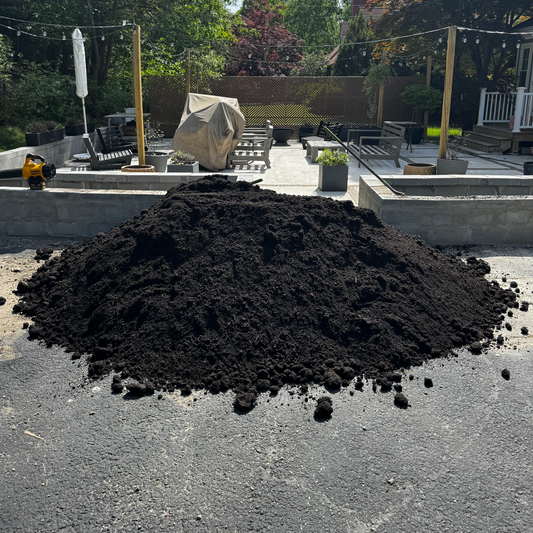
- Bottom 8 inches: Topsoil Loam 1/2" Screened (from the raised-garden-bed-materials collection).
- Top 4 inches: Mix 50/50 with mature compost.
Total volume for a 4x8 x 12-inch bed: about 1.2 cubic yards (4 ft x 8 ft x 1 ft = 32 cubic feet = 1.2 yards). Slightly less than half is the compost portion.
For the broader yardage formula on raised beds, How Much Bulk Loam Does My Middleborough Raised Bed Actually Need? covers the math that ports to Quincy.
Q: Can I just use compost in a raised bed?
A: No - it dries out too fast and slumps. A pure-compost bed loses 30-40% of its volume in the first season as the organic matter breaks down further. By August, the bed is 8 inches tall instead of 12. Water drains in seconds. Root vegetables can't form properly.
Use compost as the enrichment layer, not the bulk fill.
Q: What about using topsoil alone for a Quincy lawn?
A: Topsoil-only works for lawn patch repair. For a sod or seed application over a small bare patch (under 100 sq ft), a 1-inch top-dress of topsoil is fine. Grass has shallow roots and doesn't need the deep nutrient profile a vegetable bed needs.
For a full lawn renovation, mix in 1 part compost to 4 parts topsoil for the top 2 inches.
Q: How do I tell if compost is "mature" enough to use?
A: Smell it. Mature compost smells earthy and faintly sweet. Immature compost smells sour, ammonia-like, or sharply chemical. If you can smell it on the truck before the gate opens, it's not mature.
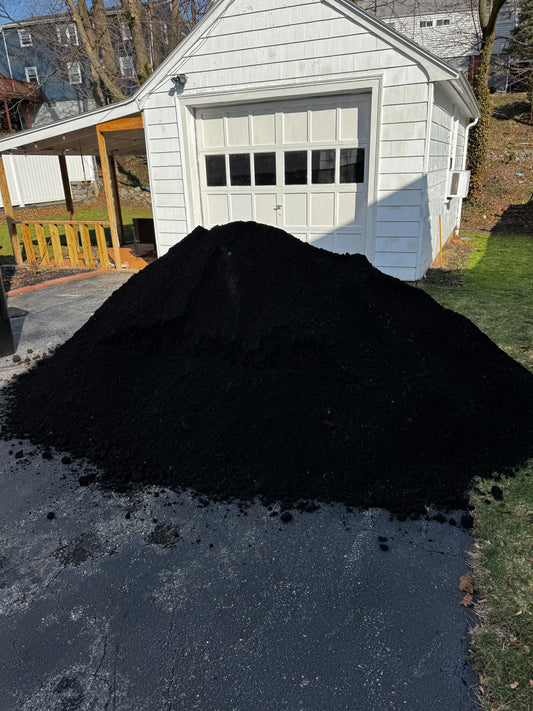
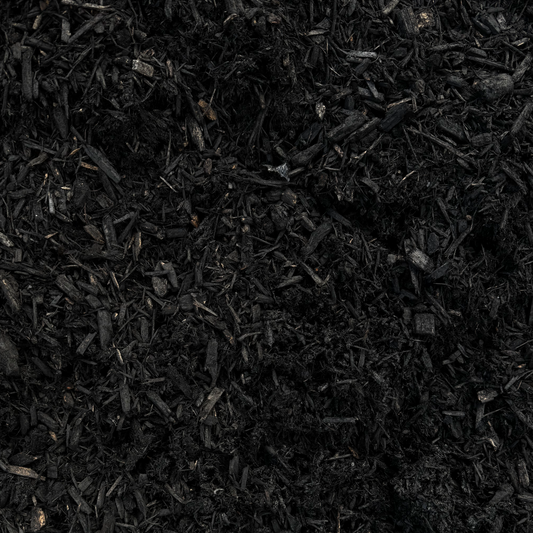
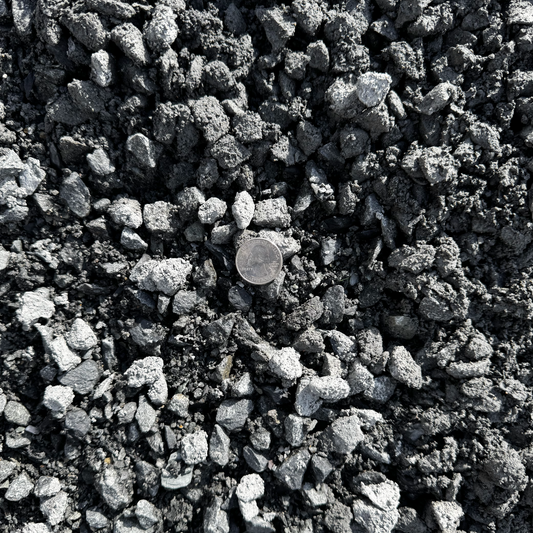
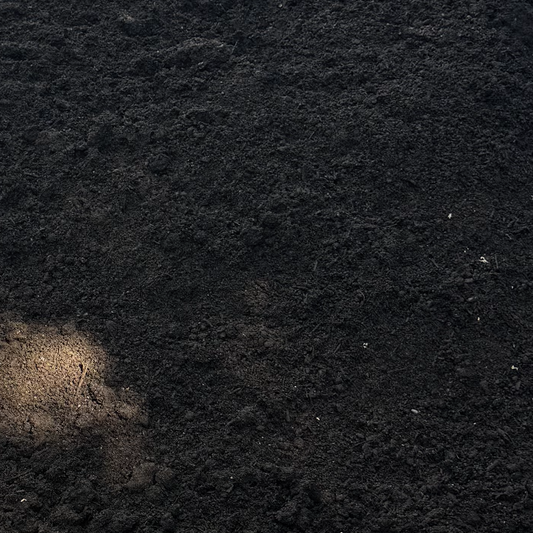
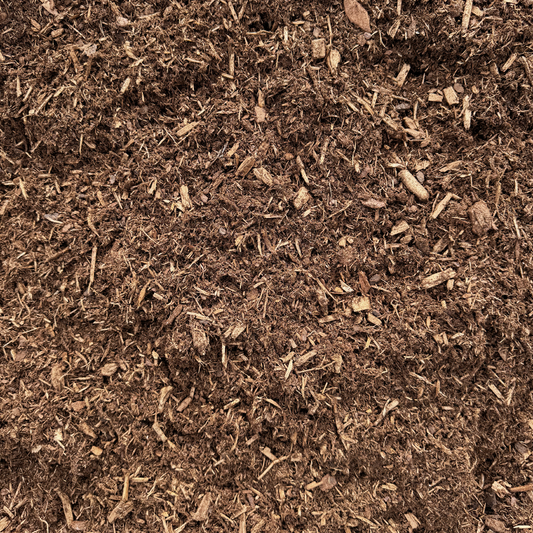
Visual check: mature compost is dark brown to nearly black, with no recognizable food scraps or whole leaves. You should see a uniform, crumbly texture.
The US Composting Council is the authoritative source on compost quality standards. Their Seal of Testing Assurance (STA) program certifies mature, pathogen-free compost.
Q: Where does Ottr compost come from?
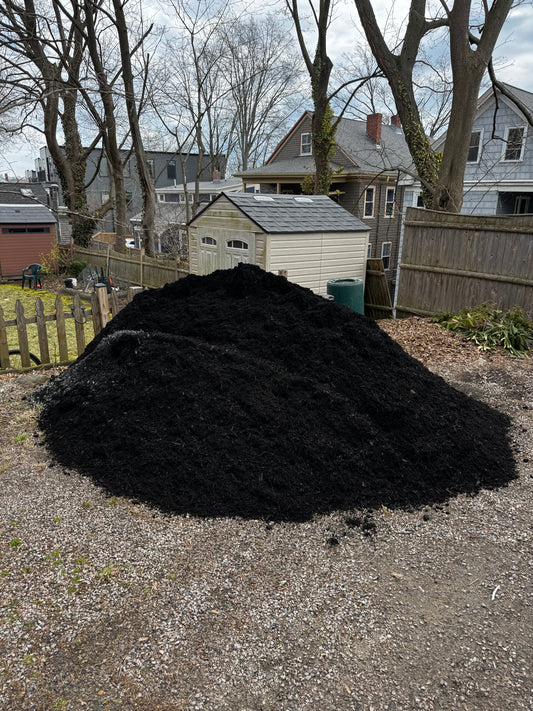
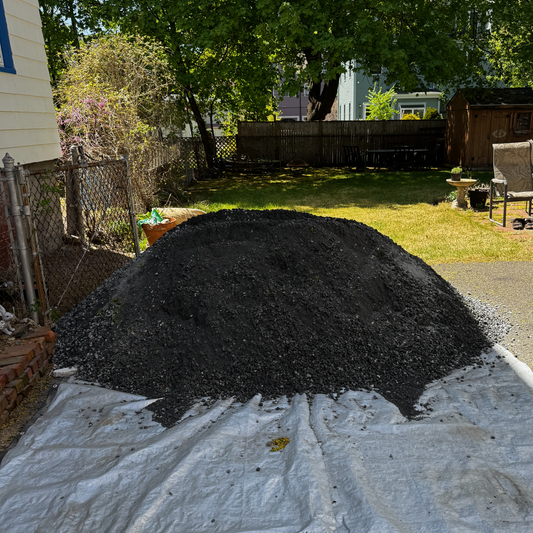
A: Regional yard-and-leaf-waste-derived sources. Ottr Compost is a regionally sourced product compatible with the US Composting Council's STA standards. The Compost product is available bulk (per cubic yard) or by the half-yard for smaller orders.
Q: How much do I need for a Quincy in-ground bed renovation?
A: For a 100 sq ft in-ground bed, about 0.6 cubic yards total. The math: 100 sq ft x 6 in (top layer) / 324 = 1.85 cubic yards if you renovate the full top 6 inches. For a more typical "amend in place" renovation:
- 100 sq ft x 2 in compost / 324 = 0.62 cubic yards
- Work the compost into the top 6 inches with a garden fork.
The bulk vs bagged compost test for Suffolk County raised beds covers the side-by-side comparison.
Q: Does Quincy soil need lime alongside the compost?
A: Test first, don't guess. Quincy soil pH varies block to block. The cool-season grasses and most vegetables thrive at pH 6.0-6.8. The UMass Soil and Plant Nutrient Testing Lab sells a $20 mailer kit that returns pH and nutrient levels in 2-3 weeks. Apply lime only based on the test result.
For coastal Quincy soils (Squantum, Houghs Neck), pH often runs slightly higher due to shell content - lime is rarely needed.
Q: When's the right week to layer the compost into a Quincy bed?
A: March 20 - April 10. Soil is workable but not yet warm. Compost worked in now has 4-5 weeks to integrate before May plantings. Avoid working soil when it's wet - if a fistful of soil holds its shape after squeezing, it's too wet to work.
For the broader Quincy planning calendar, the 2026 Quincy mulch yardage walk-through covers the bed-prep timing on the mulch side. For the related Belmont edging timing, the 2026 Belmont edging walk-through covers the edge-and-amend pairing.
The Quincy Compost-Topsoil Worksheet
| Bed type | Topsoil volume | Compost volume |
|---|---|---|
| New 4x8 raised bed (12 in deep) | 0.7 cu yd | 0.5 cu yd |
| New 4x4 raised bed (12 in deep) | 0.35 cu yd | 0.25 cu yd |
| In-ground 100 sq ft renovation | 0 (existing) | 0.6 cu yd |
| Lawn patch repair (50 sq ft, 1 in) | 0.15 cu yd | 0.05 cu yd |
| Existing bed top-dress | 0 | 0.1-0.3 cu yd |
Browse the raised-garden-bed-materials collection for the products and the Quincy landscape supply route for delivery scheduling.
For the broader regional reference on garden soil management, the UMass Extension Vegetable Program is the authoritative source.
The short version: topsoil is the base, compost is the enrichment. Use both, layered, in the right order. Quincy gardens reward the layered approach over either-or.