Quick Answer
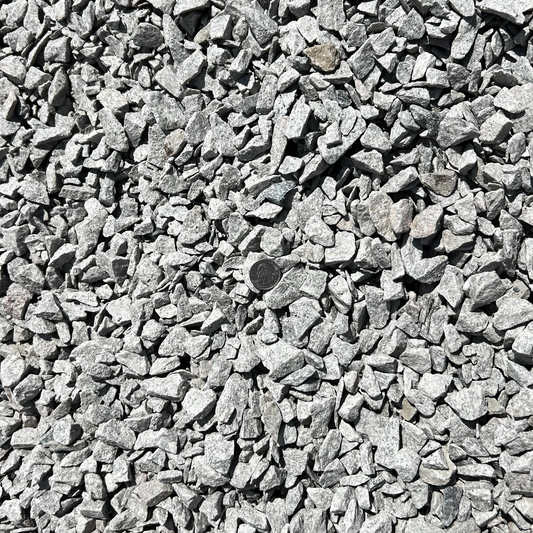
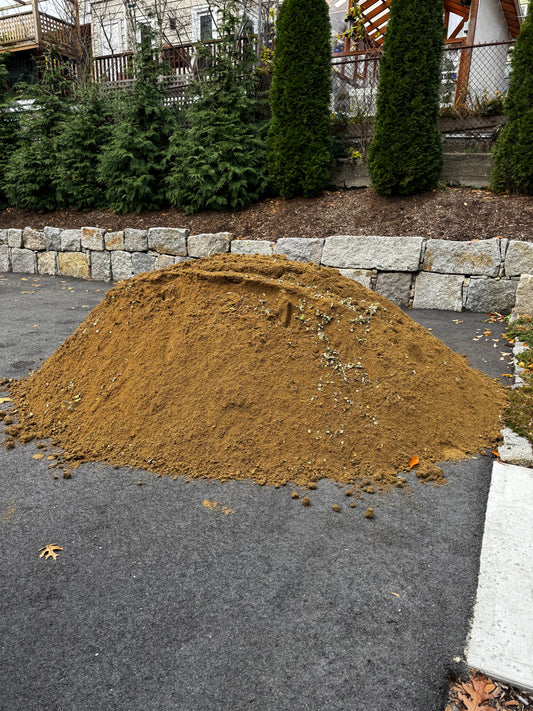
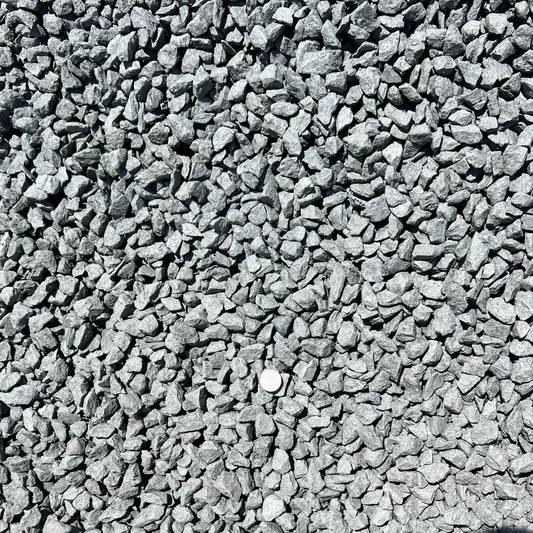
Use Dense Pack ¾" to minus as the compacted base and Mason Sand as the setting bed under Cohasset stepping stones. A 30-foot path with 15 stones at 24-inch spacing takes 0.5 cubic yards Dense Pack and 0.25 cubic yards Mason Sand total. Excavate 4 inches deep, lay 2 inches of compacted Dense Pack plus 1 inch of Mason Sand, and set the stone with a rubber mallet to sit 1/4 inch above grade. The path holds level through 25 New England freeze-thaw cycles.
Why Cohasset Stepping Stones Need Real Bases
Cohasset's coastal lots — clay-heavy in low spots, sandy on the bluffs, and ground that freezes deep through February — punish any stepping stone set directly on lawn or topsoil. The stones sink unevenly, tilt with freeze heave, and become trip hazards by year two. The fix is the same engineering used under paver patios, scaled down to one stone at a time.
The ICPI hardscape standards specify Dense Pack base + Mason Sand bedding for stepping stones. Browse the patio & walkway base collection for current per-yard rates.
Q: What stone goes under Cohasset stepping stones?
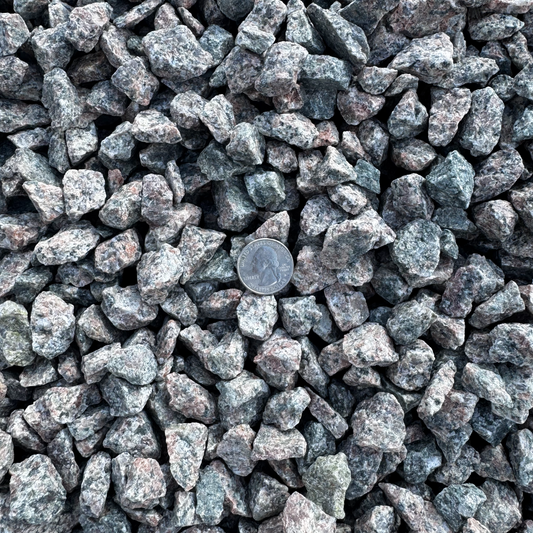
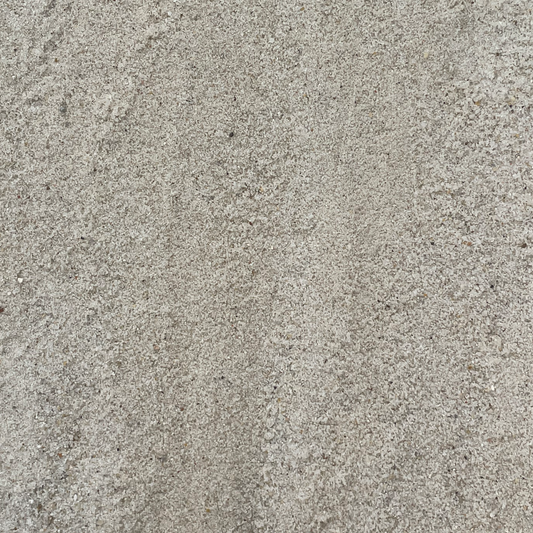
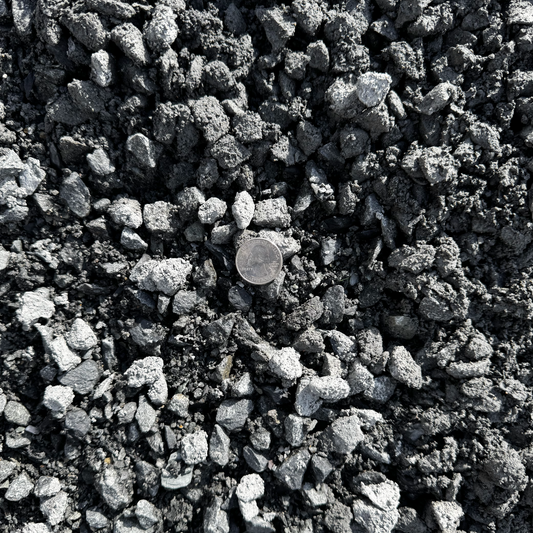
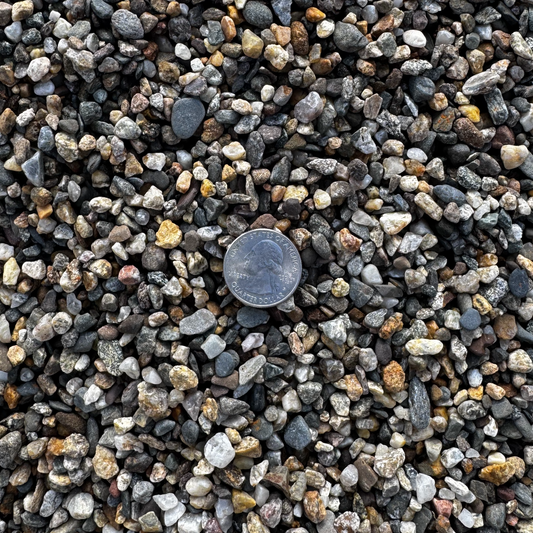
A: Dense Pack ¾" to minus + Mason Sand. Two layers, two functions: Dense Pack is the compacted load-bearing layer (drains water, holds elevation). Mason Sand is the leveling bed (lets you fine-tune the stone's pitch). Don't substitute one for the other.
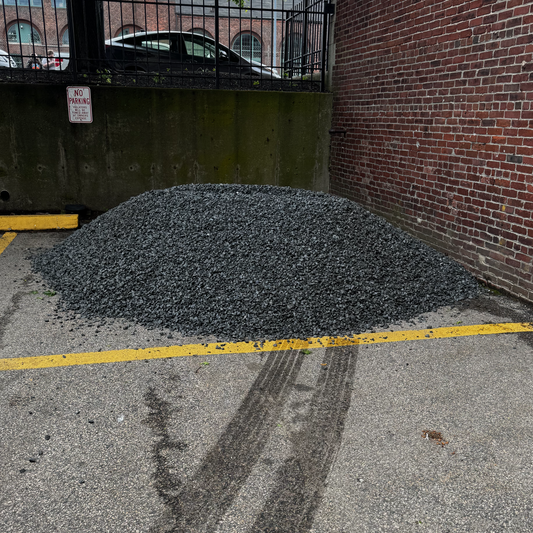
For a 30-foot path with 15 stones at 24-inch spacing: 0.5 cubic yards Dense Pack + 0.25 cubic yards Mason Sand. Order both on the same delivery through the Cohasset landscape supply routes.
Q: How deep does the base need to be?
A: 3 inches of bulk material below the stone. Specifically: 2 inches of compacted Dense Pack plus 1 inch of Mason Sand. With a typical 1.5-to-2-inch-thick stone, total excavation is 4 inches deep. The stone sits 1/4 inch above grade — the slight crown sheds water and accommodates seasonal settling.
For the broader paver-base spec that uses the same materials, see the How to Build a Walking-Path with Stone Dust in Any MA read.
Q: Can I just set stepping stones on the lawn?
A: Yes, briefly — but they'll fail. Stones placed directly on lawn sink within one growing season as the topsoil compresses unevenly under foot traffic. After two MA freeze-thaw winters, they tilt 1 to 2 inches off level and become trip hazards. The base prep is a one-time investment that lasts 25 years.
Q: Do I need landscape fabric under the base?
A: Yes — woven fabric, cut into squares. Cut a piece roughly 4 inches larger than the stone in each direction, drop it in the bottom of the excavation, then lay the Dense Pack on top. Woven fabric blocks weed root penetration while letting water through. Skip non-woven; it holds water against the stone and lifts it during a freeze.
Q: Why Mason Sand specifically — not play sand or stone dust?
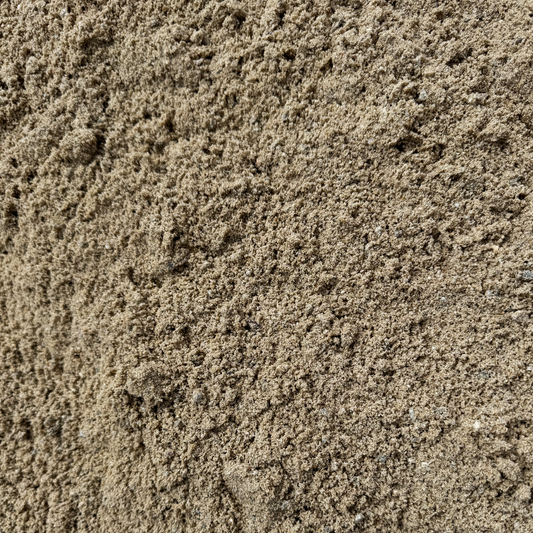
A: Particle size and drainage. Mason Sand has the angular particle shape and uniform sizing to fill voids in the stone face, distribute load across the Dense Pack, and drain water through to the base layer. Play sand has too many fines and holds water (which freezes and lifts the stone). Stone dust compacts too hard — you can't fine-tune the level with a rubber mallet.
For a contemporary alternative spec used in some Cohasset coastal yards where wave-spray salt accelerates corrosion, see the upcoming Half-Moon Edger vs Power Edger for a Norfolk County Bed Edge read on April 29 for related edging details.
Q: How wide should I excavate around each stone?
A: 2 inches wider than the stone in every direction. The extra width gives you room to seat the stone without smashing the surrounding lawn or driving the rubber mallet into existing turf. After setting, backfill the gap with screened loam and reseed.
Q: What spacing works for adult walkers in Cohasset?
A: 24 inches center-to-center for adults. That matches a natural stride length. For a longer-stride path or a tall household, go to 26 inches. Children and shorter-stride walkers prefer 22 inches. Walk the path with the stones placed loose before excavating; adjust until the stride feels natural.
Q: Should I crown the path or keep it flat?
A: Crown each stone individually 1/4 inch above grade. Skip the crowned-path-overall move (it pools water on the lawn at the edges). Each stone's slight high spot sheds water; the surrounding lawn handles the runoff.
The Cohasset Stepping Stone Build Order
- Layout — place stones loose on lawn at 24-inch spacing, walk the path to verify stride.
- Mark — outline each stone with marking paint, set stones aside.
- Excavate — 4 inches deep, 2 inches wider than each stone.
- Fabric — drop a woven fabric square in each hole.
- Base — 2 inches compacted Dense Pack ¾" to minus per stone, tamped firm.
- Bedding — 1 inch Mason Sand, raked smooth.
- Set — place stone, tap with rubber mallet, check level both directions, finish 1/4 inch above grade.
- Backfill — screened loam in the gaps, reseed.
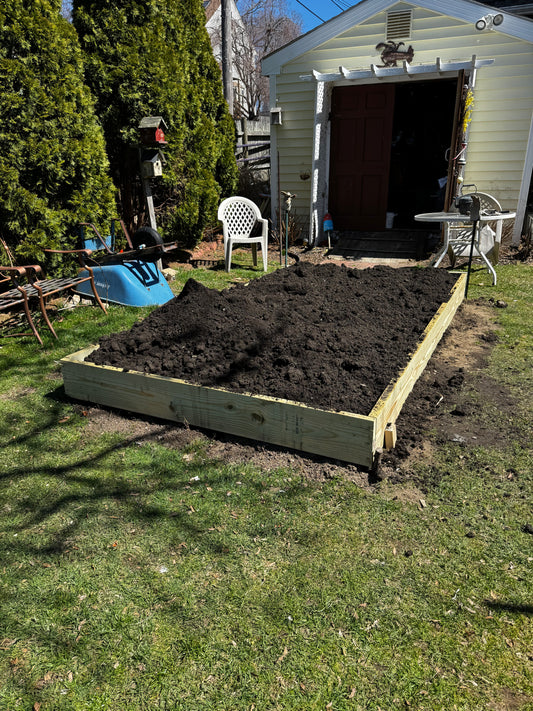
The 2026 follow-up on filling the same Mason Sand into a Wellesley raised bed setting (different application, same product) is the 2026 fill raised bed Wellesley read.
For the dry-river-bed companion that often sits adjacent to stepping stone paths, see the How to Build a Dry River Bed in a Waltham Backyard read.
The short version: Dense Pack base, Mason Sand bedding, woven fabric below, 1/4-inch crown above grade. Cohasset stepping stones built this way are still level in 2050.