Quick Answer
The five spring tree-care tasks that protect a Massachusetts yard's trees through the next 12 months: inspect for winter damage, mulch the root zone correctly, water young trees through April, prune deadwood before bud break, and check the root flare. Done in this order across a single Saturday, they cost nothing beyond 1 cubic yard of Hemlock Mulch per 4 mature trees and prevent the most common late-summer tree losses.
Why April Is the Window
April is the only month where you can see the canopy structure clearly (no leaves yet), the ground is workable (no frost), and the tree's vascular system is active (so wound healing is fast). ISA Trees Are Good, the public arm of the International Society of Arboriculture, treats April as the gold-standard window for everything except major structural pruning.
Browse the plant establishment & tree planting collection for the bulk mulch and compost these tasks need.
1. Inspect for Winter Damage
Walk every tree on the property. Look for: cracked bark from frost, broken branches from snow load, plow scars at the base, and rodent gnawing under the snow line. Mark damage with chalk for follow-up. The next steps fix what you find.
For salt-damaged tree edges along streets and driveways, the same diagnostic logic from the Apply Ice Melt the Right Way playbook applies — chloride damage shows up at bud break.
2. Mulch the Root Zone — But Not the Trunk
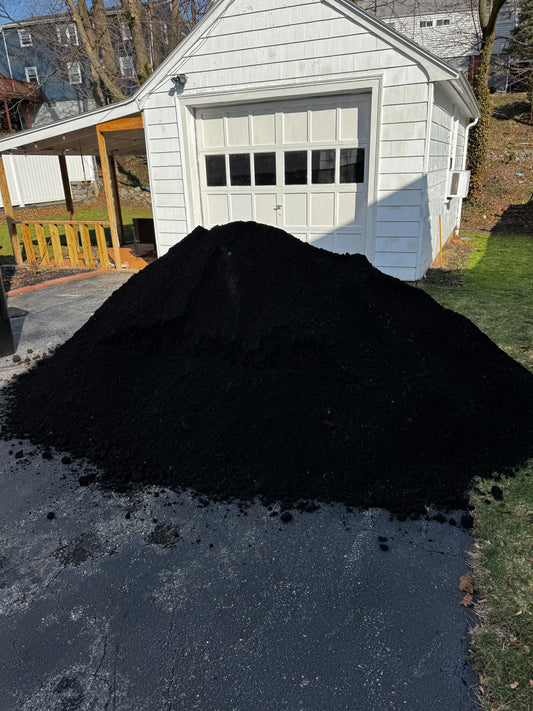
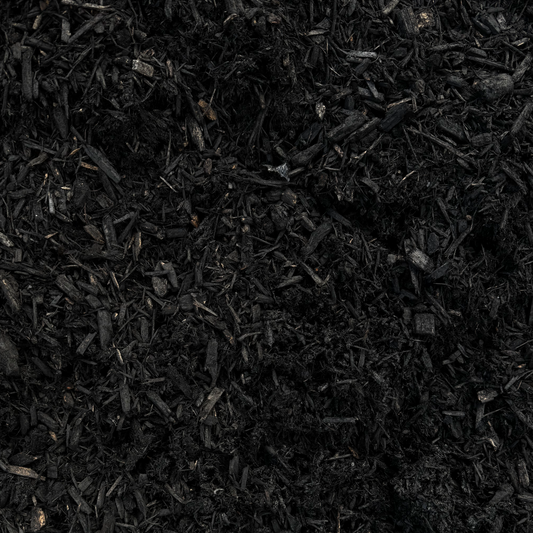
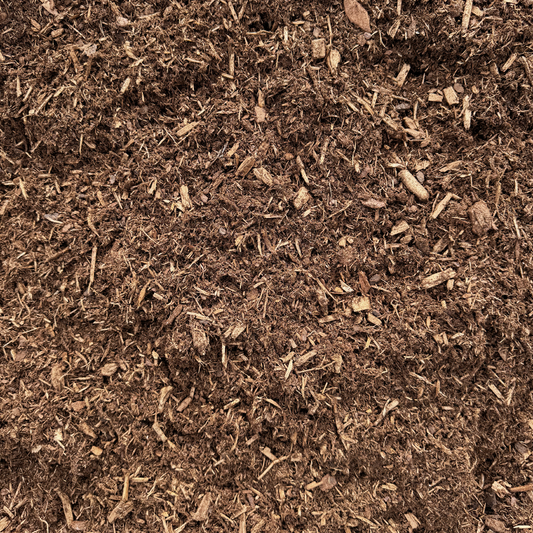
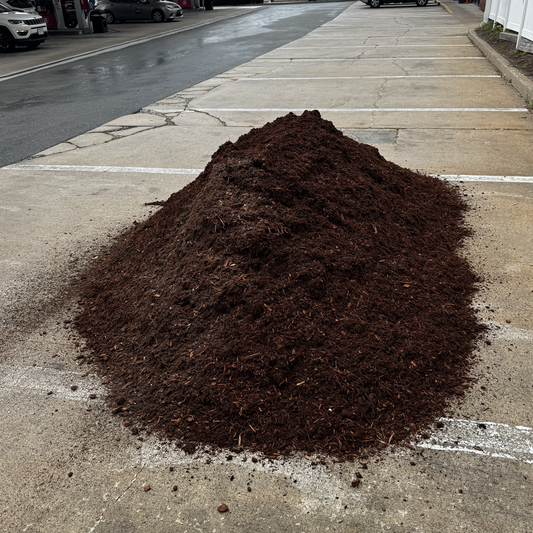
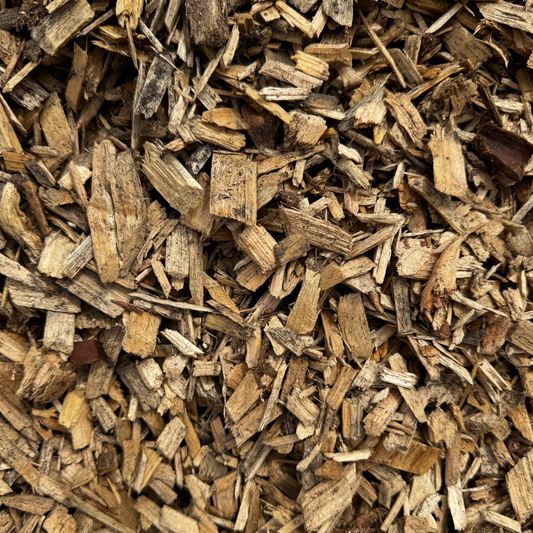
Apply 3 inches of Hemlock Mulch in a flat ring 3 feet wide around each tree, starting 3 inches off the trunk. The "mulch volcano" piled against the bark is the single biggest cause of premature MA tree death — it traps moisture against the trunk, the bark rots, and the tree girdles itself by year five. The full walkthrough is in the How to Mulch Properly Around a Newly Planted Watertown Tree read coming up tomorrow.
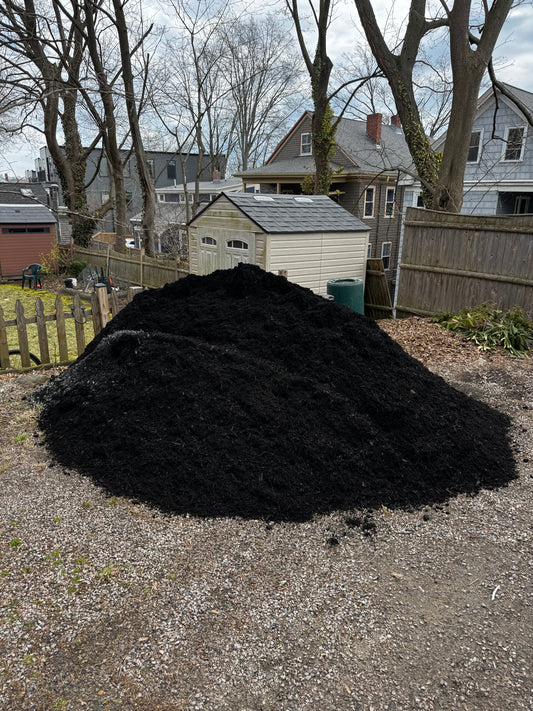
One cubic yard of Hemlock Mulch covers four mature tree rings at 3-inch depth.
3. Water Young Trees Through April
Trees planted in the last 3 years still need supplemental water until their roots establish. April rainfall in MA averages 4 inches; a young tree wants 1 inch per week. If the week's rain falls short, run a slow trickle from a hose at the trunk for 30 minutes. Skip mature trees — they're irrigated by the water table.
For the bare-root planting tasks that overlap with this watering window, see the Top 5 Pea Stone Picks for Plympton Pool Surrounds read on April 18.
4. Prune Deadwood Before Bud Break
Bud break in eastern MA falls between April 15 and April 25. Before that, while the canopy is bare, prune any branch that's clearly dead (no buds, brittle, dark bark). Cut just outside the branch collar — the slight swelling where the branch meets the trunk. Don't cut flush, don't paint the wound. The tree closes the cut on its own through the summer.
Skip oak pruning until after July — oak wilt fungus is active in spring. The ISA Trees Are Good homeowner guide has the full species-by-species pruning calendar.
5. Check the Root Flare
The root flare is the slight widening at the base of the trunk where the roots emerge. On a healthy tree, it's visible above the soil line. On a tree planted too deep — or buried by 5 years of mulch volcanoes — it's underground and the tree is slowly suffocating.
Pull mulch and soil back from the trunk until you see the flare. If it's more than 2 inches under the surface, you have a planting problem that needs intervention before summer heat. The 2026 follow-up on this same diagnostic in a Norwell yard is in the 2026 pea vs river Norwell Q&A.
What This Means for You
One Saturday, one cubic yard of Hemlock Mulch (browse the mulch collection for delivery), and your trees enter summer healthy. Skip these tasks and you'll be removing a 30-foot maple in 2032. Don't skip them.